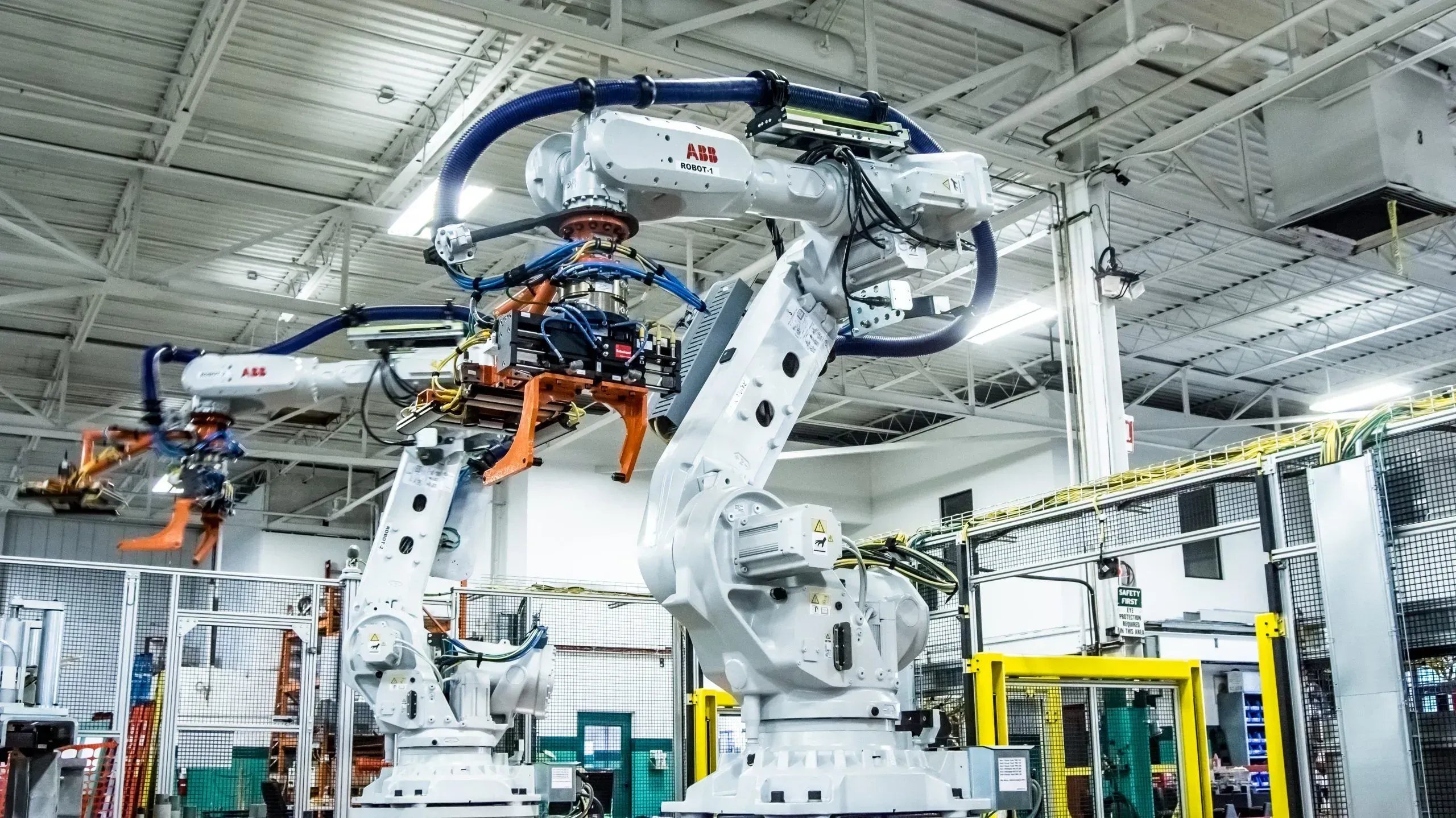
cartesian robot industrail setting

Cartesian and gantry robots, engineered and integrated in the UK

MotionTech designs, builds and integrates Cartesian robots, gantry robots and linear (XYZ) robotic systems for UK manufacturing, food and beverage, pharmaceutical, aerospace and e-commerce operations. 28 years of automation heritage, in-house controls engineering, and turnkey delivery from a single Nottingham facility.

±0.05mm
typical repeatability on Cartesian cells
+10m
work envelope on overhead gantry systems
2,000kg
peak payload on heavy-duty gantries
+28
years of UK automation engineering
Home  /  Robotics  /  Cartesian & Gantry Robots
The basics

What is a Cartesian robot?

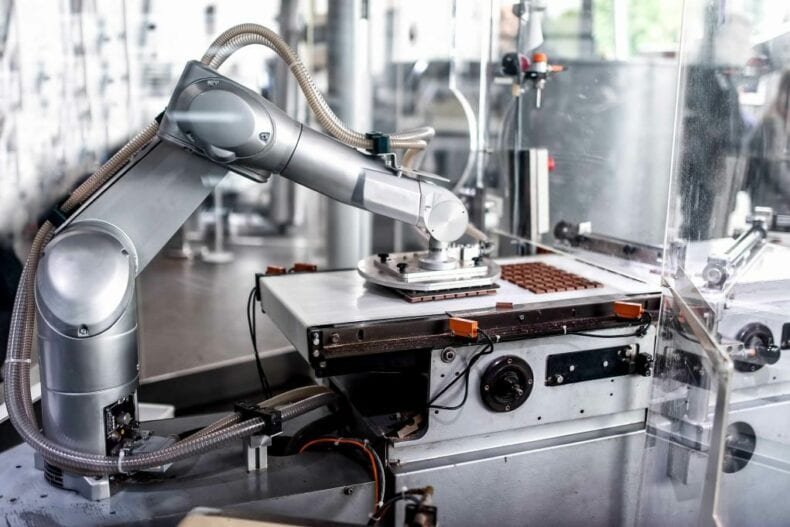
A Cartesian robot is an industrial robot that moves along three orthogonal linear axes (X, Y and Z) at right angles to each other. It uses linear actuators rather than rotational joints, which makes it mechanically simpler, exceptionally accurate (typically ±0.05 mm) and easy to scale to large work envelopes. Also called a gantry robot, linear robot, XYZ robot, 3-axis robot or Cartesian coordinate robot, depending on the configuration.

A complete Cartesian robot cell typically includes:

  • Linear axes (ball-screw, belt-drive or linear motor)
  • Servo drives and motors
  • PLC and motion controller (Beckhoff, Siemens or Rockwell)
  • HMI panel and operator interface
  • End-of-arm tooling (vacuum, gripper, dispenser, layer head)
  • Safety system (fenced cell or SICK SafetyScanner)
  • Infeed and outfeed conveyors as required
  • Connectivity to PLC, WMS, MES or ERP

Cartesian and gantry robots are used across manufacturing, food and beverage, pharmaceutical, e-commerce and grocery operations, wherever straight-line precision, heavy payload capability and large work envelopes are operationally critical. They commonly integrate with conveyor systems, ASRS and robotic palletising lines.

Our range

Cartesian configurations we design and build

"Cartesian robot" describes a family, not a single machine. MotionTech designs and integrates the full range, sized and configured around your work envelope, payload and cycle target.

Overview

2-axis benchtop Cartesian (XY)

A single horizontal plane. Used for plotting, dispensing, inspection across a flat fixture, or PCB pick-and-place where Z motion is handled by the end-effector itself. Compact, cheap, ideal for benchtop laboratory automation.

Work envelopeUp to 600 × 400 mm
PayloadUp to 5 kg
Repeatability±0.02 mm
Typical useLab automation, PCB, dispensing
Request a specification →
Overview

3-axis Cartesian cell (XYZ)

The standard industrial Cartesian. Three linear axes, one end-of-arm tool. Covers 95% of palletising, pick-and-place, CNC and 3D printing applications. Built in spans from 600 mm to 6 m on each axis.

Work envelopeUp to 1.5 × 1.5 × 0.8 m
Payload10 to 50 kg
Repeatability±0.1 mm
Typical usePick-and-place, light assembly
Request a specification →
Overview

Mid-size gantry robot

The workhorse configuration for CNC, dispensing and lighter palletising. An overhead bridge mounted on two parallel rails keeps the floor underneath clear for operators and forklifts.

Work envelopeUp to 3 × 2 × 1.5 m
Payload50 to 250 kg
Repeatability±0.2 mm
Typical useCNC, dispensing, light palletising
Request a specification →
Overview

Large overhead gantry palletiser

The default robot for very heavy palletising jobs. Layer-grip heads carrying 500 kg+ build pallets of full kegs, paper reels, aggregate sacks or large IBCs. Integrates directly with our robotic palletising systems.

Work envelopeUp to 6 × 4 × 2 m
Payload250 to 2,000 kg
Repeatability±0.3 mm
Typical useHeavy palletising, large-format machining
Robotic palletising →
Overview

Cantilever Cartesian

The X-axis bridge mounts on a single side rail rather than spanning two parallel rails. Half the structure, faster to install, ideal where overhead structure is limited or where the work area sits against a wall.

Work envelopeUp to 1.5 m span
PayloadUp to 80 kg
Repeatability±0.15 mm
Typical useWall-mounted dispensing, light pick-and-place
Request a specification →
Overview

Cartesian gantry with rotational wrist (4 to 5 axis)

A rotary axis added at the Z-axis tip gives you straight-line reach plus limited wrist orientation. Common in welding and large-format additive manufacturing where the part shape demands tool orientation.

Work envelopeUp to 6 m+ on each axis
Payload50 to 500 kg
Repeatability±0.3 mm
Typical useWelding, large-format additive, aerospace
Request a specification →

MotionTech also designs fully bespoke Cartesian and gantry cells. For pick-and-place into automated storage, integration with line-side conveyors, or as part of a wider robotic automation project, talk to our engineering team about the right configuration.

Compare

Cartesian vs gantry vs SCARA vs articulated vs cobot

The five industrial robot families do not compete head to head. Each one wins different jobs. Use this comparison to narrow your shortlist before requesting a review.

Robot type Best for Typical payload Repeatability Work envelope
Cartesian (3-axis)Large rectangular work area, straight-line precision, heavy payloads10 to 2,000 kg±0.05 mmRectangular, scalable
Gantry (overhead Cartesian)Floor stays clear, very heavy palletising, large-format CNC50 to 2,000 kg±0.3 mm3 to 10+ metres each axis
SCARAHigh-speed small-parts pick-and-place under 1 m reachUp to 20 kg±0.02 mmCylindrical, under 1 m
Articulated (6-axis)Complex curved paths, wrist articulation, dense cells5 to 700 kg±0.1 mmSpherical from base
Cobot (collaborative)Low volume, frequent changeover, working alongside peopleUp to 30 kg±0.05 mmSpherical, small
Guidance

How to choose the right Cartesian robot

Six variables decide the right configuration. Working through them in order avoids the most common mistake, a system that's technically correct but operationally wrong for the site.

Measure the work envelope

Map the X, Y and Z dimensions of the area the robot must reach. Above 1.5 m on any axis, Cartesian almost always wins.

Confirm the payload

Above 50 kg, Cartesian or articulated only. Above 150 kg, a Cartesian gantry beats an articulated arm on cost.

Decide on motion type

Straight-line over a rectangular area means Cartesian. Curved continuous-path means articulated. Top-down speed in a tight cell means SCARA.

Set the accuracy target

Below ±0.1 mm means Cartesian or SCARA. ±0.1 to 0.3 mm means all four types qualify, choose on footprint and cost.

Check building structure

An overhead gantry needs roof or column support. Without it, budget £15,000 to £40,000 for a free-standing steel frame.

Plan for change

Modular Cartesian scales cheaply as throughput grows. Bespoke gantry locks in a higher-performance fit. Depends how stable your process is.

A MotionTech engineer works through these six points during a free application review, then translates the answers into a specification, layout drawing and indicative quotation.

Our process

From application review to lifetime aftercare

Every Cartesian system MotionTech ships follows the same six-stage process, sequential, fully UK-based, managed by a single project engineer from first visit to handover.

STAGE 01

Application review & discovery

A senior engineer captures the part geometry, payload, cycle target, environment and integration requirements.

STAGE 02

CAD design & specification

2D layouts, 3D models, kinematic studies, controls philosophy and end-of-arm tooling design, approved before anything is cut.

STAGE 03

UK manufacture

Frames, gantries, end-of-arm tooling and control panels built in-house at our Nottingham facility.

STAGE 04

Factory Acceptance Test

Cells built up and run at our works. You witness the FAT and sign off before shipping.

STAGE 05

Installation & commissioning

Mechanical fit, electrical termination, PLC commissioning, WMS or MES integration and operator training.

STAGE 06

Aftercare & spares

Preventative maintenance, 24/7 emergency response, in-stock spares and remote diagnostics, backed by Lifetime Services.

Sectors

Cartesian and gantry robots by industry

MotionTech designs Cartesian systems around the operational reality of each sector, the regulatory standards, throughput patterns and product characteristics specific to it.

Manufacturing & assembly

Pick-and-place, machine loading, CNC, dispensing and inspection. Cartesian's straight-line accuracy holds tolerance across long production runs without drift.

Food & beverage

Stainless 304/316 washdown gantries, hygienic frame design, food-grade end-of-arm tooling. Cartesian palletisers handle full beer kegs and beverage cases above 150 kg, integrated directly with robotic palletising lines.

Pharmaceutical & medical

Cleanroom-compatible Cartesian cells with validated controls, audit trails and GMP documentation. The default for vial handling, blister-pack assembly and serialisation.

E-commerce & fulfilment

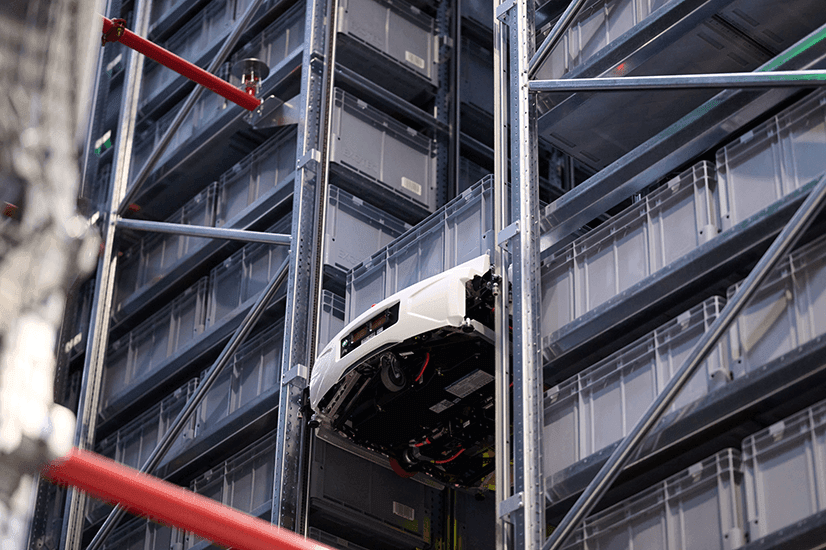
XYZ pick-and-place over large tote stores, gantry-mounted scanning, automated picking. Integrates directly with ASRS and conveyor lines for end-to-end fulfilment.

Aerospace, composites & large-format

Large-format gantry CNC for woodworking, composites layup and aerospace machining. Where work envelopes exceed 3 metres, Cartesian beats articulated on every metric that matters.

Not sure which fits?

Book a free application review and a MotionTech engineer will spec it for you.

Request an application review →
Compliance

Engineering standards, compliance & accreditations

Every MotionTech Cartesian system is designed, manufactured and certified against recognised standards. Compliance documentation and the Technical File are supplied as part of the project handover pack.

CERTIFIED 9001 ISO STANDARD ISO 9001 Quality Management
CERTIFIED 14001 ISO STANDARD ISO 14001 Environmental Management
CERTIFIED 45001 ISO STANDARD ISO 45001 Health & Safety
CHAS ACCREDITED Safe CONTRACTOR
UKMHA MEMBER
CE UKCA MARKING
Machinery Directive 2006/42/ECEU machinery safety, design, risk assessment, Technical File
UKCA / CE markingUK and EU conformity marking on all supplied machinery
BS EN ISO 10218-1/-2Industrial robot safety, design and integration
BS EN ISO 12100Risk assessment and risk reduction methodology
BS EN 60204-1Electrical equipment of machinery
ISO 9001Quality management across design, manufacture and aftercare
Why us

Why UK operations teams choose MotionTech for Cartesian systems

Direct integrator, not a reseller. Design, mechanical build, controls software and installation all in-house at our Nottingham facility.

28+ years of UK automation heritage. Built on the foundation of LAC and AMH, now part of the MotionTech group.

Independent of robot brand. Beckhoff, Siemens or Rockwell on controls. The right kit for the job, not the one we have margin on.

Modular and bespoke under one roof. Off-the-shelf cells or fully bespoke gantries, both from the same engineering team.

Integrated with palletising, conveyors & ASRS. Cartesian cells slot into a wider automation stack we already build.

UK-based aftercare and in-stock spares. No overseas escalation chains, no 4 week waits for a controller card.

FAQ

Frequently asked questions

What is a Cartesian robot?
A Cartesian robot (also called a Cartesian coordinate robot, linear robot, gantry robot or XYZ robot) is an industrial robot that moves along three linear axes (X, Y and Z) at right angles. It uses linear actuators rather than rotational joints, which makes it mechanically simpler, exceptionally accurate (typically ±0.05 mm) and easy to scale to large work envelopes for palletising, CNC, 3D printing and pick-and-place.
What's the difference between a Cartesian robot and a gantry robot?
All gantry robots are Cartesian robots. Not all Cartesian robots are gantries. "Cartesian robot" describes the kinematics (three linear axes). "Gantry robot" describes the mechanical structure (an overhead bridge on two parallel rails). A gantry is the most common large-format Cartesian configuration. Smaller Cartesian robots can use a cantilever or single-rail design instead.
How much does a Cartesian robot cost in the UK?
UK Cartesian robot pricing in 2026 falls into four bands: benchtop 2-axis units £4,000 to £12,000, mid-size 3-axis cells £15,000 to £45,000, large overhead gantry systems £55,000 to £180,000, and fully integrated gantry palletisers or CNC gantries £180,000 to £450,000+. Main cost drivers: work envelope, payload, axis count, controller (Beckhoff, Siemens, Rockwell), end-of-arm tooling and integration scope. Request a free application review for a budget figure on your project.
What's the lead time on a Cartesian or gantry robot?
Standard Cartesian cells are typically delivered within 12 to 16 weeks. Bespoke gantries with custom controls usually take 20 to 28 weeks from order to commissioning, depending on scope, EOAT complexity and FAT requirements.
What's the difference between a Cartesian robot and a SCARA robot?
A Cartesian robot moves along three linear X-Y-Z axes. A SCARA has two rotary joints in the horizontal plane plus a vertical axis, which makes it faster for short, repetitive top-down pick-and-place but limited to a fixed cylindrical envelope under 1 m. Cartesian wins for large work areas, heavy payloads and straight-line accuracy. SCARA wins for high-cycle small-parts assembly under 1 metre reach.
Can a Cartesian robot be used for palletising?
Yes. A Cartesian palletiser (usually an overhead gantry with a layer-grip head) is the preferred robot for very heavy or very large palletising jobs above 150 kg payload, full beer kegs, paper reels, aggregate sacks or large IBCs. See our robotic palletising systems page for the full end-of-line context.
What are the limitations of Cartesian robots?
Three matter. First, Cartesian robots occupy a rectangular footprint as large as their work envelope, whereas an articulated arm reaches a larger area from a small base. Second, they run slower in continuous-path motion than an articulated robot doing the same job. Third, overhead gantries need structural support, usually a steel frame anchored to the building, which adds installation cost. They're not the right choice for tight cells, complex curved paths or jobs needing wrist articulation.
How accurate are Cartesian robots?
Typical repeatability for a well-built UK industrial Cartesian robot is ±0.05 mm on small benchtop systems, ±0.1 mm on mid-size 3-axis cells, and ±0.3 to 0.5 mm on large gantries. Significantly better than the ±0.1 to 0.3 mm of a comparable articulated robot, because linear axes accumulate less error than chained rotary joints.
What standards do MotionTech Cartesian systems meet?
All systems comply with the Machinery Directive 2006/42/EC, BS EN ISO 10218-1/-2, BS EN ISO 12100, BS EN 60204-1, and UKCA / CE marking requirements. ISO 9001 quality systems apply across design, manufacture and aftercare.
Reference

Cartesian & gantry robot glossary

Cartesian robot
An industrial robot moving along three orthogonal linear axes (X, Y, Z). Also called a linear robot or XYZ robot.
Gantry robot
A Cartesian robot with its X-axis bridge mounted overhead on two parallel rails, leaving the floor clear.
Cantilever Cartesian
A Cartesian robot with its X-axis bridge mounted on a single side rail instead of two parallel rails.
SCARA
Selective Compliance Assembly Robot Arm. Two rotary joints in the horizontal plane plus a vertical Z-axis.
Articulated robot
A 6-axis robot arm with rotary joints, reaching a roughly spherical work envelope from a fixed base.
Cobot
A force-limited collaborative robot designed to work safely alongside operators without fencing.
End-of-arm tooling (EOAT)
The gripper, vacuum head, dispenser, spindle or layer head attached to the wrist of an industrial robot.
Repeatability
The maximum positional deviation when a robot returns to a programmed point under identical conditions.
Ball-screw drive
A linear actuator driven by a precision-ground threaded shaft. Used for sub-2 m spans where precision matters most.
Belt drive
A linear actuator driven by a toothed belt. Used for longer spans where cycle time matters more than micron-level precision.
Linear motor
A direct-drive linear actuator. Highest acceleration and bandwidth of any axis type. Used where cycle time dominates.
FAT
Factory Acceptance Test. Full operational testing at the manufacturer's works before delivery.
TwinCAT
Beckhoff's PC-based control software platform, common across MotionTech Cartesian builds.
WMS / WCS
Warehouse Management / Control System. Software directing robot, conveyor and sortation activity.
Talk to an engineer