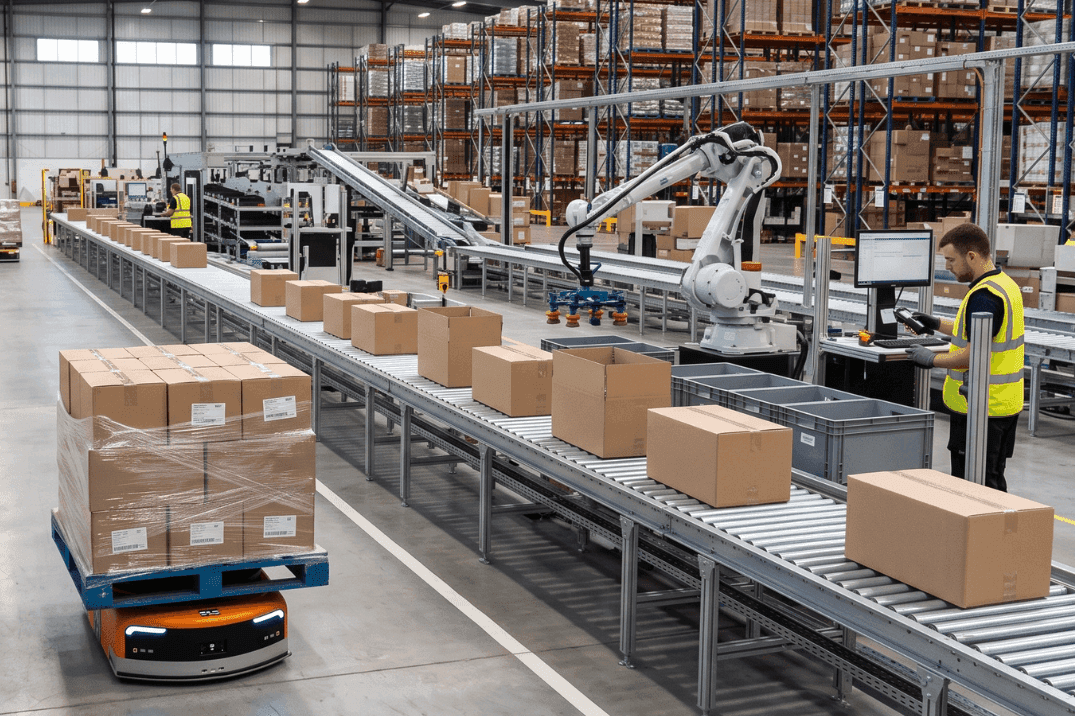
What Is Robotic Automation in Material Handling?
Most warehouse operators already know automation is coming; where they get stuck is the how. The instinct is to picture a fully automated facility and then balk at the cost, scale, and disruption of reaching it in one leap. But moving away from manual handling rarely looks like a single switch being flipped, it looks like a deliberate, staged transition.
In short: the most successful transitions start small, targeting high-volume, repetitive tasks first, prove the return with a pilot, then scale into a hybrid model where automation and people each do what they do best.

Why Move Away From Manual Handling?
Manual handling remains common across UK distribution and manufacturing facilities, particularly in operations handling irregular loads, complex picking tasks, or low-volume workflows. However, its limitations are well-documented. Labour shortages continue to affect the logistics sector, with the British Chambers of Commerce reporting persistent recruitment difficulties across the industry. Physical strain, human error, and inconsistent throughput are structural challenges that no amount of workforce management fully resolves. For operations scaling to meet growing demand, these constraints become increasingly costly, which is what makes a planned transition to automation so valuable.