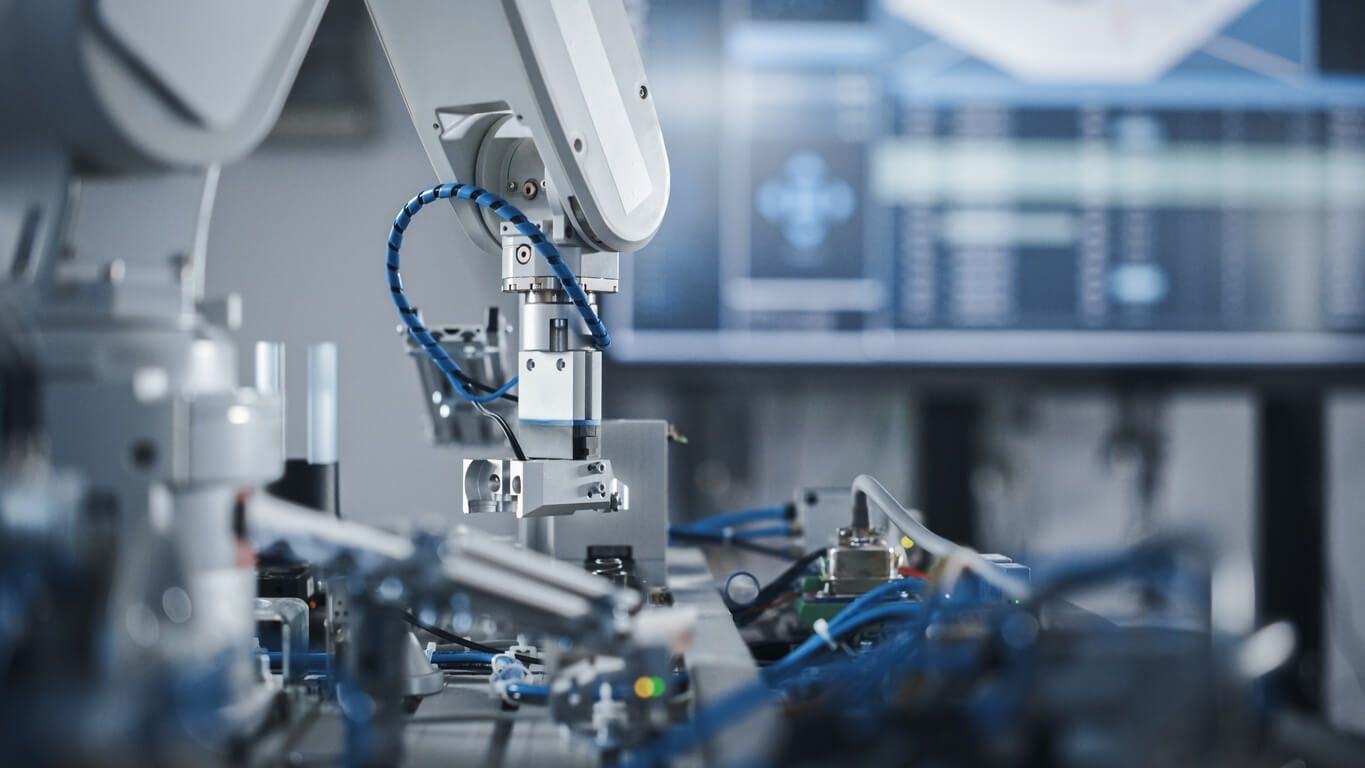
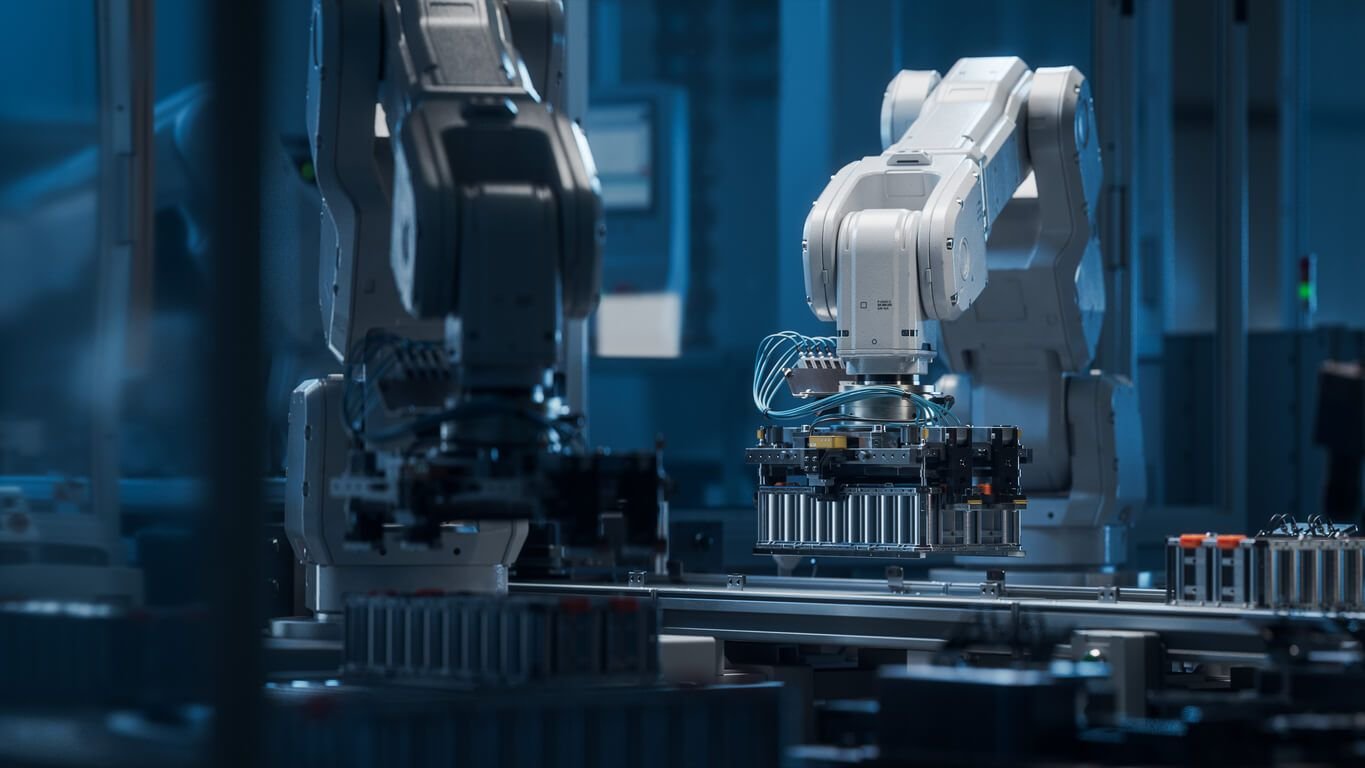
Industrial robotic arm performing precision assembly as part of an automated, energy-efficient manufacturing process

The Business Case for Robotic Automation

Across UK warehousing, manufacturing, and logistics, the pressure to improve operational efficiency has never been greater. Labour shortages, rising wage costs, and the relentless growth of e-commerce have fundamentally shifted what operational resilience looks like.

Robotic automation is increasingly adopted as a direct response to these pressures, offering a credible, scalable path to long-term competitiveness for businesses that are serious about protecting their margins and their operational future.

Key takeaways
  • Robot payback periods have fallen from around 5.3 years in 2019 to roughly 1.3 years in 2024.
  • Labour is 50 to 70% of warehouse operating cost, and the least predictable input to automate away.
  • Advanced automation can reduce labour costs by 30 to 40% over a five-year period.
  • The UK ranks 24th globally for robot density, so inaction widens the competitiveness gap year on year.

Why the Financial Case for Robotic Automation Has Strengthened

The economics of robotic automation have shifted considerably in recent years. The average industrial robot payback period has fallen from approximately 5.3 years in 2019 to around 1.3 years in 2024, driven by falling hardware costs, more flexible deployment models, and the rising cost of labour as the baseline for comparison. 

Unit wage costs in UK manufacturing increased 26.3% in the three years to 2024, compressing the margins of operations still dependent on manual headcount. For any business running labour-intensive picking, palletising, or sortation processes across multiple shifts, those figures alone reframe what a robotics investment actually costs relative to the status quo.
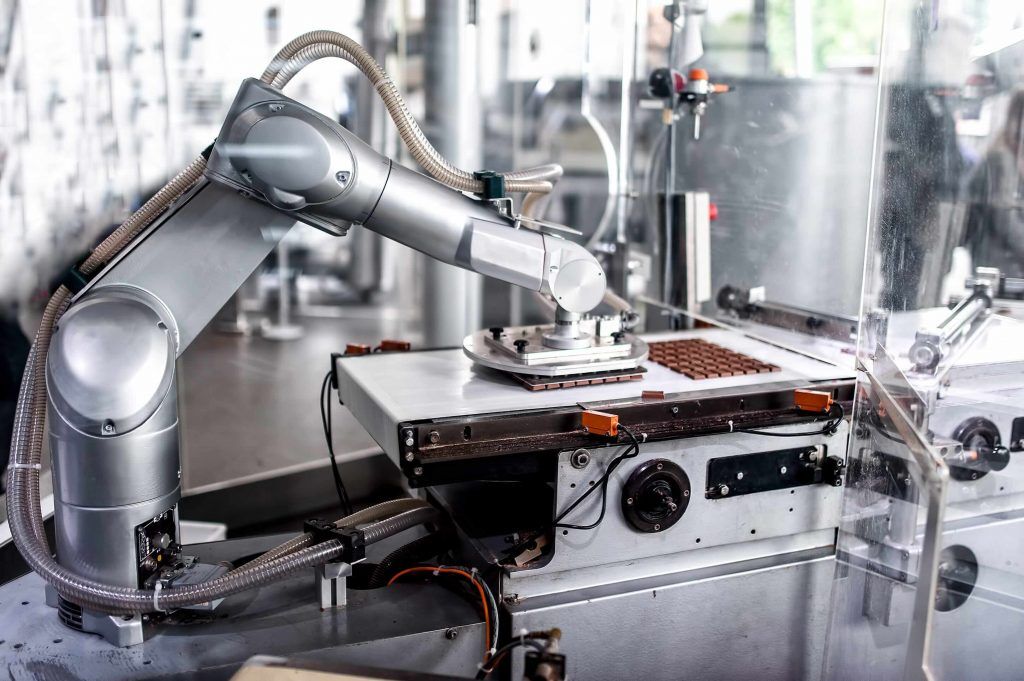
Robotic Automation in Packaging
1.3 yrs
average robot payback in 2024, down from 5.3 years in 2019
26.3%
rise in UK manufacturing unit wage costs in the three years to 2024
30-40%
potential labour cost reduction over a five-year period
24th
UK global ranking for robot density

Labour: The Structural Problem Robotic Automation Solves

Labour is consistently the largest cost line in a warehouse or production operation, accounting for between 50% and 70% of the total warehousing budget in non-automated facilities. It is also the least predictable. Recruitment difficulty, absenteeism, turnover, and the limitations of human shift patterns all introduce variability that robotic automation removes. Robotic systems operate continuously, at consistent throughput rates, without the performance degradation that comes with repetitive manual labour. The business case in labour-intensive environments is therefore not purely about cost reduction; it is about replacing a structurally fragile input with a reliable and controllable one.

Quantifying the Returns on Robotic Automation


Robotic Automation In The Food Industry

Measuring the return on a robotic automation investment is more complex than comparing the headline capital cost alone.

The most relevant metrics include:

Payback period

Most warehouse and logistics robotics implementations achieve payback within two to four years. Higher volume, multi-shift operations consistently reach payback faster.

Labour cost displacement

Automation can reduce labour costs by 30% to 40% over a five-year period in advanced deployments.

Throughput uplift

Robotic systems, particularly [goods-to-person](/asrs) (G2P) technologies, can double picker productivity compared to manual equivalents.

Error reduction

Automated picking and sortation dramatically reduces mispicks, short-ships, and returns-related costs.

The Risk of Inaction

The UK currently ranks 24th globally for robot density. Germany operates approximately nine times more industrial robots than the UK; even France operates roughly twice as many. This is not simply a productivity gap; it is a competitiveness gap. Businesses that have already deployed robotic automation operate at lower unit costs, absorb volume peaks without proportional headcount, and deliver more consistent service levels.

Businesses that automate
  • Operate at lower unit costs
  • Absorb volume peaks without proportional headcount
  • Deliver more consistent service levels
  • Scale capacity in line with growth
Operations that stay manual
  • Wage inflation compounds year on year
  • Recruitment difficulty persists
  • Competitors extend their structural lead
  • Margins compress as volumes grow

For operations that remain manual, wage inflation and recruitment difficulty compound year on year, while competitors incrementally extend their structural advantage. The business case for robotic automation is therefore also a case against inaction.


Scalability and Future-Proofing


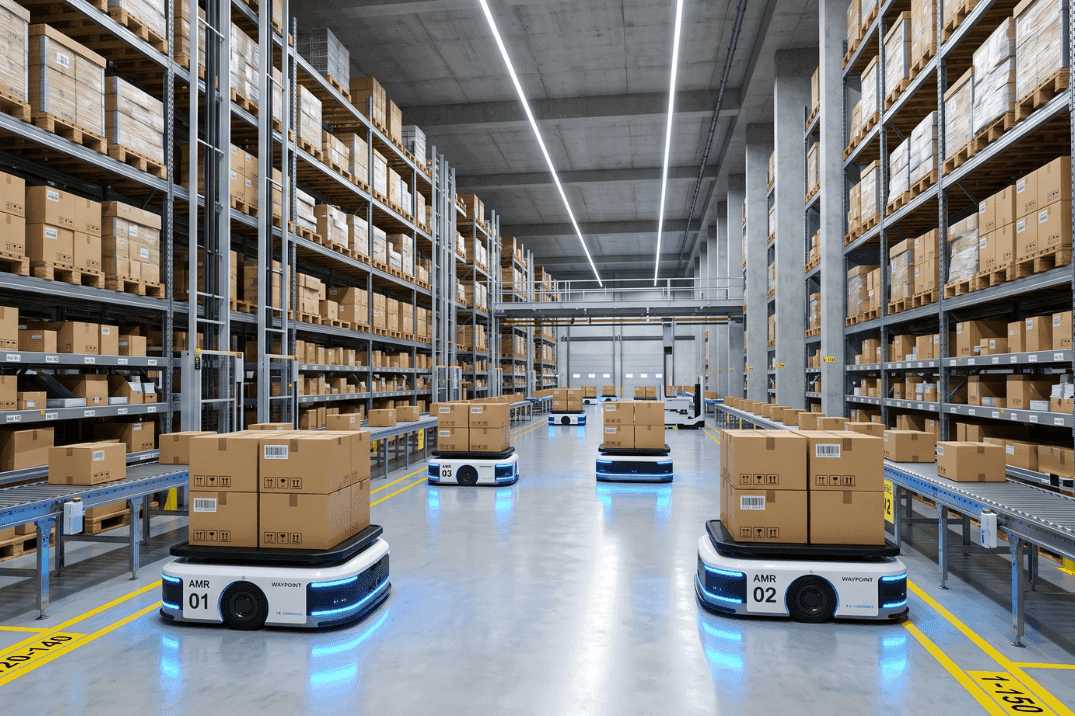
A well-designed robotic automation deployment does not lock a business into a fixed configuration. Modular robotic systems, autonomous mobile robots (AMRs), and flexible picking technologies are designed to scale in line with business growth, adding capacity without the lead time and cost associated with expanding a manual workforce. The system that handles today's volumes can be extended to accommodate tomorrow's without a proportional reinvestment.

Building a Stronger Case for Robotic Automation

The business case for robotic automation has never been more straightforward to construct. Falling payback periods, rising labour costs, and a wide range of proven deployment models mean that robotic automation is no longer a capital-heavy gamble but a calculated operational investment. 


Businesses that engage with the financial analysis thoroughly, rather than defaulting to the headline capital cost, consistently find that the numbers support the move.

robotic automation setting

Model the numbers for your operation

Robotic automation is a calculated investment, not a gamble. We will model the payback, labour savings, and throughput uplift specific to your throughput profile.

Speak to a specialist

Frequently Asked Questions