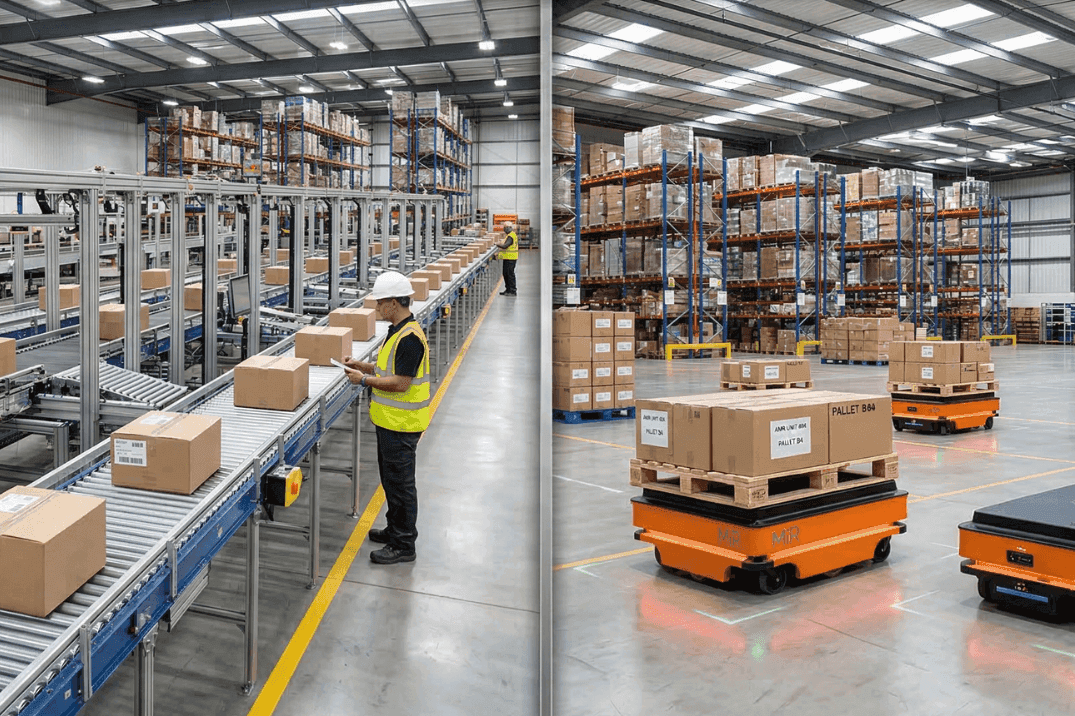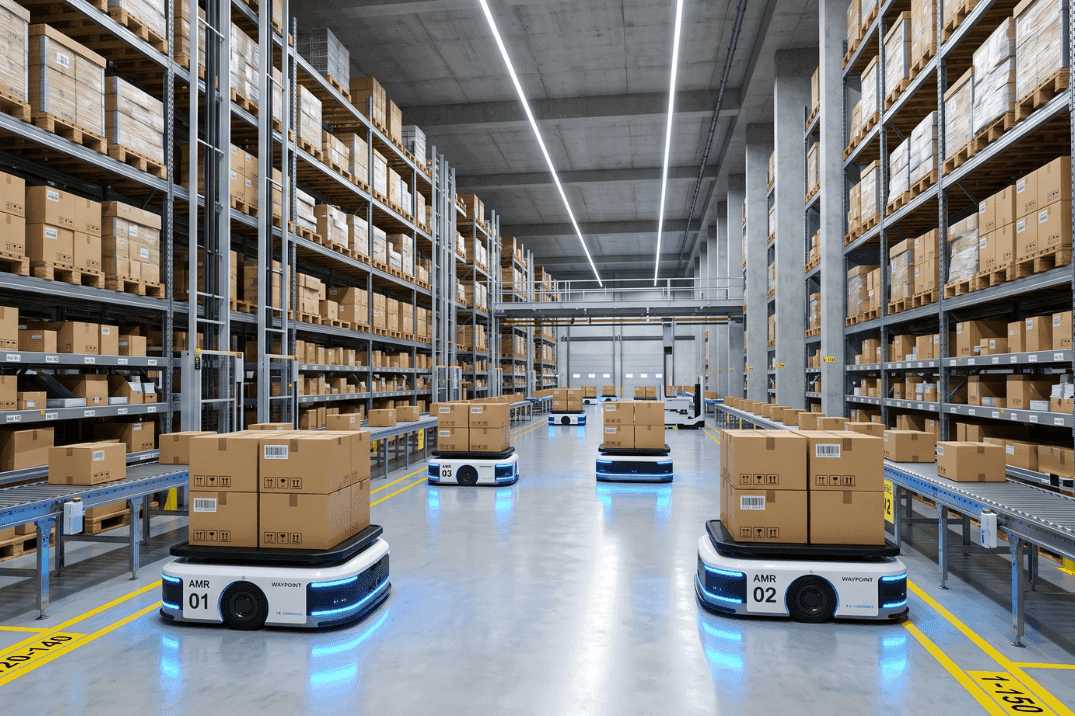
Autonomous mobile robots transporting cartons alongside conveyor systems in a modern warehouse, illustrating flexible automation commonly used in ASRS retrofit projects

How to Build a Business Case for Warehouse Automation

For operations directors and supply chain leaders across the UK, the commercial case for warehouse automation is increasingly compelling. Labour costs have risen sharply, recruitment in distribution and fulfilment remains difficult, and the operational efficiency gains achievable through robotic automation are now well-documented across grocery, retail, third-party logistics, and food and beverage. From April 2026 the National Living Wage stands at £11.44 per hour for workers aged 21 and over, and the Office for National Statistics recorded more than 100,000 transport and storage vacancies during the 2024 peaks, which means operational costs in manual warehouse facilities continue to climb whether headcount is in place or not.¹ Yet many projects stall not because the technology is wrong, but because the business case is not constructed with sufficient rigour to survive internal scrutiny.

What a Business Case for Automation Must Demonstrate

A warehouse automation business case must do two things: quantify the financial return in terms that a finance director will recognise, and demonstrate that the project risk is manageable. 


A compelling case typically covers capital investment, operating cost savings, payback period, net present value, and a risk-adjusted sensitivity analysis. Qualitative benefits, such as improved accuracy and reduced reliance on seasonal agency labour, should be presented alongside the financial model, not instead of it.
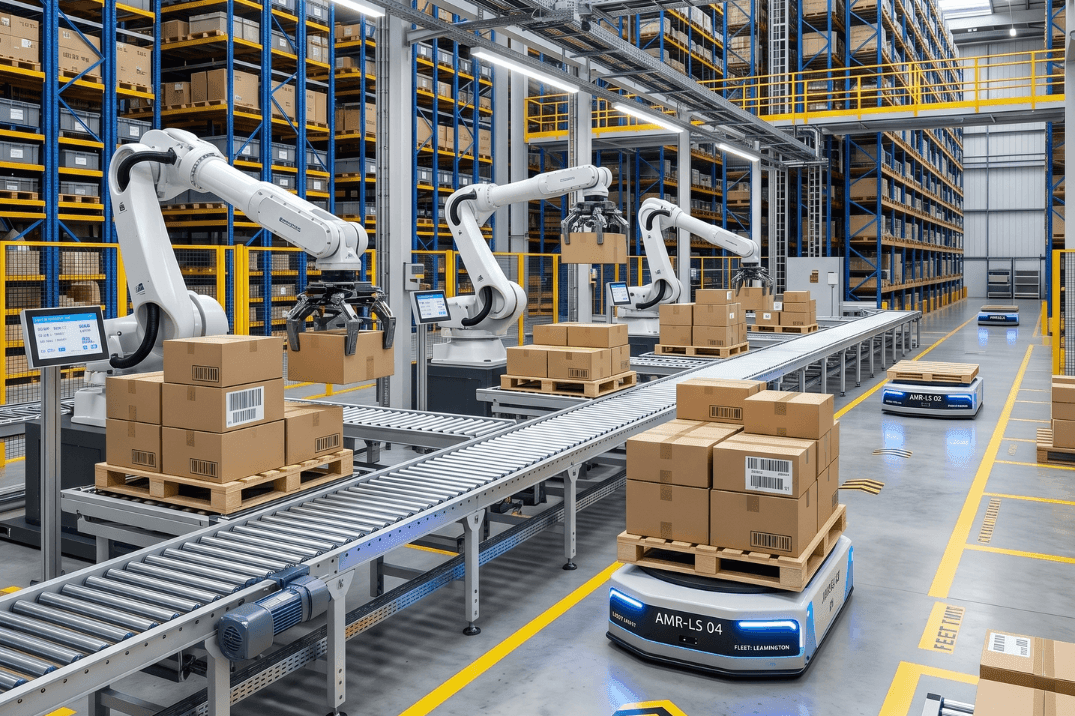
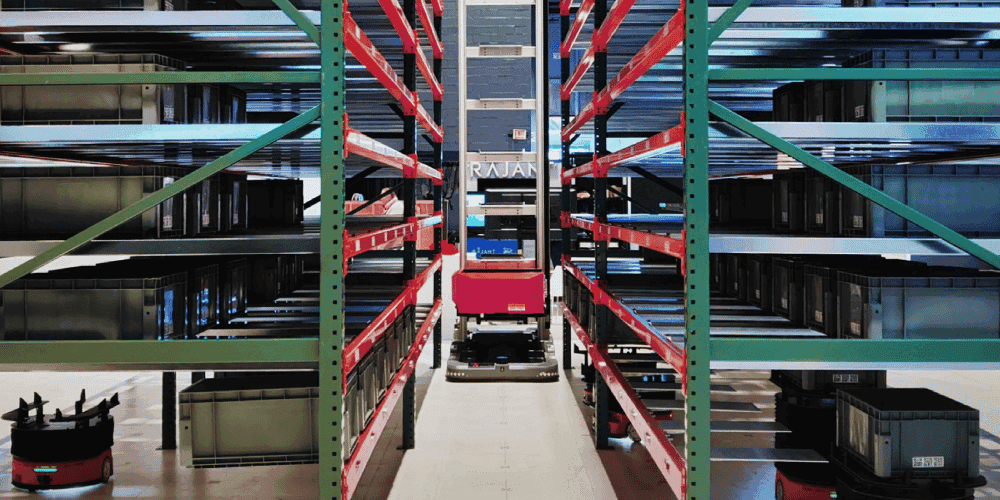
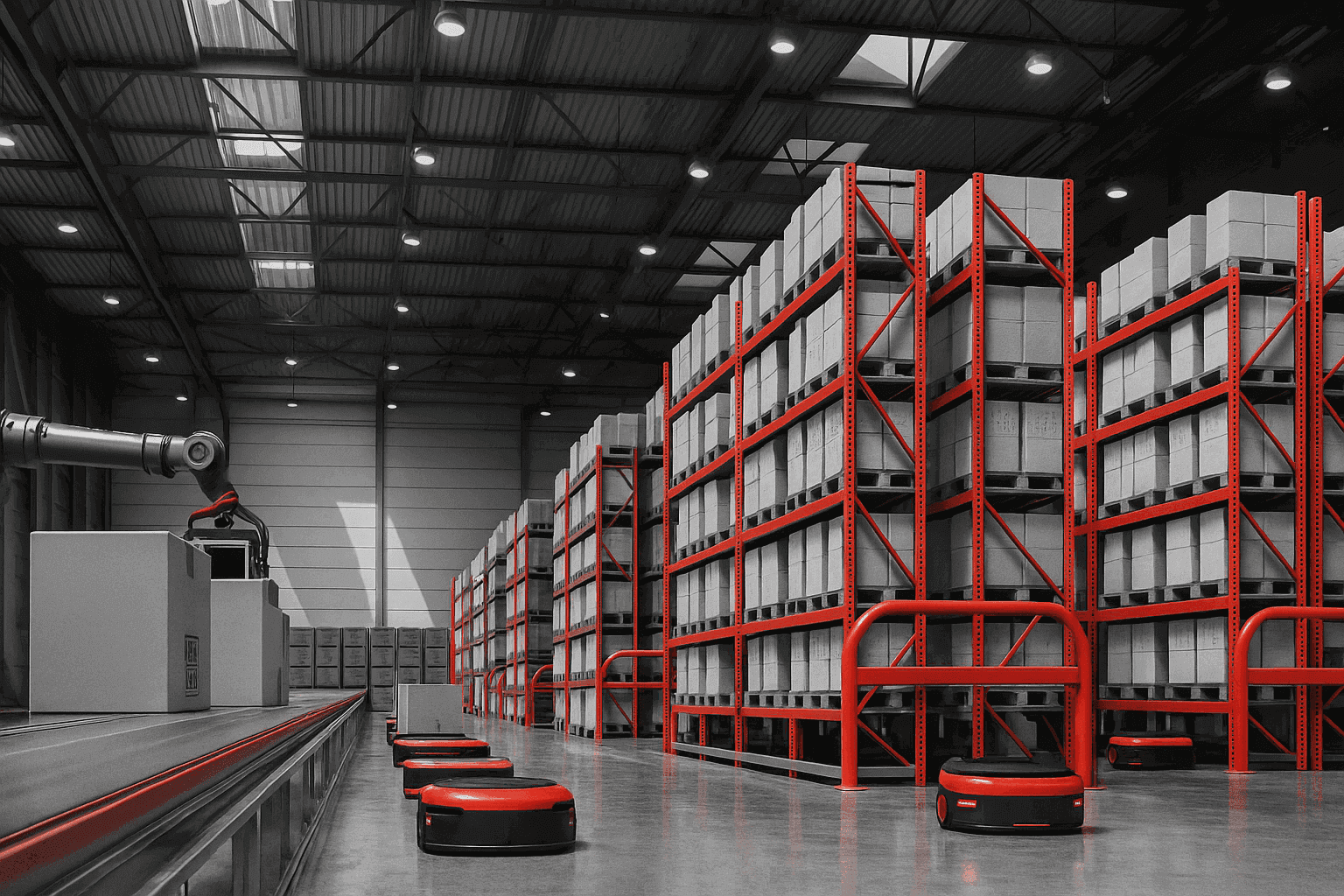
Automated warehouse with robotic picking arms, conveyor system, and autonomous mobile robots integrated with ASRS racking, illustrating system-wide dependencies in warehouse automation

Quantifying the Labour Cost Saving

Labour is usually the largest single cost driver in a manual warehouse operation, and it is typically the starting point for any warehouse automation business case. The saving should be calculated using fully loaded labour costs: base pay, employer national insurance, pension contributions, agency fees (where applicable), and the management overhead associated with running a large manual workforce.

The automation specification will define how many headcount the system replaces across each function. It is important for warehouse managers to distinguish between roles that are eliminated and roles that are redeployed, as both have different cost implications. For businesses heavily dependent on seasonal agency labour, the saving from reducing peak headcount requirements can be particularly significant. Logistics UK case modelling for a typical UK warehouse deploying autonomous robots and AGVs estimates annual labour savings of around £336,000, with net annual savings of approximately £276,000 after maintenance and software costs, producing a payback period of around 2.2 years.¹

Throughput and Capacity Uplift


Operational efficiency gains extend beyond labour. Automated warehouse facilities typically deliver higher throughput per square metre than manual operations, and do so with greater consistency across shifts. The business case should quantify:

Throughput ceiling

The maximum orders per hour the automated system can process, compared with current peak capacity.

Accuracy improvement

The reduction in pick errors and the downstream saving in returns processing, customer credits, and carrier redeliveries.

Space efficiency

For ASRS and shuttle storage, the density gain over conventional racking and the potential to defer a building expansion. This is particularly material in the UK, where Savills reports prime warehouse rents up 69% between 2015 and 2024, with a further 25% growth forecast by 2026.²

Extended operating hours

Automated systems can run two or three shifts with minimal additional staffing cost, unlocking throughput capacity that a manual operation cannot access.

These uplifts also support wider economic growth objectives at site level, allowing operators to scale into new product lines, channels, or customer contracts without proportionate increases in headcount or footprint.

Calculating Payback Period

Payback period is the primary metric most boards use to evaluate capital projects. For warehouse automation, a payback of three to five years is typical, though this varies significantly with project scale, the labour intensity of the current operation, and the throughput uplift achieved. Projects in high-labour environments, such as grocery e-commerce fulfilment, parcel sortation, and automotive warehouses serving just-in-time assembly lines, tend to have shorter payback periods than lower-throughput manufacturing sites.

The payback calculation should account for the full project cost, including system design, equipment supply, installation, commissioning, and integration with existing ERP or warehouse management systems, not just the equipment cost alone.

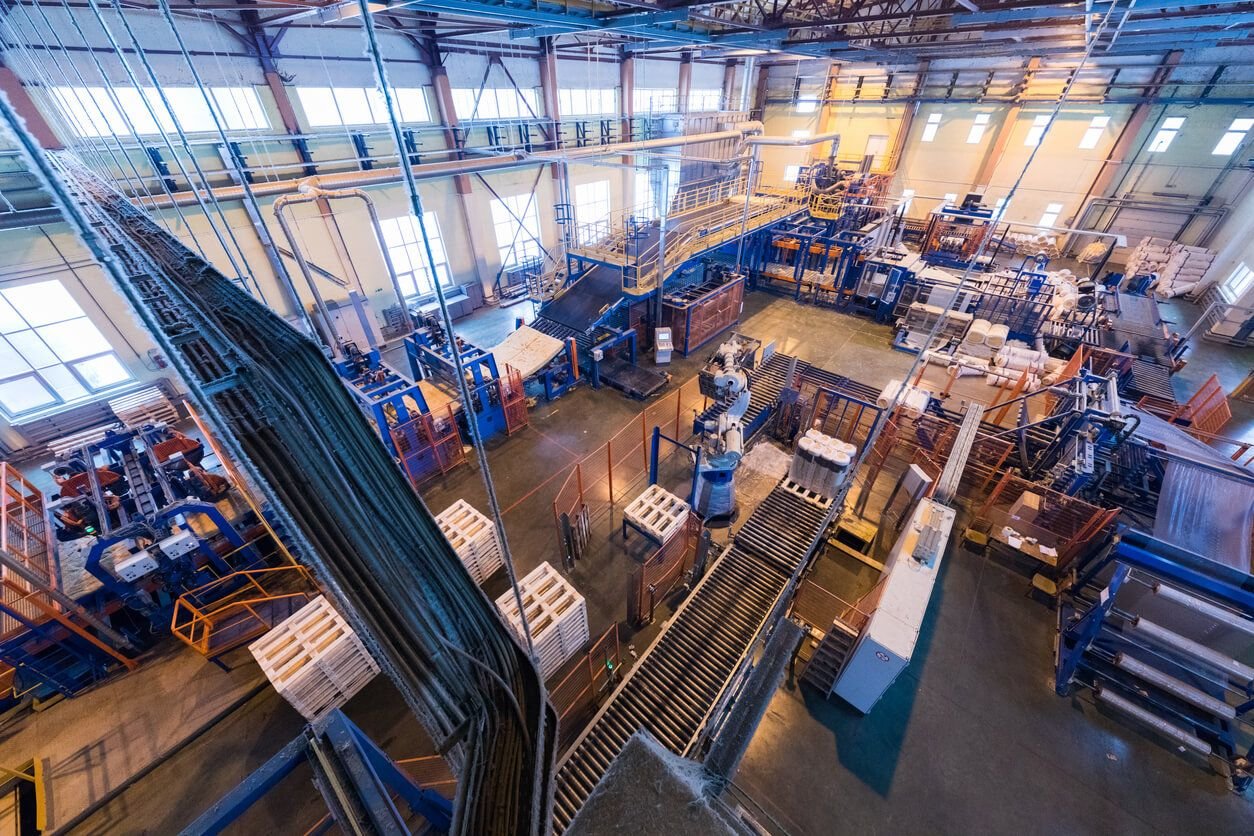
Hybrid material handling system combining conveyor belts and autonomous mobile robots (AMRs) for efficient warehouse material flow

Accounting for Risk

A credible business case acknowledges risk and provides a sensitivity analysis. The most common risk factors to model include: a lower-than-projected throughput uplift in the first year of operation, a project programme overrun that delays the start of the saving period, and the residual labour cost if some manual processes are retained longer than planned.

Choosing a systems integrator with a defined project delivery process and a track record of commissioning on programme reduces the risk that must be modelled into the sensitivity analysis.

Presenting the Case Internally

Building a Stronger Case for Operational Efficiency

A well-constructed warehouse automation business case, grounded in verified cost data and supported by a technically credible specification, stands a far higher chance of board approval than one built on high-level assumptions. Businesses that invest the time to gather accurate operational data, model conservative and optimistic scenarios, and present a clear risk mitigation plan are consistently more successful in securing investment.

Engage a systems integrator early: the specification that underpins the financial model should be designed by the people who will deliver it. At MotionTech, our integrated approach to warehouse logistics and automation combines conveyor systems, robotics, and ASRS with the engineering and commercial expertise needed to build a defensible business case. Speak to our team to scope your project before the financial model is locked.

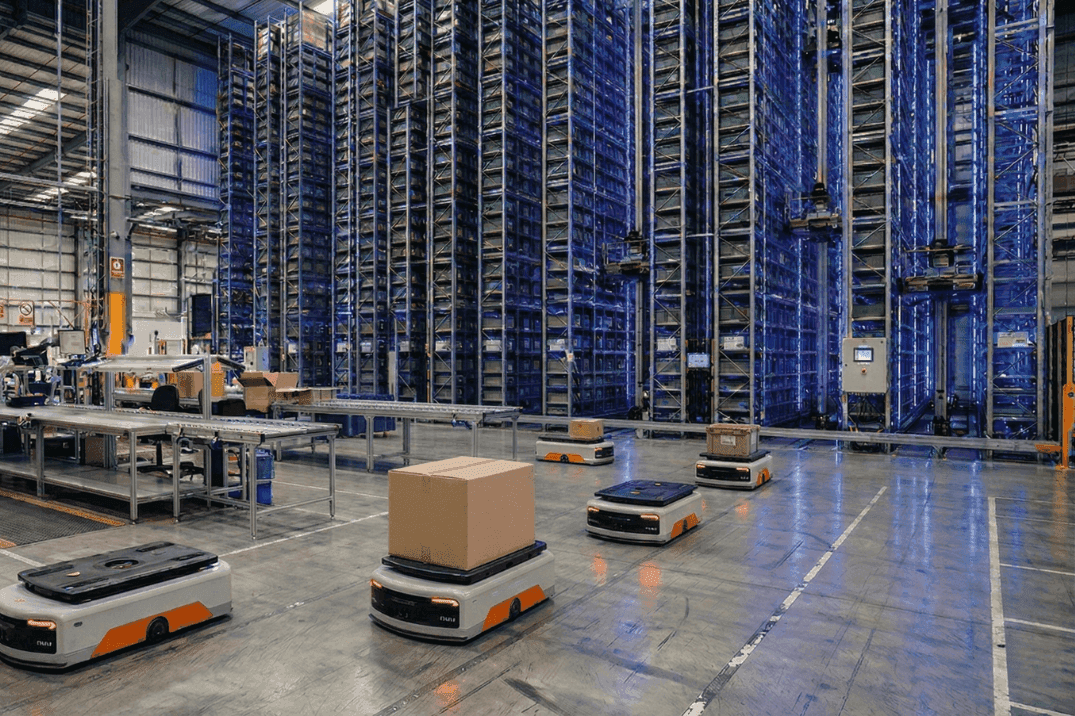
Autonomous mobile robots transporting goods alongside an automated storage and retrieval system in a high-density warehouse, illustrating flexible and scalable automation strategies

References

  1. Logistics UK, Automated Guided Vehicles (AGVs): The ROI of Warehouse Robotics for UK Operators, citing National Living Wage rates from GOV.UK and transport and storage vacancy data from the Office for National Statistics. logisticsuk.org
  2. Savills, Mind the Gap: why the gap between prime and secondary industrial & logistics rents is growing (2025). savills.co.uk