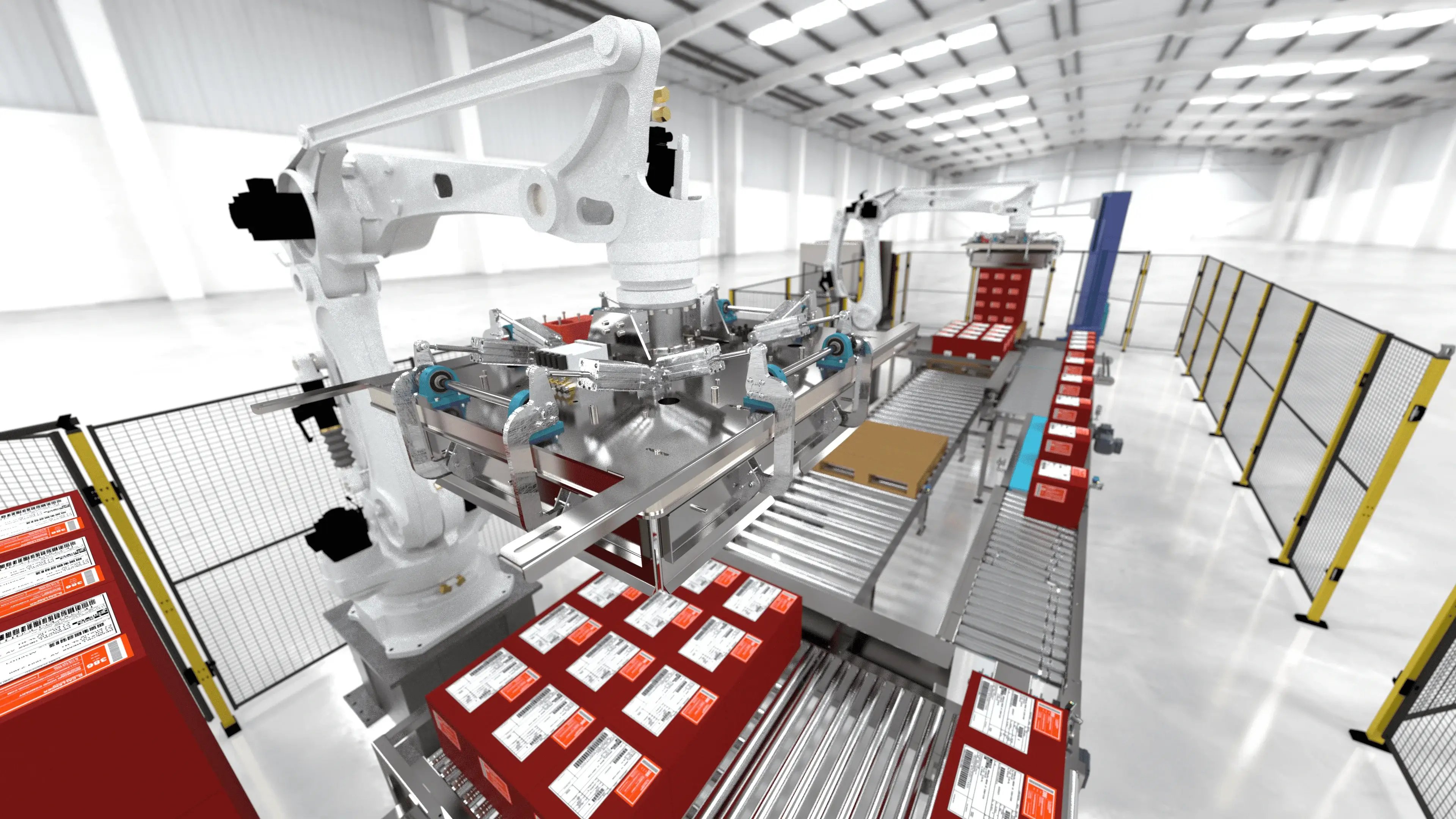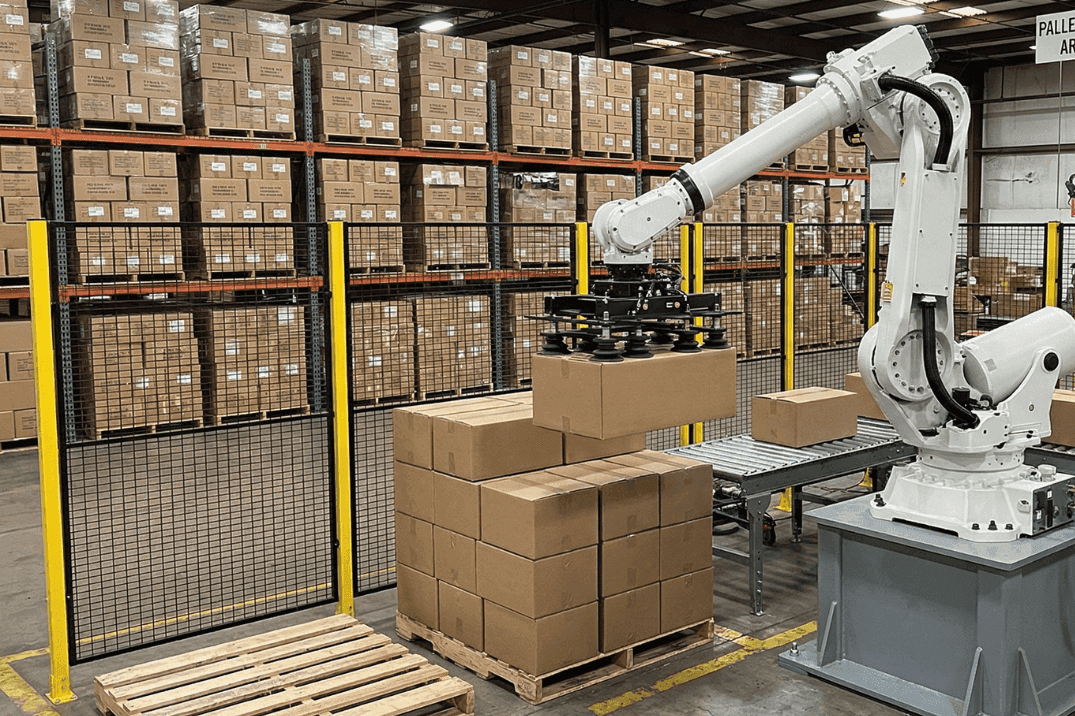
Industrial robotic arm stacking cardboard boxes onto a pallet from a conveyor system in a warehouse, demonstrating automated palletising and material handling efficiency

How to Reduce Manual Handling and Boost Throughput with End-of-Line Automation

Palletising and the wider end-of-line packaging stage are among the most physically intensive tasks on UK production lines, particularly across food and beverage and food manufacturing. Operators lifting, rotating, and positioning cases and packs hundreds of times per shift, at the pace demanded by upstream processing, represent a sustained ergonomic risk with direct consequences for workforce health, absence rates, and long-term operational cost. The Food and Drink Federation's latest State of Industry report shows that 54% of UK food and drink businesses now plan to prioritise investment in automation in the coming year, against a £14 billion productivity opportunity the FDF has identified for the sector through digital and automation adoption.¹ Reducing manual handling at End of Line is no longer just an efficiency decision; it is a risk management priority and a strategic investment with a measurable financial return.

The Scale of the Problem

The Health and Safety Executive's latest figures show that 511,000 UK workers are currently suffering from a work-related musculoskeletal disorder, with 7.1 million working days lost in 2024/25 and a total estimated cost of UK workplace injury and ill health of £22.9 billion a year.² Manual handling tasks account for 17% of all non-fatal workplace injuries in Great Britain, and warehousing and manufacturing are among the highest-risk sectors. Beyond the human cost, manual handling injuries generate direct costs in sick pay, temporary cover, and productivity loss, as well as indirect costs in management time and potential enforcement exposure.

At the operational level, manual palletising and manual case packing impose a throughput ceiling tied to operator pace and endurance. A team working at the end of a production line will always slow across a shift as fatigue accumulates, creating a bottleneck that limits output from an otherwise well-invested facility, and putting line speed targets, quality control, and quality standards under constant pressure.

Options for End-of-Line Automation


There are several automation solutions and automation systems available to reduce manual handling at end of line, each suited to a different throughput profile and product type:

Conventional robotic palletisers and case packers

Fixed robotic systems and robot arms that build pallet loads or pack cases from products arriving on a conveyor infeed. Suited to high-volume, single-SKU or limited-SKU output lines, often delivered by specialist automation suppliers including Universal Robots and similar manufacturers. Capable of rates between 800 and 1,200 cases per hour depending on case weight and pallet pattern, and a strong fit with the wider packaging industry trend toward automated packing systems.

Collaborative robot handling systems

Robotic arms designed to operate alongside human workers without a full safety enclosure. Suitable for lower-throughput lines or facilities with space constraints, where a full robotic cell is not justified but manual palletising alone carries unacceptable risk.

Case forming automation and end of line case packaging automation

Automated machines that form, fill, and seal cases at line speed, integrated with downstream packaging machines and the palletising cell into a single automated end-of-line packaging system.

Layer palletisers

Machines that palletise a complete layer of product in a single operation rather than case by case. Typically used in high-volume Food & Beverage, grocery, and consumer goods operations where line speed, pack stability, and regulatory compliance with retailer pallet specifications are the primary requirements.

Autonomous mobile robots with pallet-building capability

AMRs that transport completed pallet layers or individual cases and build pallet loads at a defined location, combining goods transport and robotic loading in a single automated function.

Across all of these, advanced sensors and vision systems are increasingly standard, supporting in-line quality control, label and barcode verification, and inspection against retailer and food safety requirements.

Ergonomic Intervention Without Full Automation


For operations that cannot yet justify full robotic palletising, intermediate solutions can significantly reduce the manual handling risk while remaining within a more modest capital budget:

Pallet turntables and height-adjustable pallet positioners

Keep the pallet load at a consistent working height and rotate it to eliminate operator reaching and twisting.

Vacuum-assist lifting tools

Reduce the physical effort required for each case placement, lowering the injury risk and extending operator endurance across a shift.

Mechanical arm assists

Counter-balanced mechanical arms that carry the weight of the case, leaving the operator to guide placement rather than carry the load.

These solutions do not deliver the throughput gains of full robotic automation but can meaningfully reduce absence rates and injury claims while the capital case for a robotic cell is developed, and they are particularly useful in facilities still processing variable raw materials or running frequent SKU changes that complicate full automation in the short term.

The Role of Preventive Maintenance

End-of-line automation only delivers a return if it runs reliably. A preventive maintenance programme, built around the OEM service intervals for packaging machines, robotic cells, and conveyor systems, is what separates a high-performing automated line from one that delivers short bursts of throughput interrupted by avoidable downtime. 


This is particularly important in food processing environments, where unplanned stoppages also create hygiene, traceability, and regulatory compliance issues that go well beyond lost units.

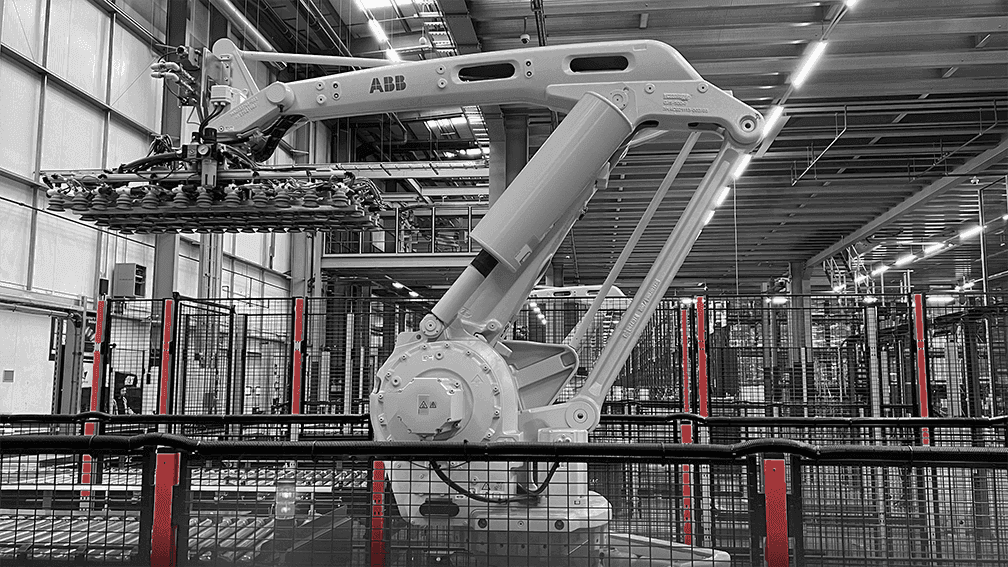
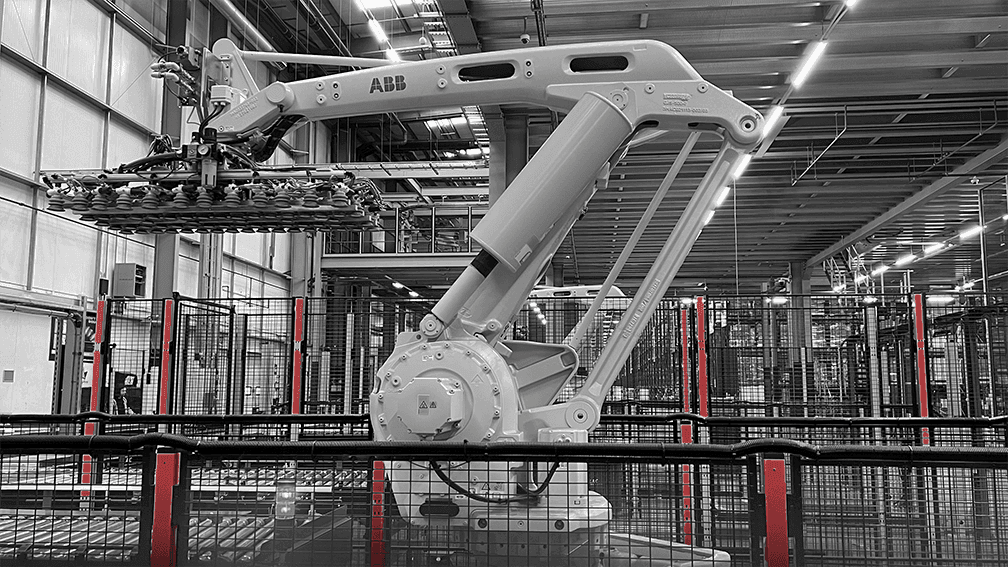
Engineers performing maintenance on an industrial robotic arm within a fenced robotic cell, highlighting downtime, system complexity, and maintenance requirements

The Payback Calculation

The return on investment for end-of-line automation is consistently one of the strongest available in warehouse and manufacturing automation. For a facility running two shifts with three manual palletisers per shift, the annual fully loaded labour cost typically exceeds £250,000. A robotic palletising cell with conveyor systems for infeed and outfeed, including installation and commissioning, frequently pays back within two to four years at this labour level.

The financial case strengthens further when reduced absence costs, lower agency fee dependency, more consistent quality control, and the throughput uplift from consistent palletising and case packing rates are included. With National Living Wage and employer National Insurance increases continuing to lift the cost of every manual hour, the payback window for end-of-line automation is shortening with every wage review.¹

A Sustained Reduction in Physical Risk

Reducing manual handling at end of line is one of the clearest examples of automation delivering benefits simultaneously to the workforce, the operation, and the business case. Businesses that move away from manual palletising and manual case packing, whether through full End-of-Line automation or a phased approach starting with ergonomic intervention, consistently report lower absence rates, higher throughput consistency, and a financial return that supports continued investment in further automation.

At MotionTech, our integrated approach to robotics, conveyors, and end-of-line automation combines the engineering capability to specify the right system with the project delivery experience needed to integrate it into live production lines. Speak to our team to scope an end-of-line automation programme tailored to your facility.

Industrial robotic palletising system integrated with motorised roller conveyors at the end of a production line.

References

  1. Food and Drink Federation, State of Industry Report Q1 2025, on UK food and drink manufacturers' automation investment plans and the £14 billion productivity opportunity for the sector. fdf.org.uk
  2. Health and Safety Executive, Key Figures for Great Britain 2024 to 2025, on UK musculoskeletal disorder rates, working days lost, and the total cost of workplace injury and ill health. hse.gov.uk