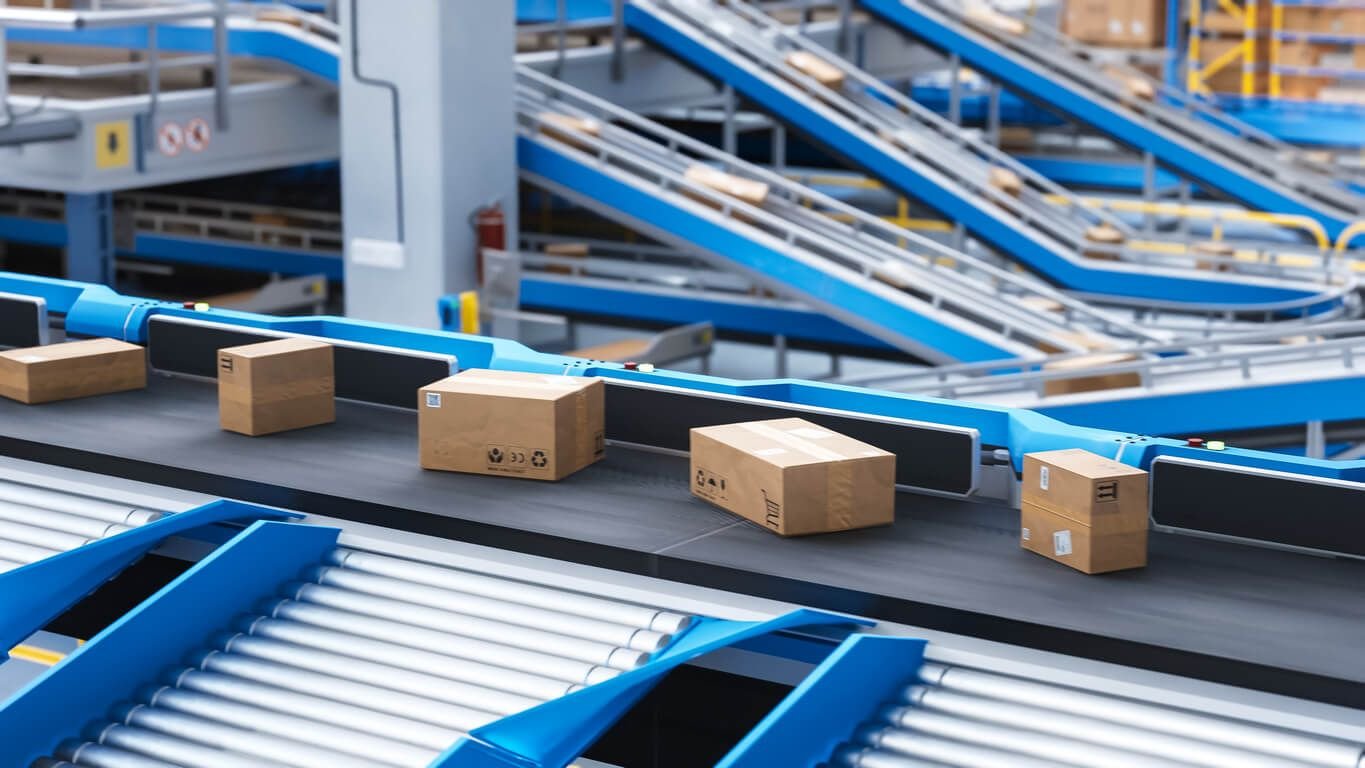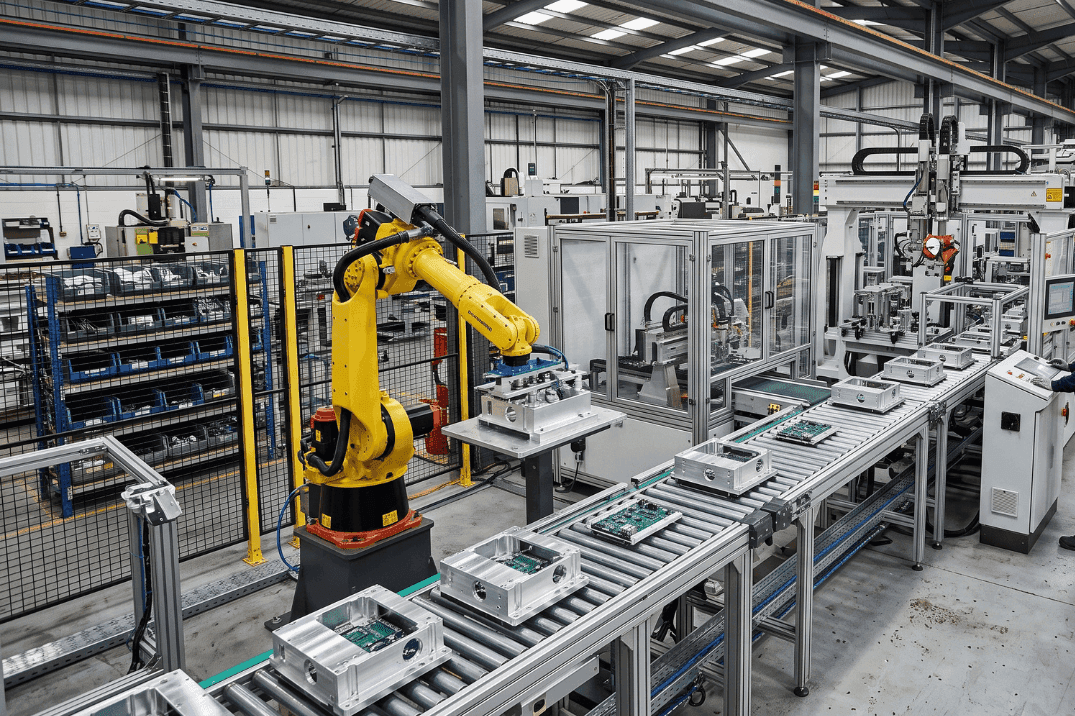
Automated production line featuring an industrial robotic arm and roller conveyor transporting components through a manufacturing facility.

Production Line Automation: When to Automate (and When to Wait)

Across UK manufacturing, the pressure to do more with less has never been more acute. Labour shortages, rising operational costs, and growing demand for faster, more consistent output are pushing businesses to ask a fundamental question: when to automate a production line, and when to hold back.

As industrial automation becomes central to a competitive manufacturing process, getting the timing right is not simply about budget availability; it is about identifying the operational conditions that make automation a sound, long-term investment rather than a premature or reactive spend.

In short: the right time to automate is when high-volume repetitive tasks, persistent labour shortages, quality defects from human error, or a clear bottleneck are limiting output, and the process itself is stable enough to justify the investment.

Signs It's Time to Automate a Production Line

Not every inefficiency on a production line points to an automation problem. Some issues are process-related; others stem from workforce structure or layout. But certain patterns, when they persist, are reliable indicators that automation is the appropriate response. Understanding when to automate a production line, and where it will lift production line efficiency, starts with reading those signals clearly.

Automate now when
  • Tasks are high-volume, repetitive and low-variation
  • Roles are consistently hard to fill
  • Output demand is outpacing viable headcount
  • Human error drives consistent quality defects
  • A single manual stage bottlenecks the line
  • The process is stable enough to justify it
Hold off when
  • Product variability is high with frequent changeovers
  • Volumes are irregular or unpredictable
  • The process itself is still changing
  • A flexible or human-operated line with targeted tooling fits better for now

Understanding when to automate a production line, and where it will lift production line efficiency, starts with reading those signals clearly:


Consistent Labour Shortfalls

Roles that are repeatedly difficult to fill, particularly those involving repetitive, physically demanding, or hazardous tasks, signal a structural gap that automation is well-positioned to close.

Volume Growth Outpacing Headcount

When output targets are rising but scaling the workforce is not viable, automated systems offer a scalable route to increased throughput without proportional increases in staff.

High Error and Rework Rates

Production processes where human error is causing quality defects at a consistent rate are strong candidates for automation, particularly where precision, repeatability, and quality control are critical.

Bottlenecks at Specific Stages

A single manual operation that holds up the rest of the line is often the most straightforward case for targeted automation.

Start With High-Volume, Repetitive Processes

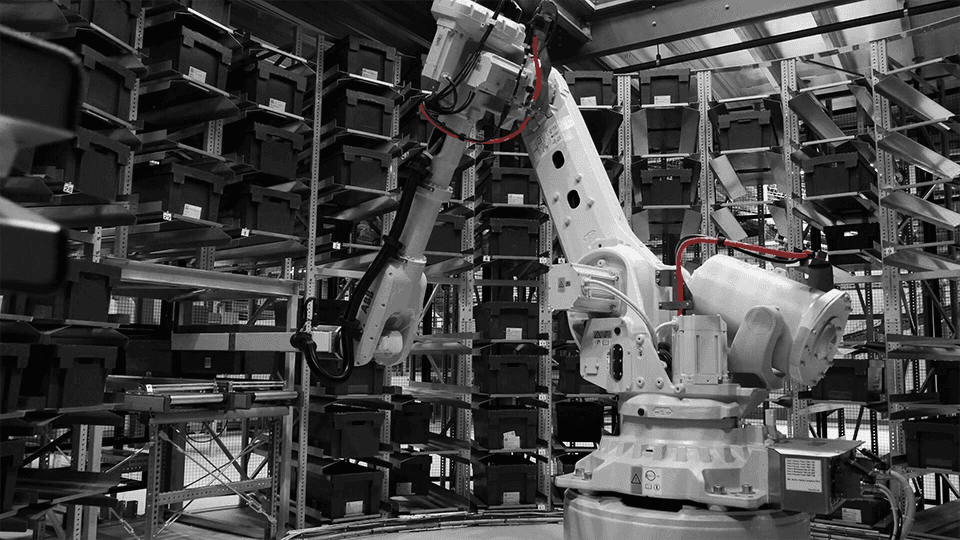
The most compelling case for production line automation arises where tasks are high in volume, low in variation, and physically repeatable. Conveyor systems, robotic pick-and-place units, palletising robots, robotic cells, and automated assembly stations all perform well in these conditions, and larger operations increasingly add automated storage and retrieval systems (ASRS) and automated guided vehicles (AGVs) to link them. When to automate a production line is often answered by looking at where workers are performing the same action hundreds or thousands of times per shift. These environments carry high ergonomic risk and low cognitive demand, making them ideal for automated production lines and industrial robotics, yet difficult to sustain through manual labour alone. On an assembly line built for high-speed processing, that consistency is exactly where mechanised systems excel.

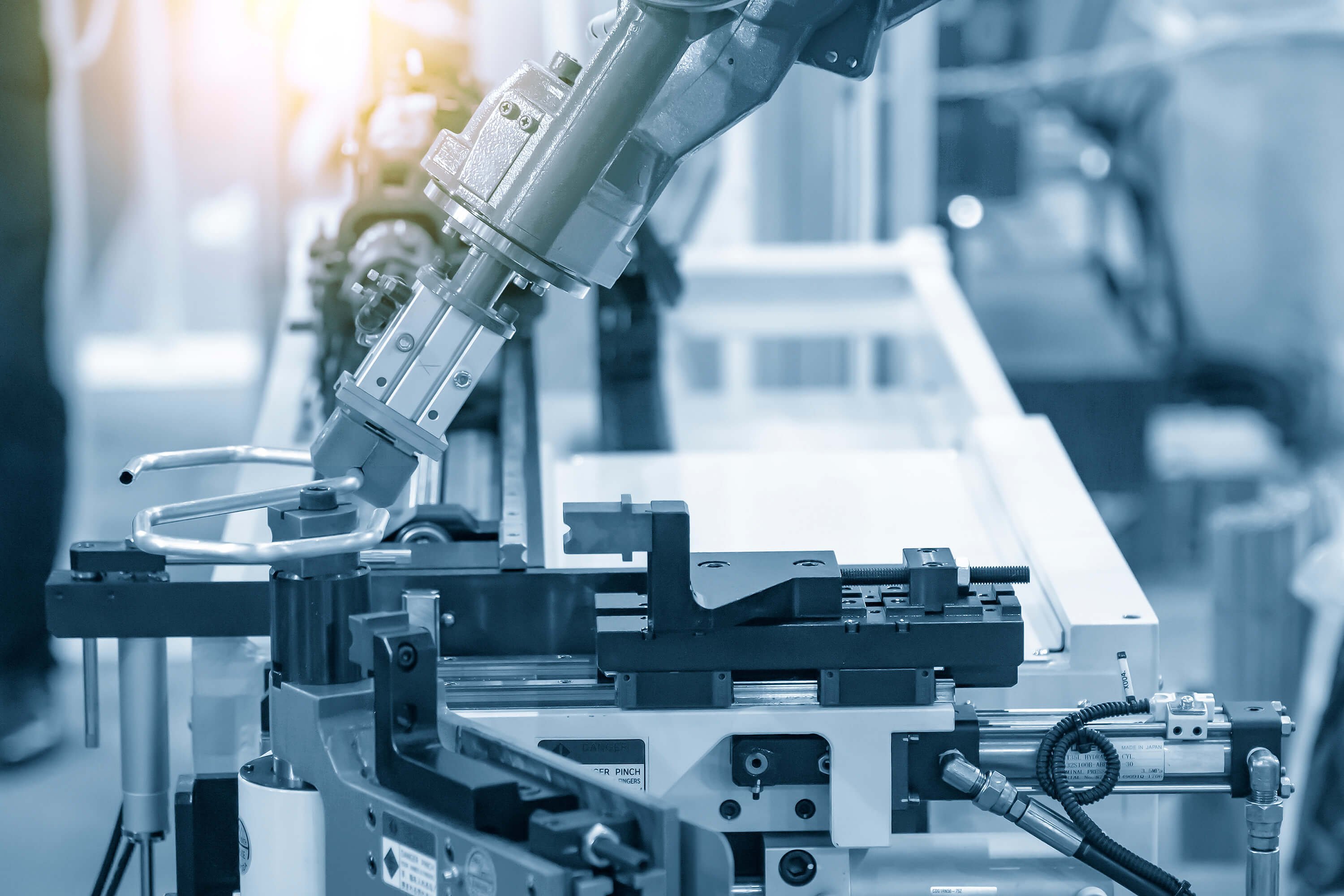
Industrial robotic arm performing automated pick and place operations on metal components moving along a conveyor system.

When Quality Standards Leave No Margin for Error

Industries operating under tight regulatory frameworks, including the food industry, pharmaceuticals, and automotive components, face quality requirements that make human variability a liability. Automated inspection systems, vision systems, vision inspection, and precision dispensing equipment deliver consistent output at tolerances that manual processes simply cannot match at scale, with minimal human intervention. Businesses in these sectors often find that the question of when to automate a production line is answered not by financial modelling alone, but by compliance obligations, the protection of product quality, and the customer satisfaction that consistent output sustains.

Matching the Automation Type to the Process

Choosing when to automate is closely tied to choosing what kind of automation to deploy:

Fixed (hard) automation

Purpose-built for stable, high-volume tasks that rarely change. Highest throughput, least flexibility.

Flexible (soft) automation

Reprogrammable systems, including collaborative robots, suited to variable product mixes and frequent changeovers.

Intelligent automation

Combines robotics with vision and data to adapt in real time, bridging rigid and flexible approaches.

Assessing the Business Case: Key Factors to Evaluate

Identifying the right moment to invest requires a structured assessment of production data, not just intuition.

Quantify before you decide
Labour cost trajectory across a 5 to 10 year horizon, including wage inflation and recruitment overhead
Cycle time benchmarks versus the rates required to meet demand
Defect and waste costs from quality failures, rework and material waste
Downtime frequency from human-related stoppages, absence, fatigue and error recovery
Payback period, typically two to five years for most production line automation projects

The following factors should be quantified before a decision is made:


Labour Cost Trajectory

Project current direct and indirect labour costs forward across a five to ten year horizon, factoring in wage inflation and recruitment overhead.

Cycle Time Benchmarks

Measure the gap between current output rates and the rates required to meet demand or contracted volumes.

Defect and Waste Costs

Calculate the tangible cost of quality failures, rework, and material waste attributable to the process under review.

Downtime Frequency

Identify how much production time is lost to human-related stoppages, including absence, fatigue, and error recovery.

Payback Period

A robust solution should deliver a clear payback calculation, typically two to five years for most production line automation projects.

When Automation Is Not Yet the Right Answer

Knowing when to automate a production line also means knowing when not to. Processes with high product variability, irregular volumes, or frequent changeovers can undermine the efficiency gains automation is intended to deliver. Where the product mix is wide and changing rapidly, flexible automation and soft automation approaches, or human-operated lines with targeted tooling, may outperform rigid fixed automation or hard automation in the near term. Automation committed to a process that is itself subject to change can quickly become a constraint rather than an enabler.

Building a Case for Long-Term Operational Resilience

The decision of when to automate a production line is ultimately a question of strategic fit as much as financial return. Businesses that automate at the right moment, against the right processes, with a clear understanding of their production data, gain not only efficiency but long-term resilience. 

From protecting production capacity against demand growth to reducing dependency on a constrained labour market, manufacturing automation represents one of the most durable investments available to UK manufacturers. Aligning automation solutions with clear production goals is what turns a one-off project into lasting competitive advantage.

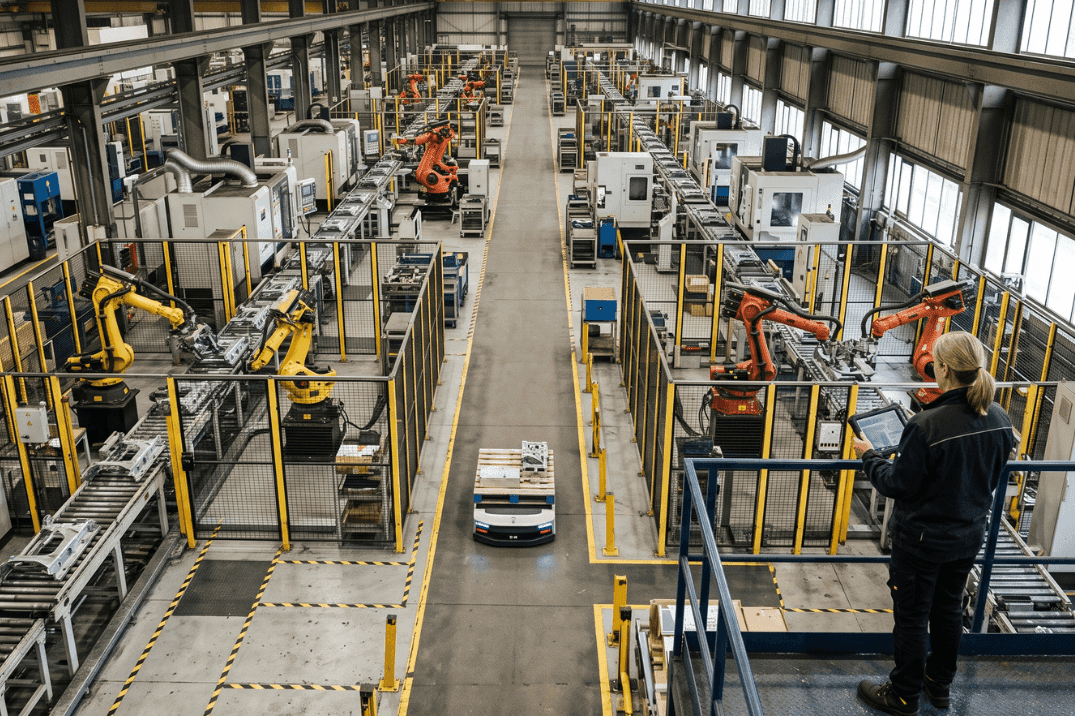
Large automated manufacturing facility with robotic arms, conveyor systems and an autonomous mobile robot supporting production line automation.

See where automation would deliver the most

We help UK manufacturers identify the right processes to automate, at the right moment, backed by your production data.

Speak to a specialist

Frequently Asked Questions