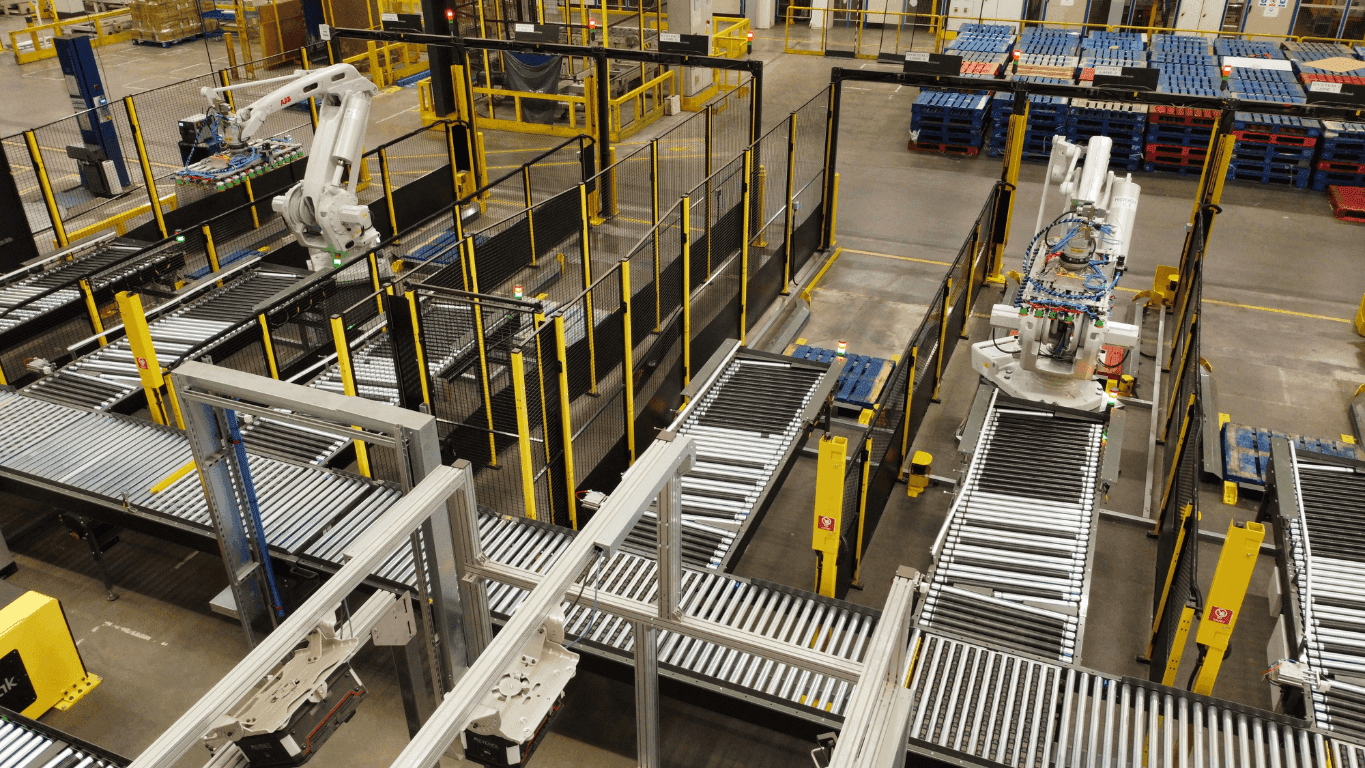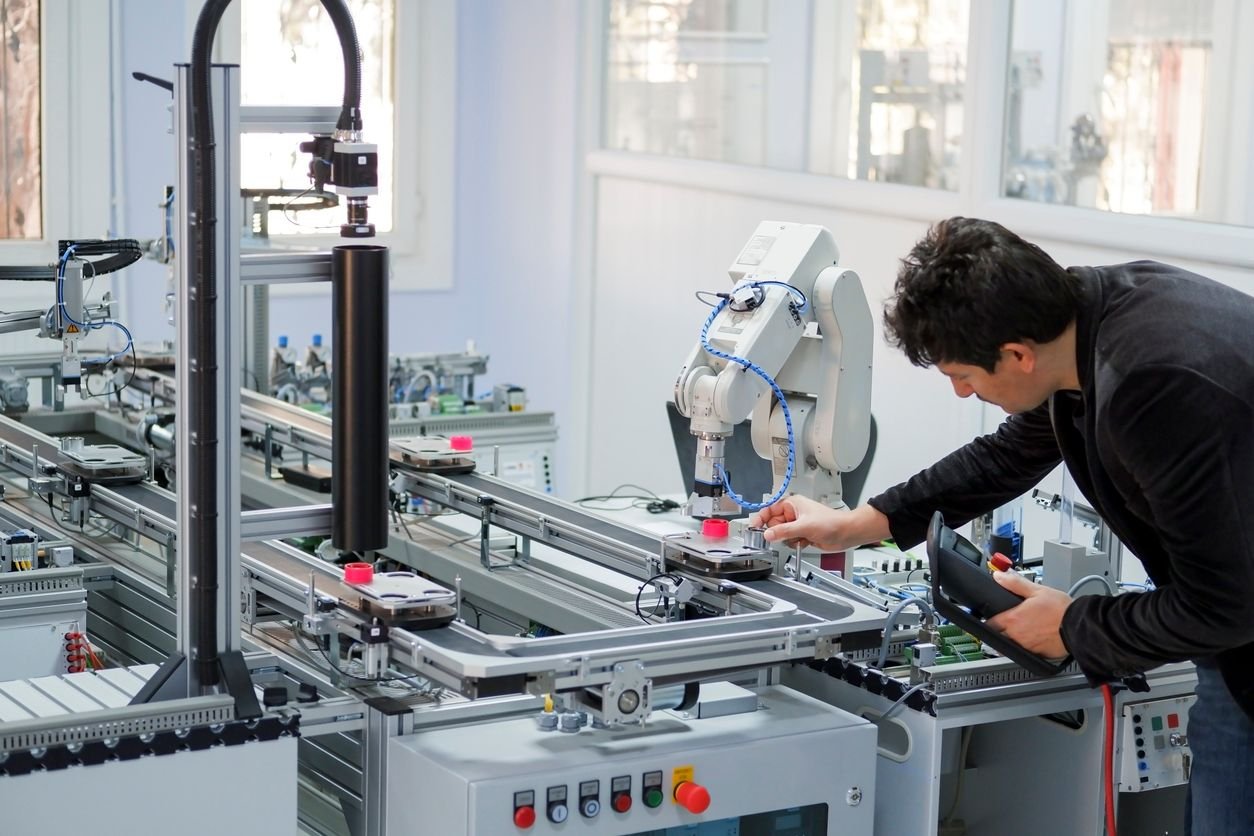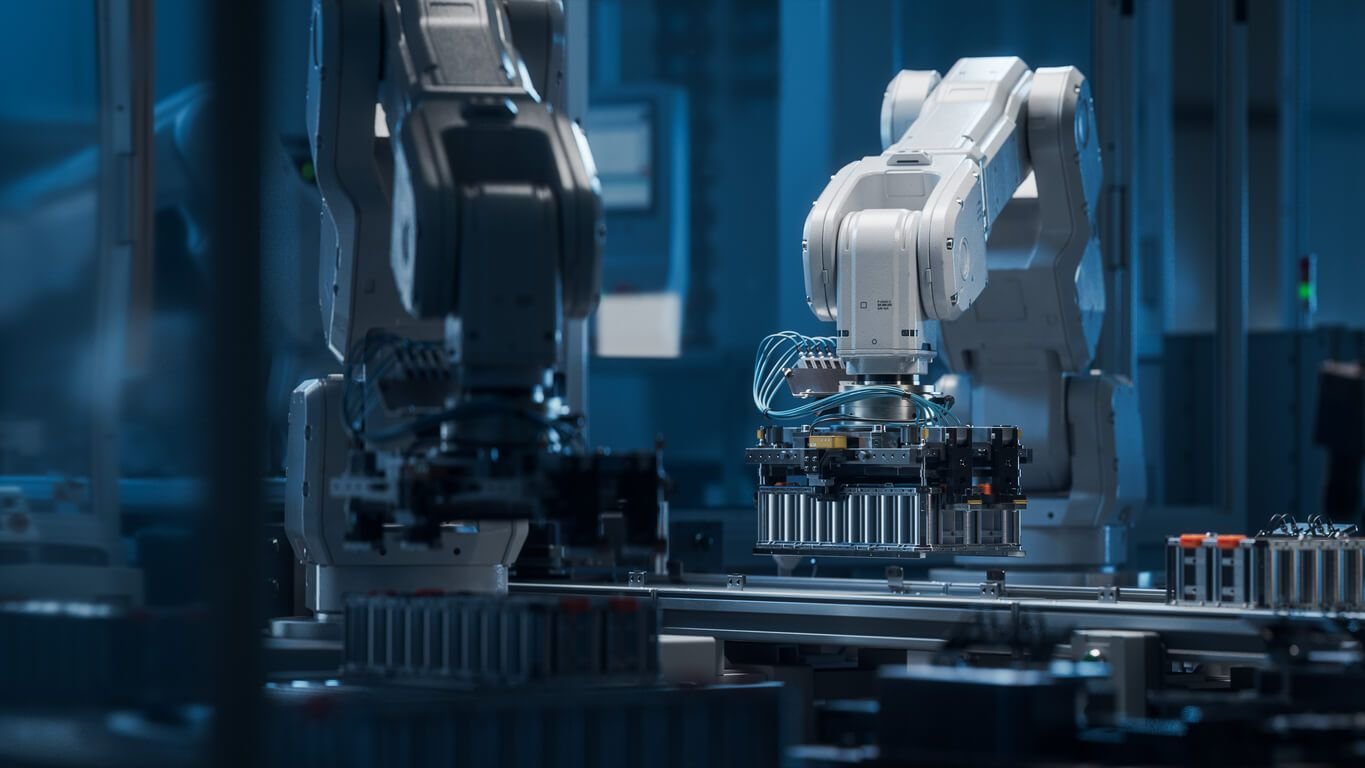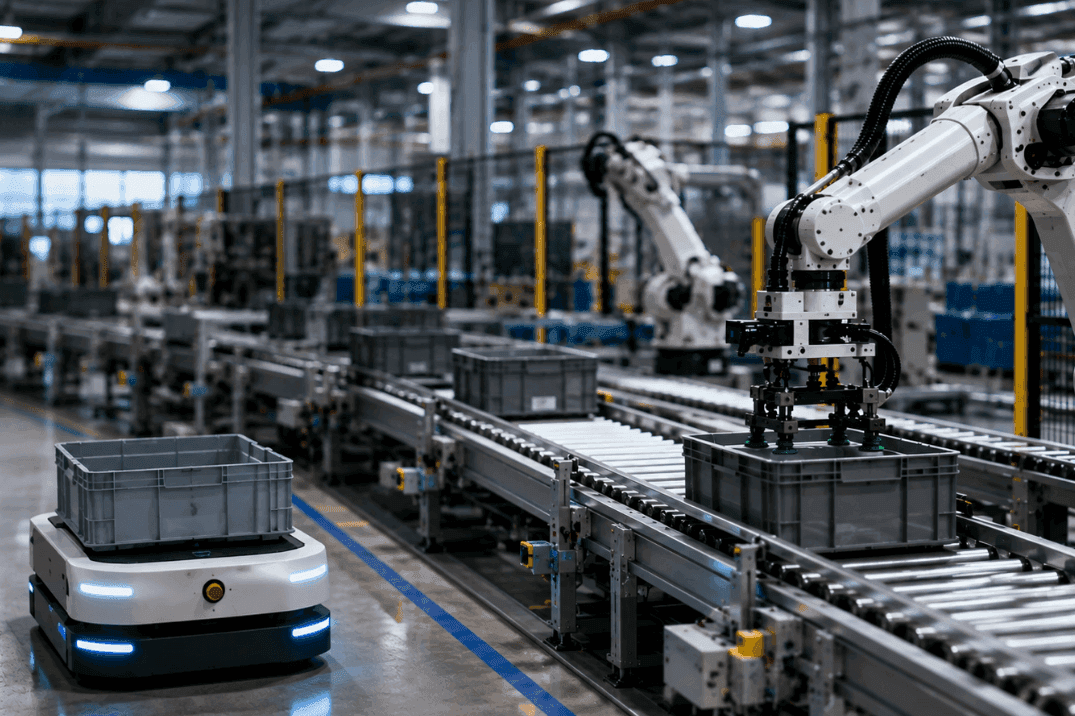
Robotic arms and an AMR integrated with an automated conveyor system in a modern manufacturing facility.

Robot Payload & Reach: How to Spec a Robot Cell

Robot payload and working reach are the two specifications that decide whether a robot cell delivers or disappoints, and both are easy to underestimate.

This guide explains what each one means, why tooling weight and moment of inertia matter, and how to specify a cell with confidence.

Key Takeaways

✓

Payload is capacity at full reach: it covers the gripper and all tooling, not just the product.

✓

Effective reach is shorter than the datasheet: the working envelope shrinks once tooling, product size and approach angles are added.

✓

Tooling eats into payload: end-of-arm tooling can consume much of the rated capacity, so design against real loads.

✓

Inertia matters as much as mass: moment of inertia and centre-of-gravity offset drive wrist-axis demand.

✓

Match the robot type to the task: from palletising and material handling to robotic welding.

What Does Robot Payload Actually Measure?

Robot payload, sometimes called handling capacity, is the maximum mass an industrial robot can carry at full extension while maintaining its rated speed, accuracy, and service life. The figure quoted on a datasheet is a rated capacity, not a target to design against. It includes everything mounted beyond the wrist flange: the gripper, vacuum generator, tool changer, sensors, cabling, and the product itself.


This distinction matters because end-of-arm tooling can account for a considerable share of available capacity. A vacuum gripper sized for a mixed-case pallet layer might weigh 25 kg before a single carton is lifted. Specifying a 50 kg robot for a 30 kg product leaves no usable margin once tooling is accounted for.

Machine tending robot operating a CNC machine while a skilled operator monitors the automated production cell.

Why Moment of Inertia Matters as Much as Mass

Mass alone does not determine whether a robot can handle a load. The distance between the load’s centre of gravity and the wrist centre creates a moment that the wrist axes must resist throughout the motion path. Two products of identical weight can present very different demands depending on how the tooling holds them.


Manufacturers publish permissible load diagrams for exactly this reason: they define the acceptable relationship between mass, offset, and inertia for each wrist axis. Exceeding those limits does not always cause immediate failure. More often it accelerates gearbox wear, degrades repeatability, and forces speed reductions that quietly erode the throughput the cell was purchased to deliver.

By the numbers

~4 m

reach of six-axis articulated robots

>1 t

top payload of large six-axis robots

<5 kg

typical delta robot payload

25 kg

example gripper weight before any load

Matching Reach to the Working Envelope

Reach is the distance from the robot’s base to the wrist centre at full extension, and it defines the working envelope in which the cell can operate. Effective reach is always shorter than the quoted figure once tooling geometry, product size, and approach angles are considered.


Robots also lose performance near the edges of their envelope: accuracy falls, singularities become more likely, and joint speeds must drop to maintain control. Sound practice places infeed, outfeed, and drop points within the middle of the envelope, leaving margin at the extremes.

Industrial Robot Palletising System

What Reduces Usable Reach


Vertical Reach

Palletising cells must clear the top of a full pallet plus slip sheet and tooling height, which often drives robot selection more than horizontal distance.

Approach Angles

Products presented at an angle, or picked from within a container, require additional joint articulation and reduce usable reach.

Interference Zones

Guarding, columns, conveyor frames, and neighbouring equipment restrict the envelope and must be modelled before selection rather than after.

How Robot Payload and Reach Vary by Robot Type


Different kinematic configurations of industrial robots offer different balances of robot payload, reach, and speed:

Six-Axis Articulated Robots

The most flexible option, with payloads from a few kilograms to well over a tonne and reach approaching 4 m. Suited to palletising, robotic welding, and machine tending, and the workhorse of the automotive industry.

SCARA Robots

Fast and precise in a horizontal plane, with low payloads and limited reach. A strong fit for high-speed assembly and small-part handling.

Delta Robots

Very high cycle rates across a compact working area, with payloads usually under 5 kg. Used widely in food & beverage primary packing.

Collaborative Robots

Lower payload and slower joint speeds, but able to operate alongside people without full guarding, which reduces the cell footprint.

The Cost of Overspecifying Robot Payload

Selecting the wrong configuration is a more expensive mistake than selecting the wrong size within the right configuration.


Oversizing a robot is often treated as the safe default, but it carries real penalties. Heavier robots need stronger mounting, larger safety envelopes, and more energy per cycle, and they cost more to buy and maintain. A cell built around a genuine duty analysis, covering peak mass, tooling weight, cycle time, and duty cycle across a full shift, delivers better long-term value than one built around a generous guess.

Specifying a Robot Cell with Confidence

As robotic adoption continues to widen across UK industry, the operations seeing the strongest returns are those treating robot payload and reach as engineering inputs rather than purchasing line items. A cell specified against measured loads, realistic tooling weights, and simulated cycle times delivers the throughput, reliability, and enhanced safety the business case assumed.


Speak with a specialist to review your application data before any equipment is selected.

Spec your robot cell with confidence

We size payload, reach and tooling against your real application data, before any equipment is chosen.

Speak to a specialist

Robot Payload & Reach FAQs