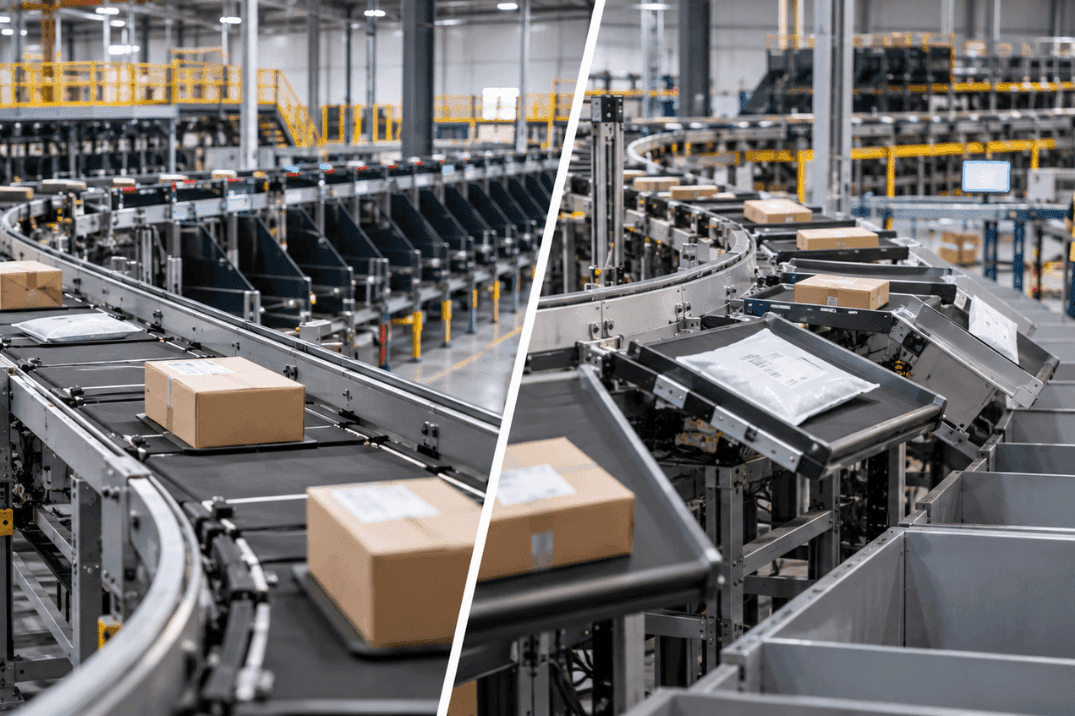
Split tray sorter induction

Sorter Induction: Getting Parcels Onto the Sorter Reliably

A high-speed sorter’s real-world performance rarely depends on the sorter itself. It is decided at the point where parcels are placed onto it. As UK parcel volumes keep climbing with e-commerce and reshape fulfilment expectations, sortation operations specify ever-faster sorters to absorb the volume, yet the real ceiling is set earlier. Sorter induction, the process of feeding items onto a parcel sorter in the correct position, orientation, and spacing, is the single largest influence on the sustained throughput and accuracy of any sortation system.

Key points

✓Sorter induction is the controlled placing of parcels onto a sorter in the right position, orientation and spacing.
✓It, not the sorter’s rated speed, usually decides the real throughput and accuracy of the whole sortation system.
✓Induction methods range from manual to semi-automatic, fully automatic and robotic induction systems.
✓Most induction problems start upstream: doubles, barcode no-reads, non-conveyable items and uneven supply.
✓A modular design lets induction capacity scale with seasonal peaks without redesigning the sorter loop.

What Is Sorter Induction?

Sorter induction refers to the controlled transfer of parcels from an upstream feed line onto the carriers of a sorting machine, whether that machine is a cross-belt, tilt-tray, or sliding-shoe sorter. 


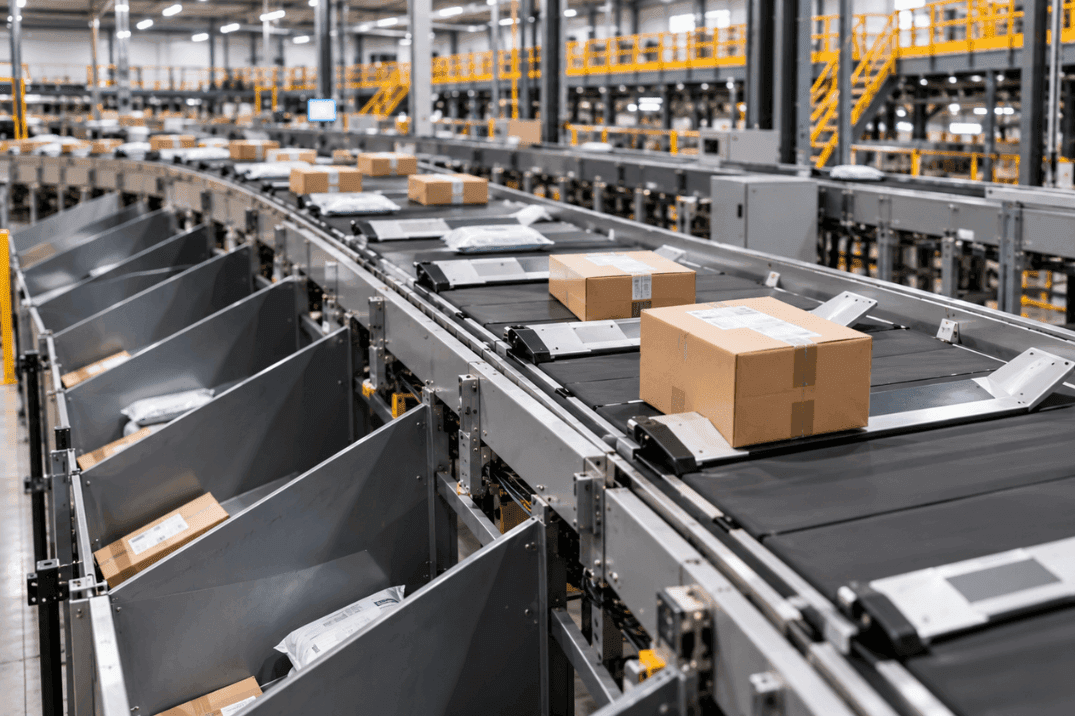
Each carrier arrives at a fixed pitch and a fixed speed, so every parcel must be released into a precise window. Induction lines therefore combine acceleration belts, gapping conveyors, scanning arrays, and control logic that calculates release timing in real time. If that timing is wrong, the parcel straddles two carriers, misses its window entirely, or is rejected downstream.

Sorter induction system scanning and spacing parcels before transferring them onto a high-speed sorting conveyor.

Why Sorter Induction Governs Real Throughput


A sorter rated at 10,000 items per hour only achieves that figure if the induction lines can supply it correctly. Rated capacity describes the mechanical limit; sorter induction describes the practical one. Several factors determine how much of that theoretical capacity is actually realised:

Pitch Utilisation

Every carrier that passes empty because no parcel was ready represents lost capacity that cannot be recovered later in the shift.

Read Rate

An item that fails to scan cannot be assigned a destination, so it is either diverted to a no-read lane or recirculated, consuming a second carrier.

Gap Consistency

Uneven spacing between parcels forces the control system to skip windows defensively, reducing effective throughput even when volume is available.

Recirculation Load

Items that miss their chute return to the induction point, competing with new volume and compounding congestion during peak periods.

These factors interact, which is why induction performance is measured as a system rather than as an isolated conveyor section.

Common Types of Sorter Induction


The appropriate induction method depends on parcel profile, volume, and shift patterns. The most widely deployed approaches include:

Manual Induction

Operators place items onto a metering belt from a feed conveyor or tote, offering flexibility for varied products but limiting each station to a practical ceiling of around 1,500 to 2,000 items per hour.

Semi-Automatic Induction

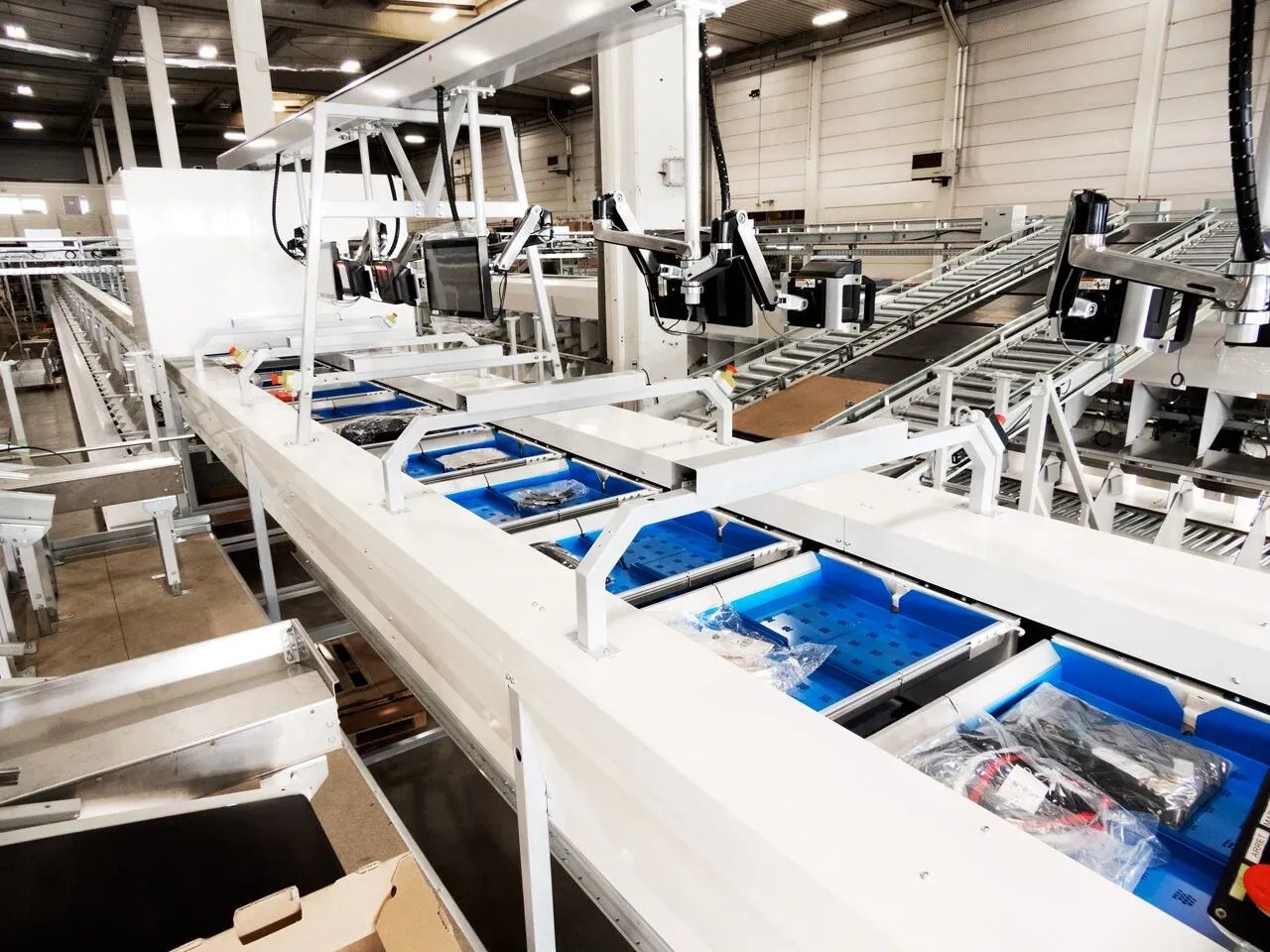
Operators present items in the correct orientation while the system controls gapping, scanning, and release, improving consistency without removing human judgement for awkward loads.

Fully Automatic Induction

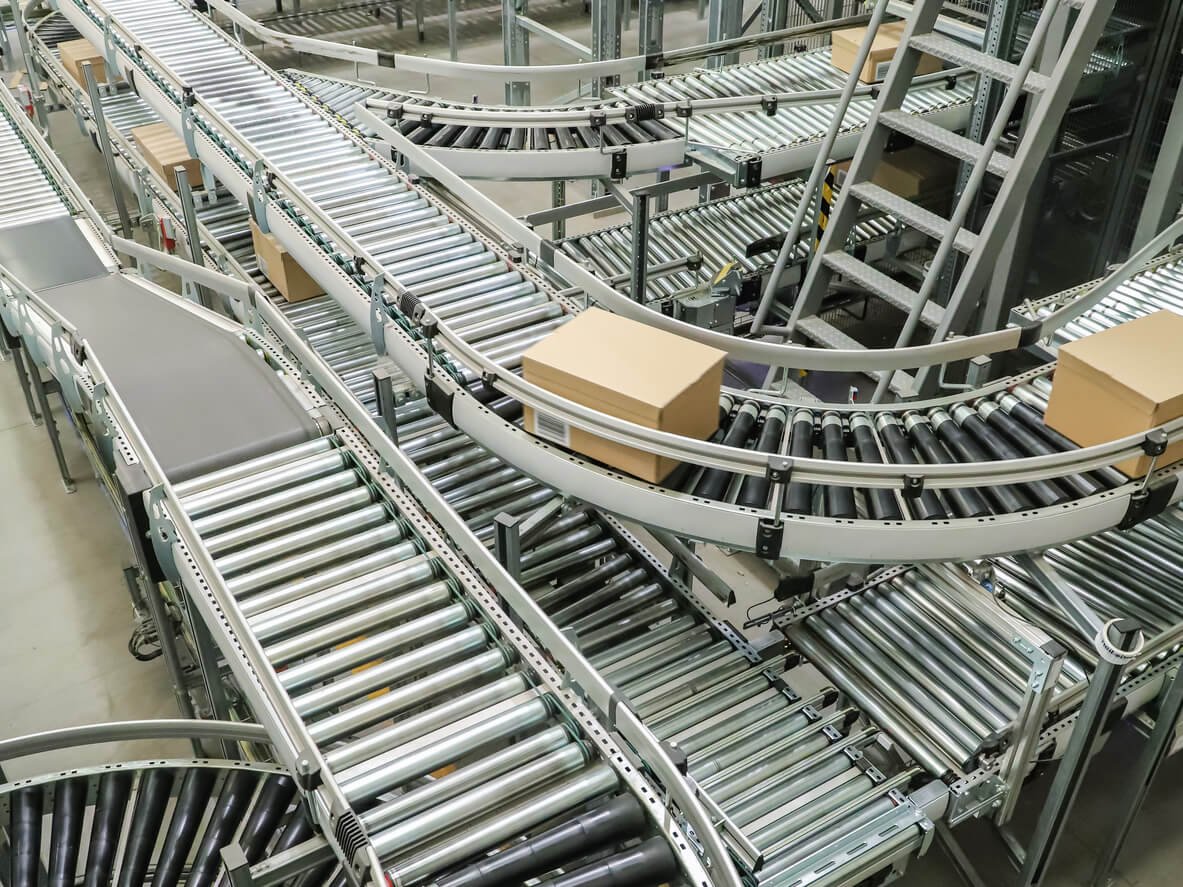
Upstream singulation and alignment conveyors deliver items in single file, with vision and dimensioning systems handling identification and the controls managing release without operator intervention.

Robotic Induction

Vision-guided robotic induction systems pick items from a bulk flow or tote and place them directly onto carriers, suited to operations facing labour shortages across multiple shifts.

By the numbers
10,000/hr
Typical sorter rated capacity
1,500-2,000/hr
Manual induction ceiling per station
No.1
Biggest influence on real throughput
4
Induction methods, manual to robotic

Where Sorter Induction Reliability Breaks Down


Most induction problems are not mechanical failures. They are the accumulated effect of upstream conditions that the induction line was never designed to absorb:

Doubles and Shingled Parcels

Overlapping items arriving from a bulk flow conveyor are read as a single unit, causing one parcel to reach the wrong chute.

Barcode Read Failures

Labels that are creased, wrapped around an edge, or facing downwards defeat fixed scanner arrays, driving no-read rates upward.

Irregular and Non-Conveyable Items

Soft polybags, long items, and parcels below minimum footprint tend to shift during acceleration and land inaccurately on the carrier.

Inconsistent Upstream Supply

Induction lines starved by an unbalanced feed cannot maintain gap discipline, and surges create queues that stall the whole line.

Addressing these conditions upstream, through singulation, dimensioning, and label placement standards, delivers more improvement than increasing sorter speed.

Integrating Sorter Induction with the Wider System

Sorter induction does not operate in isolation. It sits between upstream decant, unloading, or pick processes and downstream chute, bagging, or loading operations, all coordinated by a warehouse control system that tracks each item from scan to discharge. From automated trailer unloading through to dimensioning and weighing, upstream conveyor and sorting technology exists specifically to present a clean, single-file flow to the induction point. Where volumes fluctuate seasonally, a modular design of induction stations allows capacity to be added without redesigning the sorter loop, giving operations a scalable route to higher throughput.

Designing Reliability Into Sorter Induction

As parcel profiles continue to diversify and volume peaks become sharper, sorter induction will remain the deciding factor in whether a sortation investment delivers its rated performance. 


Treating induction as an engineered subsystem, rather than a length of conveyor feeding a sorter, is what protects throughput, accuracy, and long-term operational efficiency. Speak with a sortation specialist to review how an induction design would perform against your parcel handling mix.

Automated conveyor induction system controlling parcel spacing and feeding mixed packages into a high-speed sortation line.

Design a tailored integration approach

We design integration around your existing lines, control systems, and long-term automation roadmap.

Speak to a specialist

Frequently Asked Questions