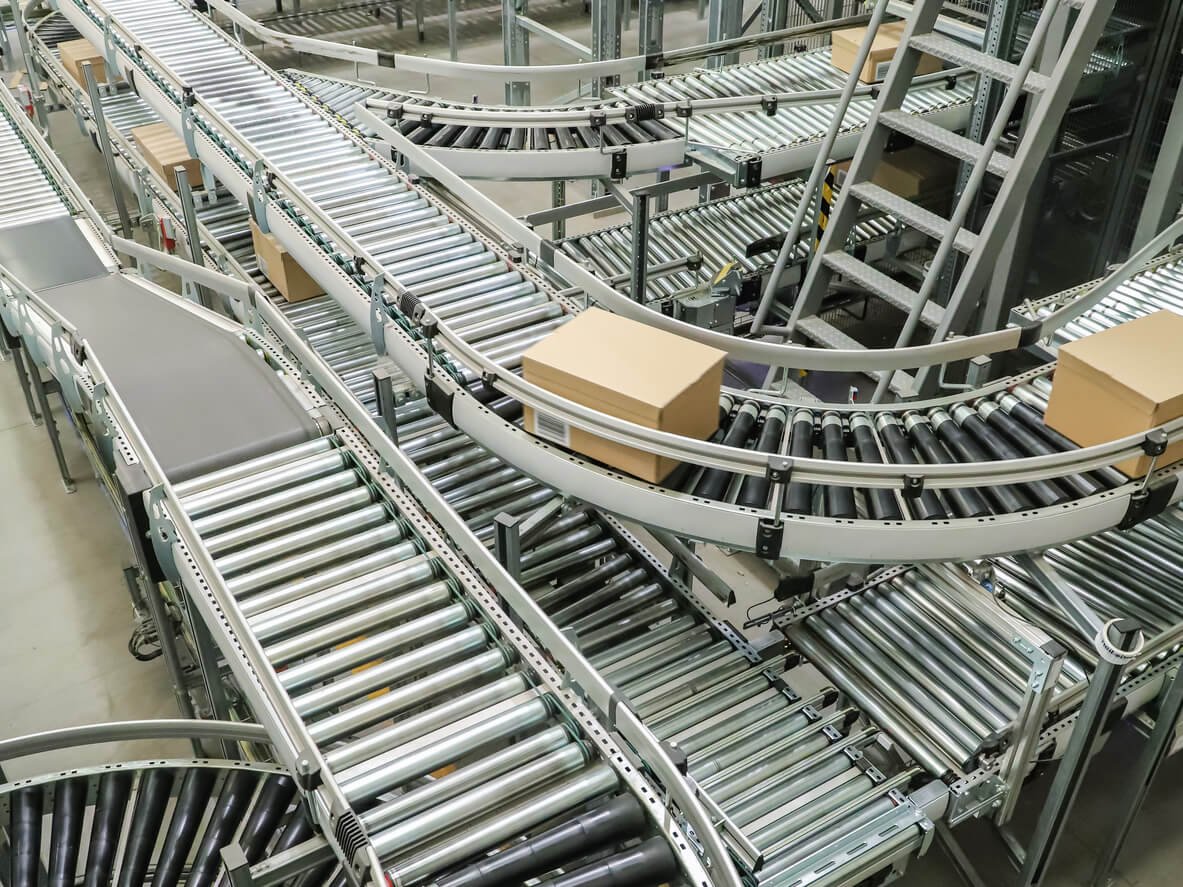
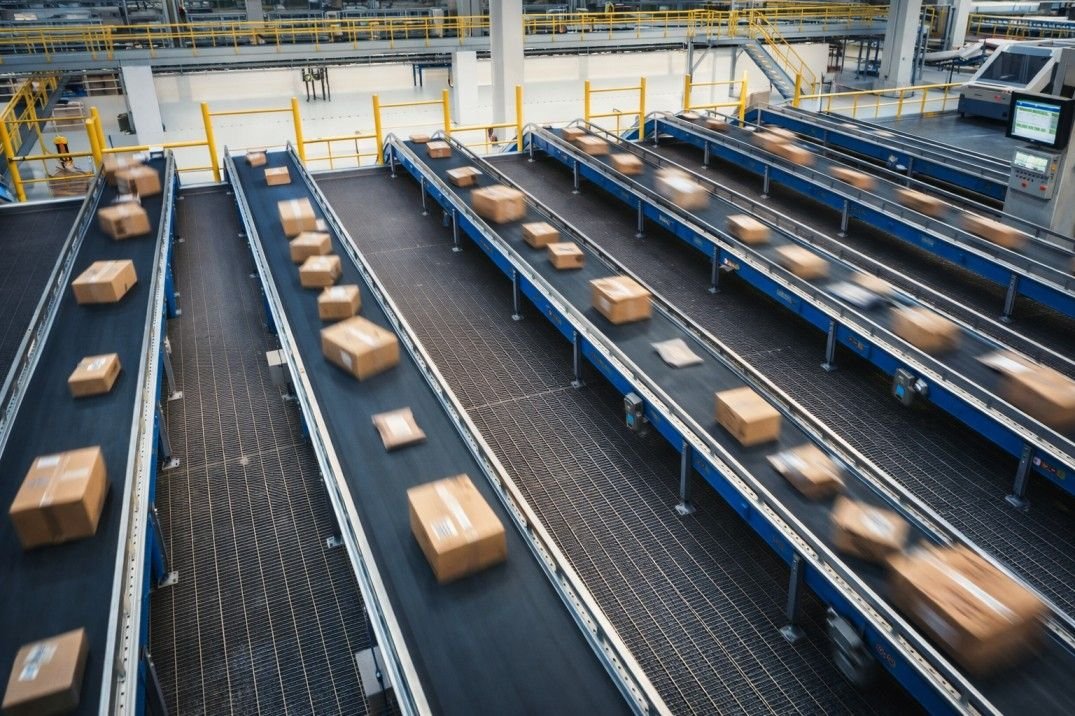
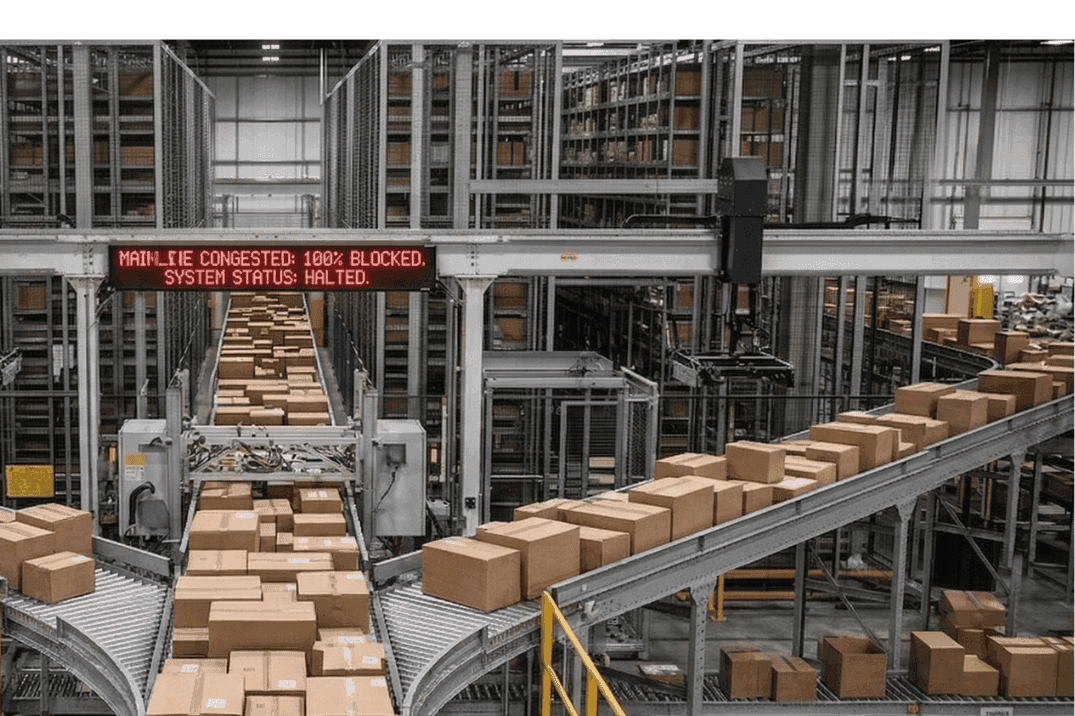
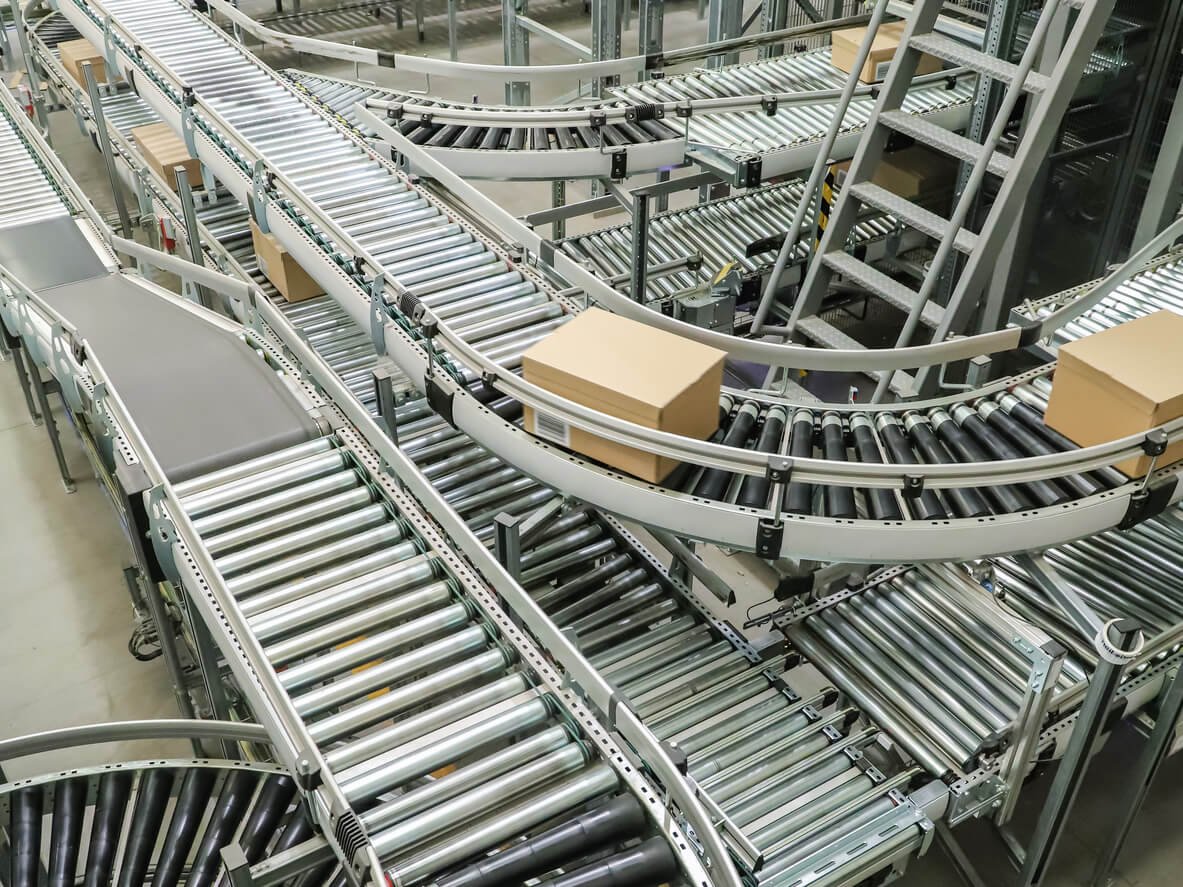
As input rates rise, the merge becomes a throttle point, and throughput plateaus or even declines as products queue upstream. Divert points exhibit similar behaviour, particularly when multiple destinations compete for products from the same trunk line.
This effect is especially visible in sortation conveyors and any sorting system where multiple destinations compete for limited discharge windows. The same principles apply in packaging industry applications, where an indexing conveyor or low-profile conveyor may be mechanically capable of higher rates, but the wider line cannot always absorb the added flow.
The Role of Product Variability in Conveyor Throughput Limitations
Uniform products on a conveyor behave very differently from mixed loads. Variations in size, weight, and orientation create inconsistent spacing, unpredictable accumulation, and irregular sensor triggering. This variability reduces the practical throughput of a system even when the mechanical components are capable of higher speeds.
Operations handling a wide range of SKU profiles often find that peak throughput figures achieved during commissioning bear little resemblance to sustained daily performance. The gap between theoretical and actual output is almost always wider than expected, and it grows as the product mix becomes more diverse.
Where fragile materials are involved, the throughput penalty can be even greater. Systems must often run with more conservative speed control, gentler transitions, and tighter spacing tolerances to protect product integrity. Under those conditions, the nominal capability of the conveyor matters less than the quality of flow control.
Why Faster Belt Speeds Do Not Always Increase Output
Increasing conveyor speed is one of the most intuitive responses to throughput pressure, but it frequently fails to deliver the expected results. Higher speeds amplify the effects of product instability, increase the likelihood of jams and misfeeds, and reduce the time available for sensors, diverts, and downstream processes to respond.
In many cases, slowing a conveyor section down can actually improve overall system throughput by reducing errors, improving accumulation behaviour, and allowing control logic to manage flow more effectively. This counterintuitive outcome is a direct consequence of the non-linear dynamics at play.
It also has direct implications for energy consumption, power consumption, and energy costs. Running faster does not always mean operating more efficiently. Poor belt tension, unstable load conditions, and badly matched speed control can increase energy demand while reducing usable output. In that sense, throughput optimisation is not only a matter of capacity, but of control and efficiency.