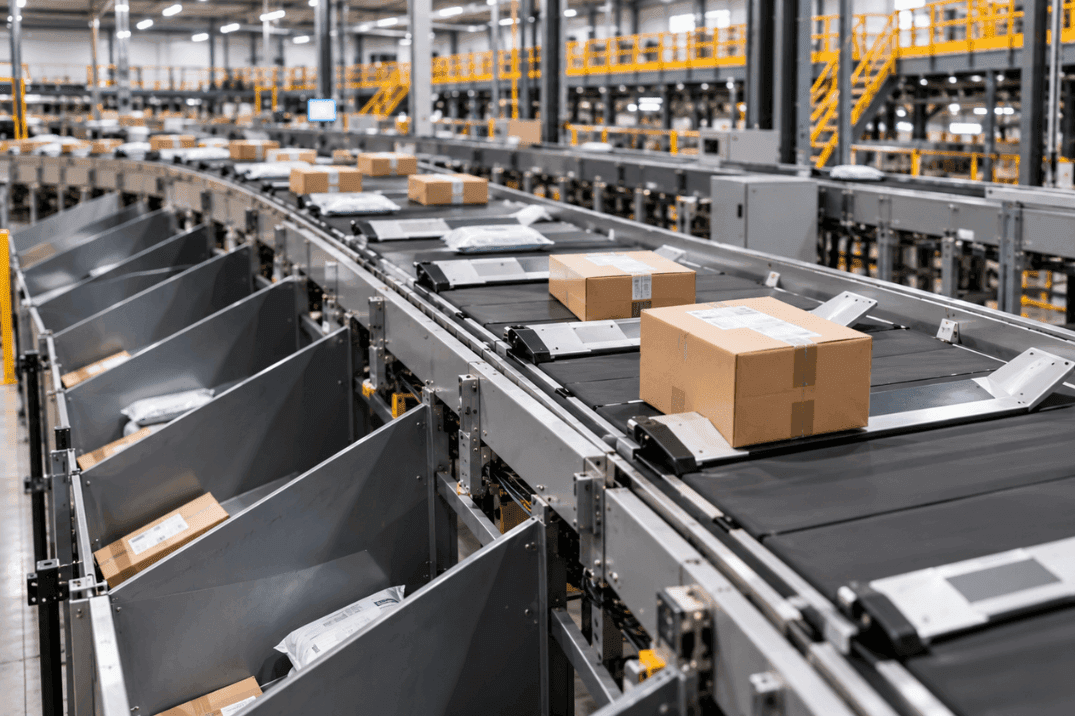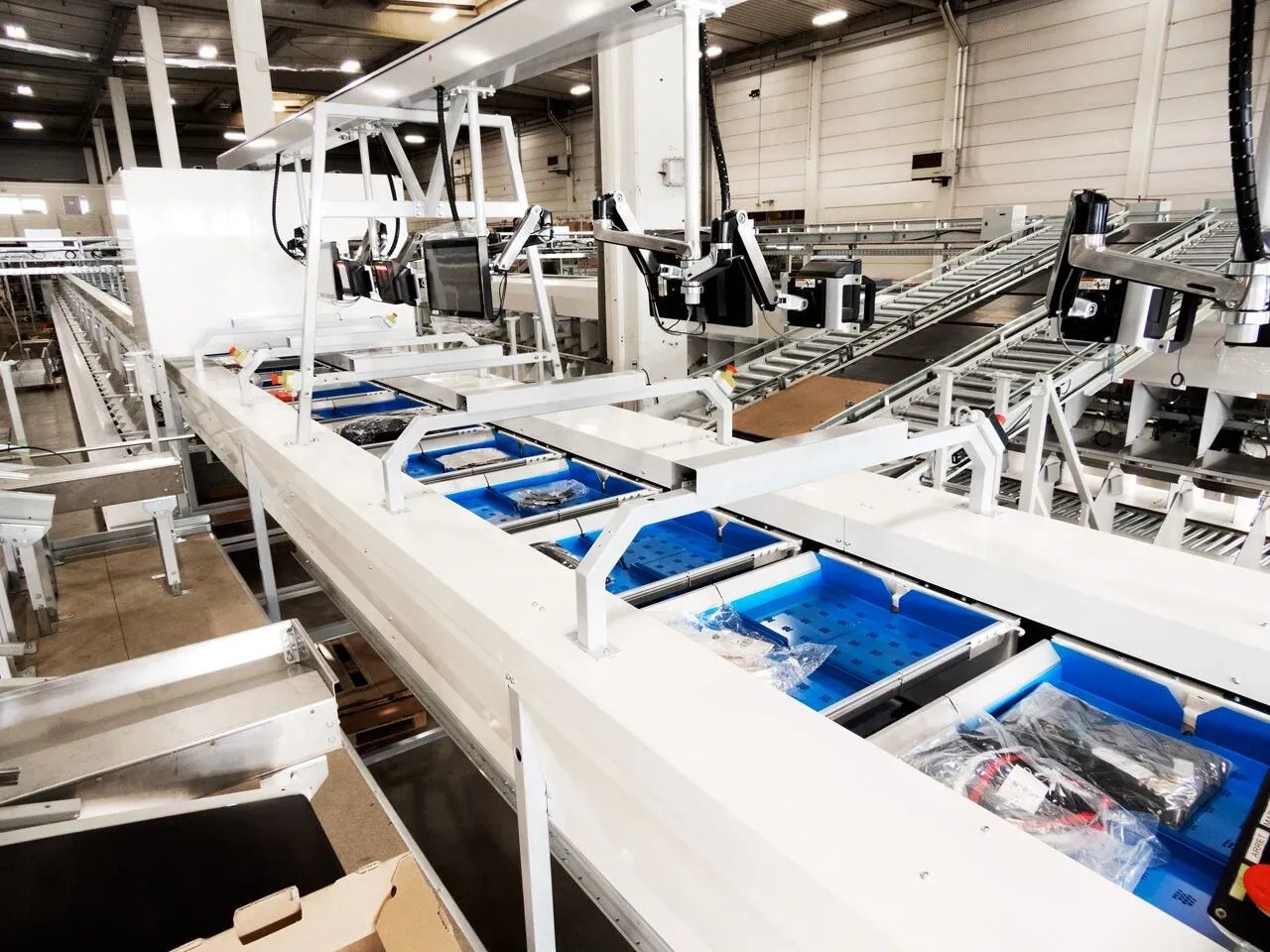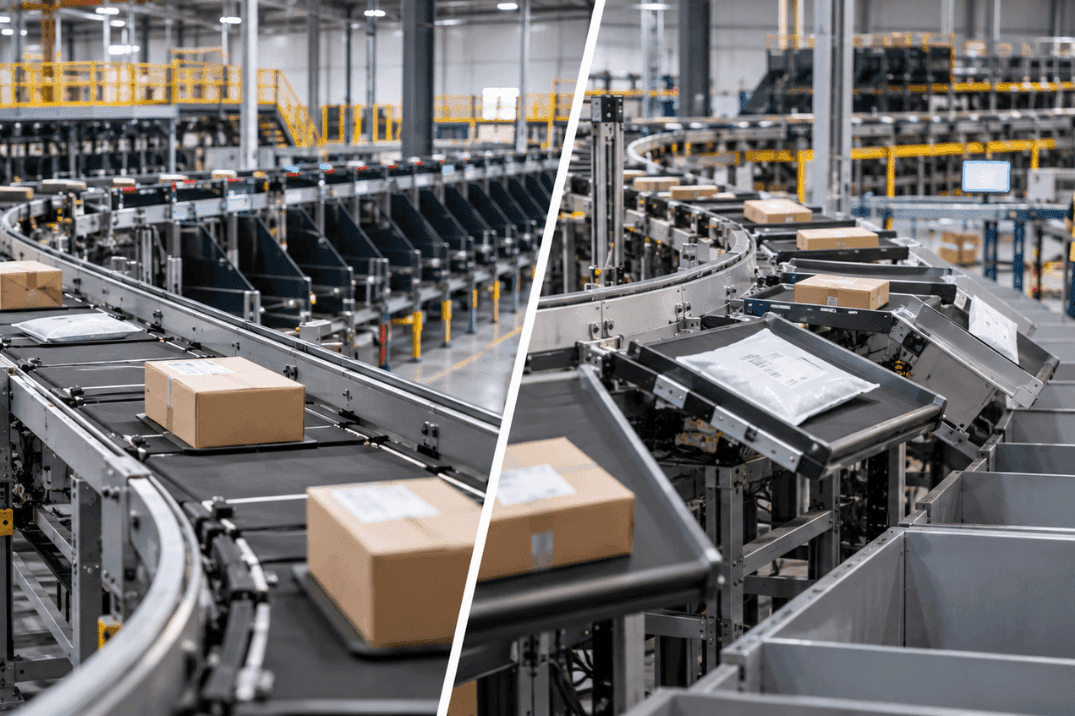
Cross-belt and tilt-tray sortation systems handling parcels in a high-speed distribution centre.

Cross-Belt vs Tilt-Tray Sorters: How to Choose

Two technologies dominate high-speed unit sortation: the cross belt sorter and the tilt-tray sorter. Both are conveyor sortation system loops that move individual items at speed across hundreds of destinations, yet they suit different products and different operational profiles. UK distribution centres are under increasing pressure to process more orders, across more SKUs, within tighter delivery windows, and without expanding the building footprint. Understanding where each performs best is the difference between a system that hits its design rate and one that quietly underdelivers.

Key points

✓Cross-belt and tilt-tray are the two dominant high-speed unit sorting systems.
✓A cross belt sorter places items gently onto the take-away; a tilt-tray releases them by gravity.
✓Cross belt suits small, flat, fragile or awkward items; tilt-tray suits robust, uniform items at lower cost.
✓Both reach similar speeds, so choose on product mix, discharge control, sorting capacity and cost of ownership.
✓Real throughput depends on induction, chute design and integration with the wider control system.

What Is a Cross Belt Sorter?

A cross belt sorter is a high-speed sorting system built from a train of independently powered carriers, each fitted with a short belt conveyor mounted at right angles to the direction of travel. 


Its modular design means carriers can be added to lengthen the loop or raise sorting capacity. As a carrier reaches its assigned destination, the belt runs and discharges the item sideways into a chute, carton, or bag. Because the item is placed rather than dropped, handling is gentle and the discharge position is closely controlled. A single loop can process several thousand items per hour across a wide range of destinations.

Cross-belt sorter transferring parcels sideways into destination chutes in a distribution centre.

What Is a Tilt-Tray Sorter?

A tilt-tray sorter uses the same continuous loop principle, but each carrier is a rigid tray that tilts to one side and releases the item by gravity. 


The mechanism is simpler, with fewer powered components per carrier. Discharge depends on the product sliding cleanly, so tray angle, chute geometry, and packaging surface all influence sortation accuracy. Tilt-tray systems are well established in parcel, postal, and apparel operations, where robust items tolerate the slide and short drop.

Tilt-tray sorter using angled trays to discharge parcels into designated sorting chutes.

Comparing Cross Belt Sorter and Tilt-Tray Performance


The two technologies overlap heavily on speed, so selection usually turns on product characteristics, discharge control, and cost of ownership. The main points of difference include:

Product handling

A cross belt sorter places items onto the take-away, making it suitable for fragile, cosmetic, or awkwardly shaped goods. Tilt-tray discharge favours durable products.

Item footprint

Powered carriers handle small and flat items such as polybags, jiffy bags, and single garments reliably. Very thin or high-friction items can stall on a tilting tray.

Discharge accuracy

Belt speed can be tuned per item, improving placement into narrow chutes and direct-into-carton discharge.

Maintenance profile

Tilt-tray carriers carry fewer electrical components, which typically reduces spares consumption and simplifies preventive maintenance, while a cross belt sorter’s motorised carriers lend themselves to condition monitoring and predictive maintenance.

Energy efficiency

Modern carriers and drives have improved energy efficiency on both platforms, though duty cycle and loop length remain the larger factors.

Capital cost

Tilt-tray systems generally cost less per carrier, while a cross belt sorter commands a premium justified by its handling breadth.

By the numbers
1,000s/hr
Items sorted on a single loop
100s
Destinations served per loop
2
Leading unit-sorter types
24/7
Continuous, unattended sorting

Matching Each Sorter to Sector Requirements


Product mix, order profile, and packaging format determine which technology performs best in practice. Typical fits across UK sectors include:

E-commerce and retail fulfilment

Mixed polybags, small cartons, and single-item orders suit cross belt handling, particularly where returns processing shares the same loop. Common across e-commerce and retail fulfilment.

Parcel and postal

High volumes of robust, uniformly packaged items make tilt-tray a cost-effective choice at scale in large distribution centres.

Apparel

Both technologies perform well, though flat-packed garments and hanging-to-flat conversions tend to favour cross belt carriers.

Food and beverage

Chilled and ambient goods in delicate packaging benefit from controlled placement rather than gravity discharge. Common in food and beverage sites.

These distinctions matter most at the extremes of the product range, where the smallest, lightest, and most fragile items expose the limits of gravity discharge.

Integrating a Conveyor Sortation System


Sortation performance depends as much on the surrounding system as on the sorter itself. Induction stations, scanning arrays, chute design, and downstream packing all set the practical ceiling on throughput. A cross belt sorter is commonly integrated with:

Warehouse control software

A control system coordinating induction sequencing, destination allocation, dynamic chute assignment, and flow control in real time.

Automated storage and retrieval systems (AS/RS)

Feeding goods to induction in order-ready sequence from automated storage to keep the loop fully loaded.

Robotic induction and packing cells

Robotic induction and packing reduces manual induction labour while stabilising item presentation and scan rates.

Because these automation products share live data, that same control system can drive predictive maintenance alerts, and seamless integration across the elements determines whether an installed system reaches its rated capacity or runs consistently below it.

Choosing the Right Sortation Technology

Sortation decisions are best made against measured order data rather than headline carrier speeds: item dimensions, weight distribution, packaging formats, and peak-hour profiles all shape the outcome. As product ranges fragment and single-item orders grow, controlled discharge and small-item capability are becoming more valuable, steadily widening the case for cross belt technology in high-mix operations. Speak with a sortation specialist to model both options against your own parcel handling throughput and product data.

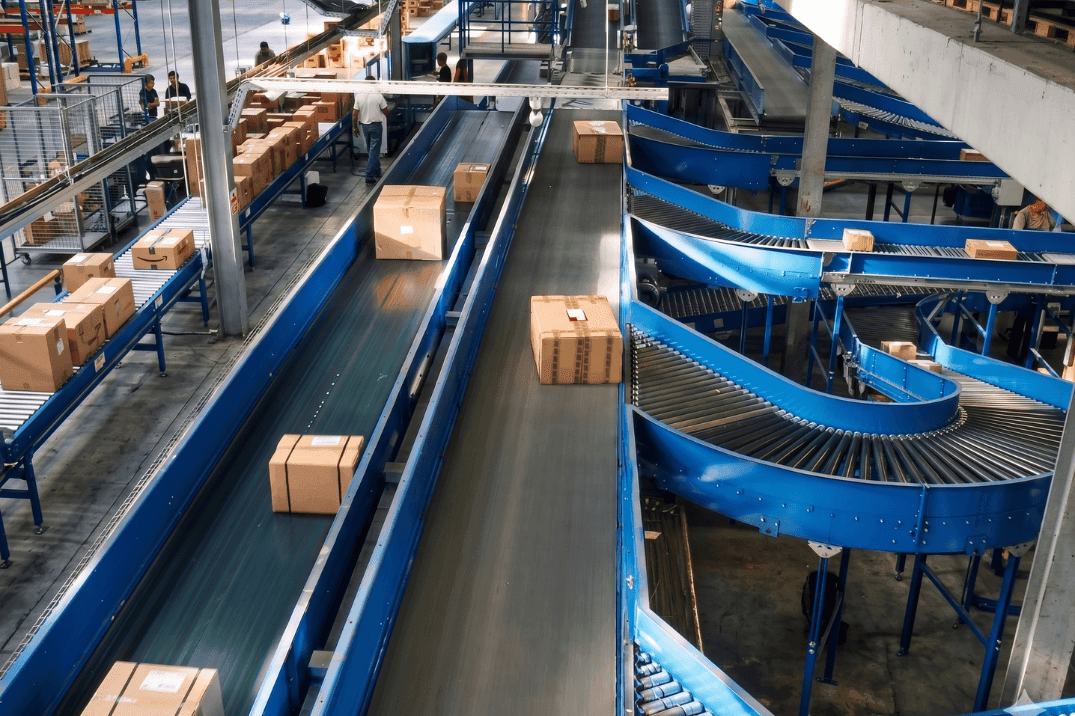
Automated sortation system processing cartons and polybags across multiple conveyor routes and destination chutes.

Design a tailored integration approach

We design integration around your existing lines, control systems, and long-term automation roadmap.

Speak to a specialist

Frequently Asked Questions