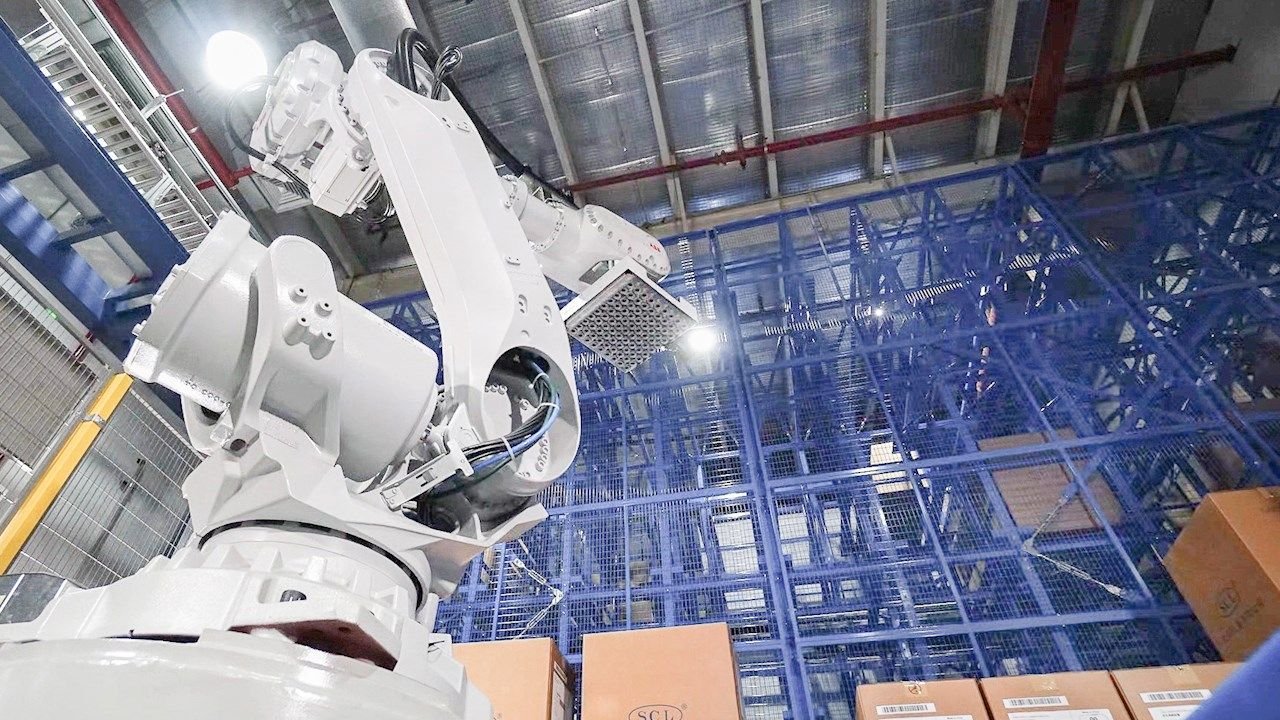
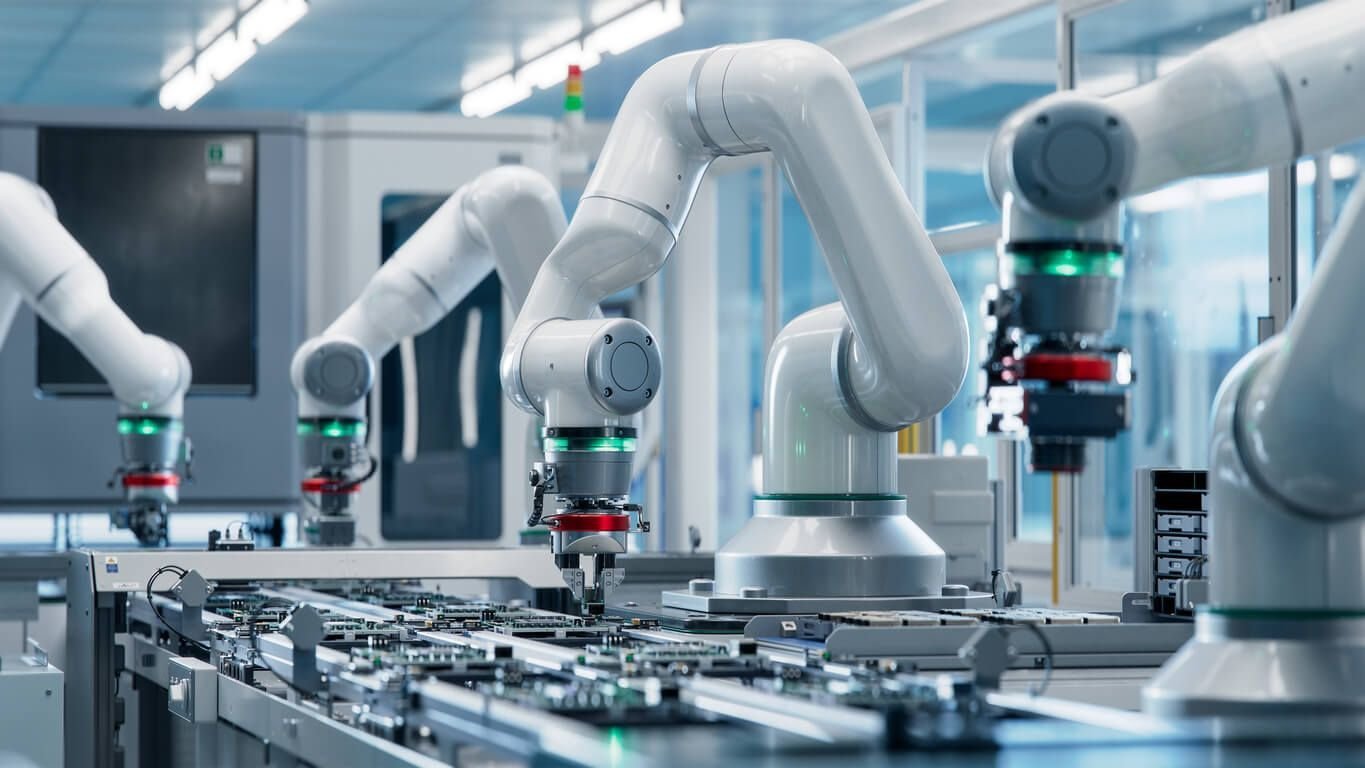
Articulated robot and collaborative robot integrated with conveyors in an automated manufacturing facility

Types of Industrial Robots Explained

Across the UK, manufacturers and warehouse operators are increasingly turning to robotics to address mounting pressures: labour shortages, rising operational costs, and the relentless pace of e-commerce growth.

Understanding the different types of industrial robots available is the first step towards selecting the right automated solutions for any given environment. From precision assembly on a factory floor to high-throughput material handling in a distribution centre, industrial robotics now offers a broad and growing range of robot types designed to meet specific operational demands, making factory automation more accessible than ever.

In short: the main types of industrial robots are articulated, SCARA, delta, Cartesian (including gantry and linear robots), collaborative robots (cobots), and autonomous mobile robots (AMRs), each suited to different tasks, payloads, and speeds.

What Are Industrial Robots?

An industrial robot is a programmable machine capable of performing automation tasks autonomously or semi-autonomously within a production, manufacturing, or logistics environment. Most are built around robotic arms with several degrees of freedom, allowing precise, repeatable movement. 


Unlike traditional fixed automation, modern types of industrial robots offer varying flexibility, allowing them to adapt to changing production lines, layouts, or throughput requirements. They are deployed across sectors including automotive, food and beverage, pharmaceuticals, retail, and general warehousing.

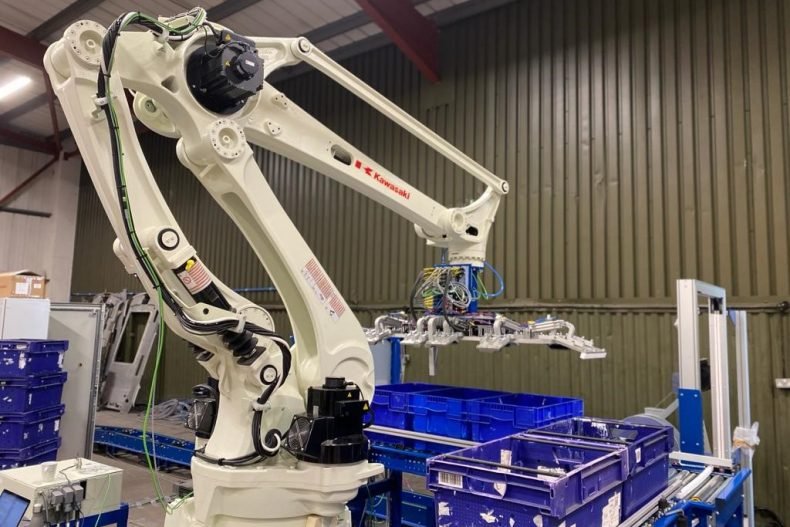
Six-axis articulated industrial robot handling components on an automated conveyor production line

Common Types of Industrial Robots in Use Today

The range of robot types available reflects the diversity of tasks that automation is now asked to perform. The most widely deployed types of industrial robots include:

Robot type Strengths Typical tasks
Articulated (4-6 axis)Wide range of motion, higher payloadsWelding, assembly, palletising, machine tending
SCARAHigh-speed lateral moves, precise, lower costElectronics assembly, packaging, light pick-and-place
DeltaVery fast and precise parallel-linkHigh-cycle picking, food sorting, inspection
Cartesian / gantrySimple, repeatable linear motion; large envelopeCNC loading, dispensing, heavy or oversized loads
Collaborative (cobots)Work safely alongside people, quick to reconfigurePick-assist, packing, frequent changeovers
Autonomous mobile (AMRs)Navigate dynamically, no fixed infrastructureGoods transport, flexible and changing layouts

Articulated and SCARA Robots: Industrial Workhorses


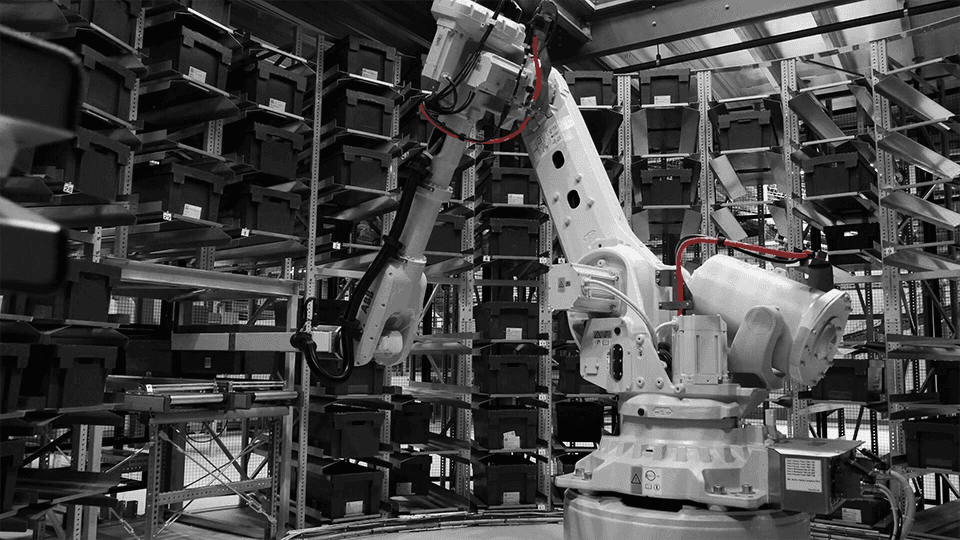
Articulated robots remain the most widely used type across manufacturing industries, with the British Automation and Robot Association (BARA) consistently reporting them as the dominant category in UK industrial deployments. Their six-axis configuration allows them to replicate a wide range of human arm movements, handling greater load capacity across complex, multi-step tasks. SCARA robots occupy a distinct position in the taxonomy, offering high-speed, precise lateral motion at a lower cost point. Both types are robust, reliable solutions for environments where repeatability, cycle time, and production output are critical performance metrics.


Mobile and Collaborative Robots in Modern Warehousing


The growth of e-commerce fulfilment has accelerated adoption of AMRs and cobots within warehouse environments. AMRs bring a fundamentally different approach to material handling: rather than following fixed conveyor belt routes or requiring magnetic track infrastructure, they map their environment dynamically and adapt to changing floor layouts. This flexibility makes them a scalable solution for operations that experience seasonal demand peaks or frequent SKU range changes. Cobots, meanwhile, are not only delivering productivity gains in pick-assist and packing applications but also contributing to safer workplaces, using safety sensors to reduce the physical strain placed on human operatives and reinforce worker safety.


Choosing the Right Robot Type for Your Operation


Selecting between types of industrial robots requires careful evaluation of payload requirements, reach, cycle time, and integration complexity. Key considerations include:

Payload & reach

Articulated and Cartesian suit heavier loads and longer reach; delta and SCARA prioritise speed over load capacity.

Environment & space

AMRs need clear floor space and stable conditions; fixed arms need defined envelopes and guarding or collaborative certification.

Integration

Every robot must interface with WCS, WMS and conveyor networks; experienced integrators turn individual robots into a coordinated line.

Flexibility

Frequent changeovers and product variety favour cobots and AMRs; high-volume repetitive tasks suit fixed articulated or delta.

A Foundation for Long-Term Automation Success

As robotic technologies continue to mature and the total cost of deployment falls, types of industrial robots that were once viable only for large manufacturers are increasingly accessible to mid-sized operations across the UK. 


Working with reputable robot manufacturers and system integrators, and understanding the distinctions between articulated, SCARA, delta, Cartesian, cobot, and mobile robot platforms, is not a technical exercise alone; it is a strategic one. Businesses that invest time in selecting the right robot type for their specific operational context will be better positioned to build scalable, future-proof automation systems that deliver long-term growth and competitive advantage.

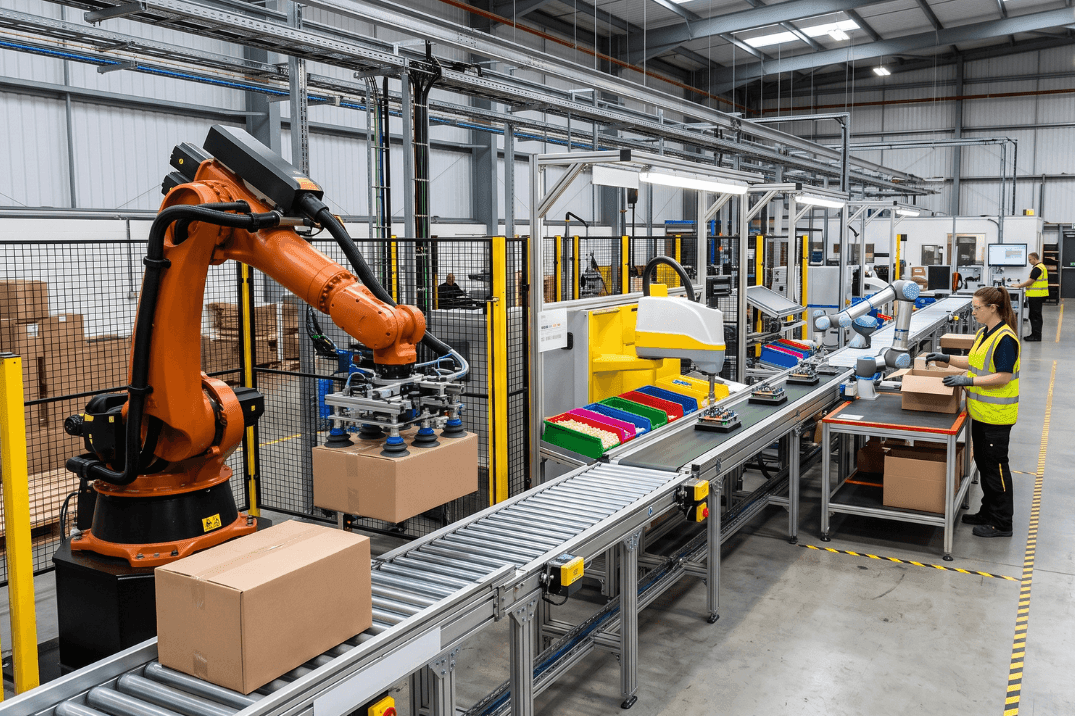
Integrated robotic automation facility with industrial robots, conveyors, AMR and engineers overseeing production

Match the right robot type to your operation

We help you select and integrate the right robot platform for your payload, throughput, and flexibility requirements.

Speak to a specialist

Frequently Asked Questions