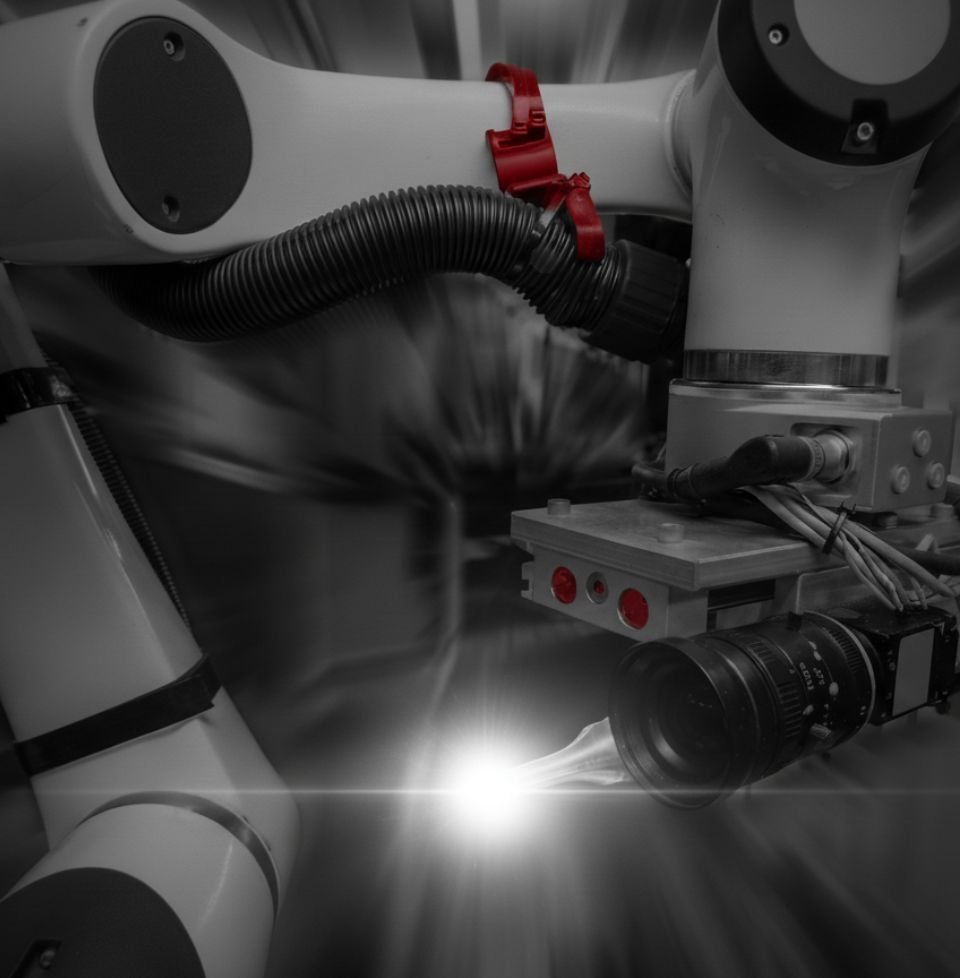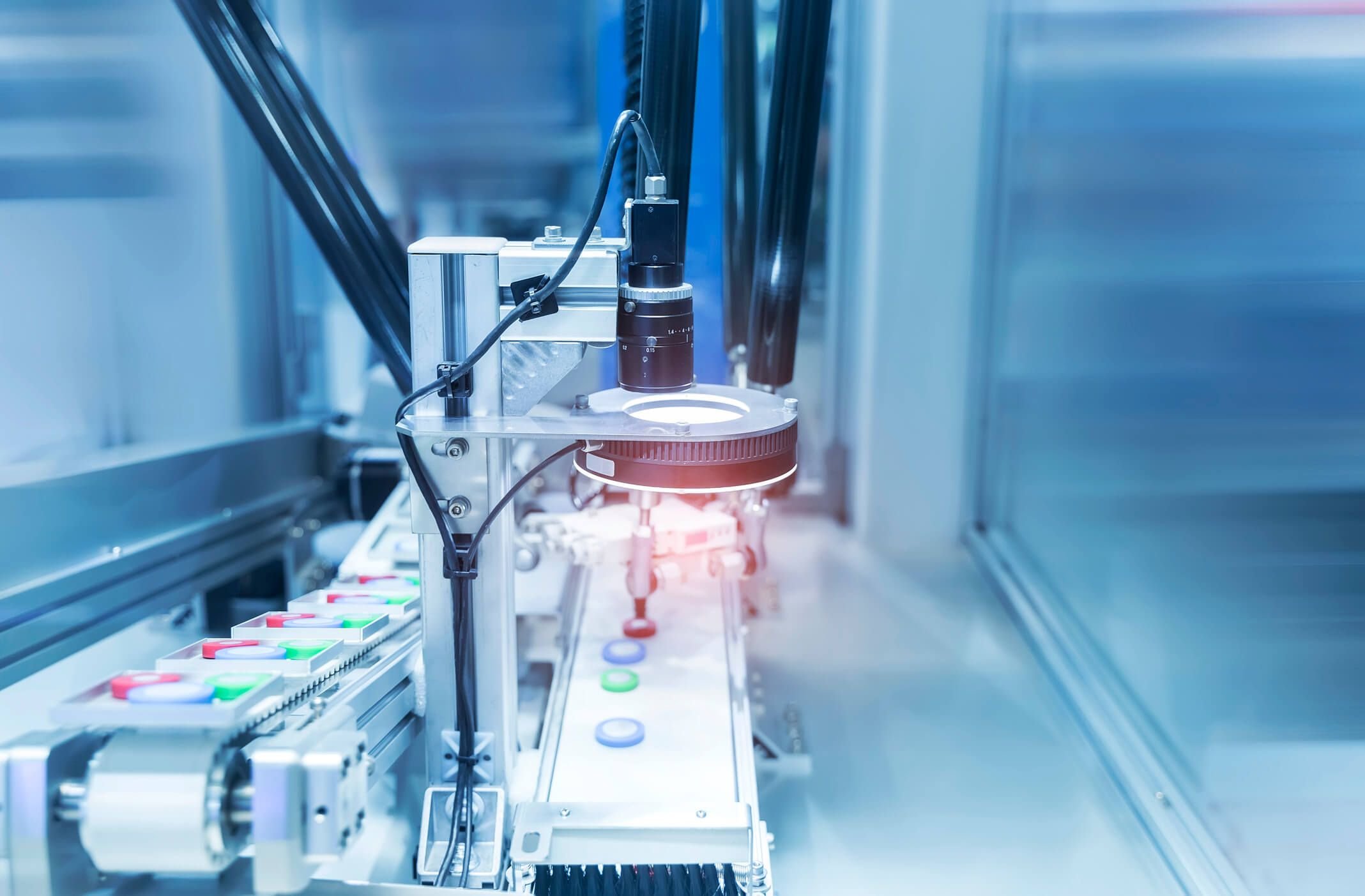
Vision-guided robot arm using a camera to locate and pick components

Vision-Guided Robotics for Quality Control

Quality control has long been one of the most labour-intensive and error-prone stages of production. As consumer expectations tighten and regulatory requirements grow more demanding, the pressure to deliver consistent, defect-free output has never been greater.

Vision-guided robotics is increasingly being adopted as a robust and reliable solution to this challenge, combining the physical precision of an industrial robot with the analytical capability of an advanced machine vision system to automate inspection and intervention at scale.

In short: vision-guided robotics combines a machine vision system (cameras, sensors, and software) with a robot, so it can see, inspect, and act, detecting defects and automatically rejecting, rerouting, or reworking items without human intervention.

What Is Vision-Guided Robotics?

Vision-guided robotics refers to robotic systems equipped with a camera system, vision sensors, and image-processing software that allow them to interpret visual data and respond in real time. 


Using 2D and 3D cameras, vision software applies vision algorithms to identify the position, orientation, and condition of objects within the camera's field of view. The robot controller then converts that analysis into precise robot motion control, so the robot acts on what it sees rather than following fixed, pre-programmed coordinates.

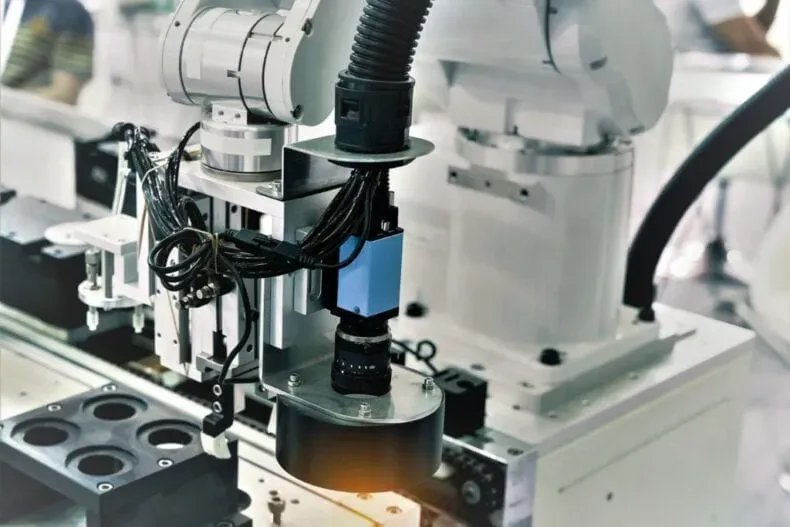
Industrial robot using machine vision to inspect and handle components on an automated conveyor.

Where 3D vision is used, the system can also judge depth and shape, the capability that underpins tasks such as bin picking. In the context of quality control, this translates into automated inspection that can detect surface defects, dimensional inconsistencies, incorrect labelling, and assembly errors with a level of accuracy and repeatability that manual inspection simply cannot match.
2D vision
  • Captures a flat image of the field of view
  • Ideal for surface inspection, labelling and barcode validation
  • Reads position and orientation in a plane
3D vision
  • Adds depth and shape perception
  • Enables bin picking of randomly oriented parts
  • Supports accurate dimensional verification

How Vision-Guided Robotics Supports Quality Control

The core strength of vision-guided robotics in quality control lies in its ability to combine detection with immediate corrective action. Traditional inspection systems may identify a defect but still rely on a human operative to act on that information. Vision-guided robots close that gap entirely. In a typical vision-guided robotic application, the robot can pick and place a conforming item, divert a defective one, halt the line, or complete corrective assembly tasks, all without human intervention.

Key applications within quality control workflows include:

Surface inspection

High-resolution cameras flag scratches, cracks, contamination or discolouration at line speed.

Dimensional verification

Measures component geometry against defined tolerances before the next stage.

Label & barcode validation

Confirms labelling is correctly placed, legible and accurately encoded.

Assembly verification

Checks all parts are present and correctly positioned before a product is signed off.

Bin picking

Uses 3D vision to locate and retrieve randomly oriented parts from bins or totes.

Industry Sectors Deploying Vision-Guided Robotics


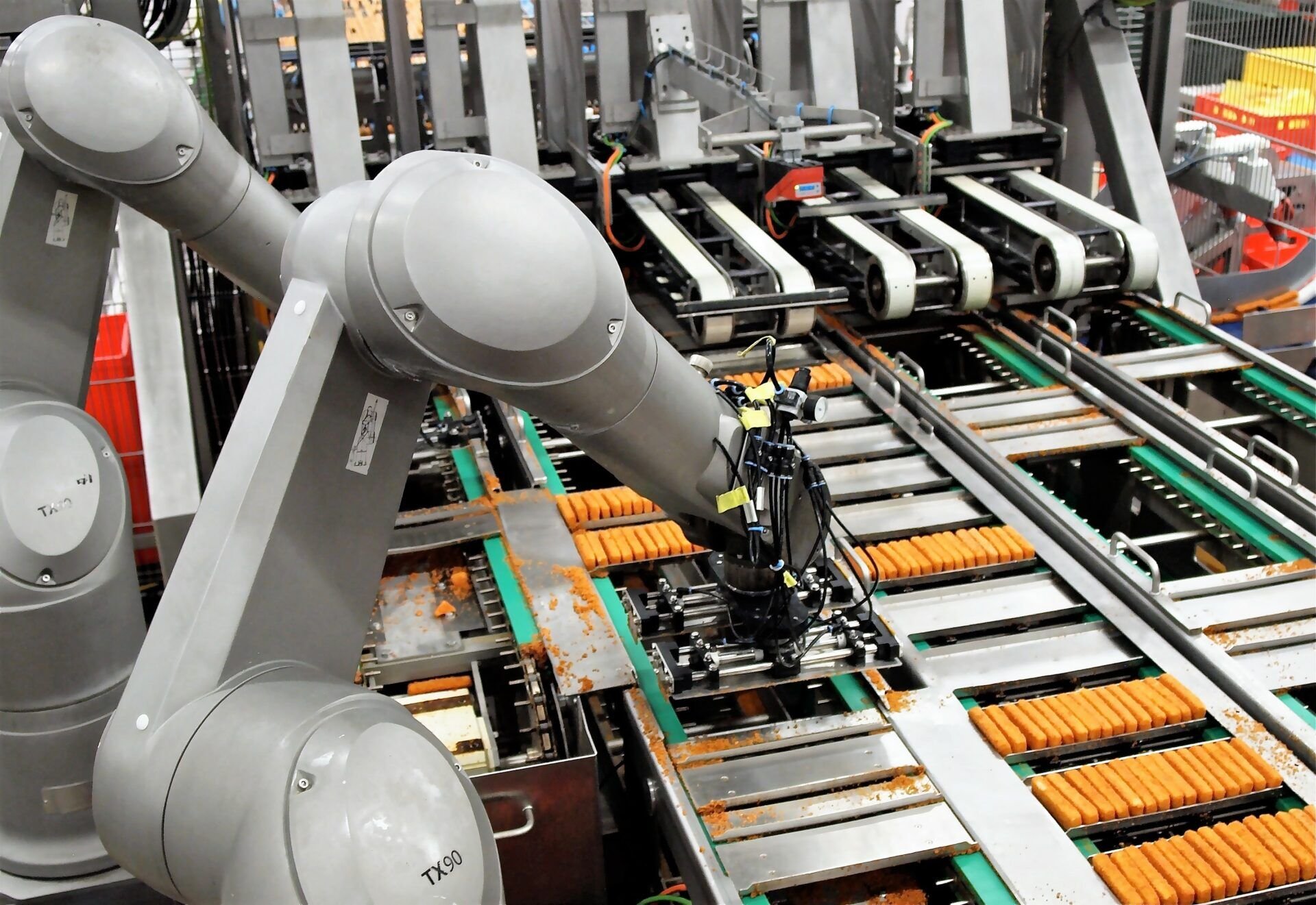
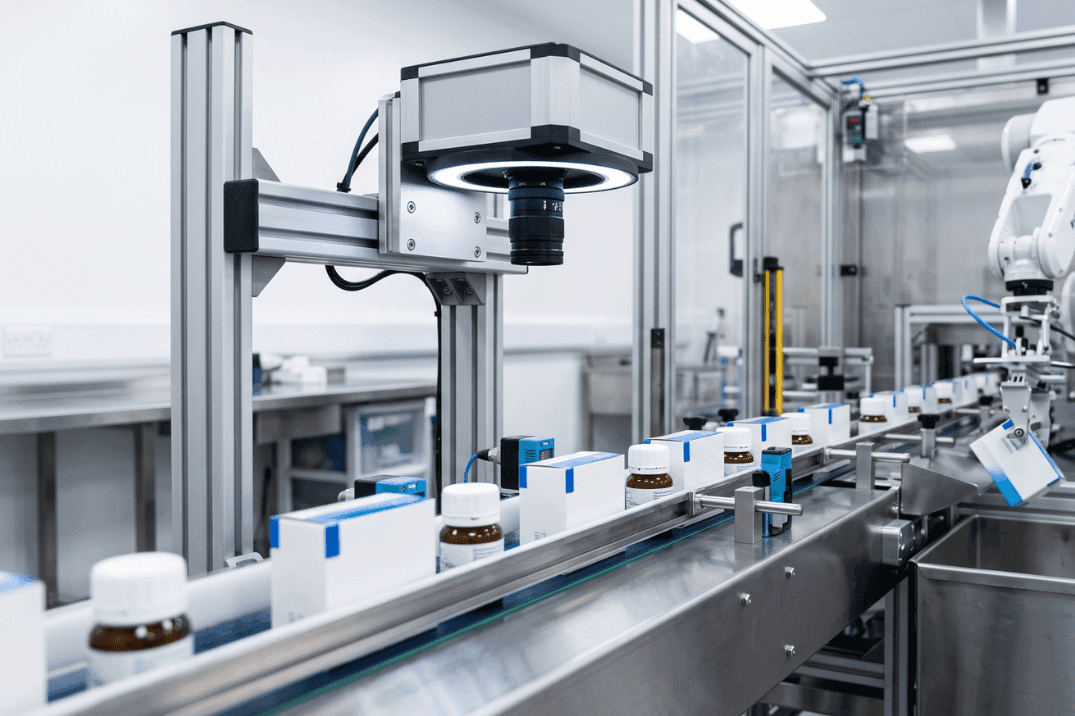
Machine vision system inspecting pharmaceutical packaging on an automated production line.

From food and beverage production to pharmaceutical packaging, the range of sectors integrating vision-guided robotics into their quality control operations is broad:

Food and Beverage

Contamination detection, fill-level verification, and packaging integrity checks are critical in this sector, where product safety is regulated and recalls are costly.

Pharmaceutical and Healthcare

Strict regulatory frameworks demand near-perfect inspection accuracy. Vision-guided systems support compliance by providing auditable, automated inspection data.

Electronics Manufacturing

Component placement accuracy and solder joint quality are assessed at speeds impossible for human inspectors, reducing defect escape rates significantly.

Retail and E-Commerce Fulfilment

Label accuracy, packaging completeness, and product condition checks are increasingly automated to support the throughput demands of modern distribution centres.

Integration with Other Automation Technologies


Vision-guided robotics does not operate in isolation. To unlock the full benefits of these systems, many organisations are combining them with wider automation infrastructure including conveyor systems, autonomous mobile robots (AMRs), and warehouse control systems (WCS). A vision-guided robot integrated into a sortation line, for example, can inspect, classify, and redirect items seamlessly within a single workflow. The same vision capability is increasingly built into collaborative robots, allowing guided inspection to run safely alongside operators. Where artificial intelligence (AI) and deep learning are layered into the vision system, the robot's ability to identify complex or variable defect patterns improves continuously over time, making the system not only precise and consistent but increasingly self-optimising.


The Future of Vision-Guided Robotics in UK Manufacturing


The adoption of vision-guided robotics in quality control is set to accelerate as hardware costs fall and software capabilities advance. The Industrial Vision Association has noted sustained growth in machine vision deployment across UK industry, driven by the need for greater traceability, reduced waste, and improved compliance. Businesses that integrate vision-guided robotics now are positioning themselves to future-proof their operations against tightening standards and growing throughput demands.

Building a Competitive Case for Vision-Guided Robotics

As quality expectations continue to rise across manufacturing and logistics, vision-guided robotics offers a scalable path to consistent, automated inspection that supports long-term operational efficiency. 


For businesses looking to reduce defect rates, improve traceability, and maintain a competitive edge, deploying vision-guided robotics within quality control workflows represents a strategic investment in the resilience and reliability of their operations.

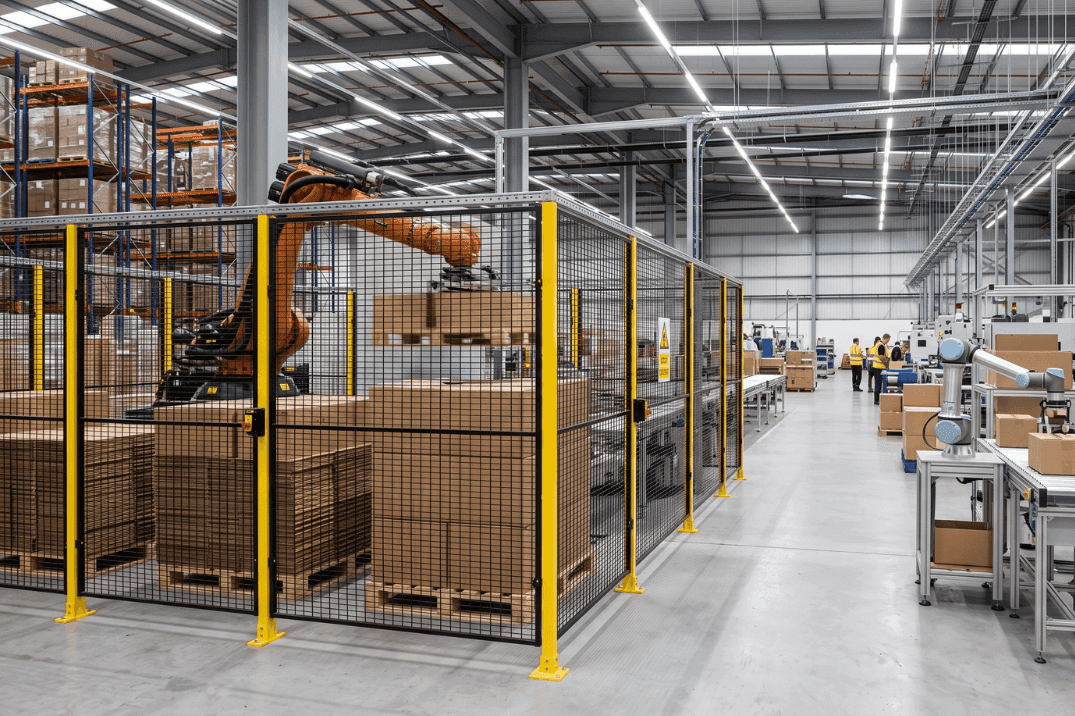
Vision-guided robotic inspection integrated with conveyor systems across an automated manufacturing facility.

Design inspection around your requirements

We design bespoke vision-guided robotic inspection around your specific quality control workflows and tolerances.

Speak to a specialist

Frequently Asked Questions