Machine Vision Systems

When to Use Vision Systems for Robotic Quality Control

Quality control in manufacturing and distribution has historically relied on manual inspection: an operator visually examining products against a defined standard, at a rate the human eye and concentration allow.

For many UK operations, this approach is no longer adequate. Throughput rates have increased beyond what manual inspection can cover at full line speed, product specifications have tightened, and the cost of defects reaching the customer has grown significantly. Adoption of vision systems is now accelerating quickly across UK industry: Zebra Technologies' benchmark research found that 56% of UK original equipment manufacturers are using AI machine vision, with adoption highest in automotive end-of-line inspection and traceability.¹ Vision systems for robotic quality control offer an alternative to manual inspection that operates at line speed, applies consistent standards across every unit, and generates an objective data record of every inspection performed.

What Vision Systems for Robotic Quality Control Actually Do

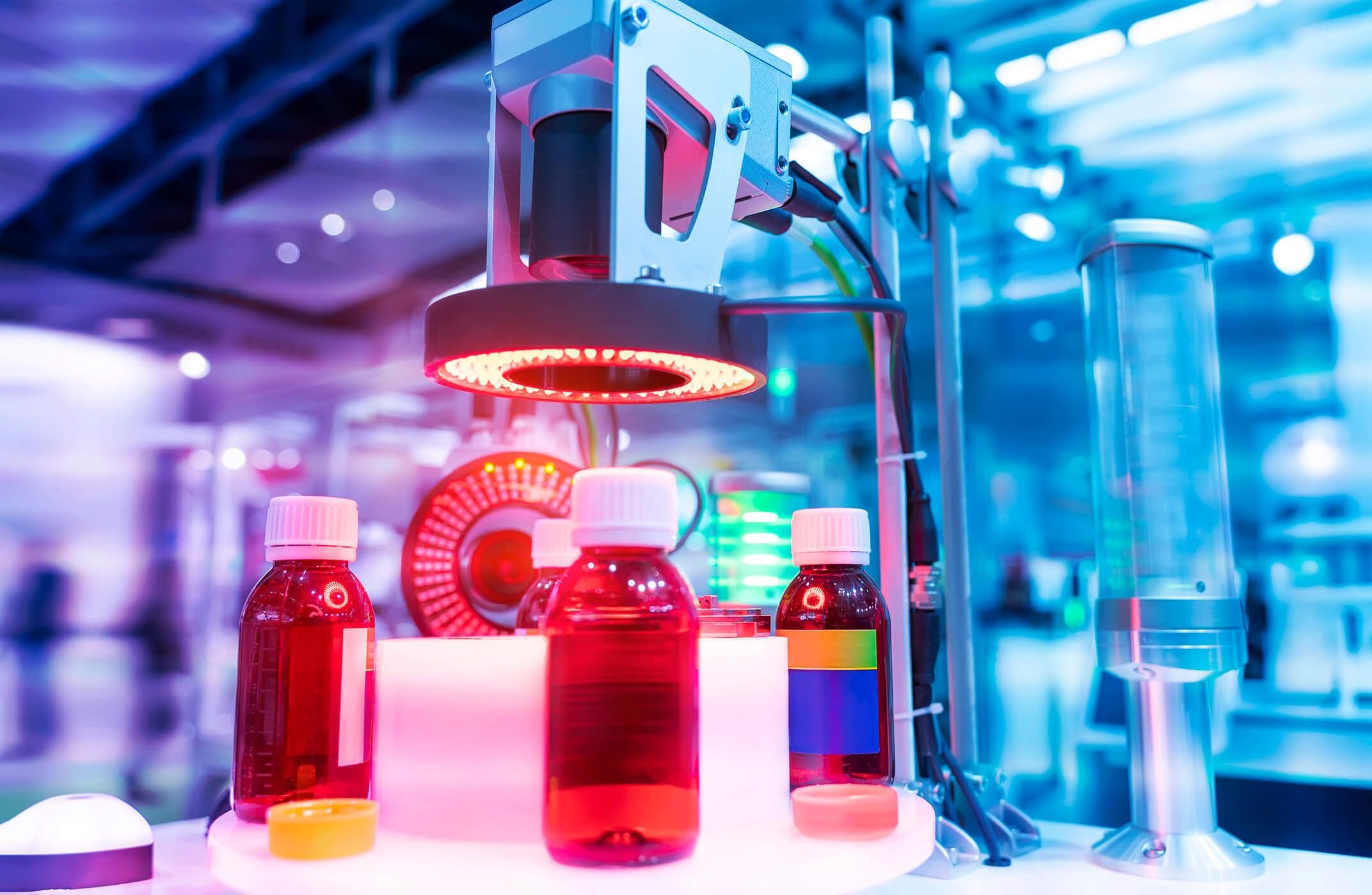
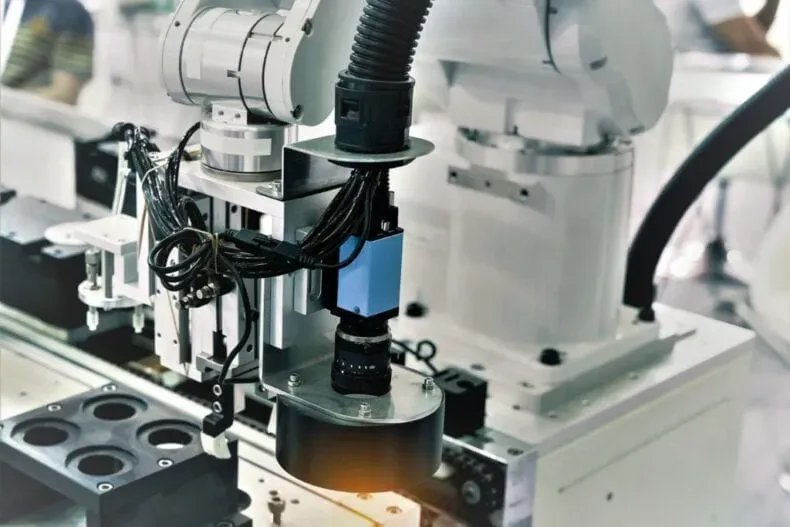
A vision system for robotic quality control combines one or more cameras, lighting, and image-processing software to inspect products against defined parameters without pausing the production line. Depending on the application, the system may check for surface defects, dimensional conformance, label presence and legibility, fill level, seal integrity, or colour consistency. When a non-conformance is detected, the system triggers an automated reject mechanism to remove the product from the line.

Modern Robotic Vision Inspection Systems increasingly combine traditional Machine Vision Inspection with artificial intelligence and machine learning, allowing the system to learn from each inspection and improve detection of subtle or previously unseen defects. This differs from a standalone inspection camera in that the vision system is integrated with the robotic or conveyor equipment operating the line. The result is a closed-loop quality control function: inspect, identify, reject, and log, without manual intervention. IDS-INDATA's benchmarking of UK manufacturers found around 60% of mid-to-large automotive firms now using AI in this way, with Jaguar Land Rover using AI-powered analytics across 128 sites to spot production anomalies and reduce defects in real time.²

Key Features and Applications Where Vision-Guided Quality Control Delivers Most Value


Vision systems for robotic quality control are most valuable where one or more of the following conditions apply:

Throughput exceeds manual inspection capacity

A line producing 200 units per minute cannot be inspected adequately by an operator at line speed. Automated Vision Inspection operating at the same rate as the conveyor performs every inspection without sampling gaps.

Defect detection requires consistency across a full shift

Manual inspection degrades as shift length increases. Robotic vision technology applies the same detection parameters at hour eight as it does at hour one.

Defects are visually subtle or dimensional

Colour variation in food products, hairline cracks in moulded components, and minor label misalignment are consistently detected by calibrated Robotic vision systems and advanced imaging technologies at rates a human inspector cannot match.

Product liability or regulatory compliance requires traceability

A vision system creates a timestamped image record of every unit inspected. This data is available for audit, batch recall, or regulatory reporting in a way that manual inspection logs cannot replicate.

Operations run in complex environments

Robotic vision inspections perform reliably in environments where lighting varies, products move at speed, or operators would otherwise be exposed to noise, heat, or hazardous conditions.

Common Industries and Applications


From food and beverage to pharmaceutical and consumer goods manufacturing, vision systems for robotic quality control are deployed across a wide range of UK industries:

Food and beverage

Fill level inspection in bottling and canning, seal integrity on modified atmosphere packaging, label presence and date code legibility, and foreign object detection. Vision checks often run alongside food-grade conveyor systems.

Pharmaceutical and healthcare

Tablet counting and blister pack inspection, bottle cap torque verification, label accuracy against batch data, and packaging conformance for regulated products.

Consumer goods and retail packaging

Print quality verification on retail cartons, barcode and QR code readability, dimensional checks on shrink-wrapped multipacks.

Industrial manufacturing

Surface defect detection on painted or machined components, dimensional conformance of moulded parts, assembly verification on multi-component products. These checks are common on automotive production lines.

Integration with Robotic and Conveyor Systems

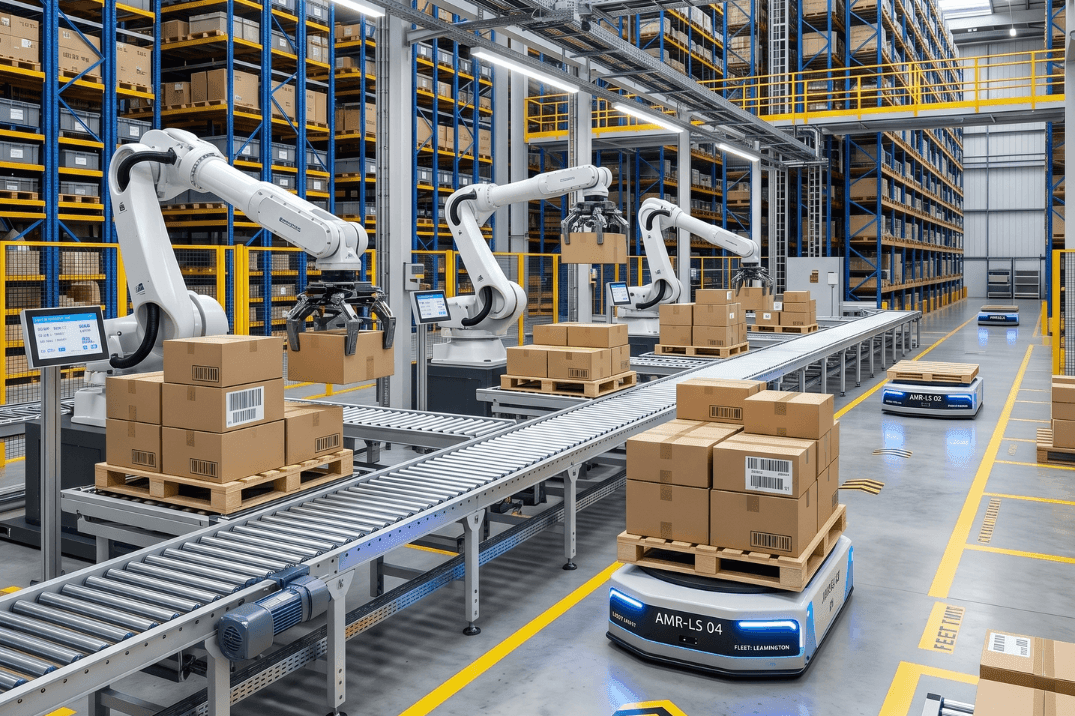
A vision system operates most effectively when it is engineered as part of the production line rather than bolted on after the fact. The camera position, lighting design, conveyor speed, and reject mechanism must all be specified together to ensure that the system can physically inspect every unit at the required rate and reliably remove rejects without disrupting line flow. This is where integration issues most commonly arise in retrofits: a camera fitted to a line that was never designed around it can deliver impressive detection accuracy in isolation but fail to translate that into reliable in-line performance.

The image processing software must also be integrated with the production control system so that inspection data is linked to batch records, production orders, and traceability logs rather than existing in isolation.

The Data Benefit Beyond Defect Rejection

Vision systems generate inspection data that has value beyond the immediate reject decision. Trend analysis of defect rates by shift, line, or batch identifies process drift before it generates a significant defect rate. This data supports continuous improvement programmes and allows the root cause of quality issues to be identified from objective records rather than retrospective operator reports. Over time, machine learning models trained on this data can flag the early signatures of an emerging quality issue before it crosses the reject threshold.

Machine Vision Systems

A More Consistent Approach to Quality

Vision systems for robotic quality control deliver a step change in inspection consistency, throughput coverage, and data quality that manual inspection cannot match at scale. Businesses that integrate vision-guided inspection into their production lines gain a quality function that operates at line speed, applies objective standards, and produces the traceability data that customers and regulators increasingly require.

At MotionTech, our integrated approach to robotics, conveyors, and production line automation combines the engineering capability to specify the right vision system with the integration experience needed to embed it into a working line. Speak to our team to scope a vision-guided quality control programme tailored to your operation.

References

  1. Zebra Technologies, AI Machine Vision in the Automotive Industry Benchmark Report, reported by Imaging and Machine Vision Europe, on UK OEM adoption of AI machine vision for end-of-line inspection and traceability. imveurope.com
  2. IDS-INDATA, Mapping the Future of AI in UK Manufacturing: Leaders, Opportunities, and What Comes Next (2025), on AI adoption and maturity in UK manufacturing sectors, including machine vision quality control. idsindata.co.uk