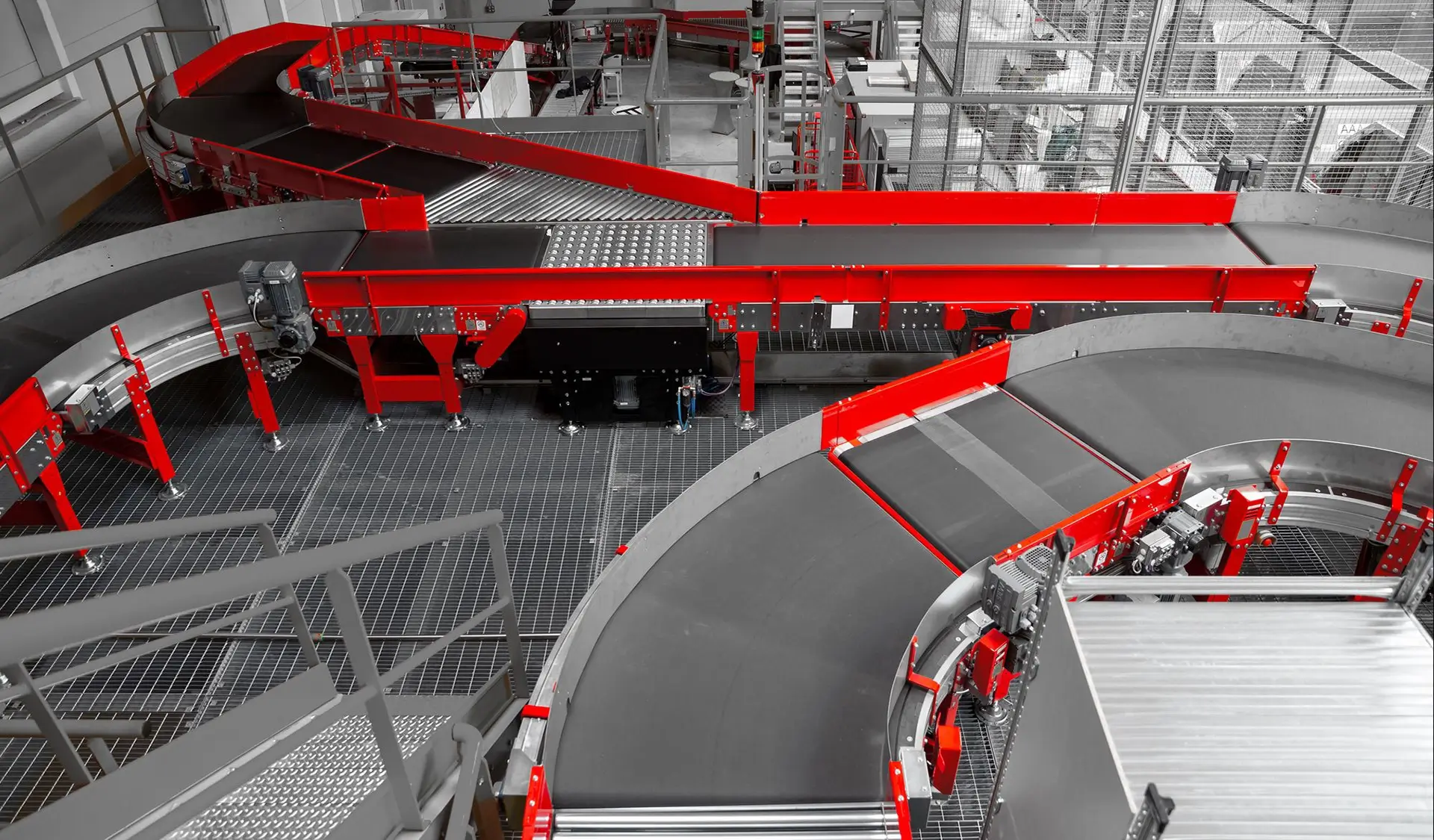
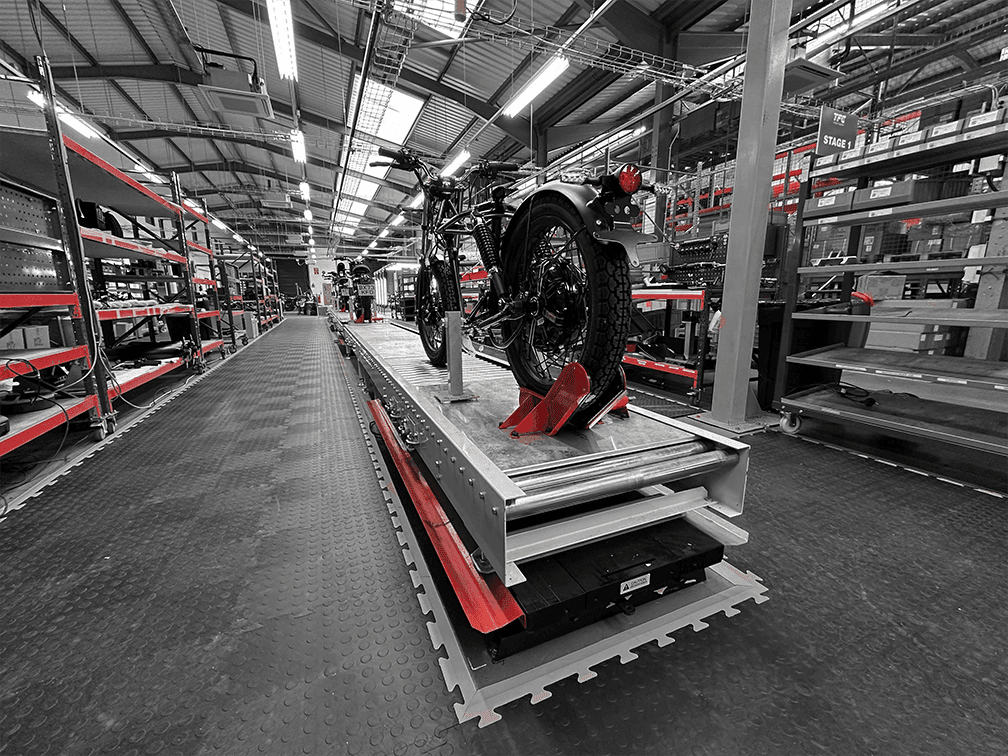
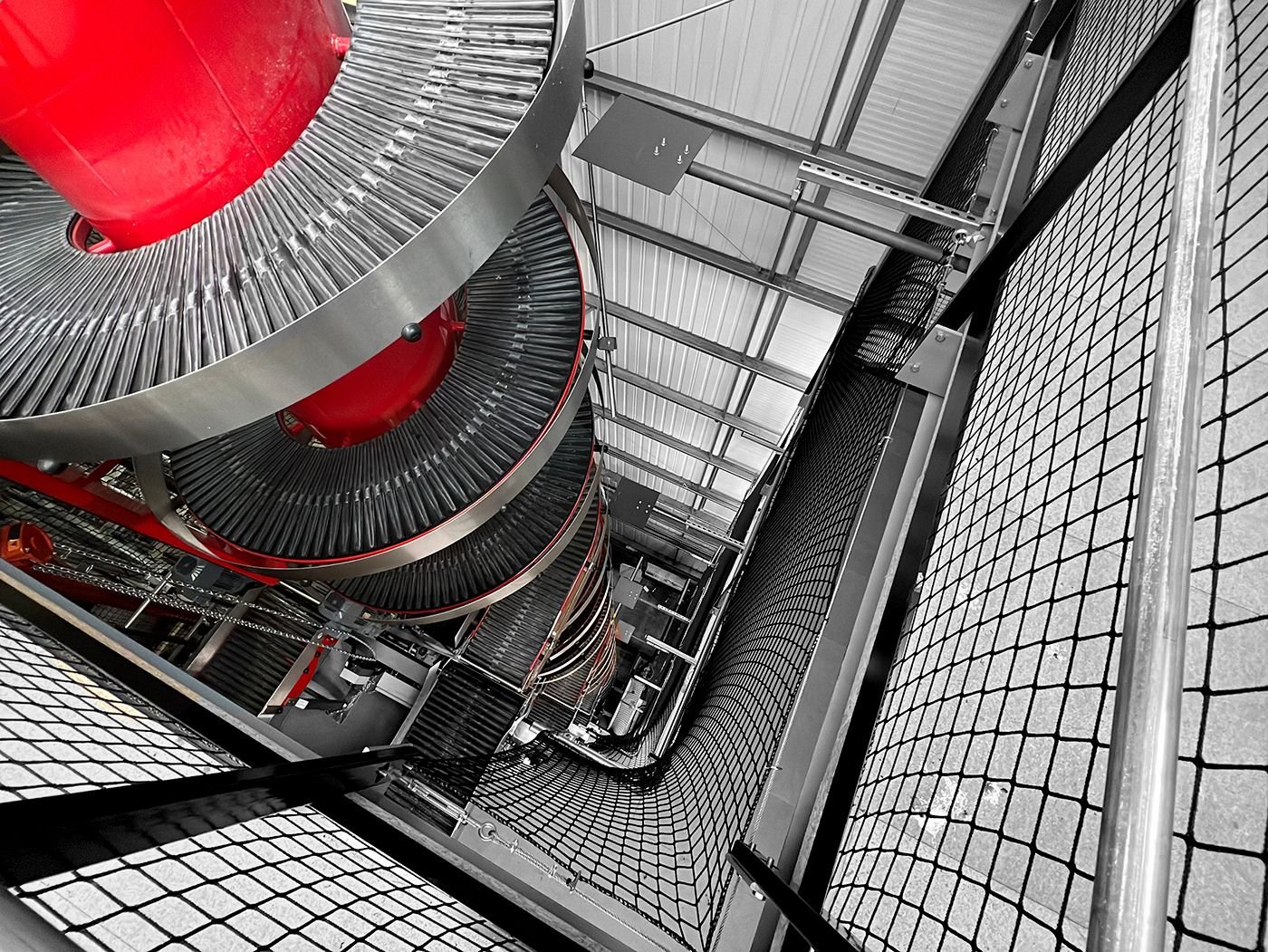
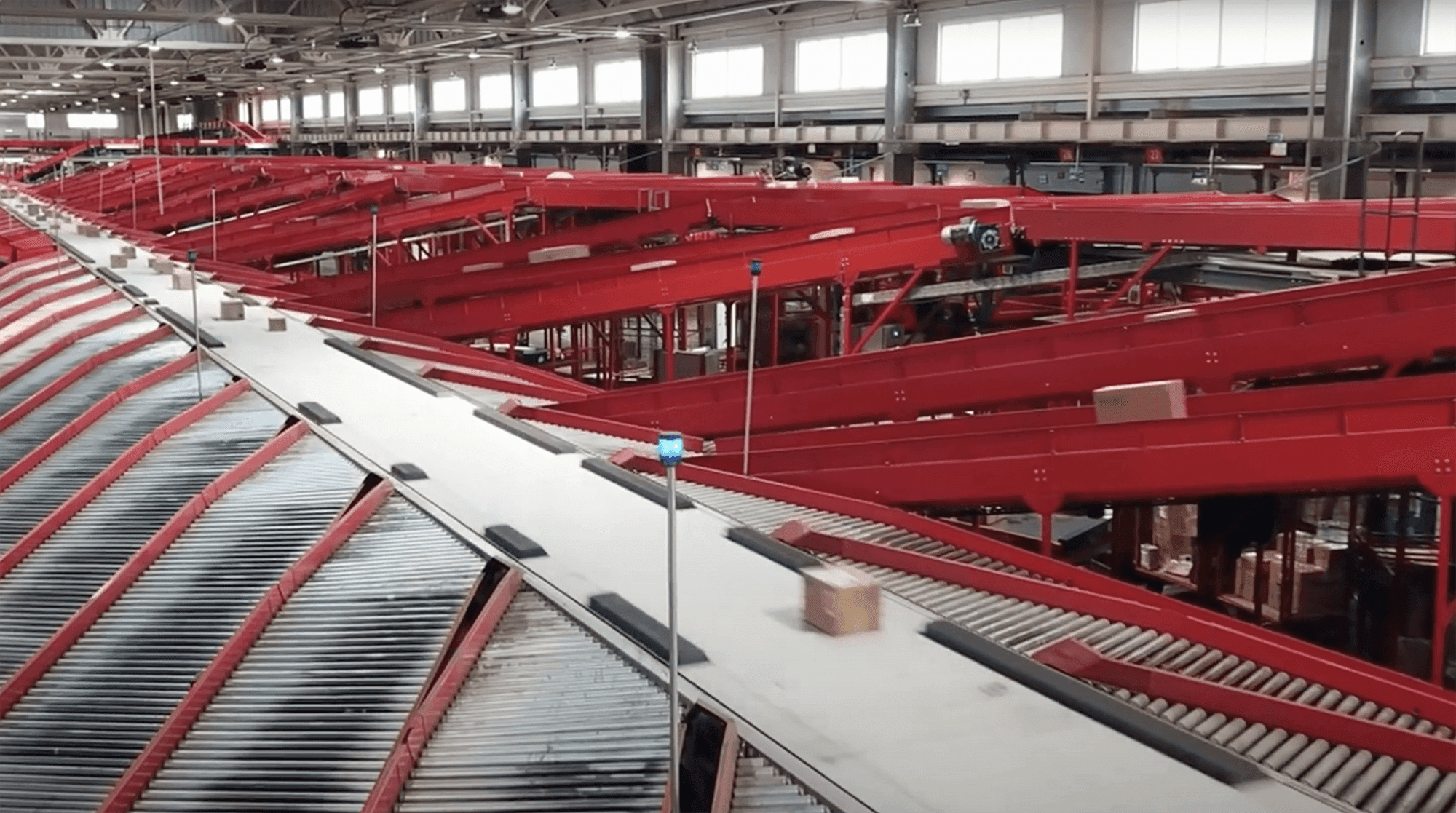
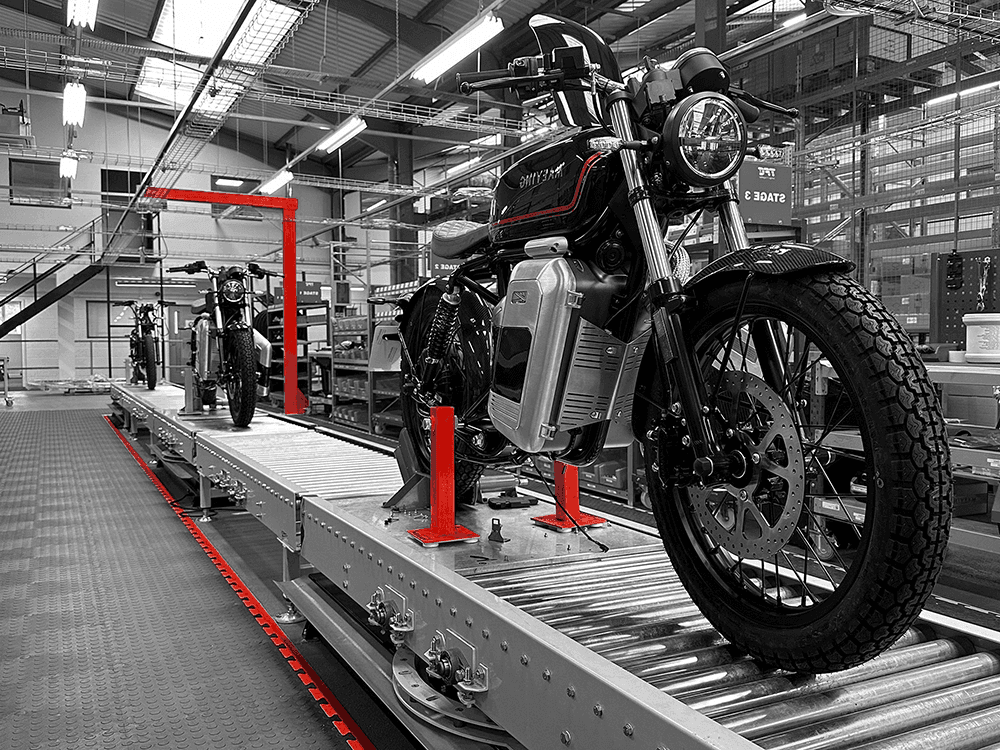
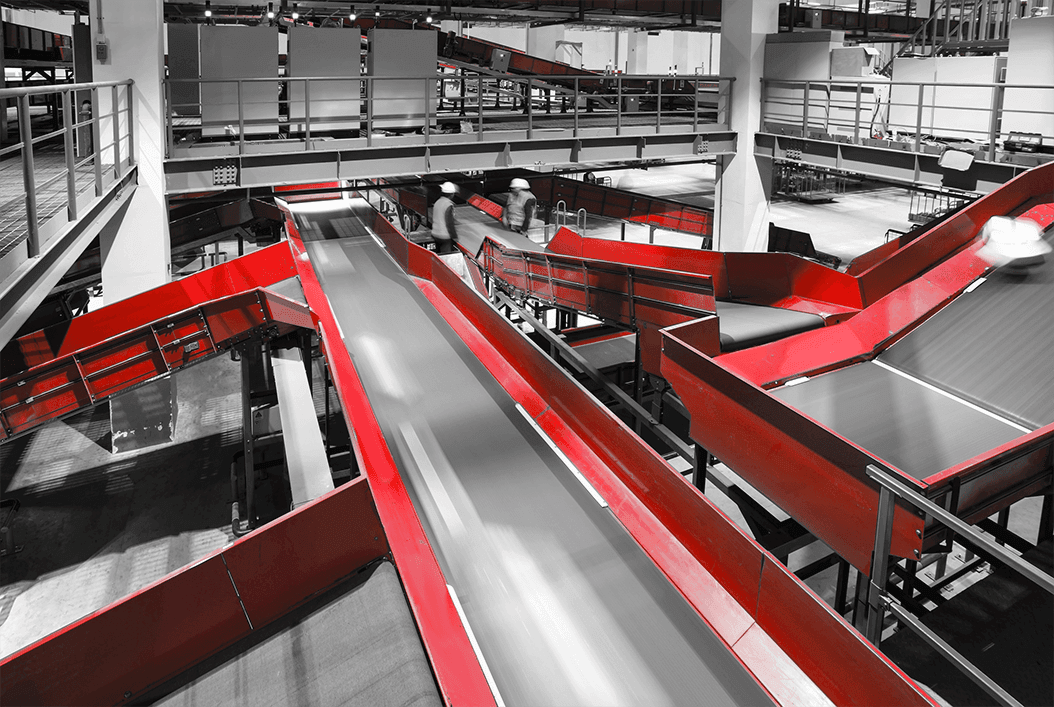
A large-scale automated conveyor system with a red belt, used for logistics and comprehensive material handling.

What Is A Conveyor System?

Conveyor systems are automated mechanical systems designed to move goods, materials, or products from one point to another within a facility. Whether you’re transporting small parcels across a fulfilment centre or shifting heavy components through a production line, conveyors are engineered to improve speed, efficiency, and workplace safety.

At MotionTech, we design and deliver conveyors tailored to the demands of modern industry - from manufacturing and warehousing to food, retail, and healthcare. Using belts, rollers, chains, or slats, our systems are built to handle a wide range of loads, streamline operations, and reduce manual handling. Below, we explore how conveyor systems work, the types available, and how they can add value across different industrial settings.

Definition

A conveyor, or conveyor system, is a piece of mechanical handling equipment that moves goods, materials or packages from one point to another along a fixed path, using belts, rollers, chains or gravity. Conveyors are used across warehousing, logistics and manufacturing to move product faster, more safely and with far less manual handling.

Looking for a system for your site? See our conveyor systems

Types of conveyor system at a glance

The main types of conveyor system and what each is best suited to.

TypeHow it moves the loadBest suited toRead more
Belt conveyorA continuous belt carries the load across horizontal or inclined planesItems from bulk materials to individual productsBelt conveyors
Roller conveyorCylindrical rollers on a frame let items roll along a defined path, powered or gravityLoads from lightweight parcels to heavy-duty industrial productsRoller conveyors
Chain conveyorA continuous chain, often fitted with plates, slats or buckets, carries the loadRobust material handling in industrial environments, including heavy loadsChain conveyors
Slat chain conveyorRigid slats on a chain give a flat, stable surfaceLong distances or complex lines, and items that might tip or shift on rollers, such as in bottling, packaging and automotive assemblyBespoke conveyor solutions
Modular belt conveyorInterlocking plastic segments form the beltFood, beverage and packaging lines that need easy cleaning, curved layouts and custom configurationsConveyor modules
Stainless steel conveyorStainless steel construction with easy washdownFood manufacturing, pharmaceuticals and cleanroom settingsBespoke conveyor solutions
Pallet and palletising conveyorPowered chain or roller modules move loaded pallets, and transfer packed goods to palletisersHeavy pallet loads and end-of-line palletising, with accumulation and indexingPallet conveyors
Overhead conveyorProducts move above work zonesFacilities where floor space is at a premium, such as retail, automotive and garment handlingOverhead conveyors

CONVEYOR SYSTEMS OVERVIEW


A conveyor system, also known as a conveyor, is used in many industries as a standard piece of mechanical handling equipment to move goods, products, raw goods, and other materials from one location to another, usually in the same area or building.

They are extremely handy for businesses that deal with heavy goods, sharp items, raw materials, and mass-produced products. This system allows for quick and efficient transportation of a business’s materials and products as well as being able to move heavy items such as cars down a production line which makes them popular in the material handling and packaging industries as well as the manufacturing industries. Although this is not their only use.

Types of Conveyor System Explained


At MotionTech, we offer a comprehensive range of conveyor systems designed to meet the unique demands of different industries, product types, and facility layouts. 


From lightweight parcel handling to heavy-duty industrial applications, each conveyor type is built for performance, durability, and seamless integration into your workflow. Below, you’ll find an overview of the most common conveyor systems we supply -  each engineered to improve efficiency, reduce manual labour, and support scalable automation.


spiral_conveyor_unibake


a conveyor as a conveyor systems warehouse


Industrial conveyor system for automated material handling in a logistics warehouse

Belt Conveyors

Belt conveyors are essential material handling systems used to efficiently transport a wide range of items, from bulk materials to individual products, across horizontal or inclined planes.

Roller Conveyors

Roller conveyors are versatile material handling systems that utilise a series of cylindrical rollers, mounted on a frame, to facilitate the smooth movement of objects along a defined path. These conveyors allow items to roll freely across the rollers, reducing friction and enabling efficient transportation.

Conveyor Rollers for Reliable Material Handling

Conveyor rollers play a vital role in supporting smooth product movement across warehouse and production environments. Whether used in gravity roller systems or powered applications, they provide low-friction transport that reduces wear on goods and equipment. At MotionTech, our roller conveyors are built to suit various load weights, from lightweight parcels to heavy-duty industrial products, helping maintain a consistent and reliable material flow throughout the facility.

Chain Conveyors

Chain conveyors are robust mechanical systems designed for efficient material handling in industrial environments. They utilise a continuous chain, often fitted with carriers like plates, slats, or buckets, to transport materials along a production line or within a facility.

Modular Belt Conveyors for Flexible Configurations

Modular belt conveyors are built for adaptability. Their interlocking plastic segments allow for easy cleaning, curved layouts, and custom configurations to fit unique spaces. Ideal for food, beverage, and packaging industries, these conveyors offer hygienic transport of goods with reduced maintenance downtime. Their durability and ease of modification make them a preferred choice for businesses needing scalable, flexible automation.

Stainless Steel Conveyors for Hygienic Environments

For industries where cleanliness and corrosion resistance are essential, stainless steel conveyors provide the ideal solution. These systems are widely used in food manufacturing, pharmaceuticals, and cleanroom settings, offering easy washdown capabilities and long-term durability. MotionTech’s stainless conveyor designs meet the strictest hygiene standards while maintaining efficient material flow in sensitive environments.

Slat Chain Conveyors for Controlled Movement

Slat chain conveyors are well-suited to applications that require stable product movement over long distances or through complex production lines. Often found in bottling plants, packaging facilities, and automotive assembly, these conveyors provide a flat, stable surface for transporting items that might tip or shift on traditional rollers. Their rigid slats are typically constructed from stainless steel or engineering-grade plastics to handle heavy loads with ease.

Palletising Conveyors for End-of-Line Efficiency

Palletising conveyors are essential for automating the final stages of the production process. These systems transfer packed goods from assembly or packing areas directly to robotic palletisers or manual loading zones. By incorporating accumulation zones and indexing capabilities, palletising conveyors help coordinate the flow of products and ensure precise placement for stacking, wrapping, or loading operations.

How a conveyor system works


Every conveyor system does the same basic job: it holds a load on a moving or low-friction surface and carries it along a set path. What changes from one type to the next is how the load is carried.

Drive

An electric motor and gearbox turn a drive pulley, roller or sprocket.

Belt conveyors

The drive pulley pulls a continuous belt around the frame, and friction carries the load.

Roller conveyors

The load rests on rollers. They are powered by a belt, chain or line shaft, or left unpowered as a gravity roller conveyor, where a slight decline or a push moves the load.

Chain conveyors

Sprockets pull a continuous chain that carries pallets, totes or hanging loads.

Controls

Sensors and a control panel start, stop and space the loads, so they accumulate, merge or divert without collisions.

Key components of a conveyor system


Whatever the type, most conveyor systems are built from the same five parts.

Frame and supports

The structure that holds everything at the right height and keeps the line rigid and level.

Drive unit

The motor, gearbox and drive pulley or sprocket that provide the movement.

Carrying surface

The belt, rollers, chain or slats that the load actually sits on.

Sensors and controls

Photo eyes, a control panel and software that manage speed, spacing and diverting.

Guarding and safety

Emergency stops, guards and pull cords that protect operators.

Planning an automation project?

If you are choosing a conveyor for a live project, our engineers can help you match the type to your product, throughput and layout.

Explore our bespoke conveyor solutions, belt conveyors and pallet handling systems.

Wondering what affects the price? See how much a conveyor system costs and what drives the price.

Discuss your project with our engineers

Consumer applications of conveyor systems

Conveyor systems are also popular in consumer applications for food and people transportation such as supermarkets, sushi restaurants, airports, and shopping centres. So not only do they transport heavy items, but they are also useful for moving small plates and people more quickly and efficiently. Quite handy to use one in the airport if you’re going between gates and you’re running late for a flight. They are usually fixed into positions with ancillary equipment and addons being available for them so they can connect to an existing or non-conveyor system. 


You can get portable systems which can be moved around with ease. This way you can put the conveyor into a different floor plan and move depending on the volume of products. Portable conveyor systems also known as mobile line shaft conveyors are popular in the Logistics and parcel delivery industry due to being able to be configured for the number of parcels coming in or being moved to another department that might get an influx of deliveries throughout the day, week, month, or year.

Conveyor Solutions by Industry


Our conveyor systems are engineered to meet the demands of a wide range of industries, from fast-paced e-commerce hubs to highly regulated pharmaceutical environments. Modern industrial conveyor systems can be configured for warehousing, logistics, food production, pharmaceutical handling and automated manufacturing processes, ensuring efficient and reliable product movement across every stage of an operation.


Whether you need to move lightweight packages or heavy-duty components, our solutions are tailored to optimise workflow, boost efficiency, and maintain operational safety. Explore how we support your sector below.


	 YoSushi conveyor system

Manufacturing

Automated conveyor systems streamline assembly, reduce manual handling, and increase production efficiency across a wide range of manufacturing processes.

Food & Beverage

Hygienic conveyors designed for food safety and washdown environments help transport ingredients, packaged goods, and more with full compliance.

Retail

Improve in-store logistics and stockroom efficiency with conveyor systems that support high-volume sorting, returns processing, and seasonal demand peaks.

E-Commerce

E-Commerce. From order fulfilment to last-mile dispatch, conveyors support rapid throughput, real-time tracking, and seamless integration with automation technologies.

Grocery

Ensure efficient shelf replenishment, backroom storage, and distribution centre handling with conveyors built for high SKU turnover and mixed product handling.

Healthcare

Support hospital logistics, pharmaceutical packaging, and laboratory automation with cleanroom-ready and compact conveyor solutions.

Automotive

Support assembly lines, parts distribution, and body-in-white handling with robust conveyor systems tailored to automotive manufacturing standards.

Benefits: Conveyor systems offer numerous advantages


It’s easy to see why an increasing number of companies and industries are using conveyor systems with the numerous benefits they provide. We’ve listed some of the major benefits here.

Safe Vertical Transport

They can safely transport materials from one level to another through elevated systems.

Easy Installation & Improved Workplace Safety

They can be installed in most situations while usually being able to add value and increase the safety of the workplace due to automation, fail safes, and safeguards

High Capacity Handling

They can move high quantities of items in various shapes, sizes, and weights.

Built-In Safety Features

They have advanced safety features that prevent accidents and injuries while increasing the throughput of the system

Flexible Power & Control Options

They offer a variety of options to run the conveying systems, including the hydraulic, mechanical, and fully automated systems which are equipped to fit individual needs

GROWTH OF CONVEYOR SYSTEMS

Conveyor systems are growing in use and popularity. In the commercial and civil sectors, businesses are rapidly increasing their implementation at places like airports, shopping centres, stadiums, and restaurants.


These systems are highly popular in the manufacturing and packaging industries as well as production plants and with the amount of demand for these products going up, the systems excel at allowing businesses to meet consumer demand and for that reason are more in need in a manufacturing process than ever. Commonly purchased types are line shaft roller, chain, and conveyor belt systems.

Roller_Conveyor

Uses of a conveyor system

A conveyor system is commonly used in the mining, automotive, agricultural, food and beverage, bottling, manufacturing, warehouse and logistics, and packaging industries


All sorts of materials are conveyed thanks to the different conveyor belts you can get to manage different loads and materials. Some of the common items that are used by conveyors are food items such as beans, nuts, canned foods, and vegetables, bottles, canned drinks, automotive parts such as engines, car frames, and tyres, pills such as medicine or supplements, large amounts of powder, furniture, and much more.


Whether you need a conveyor system and what conveyor you need depends on what you require of the system and therefore you need to outline how the conveyor system will be used beforehand.  These factors include what it will be transporting, loads of that item(s), the speed of the conveyor, how much it needs to accumulate at a time, how long it takes to sort the items, where the pickup points are, the widths and lengths, and in cases many more factors to ensure it meets your businesses desired outcomes.


Maintaining a Conveyor System


As useful as conveyor systems can be, they do need to be maintained for the conveyor system to run effectively or just like any electrical item they can break and be costly to replace, both in time and in money if a big system has a bespoke design.


Businesses should make looking after their conveyor systems a priority to ensure no loss of business or disruption to their manufacturing, packaging, or delivery process. You can, of course, analyse the running of your system through a human-machine interface (HMI) which allows you to analyse and monitor previous and real-time data. 


Certain aspects to ensure that they work at optimum capacities such as regular inspections, system audits, close monitoring of motors, ensuring spares are in stock for changeovers should be looked at. Also, ensuring that the operational team are trained on running the system and are aware of what to look for when identifying errors or problems is necessary.


There are ways you can increase a conveyor’s life or the system cycles they run by choosing the right conveyor type when installing the system, making sure the system is designed to fit the layout or goes through the correct areas at optimum speed, and ensuring the system is regularly maintained.


Depending on the conveyor system installed there will be different functional problems you’ll have to watch out for. A roller conveyor used for moving parcels is going to need different maintenance to an overhead chain conveyor moving car frames or a belt conveyor moving high amounts of papers compared to a pallet conveyor moving heavy loads of goods.


Again, if the conveyor is being used in harsher conditions such as in below-freezing temperatures there will be different maintenance procedures to ensure optimum running.


It’s recommended to have the approach of preventive maintenance over reactive maintenance, this way you can stop your conveyor or motor from getting to a point where it’s damaged which could result in further damage down the line. Doing preventative maintenance allows you to schedule sorting the system at intervals with a likely lower cost than waiting for the system to break and then having additional downtime of the whole system which could be in peak time.


Materials Used in a Conveyor System for Impact and Wear Resistance


Conveyor systems need to be resistant to impact and wear due to the high volume of items they’re moving that can be sharp and heavy and not be seized up due to deformation.


The handling materials that these systems use include UHMW, nylon, Nylatron NSM, HDPE, Tivar, Tivar ESd, and polyurethane. The handling material used will depend on the function of the conveyor and where static control is a factor, the conveyor system will need special materials to be designed to either dissipate or conduct electrical charges from the conveyor.

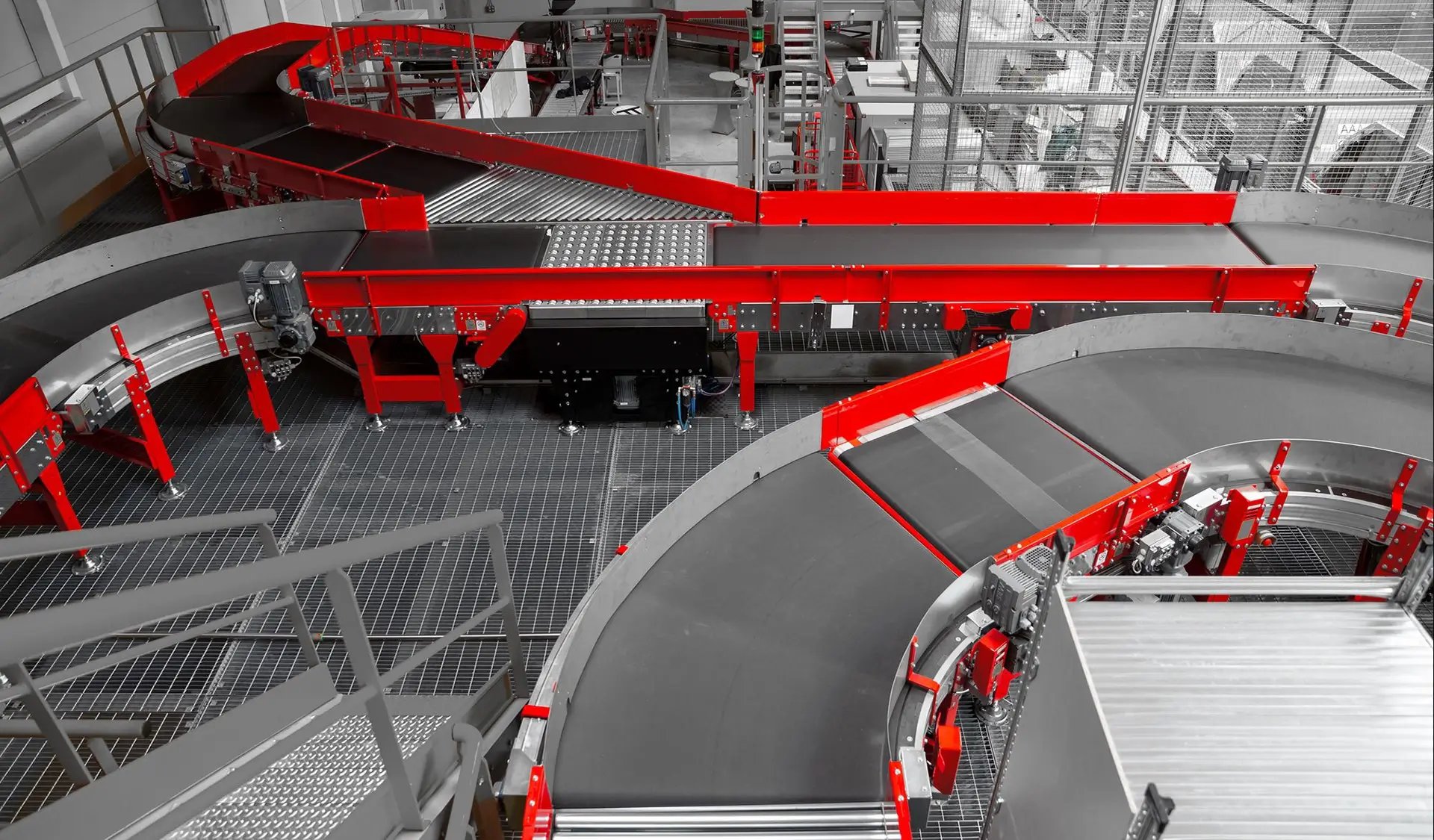
The MotionTech conveyor range

MotionTech’s range covers belt, roller, slat, chain, pallet, spiral and vertical conveyors, built from stainless steel, aluminium and painted steel to suit the load and the environment. Powered conveyors can be specified with speed control, accumulation zones and sensors, gravity rollers provide simple unpowered runs, and inclined and vertical conveyors move product between levels. Explore our full conveyor systems range or talk to our engineers about a bespoke build.

OTHER TYPES OF CONVEYOR SYSTEMS

Lineshaft roller conveyor

Rollers driven by a shared spinning shaft, widely used for parcels and cartons. See roller conveyors.

Motorised-drive roller conveyor

Individual rollers with built-in motors, giving zoned control and accumulation. See 24V conveyor modules.

Belt-driven live roller

Rollers turned by a belt running beneath them, a quiet option for light to medium loads.

Chain-driven live roller

Rollers driven by a chain, suited to heavy pallets and tougher environments.

Gravity and skate wheel conveyor

Unpowered runs where product moves on rollers or wheels down a slight decline or by hand. See gravity roller conveyors.

Overhead I-beam conveyor

Loads carried on trolleys along an overhead track, freeing up floor space. See overhead conveyors.

Overland conveyor

Long-distance belt systems for moving bulk material across a site.

Spiral conveyor

Raises or lowers product continuously in a compact footprint. See spiral conveyors.

Vertical conveyor

Moves product between floors or mezzanines. See vertical conveyor systems.

Pneumatic conveyor

Moves powders and granules through pipes using air pressure or vacuum.

Screw or auger conveyor

A rotating screw that moves bulk material along a trough. See screw conveyors.

Bucket conveyor

Buckets on a belt or chain that lift bulk material vertically.

Drag conveyor

A chain with paddles that drags bulk material through an enclosed trough.

Vibrating conveyor

A vibrating tray that moves product forward, often used for feeding or sorting.

Wire mesh conveyor

An open-weave metal belt for heat, cooling, washing or draining.

Plastic belt conveyor

Interlocking plastic modules that suit curves and washdown cleaning. See modular belt conveyors.

Flexible conveyor

Extendable sections that can be moved to follow the work.

Pharmaceutical conveyor

Hygienic, easy-clean designs for regulated and cleanroom production. See pharmaceutical conveyors.

Dust-proof conveyor

Enclosed designs that contain dust and protect the product from contamination.

Automotive conveyor

Heavy-duty lines for car bodies, parts and assembly.

Electric track vehicle systems

Self-propelled carriers running on a fixed track.

Aero-mechanical conveyor

Discs on a cable inside a tube that move bulk powders gently.

Overhead Conveyors for Space Efficiency


Overhead conveyors are ideal for facilities where floor space is at a premium. These systems allow products to move above work zones, freeing up valuable ground-level space for packing, processing, or customer-facing tasks. Commonly used in retail, automotive, and garment handling environments, overhead conveyors are engineered for continuous material flow and can be seamlessly integrated with existing automation systems. Their suspended design also improves safety by reducing trip hazards and forklift traffic.


Rotary Turntables and Carousel Conveyors


Where change of direction or product accumulation is required, rotary turntables and carousel conveyors provide simple yet effective solutions. These systems are often used in conjunction with floor conveyors and packing stations, allowing for buffering, sorting, or reorientation of goods. Rotary turntables can rotate products for inspection or redirection, while carousel conveyors offer continuous loop movement for order picking or storage systems.


Automation Solutions for Modern Facilities


Conveyor systems are a core part of wider automation solutions that include sensors, control software, and robotics. At MotionTech, our conveyors are often deployed as part of fully integrated automation systems designed to streamline production lines, increase throughput, and reduce reliance on manual labour. These end-to-end automation solutions can be tailored for specific industries such as food processing, logistics, and pharmaceuticals, ensuring precise material handling across every stage of the workflow.


Warehouse Automation and Conveyor Integration


Warehouse automation depends heavily on the intelligent use of conveyors to support picking, packing, sortation, and dispatch. By integrating belt, roller, and overhead conveyors into your warehouse layout, businesses can achieve faster order fulfilment, reduced errors, and improved inventory control. Our systems work alongside automation technologies such as barcode scanners, vision systems, and Warehouse Control Systems (WCS) to optimise throughput and maintain accuracy at scale.


From Floor Conveyors to Full System Design


Whether it’s a basic floor conveyor or a complex, multi-level automation system, the success of any conveyor setup begins with proper design and development. At MotionTech, we work closely with clients to understand their layout, product flow, and business goals before delivering bespoke systems that integrate seamlessly with existing infrastructure. From initial planning to final commissioning, our end-to-end service ensures every conveyor solution is built for longevity, safety, and performance.

DO YOU NEED A CONVEYOR SYSTEM?

At MotionTech, we specialise in designing bespoke conveyor systems to meet the specific needs of businesses across a wide range of industries, including logistics, food processing, and assembly lines.

We offer an extensive range of conveyor solutions, featuring gravity roller conveyors, inclined belt conveyors, and pneumatic conveying systems, all engineered for smooth movement, continuous operation, and maximum efficiency. Whether transporting bulky materials, managing high volumes of products, or ensuring precise control in material movement, our systems are tailored to deliver exceptional performance.

Our customised conveyor systems incorporate cutting-edge control systems and premium conveyor components, ensuring compliance with the highest industry standards. Designed for both manual integration and continuous loop operations, they are ideal for seamless performance in assembly processes and other demanding applications.

Partnering with leading conveyor manufacturers, we deliver solutions that excel in conveyor technology, offering flexibility, durability, and scalability for conveyor lines in fast-paced environments. Whether you need a conveyor system for bulk products or to streamline operations, we’re here to help. Contact us today to discuss your needs and create a bespoke solution for your business.

Explore our guide to material handling automation.

If you are planning a new material handling setup, explore our bespoke conveyor systems designed around throughput, layout and long-term scalability.

Conveyors FAQS