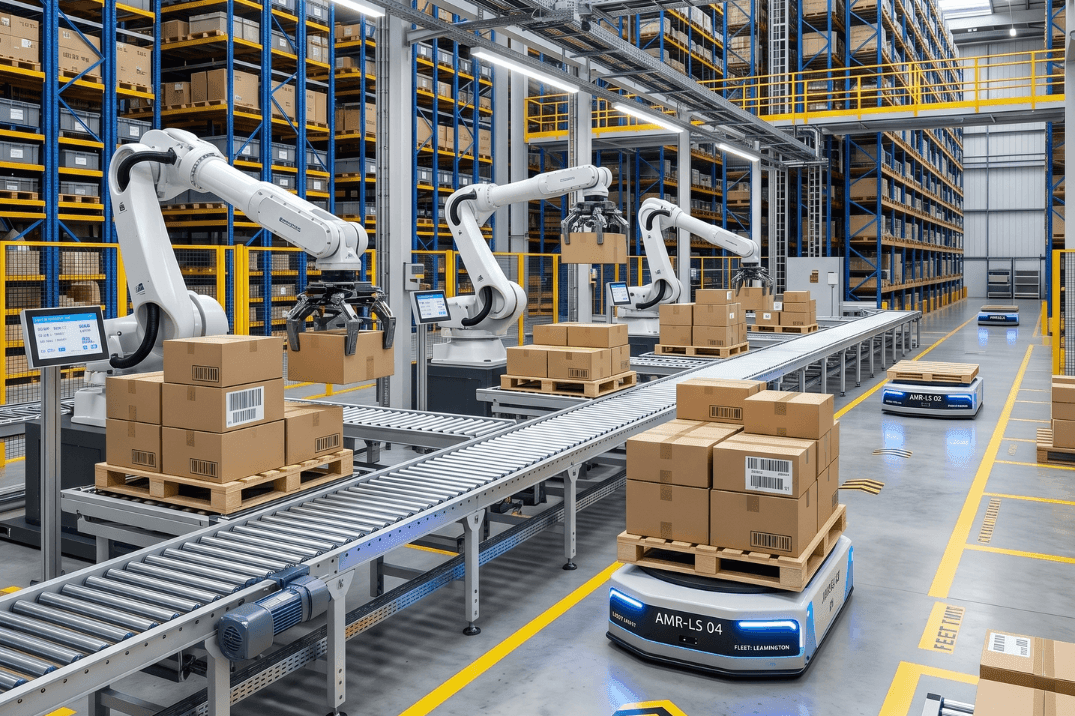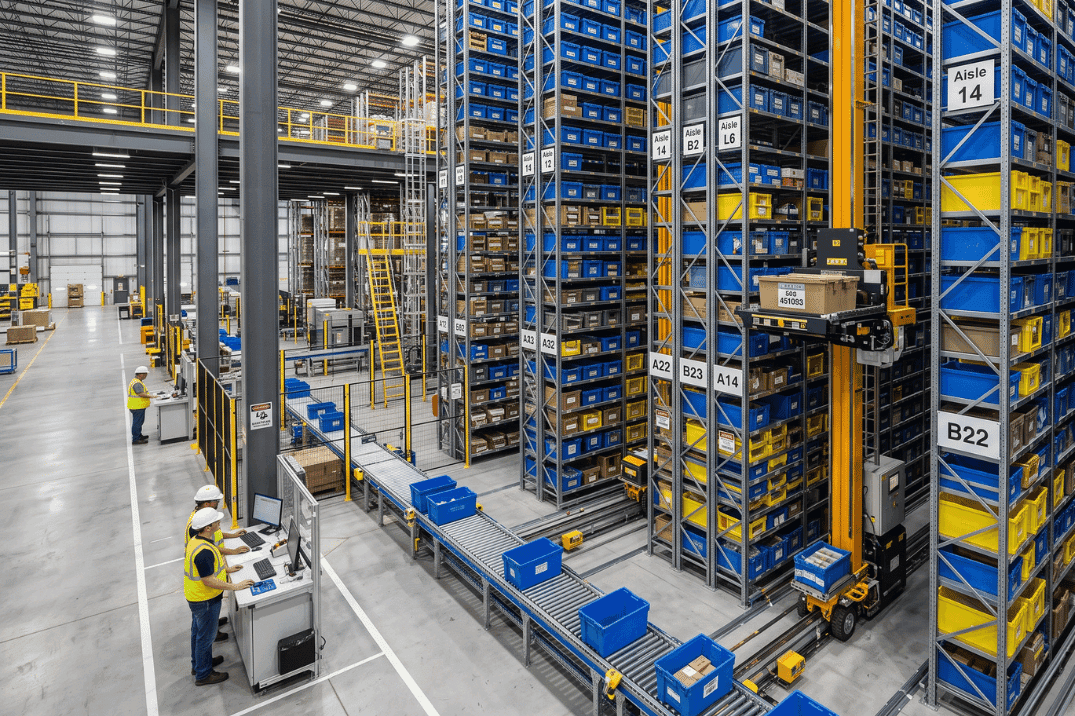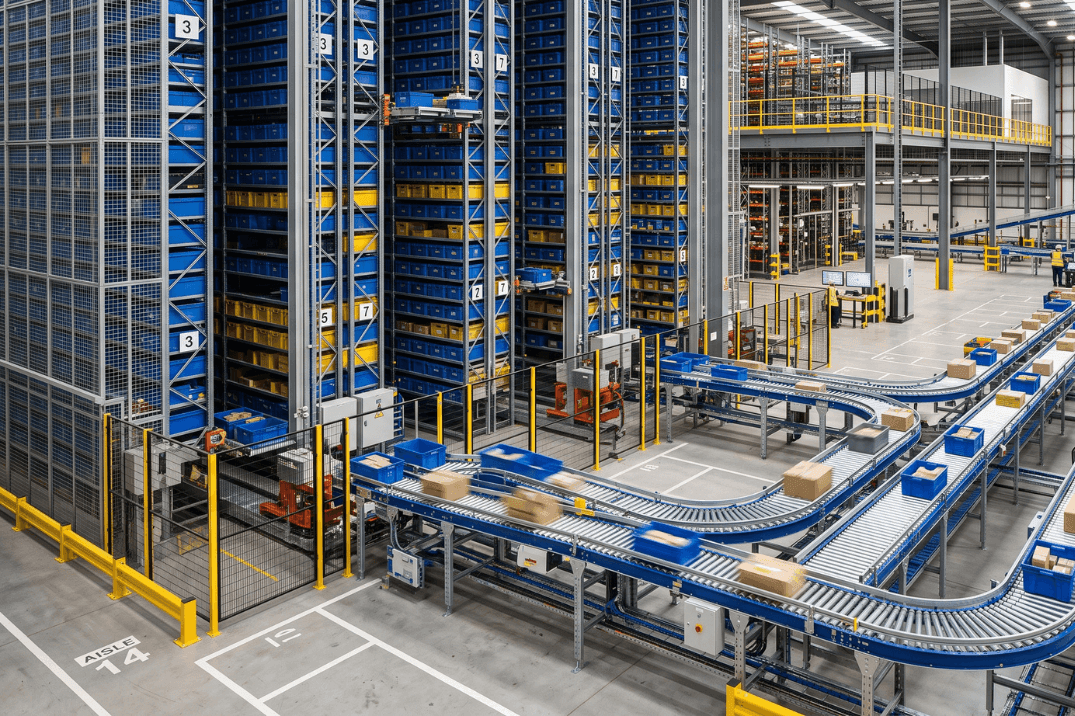
Integrated ASRS and conveyor system moving totes and cartons between automated storage and warehouse processing areas.

ASRS vs Conveyor Systems: Key Differences and When to Use Each

Warehouses across the UK are under mounting pressure to move more product, faster, with less available labour. Automation has become the default response, but choosing the right technology is rarely straightforward. ASRS vs conveyor systems are often positioned as competing choices when in practice they solve different problems within the same facility.

Key takeaways
  • Different jobs: ASRS is built for storage density and efficiency; conveyors are built for movement, throughput and order fulfilment.
  • ASRS comes in types: Unit-Load, Mini-load and Shuttle-Based, using stacker cranes, shuttles, vertical lift modules and carousels.
  • Conveyors connect the flow: they link picking, packing and dispatch and integrate easily with existing manual processes and sortation.
  • They work best together: most modern warehouses combine both, coordinated by a WMS and WCS.
  • The choice is situational: it depends on floor space, SKU profile, throughput and labour costs, and is often a bespoke design.

What Is ASRS?

Automated Storage and Retrieval Systems (AS/RS) are engineered structures that store and retrieve goods using automated mechanisms such as shuttle systems, stacker cranes, or autonomous vehicles. 


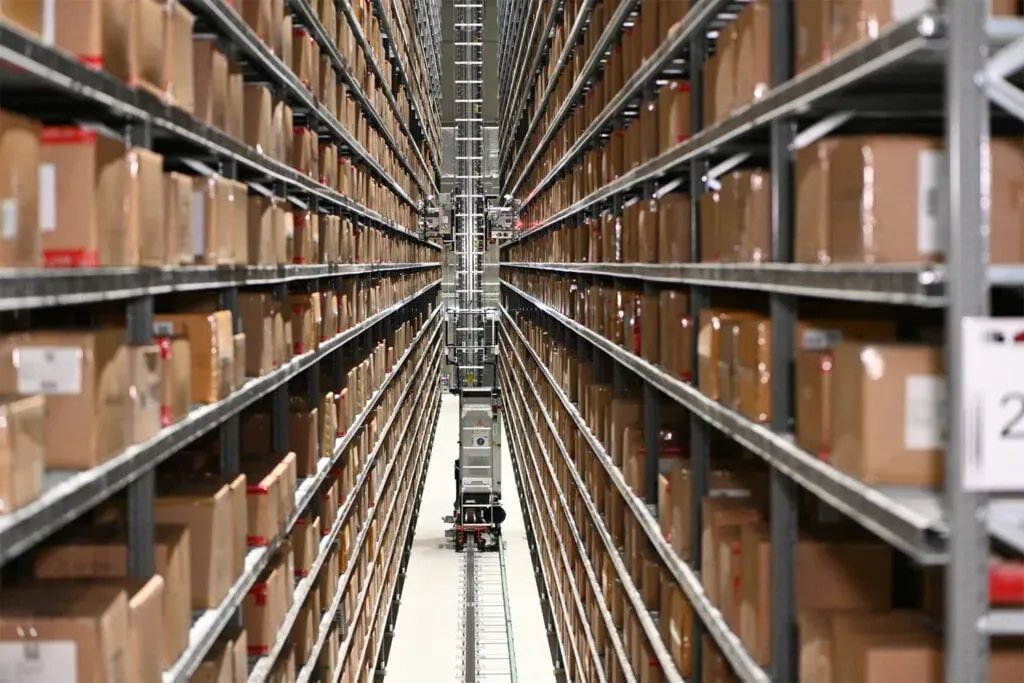
They operate within a fixed racking structure, often extending vertically to make full use of available cubic space. AS/RS is typically deployed where storage density and inventory accuracy are the primary drivers, supporting precise inventory management across dense storage.

Automated storage and retrieval system using high-density racking and automated machinery to store and retrieve totes.

Types of AS/RS


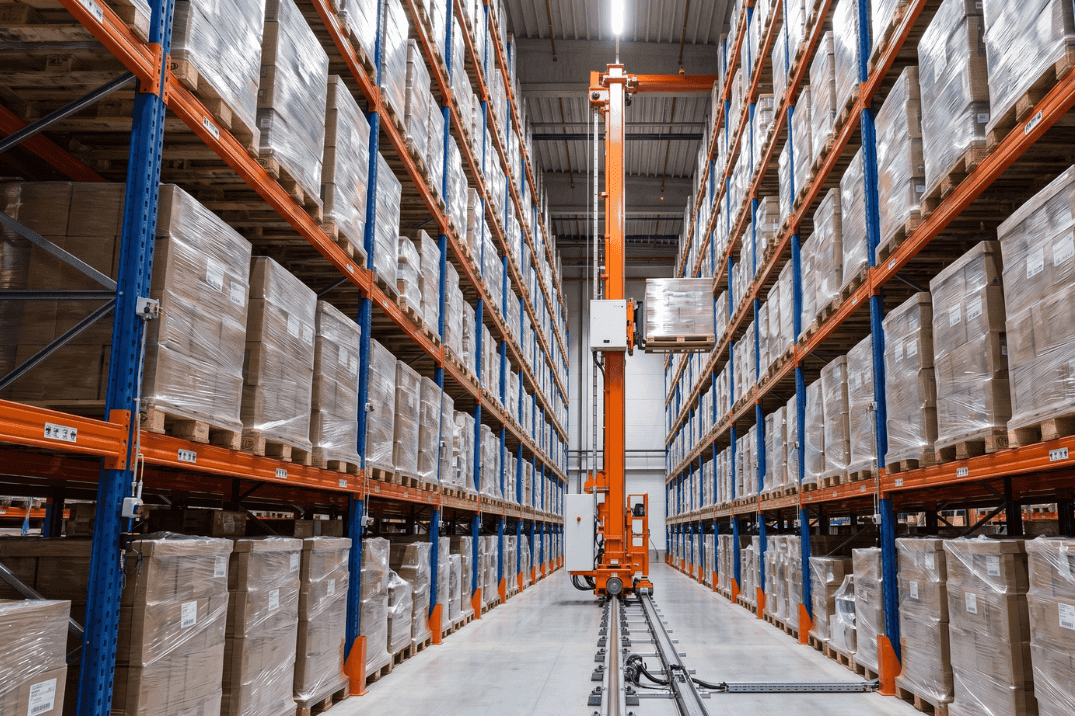
Unit-Load ASRS

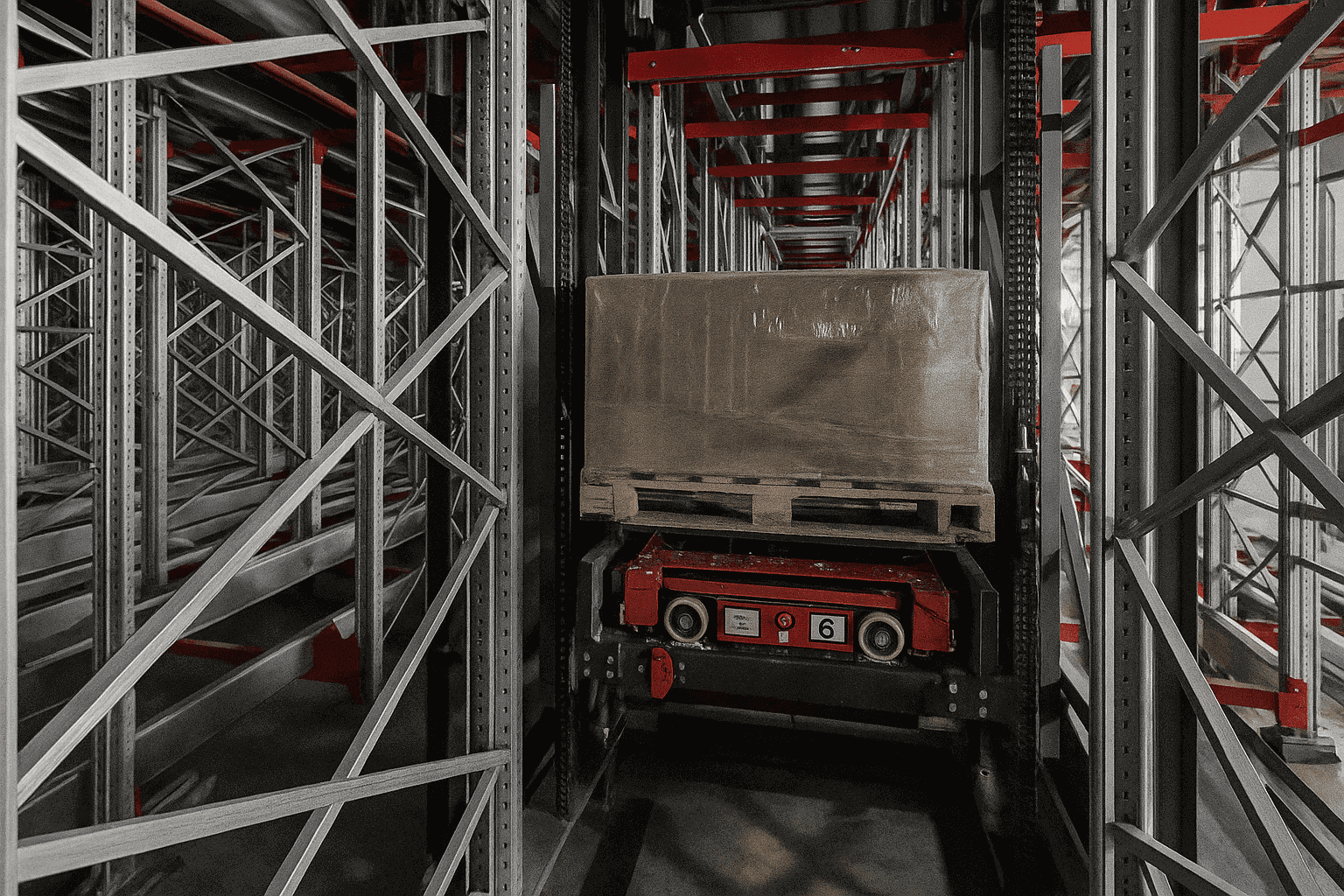
Unit-load systems where stacker cranes store and retrieve full pallets within fixed storage lanes.

Mini-load systems

Compact case storage and tote handling for smaller loads within dense storage lanes.

Shuttle-Based ASRS

Robotic shuttles move loads horizontally within the racking systems, with lifts handling vertical travel.

Vertical Lift Modules and carousels

A vertical lift module, vertical carousel or horizontal carousels bring stored items to the operator (goods-to-person).

What Is a Conveyor System?

A conveyor system is a mechanical material handling solution that moves goods along a fixed path between two or more points. 


Conveyors range from simple belt and roller configurations to complex sortation networks incorporating diverts, merges, and vision-guided routing. Their core function is movement, not storage, making them the backbone of transport within a facility rather than the answer to space constraints.

Powered roller and belt conveyor system transporting cartons and totes through a warehouse.

Core Differences in Function

The fundamental distinction between the two technologies lies in purpose. AS/RS is built to store: it maximises cubic storage density and automates the retrieval of specific SKUs on demand, supporting accurate inventory management. Conveyor systems are built to move: they connect processes such as picking, packing, and dispatch with minimal manual intervention.

Aspect ASRS Conveyor
Primary purposeStorage density and retrievalMovement and throughput
Storage densityMaximises vertical, cubic spaceNot designed for storage
Throughput and flowOn-demand SKU retrievalContinuous, high-speed flow
Layout flexibilityFixed once installedEasily reconfigured or extended
Labour dependencyCuts order-picking labourCuts goods-movement labour

When to Use Each

The stronger case for each technology comes down to whether your priority is dense storage or continuous movement.

ASRS makes the stronger case when
  • Floor space is constrained
  • You manage a high SKU count with variable demand
  • Cold storage or pharmaceutical, high-density needs
  • Retrieval speed and picking accuracy are priorities
Conveyors make the stronger case when
  • You need high, steady throughput between fixed points
  • Parcel sortation, food and beverage lines, end-of-line palletising
  • You want to integrate with existing manual processes
  • Phased automation over one large capital outlay

Facilities constrained by floor space, or those managing a high SKU count with variable demand, tend to benefit most from AS/RS. Cold storage and pharmaceutical operations are common adopters, since AS/RS enables high-density storage where manual picking is costly or impractical. Operations with high, steady throughput, such as parcel sortation, food and beverage production lines, or end-of-line palletising, are typically better served by conveyor systems, which also integrate well with existing manual processes and allow phased automation.

Integration With Other Technologies


In most modern warehouses, the choice is not exclusively ASRS vs conveyor systems, since the two are frequently combined within a single, cohesive operation. AS/RS handles bulk storage and retrieval, feeding totes or pallets onto conveyor networks that transport goods onward to picking, packing, or dispatch. This combination is increasingly common in grocery and 3PL environments, where storage density and continuous flow are both business-critical.

Robotics Integration

Autonomous mobile robots (AMRs) and Automated Guided Vehicles (AGVs) can transport goods between AS/RS output points and conveyor lines, and [collaborative robots](/what-are-cobots) can support picking, reducing manual handling further.

WCS and WMS Integration

A warehouse control system (WCS) coordinates AS/RS and conveyor operations in real time, alongside the warehouse management system (WMS) and its inventory management, ensuring efficient sequencing and minimal downtime.

Sortation Technology

High-speed sortation systems are often positioned downstream of AS/RS retrieval points to route goods to the correct dispatch lane.

Making the Right Choice

The decision between ASRS vs conveyor systems ultimately depends on the specific constraints of the operation: available space, SKU profile, throughput requirements, and budget. Facilities with limited floor space and high SKU density will lean towards AS/RS, while those prioritising continuous, high-volume flow will find conveyors more suitable. In many cases, the most effective answer is not one or the other but a bespoke solution that combines both.

Building a Scalable Automation Strategy

As UK warehousing continues to face pressure from labour shortages and rising e-commerce demand, both AS/RS and conveyor systems will remain central to automation strategy. 


Rather than treating the decision as binary, operators are increasingly designing integrated systems with a scalable design that draws on the strengths of each technology to deliver a scalable, future-proof operation.

Large automated warehouse combining conveyor systems, high-density automated storage and mobile robots for material handling.

ASRS, conveyors, or both?

We design bespoke solutions that combine the strengths of each around your space, SKU profile, and throughput.

Speak to a specialist

Frequently Asked Questions