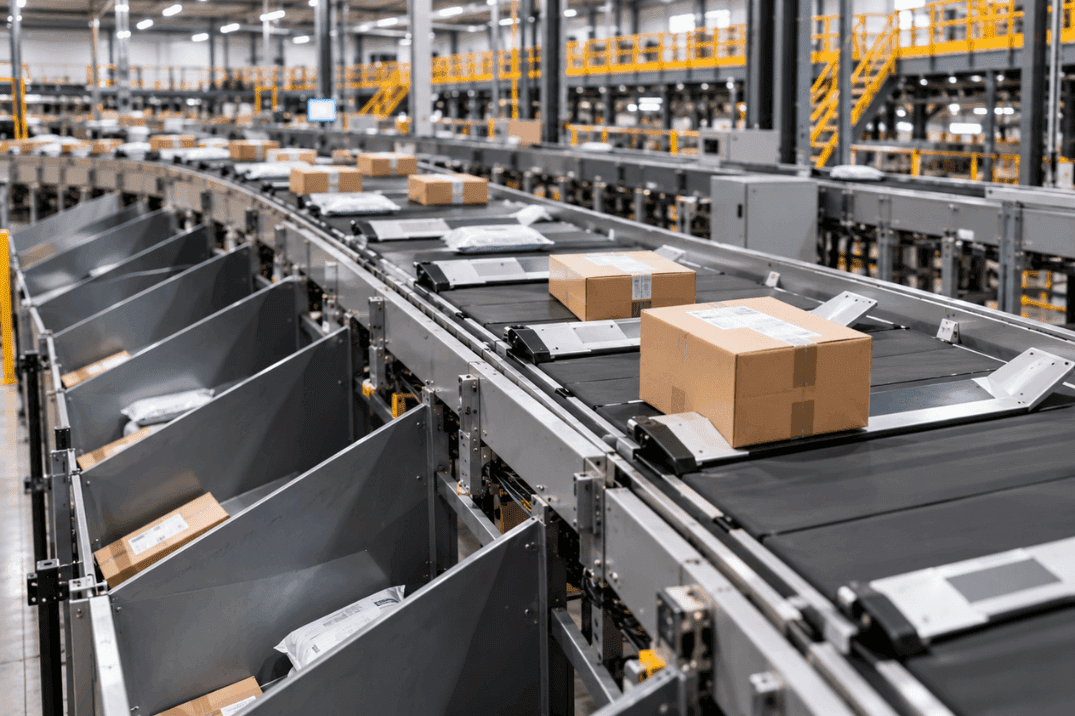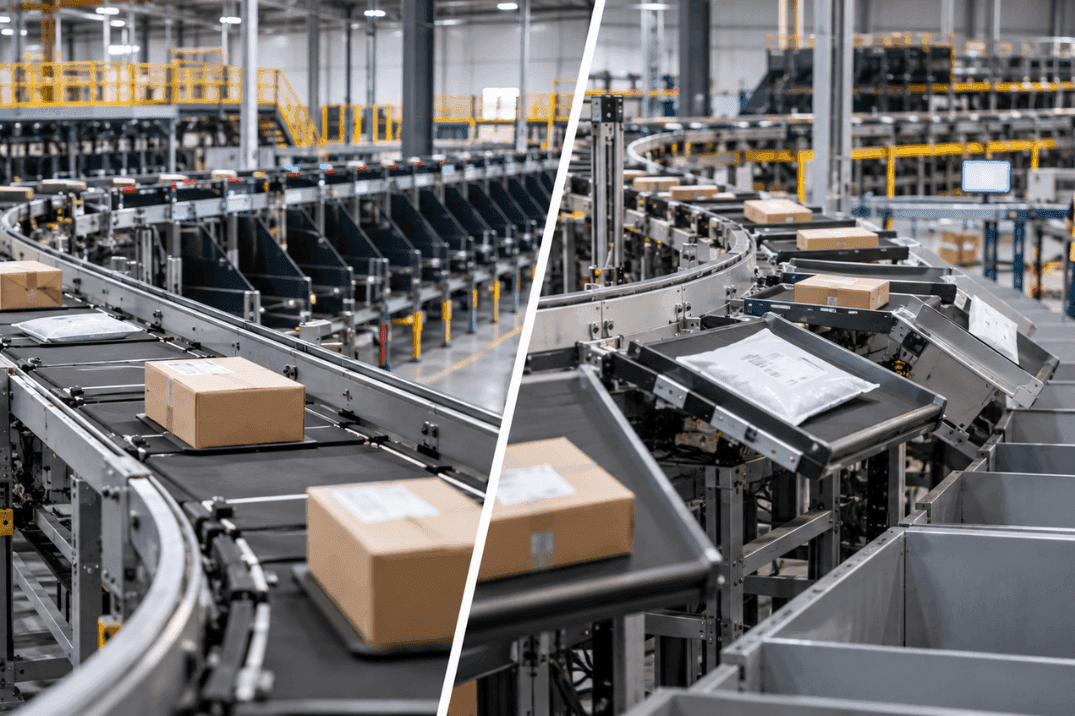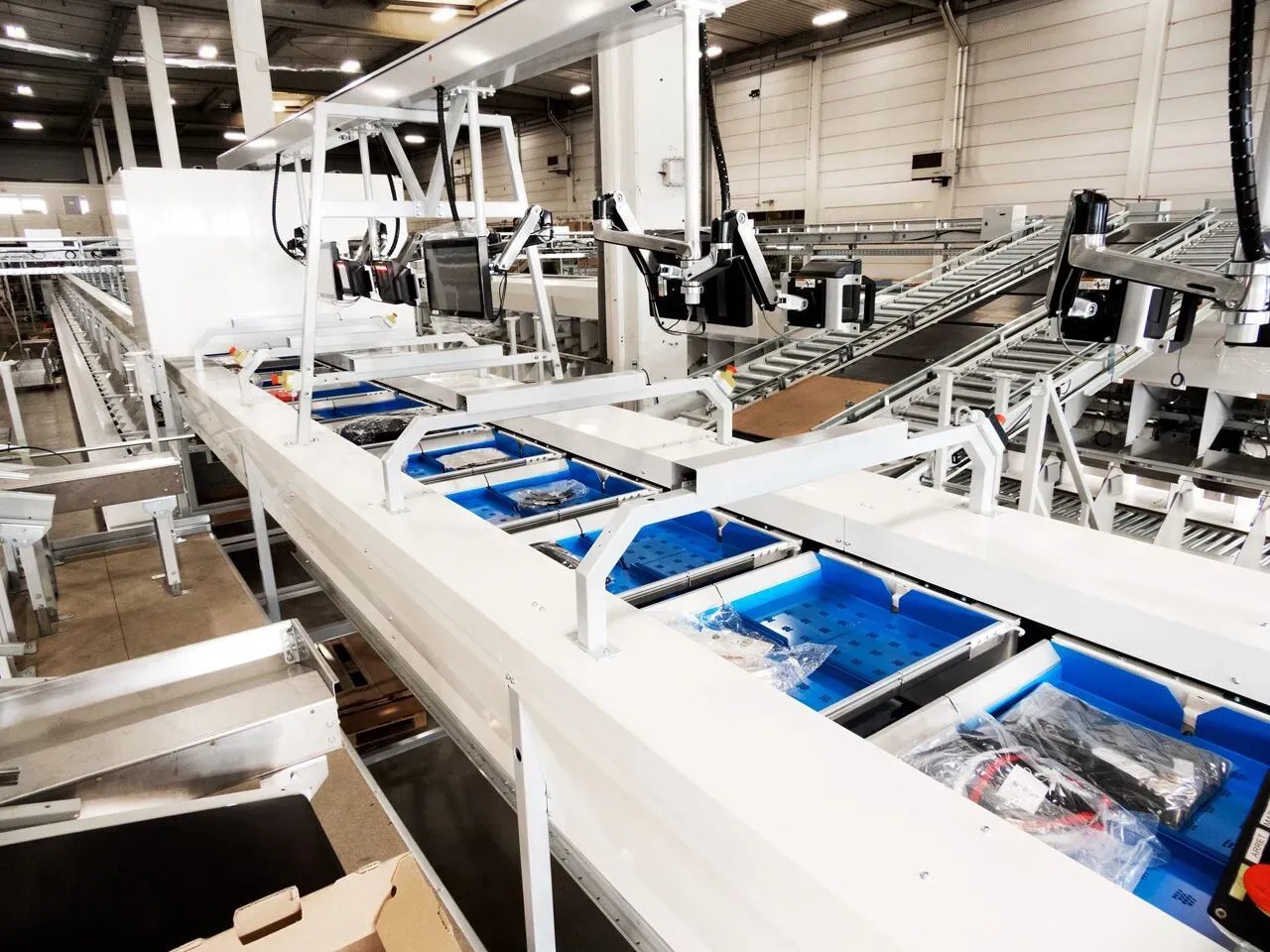
Automated conveyor sortation system processing returned apparel, parcels and polybags in an e-commerce fulfilment centre.

Conveyor Sortation for E-commerce Returns

In fashion and footwear, return rates routinely reach a third of everything despatched, and for UK e-commerce retailers that returns burden keeps growing faster than the sales driving it. Every returned parcel has to be received, inspected, graded, and put back into stock before it can generate revenue again. Manual reverse logistics struggles under that volume, tying up floor space and skilled labour in a manual process that adds cost rather than margin. Returns automation, built around conveyor sortation, is increasingly adopted to bring throughput and control to return logistics, often the least disciplined area of the warehouse.

Key points

✓Returns automation uses conveyor sortation to turn grading decisions into physical routing.
✓Operators grade the item; the conveyor handles induction, transport, accumulation and diversion.
✓It scales with volume, not headcount, replacing a manual process that ties up floor space and labour.
✓Sorter choice (sliding-shoe, cross-belt, tilt-tray, pop-up) follows the mixed returns product profile.
✓The payoff is faster stock recovery, better traceability and peak handling without temporary labour.

Why Are Returns Harder to Automate Than Outbound Orders?

Outbound fulfilment deals in known quantities: a picked order, a predictable carton, a scheduled despatch slot. Returns arrive as a random mix of SKUs, packaging formats, and product conditions, with little advance notice of what is inside, often only the data captured when the customer initiated the return through one of the retailer’s e-commerce platforms. That variability is why return logistics has remained stubbornly manual in many operations.


Each returned item also requires a decision rather than simply a movement. Grading determines whether goods go back to prime stock, to refurbishment, to clearance, or to disposal, and each of those outcomes has a different physical destination within the building.

Comparison of automated outbound parcel handling and manual e-commerce returns inspection in a fulfilment centre.

How Conveyor Sortation Enables Returns Automation

A conveyor sortation system turns those grading decisions into physical routing. Items are inducted onto the conveyor at the goods-in point, scanned to confirm identity, then diverted automatically to the destination matched to their disposition code. The operator makes the judgement; the system does the handling.


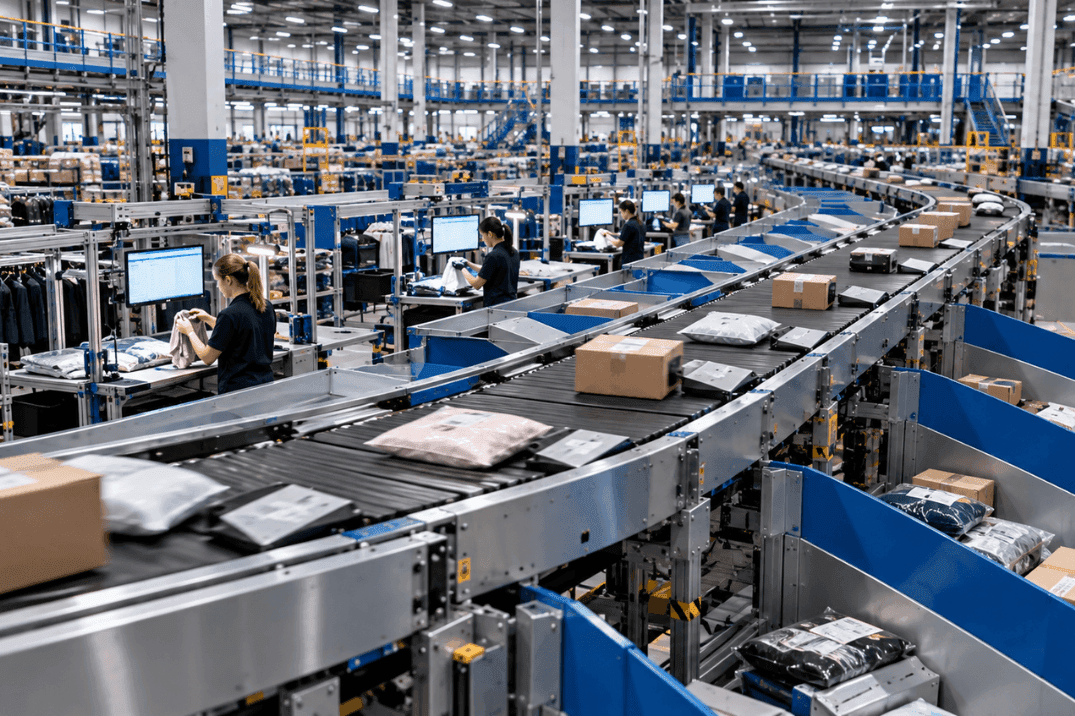
That separation is the point. Decision-making stays with trained staff at inspection stations, while transport, accumulation, and diversion are absorbed by the conveyor. The outcome is a returns automation process that scales with volume rather than with headcount.

Sortation Technologies Used in Returns Automation


Returns present genuinely mixed loads, from polybags to boxed goods to loose items in totes, so sorter selection is driven by product characteristics as much as by throughput. The technologies most commonly deployed include:

Sliding-Shoe Sorters

Gentle, high-capacity diverting suited to cartons and boxed goods where product protection matters as much as speed.

Cross-Belt Sorters

Individual belted carriers handle small, irregular, and lightweight items such as polybagged garments that resist reliable diverting by other means.

Tilt-Tray Sorters

A strong fit for mixed-size items and high destination counts, particularly where returns are graded across many disposition routes.

Pop-Up Wheel and Roller Diverters

A cost-effective option for lower-volume operations, or for splitting flow between a small number of processing zones.

These options are rarely used in isolation. A single returns line may combine a simple diverter at induction with a cross-belt sorter downstream, creating a bespoke solution shaped around the product mix rather than a standard template.

By the numbers
1/3
Return rate in fashion and footwear
4
Disposition routes per returned item
24/7
Peaks absorbed on running hours, not temp staff
1 line
Polybags, cartons and totes together

Benefits of Returns Automation


Automating the reverse flow delivers commercial gains that reach well beyond the warehouse floor. The most consistent benefits include:

Faster Stock Recovery

Shorter dwell time between receipt and resale means saleable goods return to the available inventory pool while demand still exists.

Reduced Labour Dependency

Conveyor sortation removes repetitive walking and carrying, allowing existing teams to concentrate on inspection and grading.

Improved Traceability

Scanning at induction and confirmation at each divert produce an auditable record of every item, supporting refund accuracy and supplier claims.

Scalable Peak Handling

January and post-promotion peaks can be absorbed through extended running hours rather than large volumes of temporary labour.

As highlighted above, the benefits of returns automation are as much financial as operational, shortening the cash cycle on goods that have already been paid for once.

Integrating Returns Sortation with Wider Warehouse Systems

Sortation delivers its full value when connected to the systems around it. Warehouse management and warehouse control software apply the automation rules that assign disposition codes, drive divert decisions, and update stock records in real time, while barcode scanning, weight checks, and vision inspection feed data back into the same loop. Increasingly, machine learning supports that vision grading, and robotic process automation handles the downstream admin such as refund triggering and supplier claims, removing manual keying from the process.

From automated storage and retrieval systems to autonomous mobile robots and other autonomous systems moving graded totes to putaway, returns lines are increasingly integrated into a wider automation network for seamless flow.

Building a Stronger Case for Returns Automation

As online retail volumes continue to rise, returns handling will shift from a tolerated cost centre to a measured part of fulfilment performance. 


Conveyor sortation offers a robust and reliable route to that shift, converting a labour-intensive bottleneck into a controlled, scalable process that protects margin and supports long-term growth. Speak with a specialist to explore how a returns line could be designed around your product mix.

Warehouse operatives inspecting returned apparel alongside automated conveyor and sortation systems in a fulfilment centre.

Design a tailored integration approach

We design integration around your existing lines, control systems, and long-term automation roadmap.

Speak to a specialist

Frequently Asked Questions