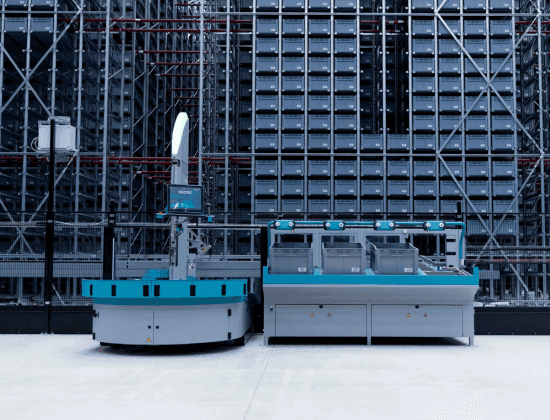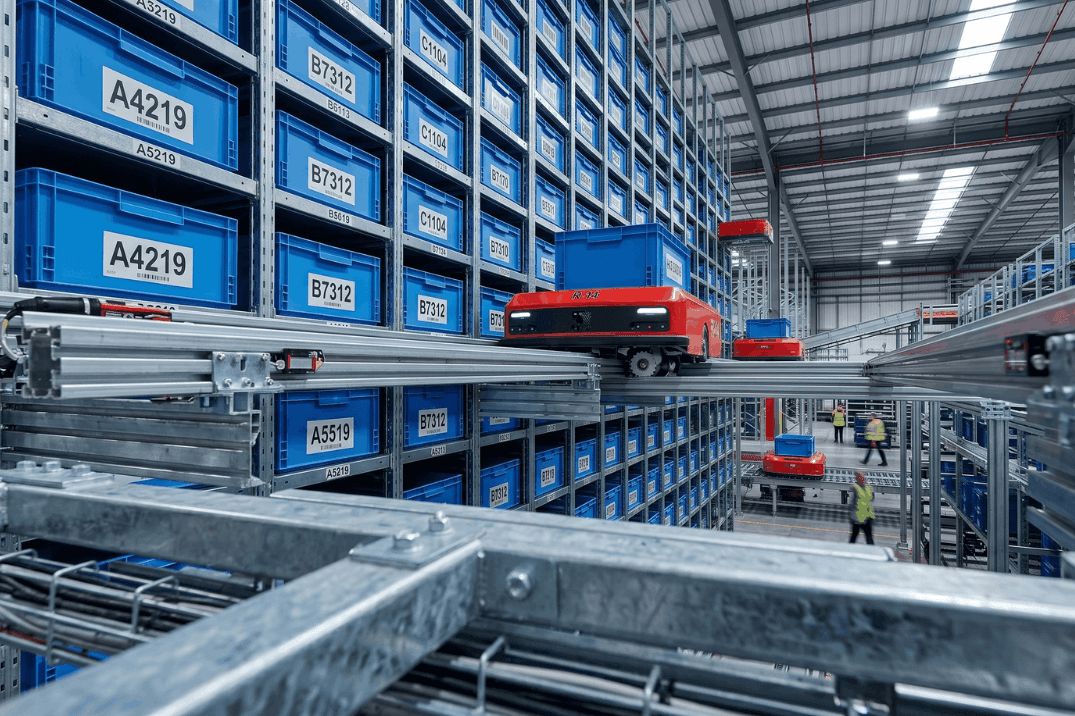
High-density shuttle-based ASRS system with autonomous robots transporting blue storage totes within a structured racking system, illustrating the balance between storage capacity and retrieval responsiveness in automated warehouse operations.

Storage Density vs Responsiveness in ASRS Design

Within the UK's logistics and warehousing sector, the pressure to maximise the use of available space while maintaining fast order fulfilment continues to intensify. Automated storage and retrieval systems (ASRS) are widely adopted to address both of these objectives simultaneously, yet they involve a fundamental tension that shapes every aspect of system specification. The ASRS design trade-offs between storage density and retrieval responsiveness are at the heart of every project, and understanding them is critical to selecting a solution that genuinely serves the operation's needs.

In practical terms, this means balancing how much inventory can be stored within a given warehouse footprint against how quickly individual items can be accessed for order fulfillment, order picking, and downstream processing. This trade-off affects not only throughput, but also inventory control, warehouse automation strategy, and the long-term value of the investment.

Why Density and Responsiveness Pull in Opposite Directions

Storage density refers to the amount of inventory that can be held within a given floor area and building volume. Higher density means storing more product in less space, reducing the facility footprint and potentially the cost of the building itself. Responsiveness refers to how quickly a stored item can be retrieved and delivered to an output point for order fulfilment or processing.


These two objectives are inherently in tension. Maximising density typically requires deep storage lanes, taller structures, and tightly packed locations, all of which increase the time and complexity involved in accessing any individual item.
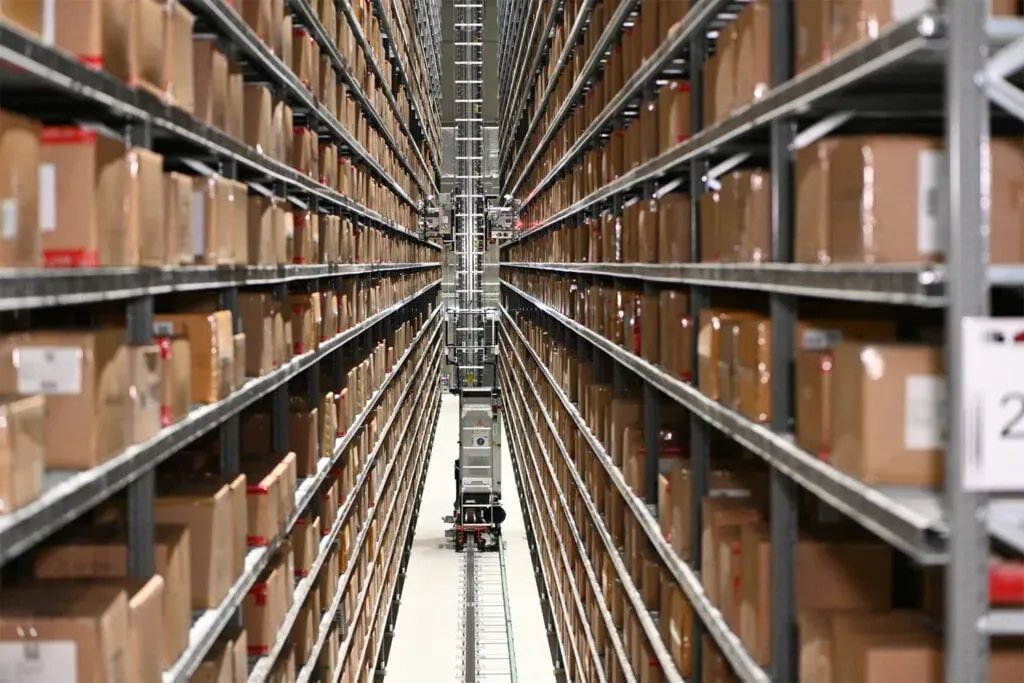
ASRS-warehouse-automation-solution

Maximising responsiveness requires shallow storage with direct access to every location, fast transport mechanisms, and minimal queuing, all of which reduce the amount of product that can be stored in the same physical space. Every ASRS design represents a specific resolution of this trade-off.


This is why decisions about storage density, warehouse space, and warehouse footprint cannot be separated from decisions about access frequency, order profiles, and the operational demands of distribution and fulfillment. A system designed for maximum storage capacity may not be the right fit for fast-moving, high-frequency order environments.


ASRS Design Trade-Offs Across Different Technologies


Different ASRS technologies sit at different points on the density-responsiveness spectrum, each suited to different operational profiles:

Crane-based ASRS

High-density pallet storage with relatively slower retrieval per individual transaction, well suited to deep-lane bulk storage where access frequency per SKU is moderate and batch retrieval is common.

Shuttle-based ASRS

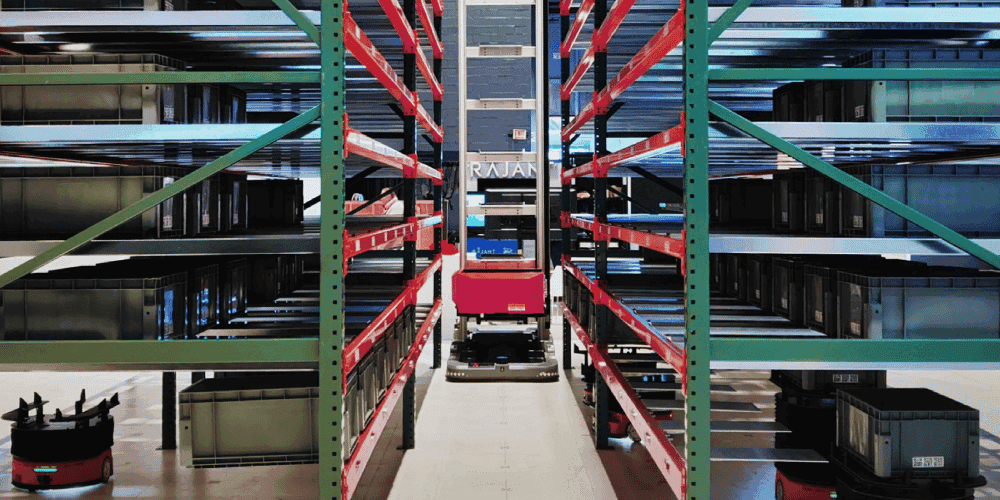
A balance of density and speed, using shuttles to access bins or totes within a racking structure, widely used in case and piece-picking operations where both storage capacity and retrieval speed are important.

Vertical Lift Modules

Compact footprint with moderate density and fast retrieval for small parts and components, particularly effective in manufacturing, maintenance, and spare parts environments where floor space is limited.

Cube-based ASRS

Extremely high density with variable retrieval times depending on item depth within the grid, increasingly popular for e-commerce and omnichannel fulfilment where maximising storage in a small footprint is the primary objective.

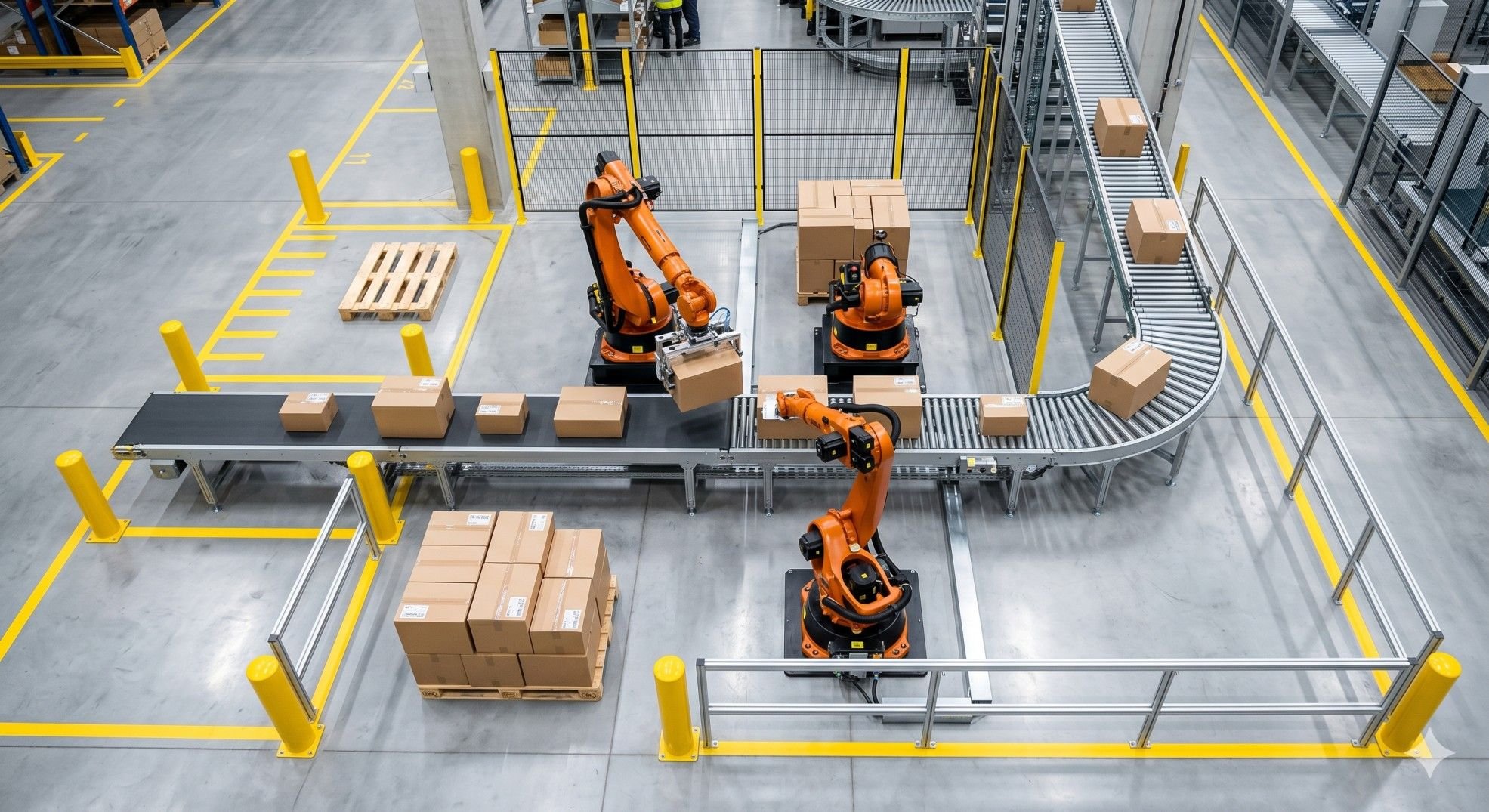
Additional system types can also sit at different points on the same spectrum. Unit-load ASRS and mini-load ASRS are often selected where the balance between heavy-load storage, picking speed, and integration with warehouse automation must be tuned carefully. Horizontal carousel systems may offer advantages in certain small-parts applications, while stacker cranes remain relevant where pallet access, heavy equipment handling, and structured aisle movement are central to the design.


Each technology embodies a different resolution of the ASRS design trade-offs, and the right choice depends entirely on the operational profile, order characteristics, and strategic priorities of the facility.

How Order Profiles Influence the Trade-Off

The optimal balance between density and responsiveness is not a fixed parameter; it shifts based on the order profile of the operation and the service levels required. A facility handling large, predictable replenishment orders for retail stores can tolerate slower individual retrieval times and benefit from maximised storage density. A facility processing high-frequency, small-order e-commerce demand requires rapid access to a wide and constantly changing range of SKUs, pushing the design firmly towards responsiveness.


Understanding the distribution of order sizes, SKU velocity profiles, peak-to-average demand ratios, and access frequency across the inventory is essential for positioning the ASRS design trade-offs correctly for each specific application.

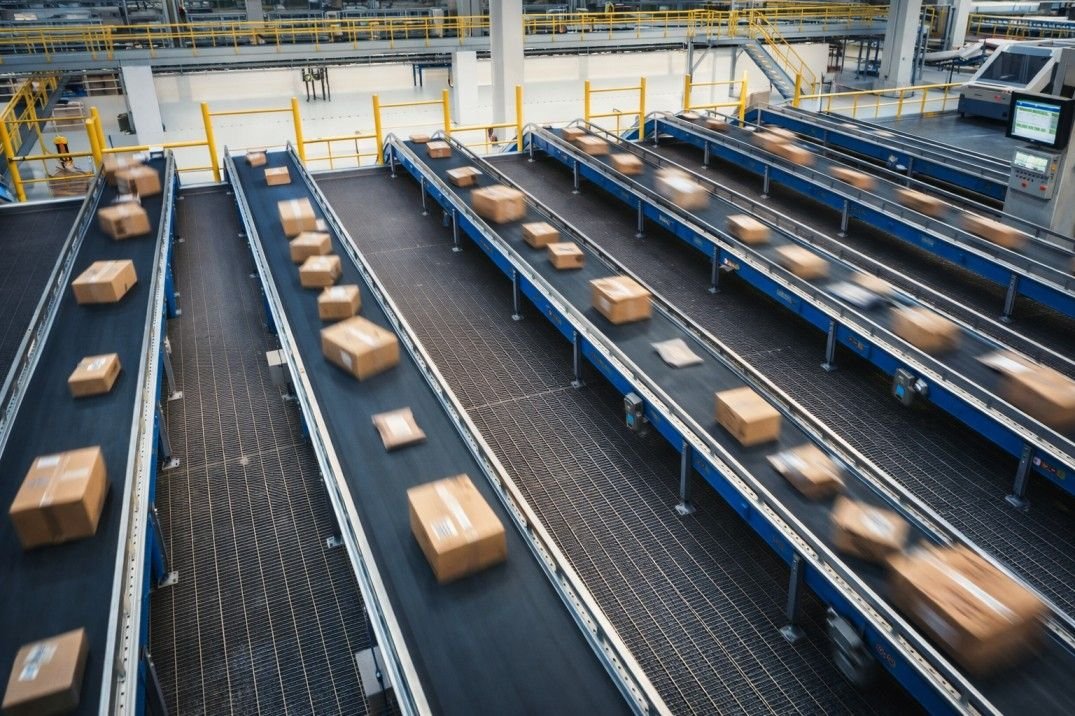
Automated conveyor system transporting parcels and packages through a high-volume distribution centre, demonstrating continuous material flow and the role of conveyors in maintaining fast and efficient order processing.

Operations that specify ASRS based on average metrics rather than the full distribution of demand scenarios often find that the system cannot meet service level targets during peak periods.


This is especially important in goods-to-person system environments, where responsiveness has a direct effect on order accuracy, order picking productivity, and the ability of warehouse operators to maintain service levels under pressure.

Designing for a Balanced ASRS Solution


The most effective ASRS installations are those that accurately match the balance of density and responsiveness to the operational requirements, not just at the point of commissioning, but across the anticipated range of future demand scenarios. This requires detailed modelling of inventory profiles, order patterns, growth projections, and seasonal variation.

In practice, designing for balance usually means assessing:

Current and future SKU profiles

Required service levels for order fulfillment

The role of the warehouse management system and Warehouse Control System

Available warehouse infrastructure and warehouse space

Implications for material handling and material handling equipment

Maintenance costs, spare parts availability, and energy consumption

Safety systems, safety and compliance requirements

Operations that overweight density at the expense of responsiveness risk service level failures during peak demand, leading to missed dispatch windows and customer dissatisfaction. Those that overweight responsiveness risk underutilising expensive facility space and inflating the cost per storage location, weakening the financial case for the investment.


This balance also affects long-term maintainability. High-density storage racks, deep-lane storage systems, and tightly optimised layouts can improve space efficiency, but they may also increase maintenance complexity, reliance on spare parts, and the operational impact of failures.

Navigating ASRS Trade-Offs for Long-Term Value

As UK businesses invest in ASRS Technology to support their warehousing and fulfilment strategies, a thorough understanding of the ASRS design trade-offs between density and responsiveness ensures that the selected solution delivers sustained operational performance and long-term value aligned with the evolving demands of the business and the market it serves.


The strongest solutions are not simply those that maximise storage or speed in isolation, but those that align storage density, retrieval performance, inventory control, maintenance practicality, and safety with the real needs of the operation. That is what turns an ASRS from a space-saving installation into a resilient long-term warehouse automation asset.

asrs warehouse

Optimise Your ASRS Trade-Offs

Don't let high density bottleneck your responsiveness. Our engineers help you model SKU velocity and order profiles to ensure your automation delivers long-term throughput, not just space savings.