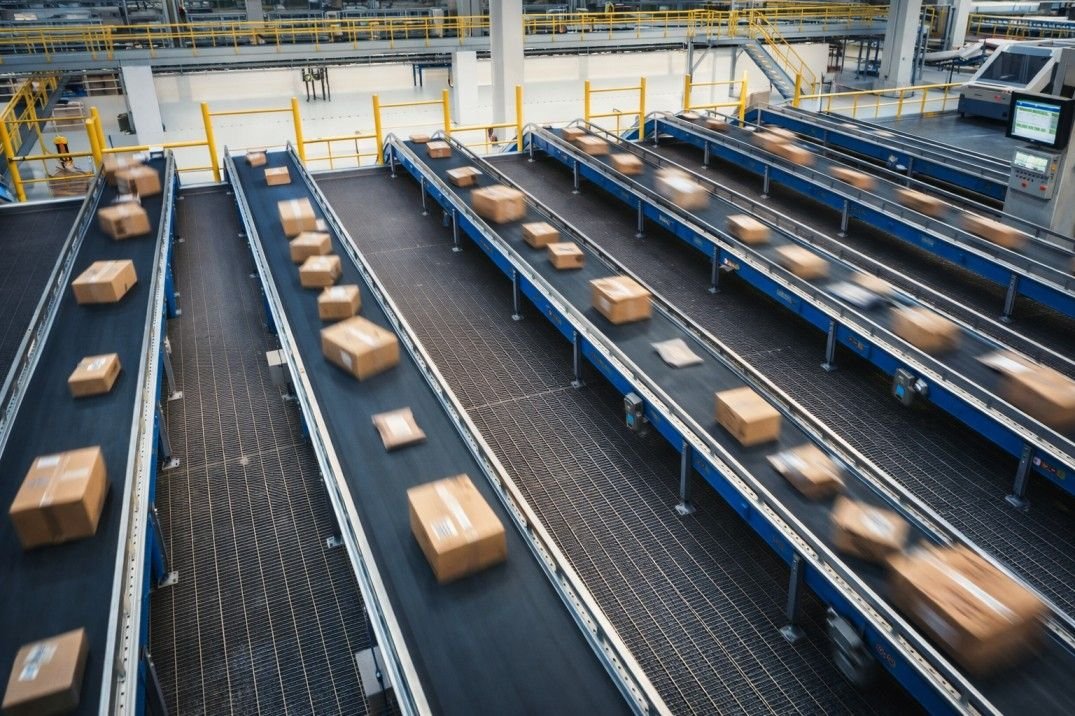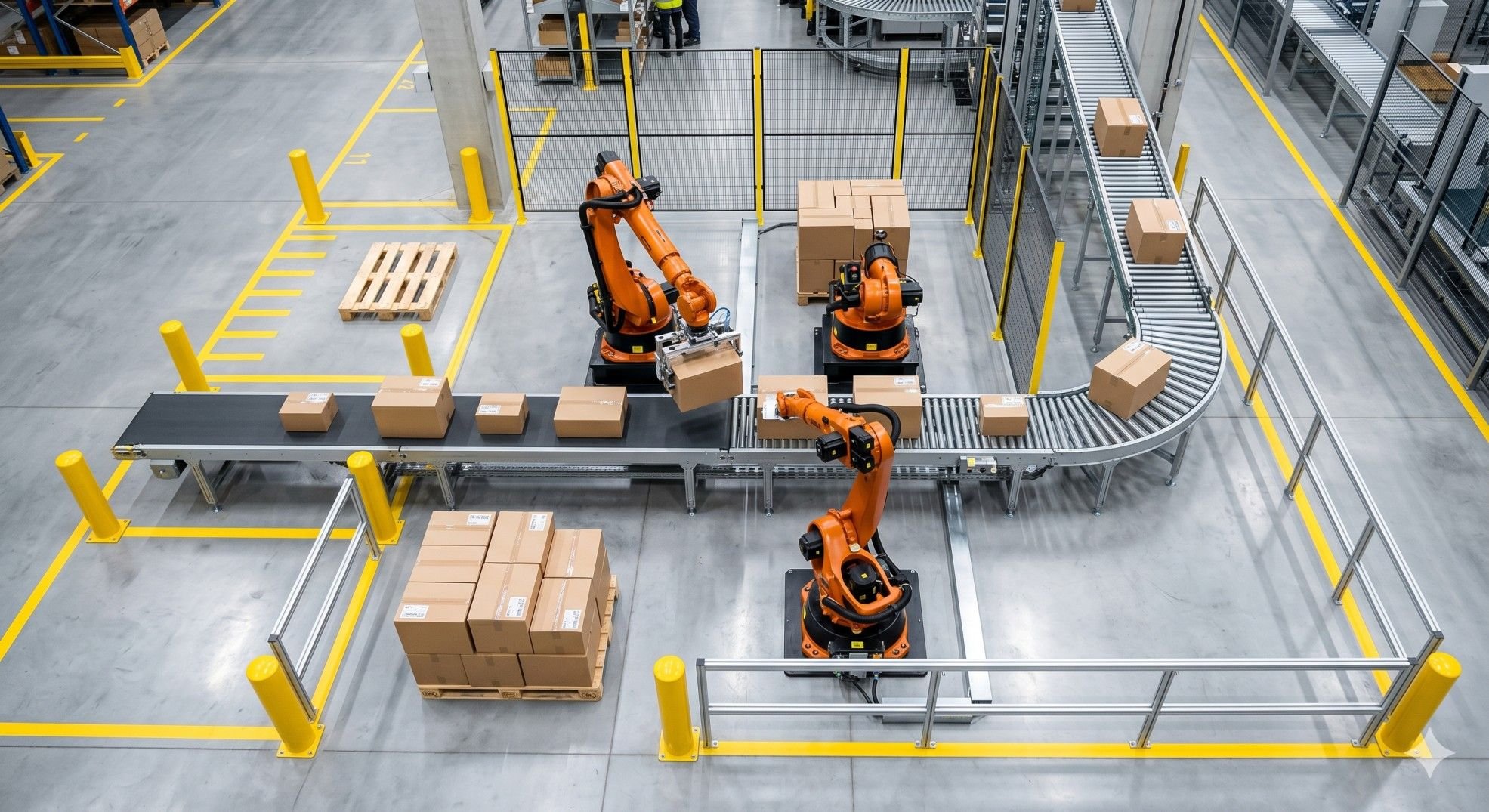
Multiple industrial robotic arms picking parcels from a conveyor system in a warehouse, illustrating shared task zones and multi-robot coordination challenges.

What Happens When Multiple Robots Compete for the Same Tasks

As robotic automation becomes more prevalent in UK warehousing and manufacturing, the deployment of multi-robot systems within a single operation is increasingly common. Multiple robots working in shared spaces or on overlapping task pools offer the potential for significant throughput gains and operational redundancy. However, the coordination challenges that arise when several robots compete for the same resources, tasks, or workspace introduce a layer of complexity that is often underestimated during system design and can significantly erode the expected performance benefits.

This is increasingly relevant not only in fixed robotic cells, but also in wider robotic systems that combine conveyors, AMRs, and other automation assets within the same operational flow. In these environments, the challenge is not simply adding more machines, but ensuring that the system can coordinate them intelligently under live conditions.

The Promise and Complexity of Multi-Robot Systems

Deploying multiple robots allows operations to distribute workload, increase redundancy, and scale throughput beyond what a single unit can achieve. In theory, adding a second robot to a task doubles capacity. In practice, the gains are always less than linear due to the overhead required for coordination, collision avoidance, and task allocation logic.


Multi-robot systems must solve a set of problems that single-robot installations do not encounter: which robot picks which product, how robots share physical space without colliding, and how task allocation adapts in real time as conditions change. Each of these problems introduces computational overhead and potential delays that reduce the effective throughput of each individual robot.
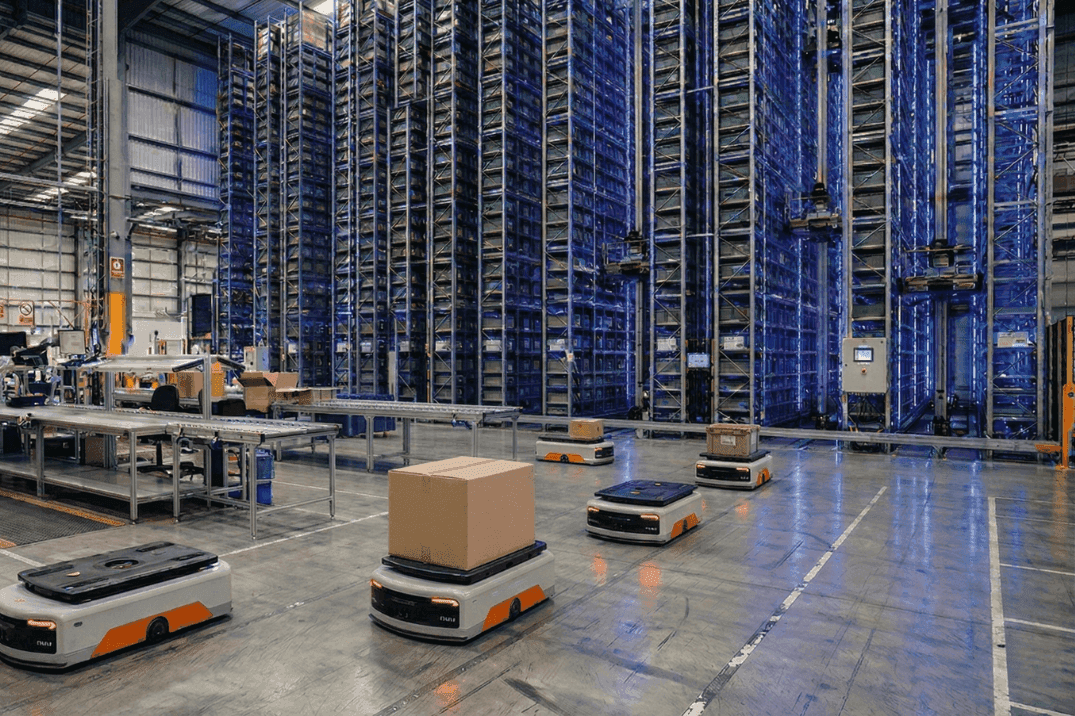
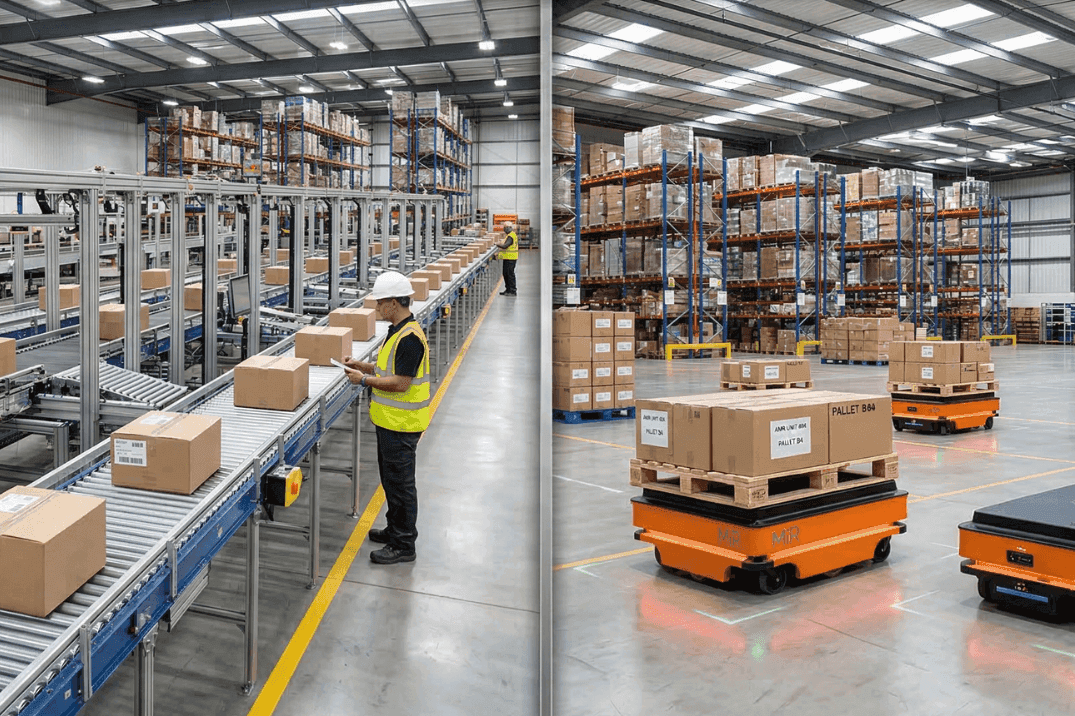
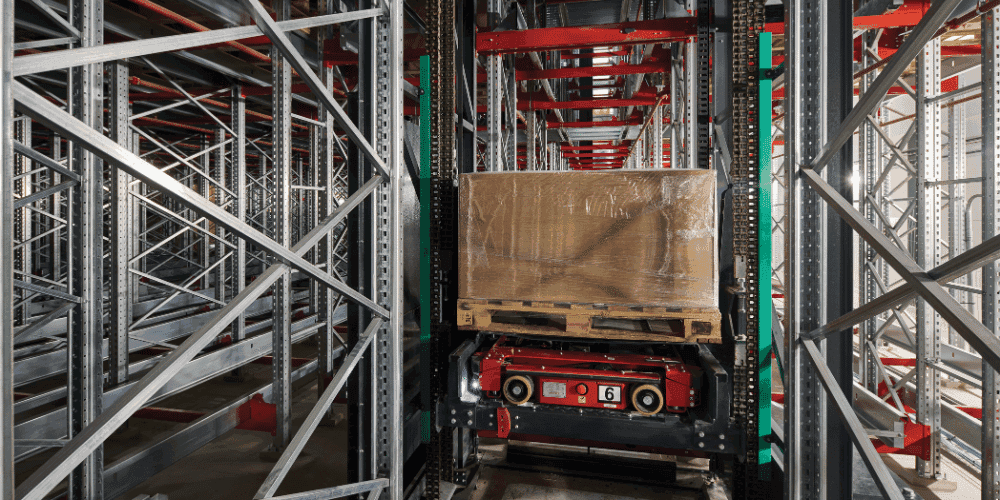
Autonomous mobile robots transporting goods alongside an automated storage and retrieval system in a high-density warehouse, illustrating flexible and scalable automation strategies

The more robots in the system, the greater the proportion of capacity consumed by coordination rather than productive work. Understanding this overhead is essential for accurately predicting the throughput gains that additional robots will deliver and for avoiding over-investment in units that yield diminishing returns.


In more advanced environments, artificial intelligence may support the allocation logic by improving prediction and decision-making, but it does not eliminate the underlying coordination problem. It simply changes how efficiently the system responds to it.


Task Allocation and Conflict Resolution


When multiple robots draw from the same pool of tasks, the allocation logic must ensure that no two robots attempt the same pick, that work is distributed efficiently, and that idle time is minimised across all units. Common approaches include:

Zone-based allocation

Each robot is assigned a defined physical zone, eliminating direct task competition but potentially creating imbalanced workloads when demand is unevenly distributed across zones.

Dynamic task assignment

A central coordinator assigns tasks in real time based on robot position, availability, and proximity to the next task, maximising efficiency but requiring sophisticated software and fast communication.

Priority-based queuing

Tasks are ranked and assigned sequentially, with robots claiming the next available task from a shared queue, reducing conflicts but introducing queuing delays that increase with the number of robots.

The choice of allocation strategy has a direct impact on the effective throughput of the multi-robot system. No single approach is universally optimal; the best choice depends on the specific geometry of the workspace, the nature of the tasks, and the performance requirements of the operation.

Where machine vision systems are used, the allocation logic can be strengthened by more accurate real-time awareness of object position, product orientation, and workspace occupancy. This can improve decision-making, particularly in variable environments, but it also adds another layer of software dependency that must be engineered correctly.

Collision Avoidance and Workspace Sharing

Robots operating in overlapping workspaces must actively avoid collisions with one another, with fixtures, and with products in the shared environment. Collision avoidance logic adds cycle time by requiring robots to pause, reroute, or slow down when their planned paths conflict with another robot's current or predicted movement.


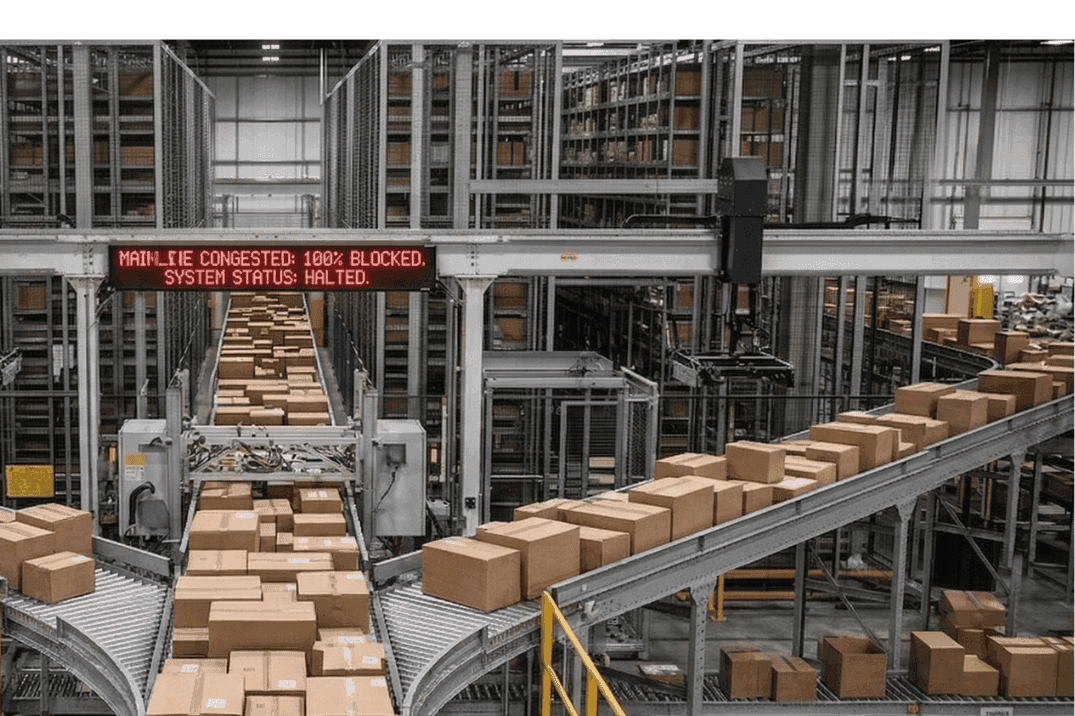
The more robots share a workspace, the greater the proportion of cycle time consumed by collision avoidance calculations and waiting for clear paths. This is one of the primary reasons why adding more robots to a shared space yields diminishing returns in throughput.

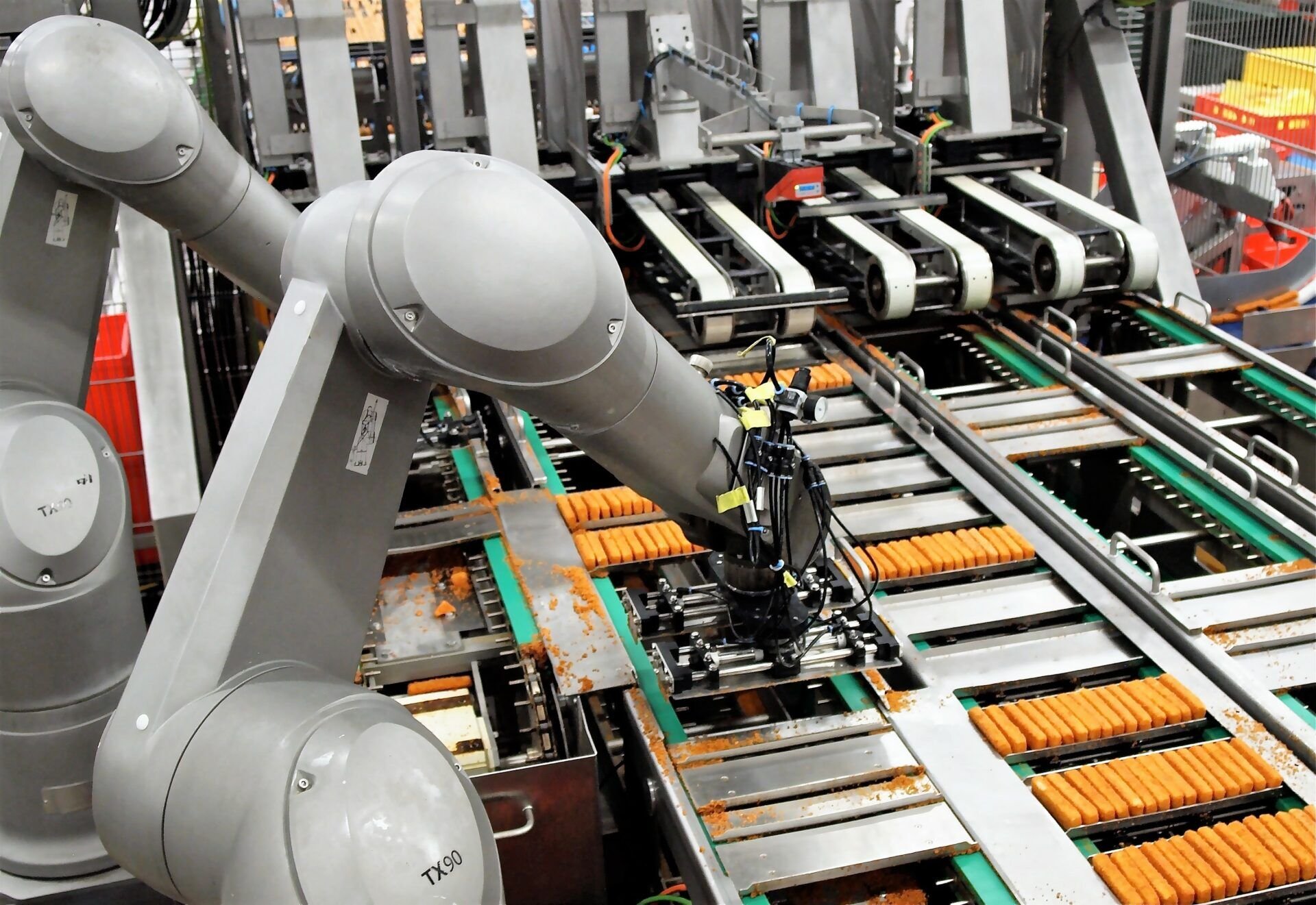
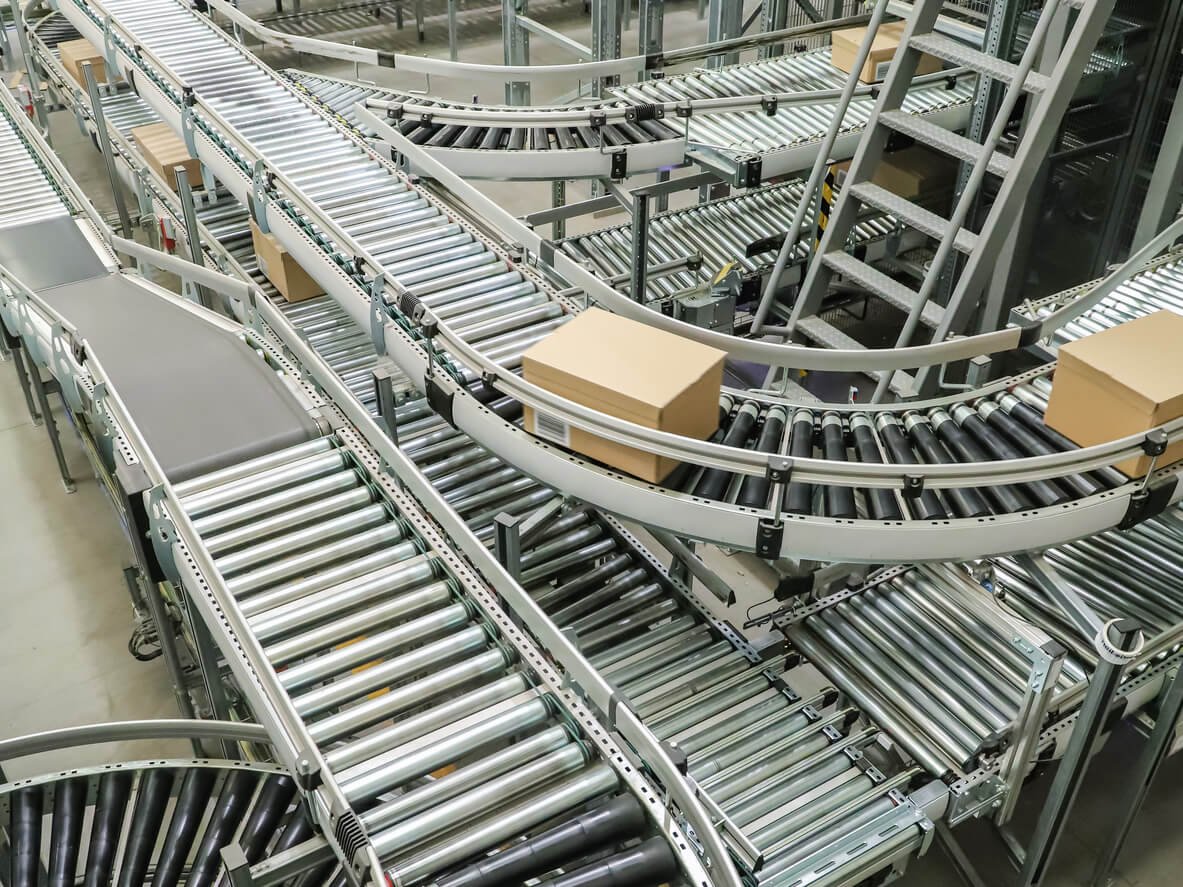
Food-grade robotic automation system handling products on a conveyor line in a hygienic manufacturing environment.

At a certain point, adding another robot to a constrained workspace can actually reduce total system throughput by increasing the frequency and duration of avoidance manoeuvres. Careful workspace planning and simulation during the design phase are essential to identify the optimal number of robots for a given cell configuration.


This is particularly relevant in systems that blur the line between fixed automation and mobile automation, such as environments where conveyors, AMRs, and robotic systems interact in the same process. In some cases, a collaborative robot system may be used to support more flexible interaction within the shared space, but that still requires careful control of movement, timing, and access to tasks.


Communication and Latency in Multi-Robot Systems


Effective multi-robot coordination depends on fast, reliable communication between robots and their central controller. Latency in communication introduces delays in task assignment, position updates, and collision avoidance calculations that compound as the number of robots increases. In high-speed applications, even millisecond-level delays can force robots to adopt more conservative movement profiles, reducing overall system speed.


The communication architecture, whether centralised, distributed, or hybrid, must be designed to handle the data volume and update rates required by the number of robots in the system. Network bandwidth, processing capacity, and communication protocol selection all become critical design decisions in multi-robot deployments that would be trivial in single-robot installations.


Where artificial intelligence or machine vision systems are layered into the control architecture, these communication demands can increase further, particularly if the system is processing vision data or predictive allocation logic in real time.

Optimising Multi-Robot Deployments for Real-World Performance

As UK operations scale their robotic automation, the design and commissioning of multi-robot systems demands careful attention to coordination logic, workspace planning, and communication infrastructure. The most effective multi-robot deployments are those where task allocation, collision management, and system integration are treated as primary design challenges from the outset, ensuring that the investment delivers sustained throughput and operational efficiency.


In practice, the best results come from recognising that performance depends less on the number of robots deployed and more on how well the wider system is orchestrated. That principle applies whether the deployment involves fixed robotic systems, machine vision systems, conveyors, AMRs, or a broader collaborative robot system designed for flexible shared-task operation.

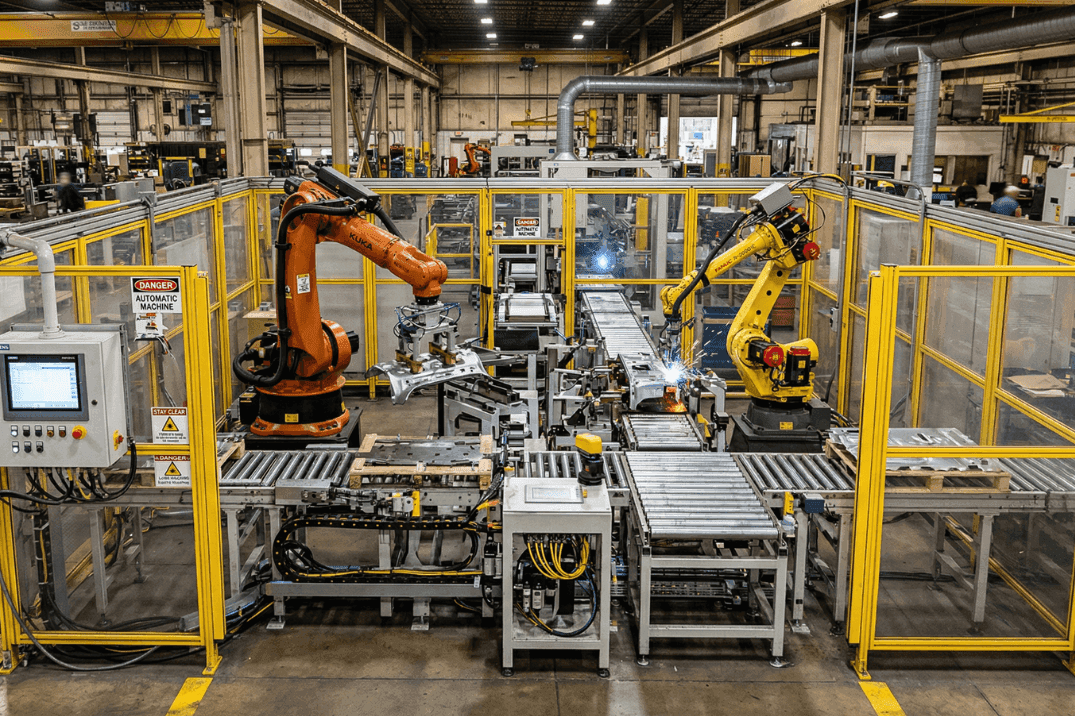
Industrial robotic cell with multiple robot arms, conveyor systems, and safety fencing in a manufacturing environment, illustrating complex automation systems and space requirements

Scaling Your Robotic Fleet?

Don't let coordination overhead erode your ROI. Speak to our integration specialists about intelligent multi-robot orchestration and collision avoidance strategies.