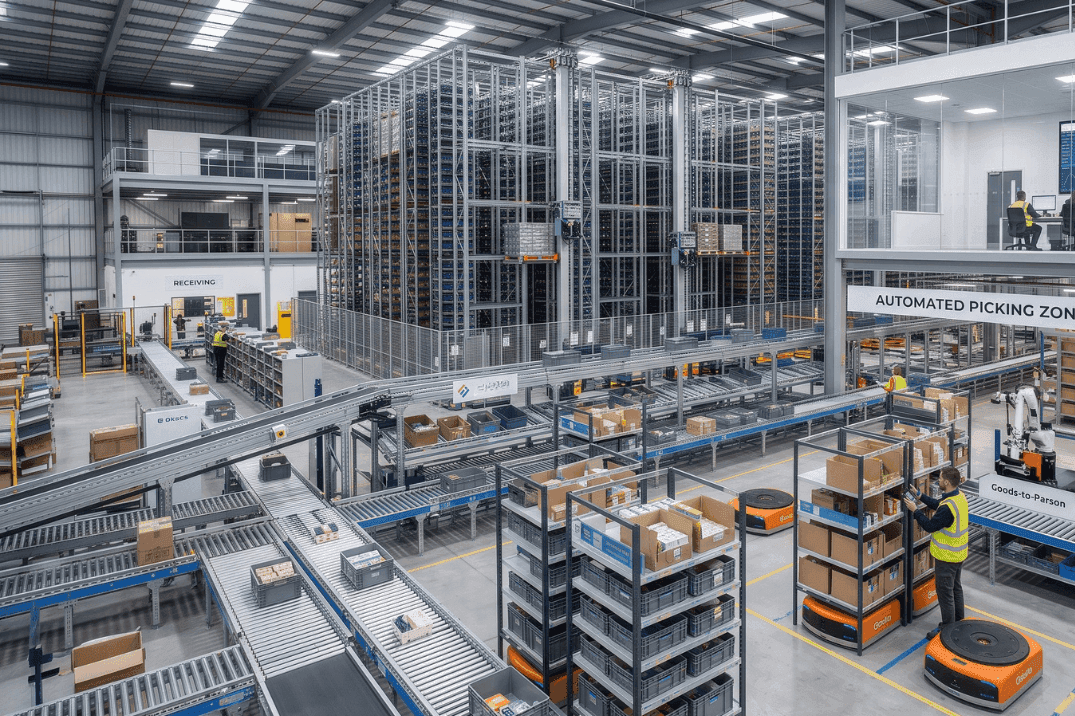
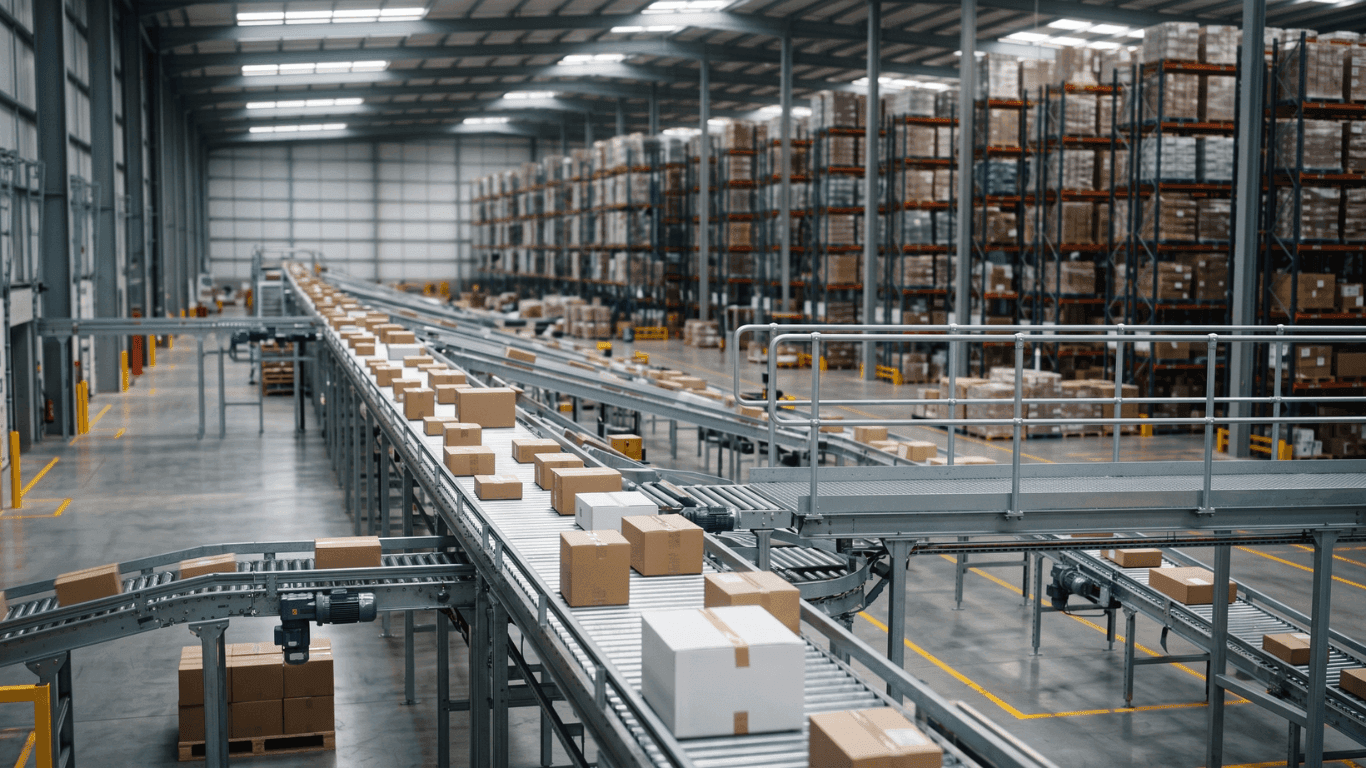
Automated warehouse with conveyor systems, high-bay ASRS and goods-to-person AMRs picking orders

What Is Warehouse Automation?

Warehouse automation is the use of technology, software and automated equipment such as conveyors, AS/RS, robots and WMS to move, store, pick and manage inventory in a warehouse with minimal human intervention.

Key Takeaways
  • Warehouse automation combines conveyors, AS/RS, robots, AMRs and software (WMS and WCS) to run a warehouse with minimal manual labour.
  • It delivers faster throughput, higher accuracy, lower labour costs, better safety and 24/7 operation.
  • The software layer is the difference: a WMS keeps the records, a WCS (like MotionTech's HELIX) orchestrates the machines in real time.
  • The UK market is growing from £1.9bn (2025) to £4.5bn (2034), and most operators see payback in under two years.

Warehouse automation overview


Warehouse automation is the application of technology to reduce or eliminate manual labour in warehouse operations. It encompasses everything from simple conveyor belts to autonomous mobile robots (AMRs), automated storage and retrieval systems (AS/RS), and sophisticated software like warehouse control systems (WCS) and warehouse management systems (WMS).

In practice, warehouse automation transforms a traditional warehouse where workers walk, pick, pack and move goods manually into an efficient, data-driven operation where machines and software handle the heavy lifting, repetitive tasks, and complex orchestration.

The global warehouse automation market was valued at approximately £24 billion in 2025 and is projected to reach £53 billion by 2031, growing at a compound annual growth rate (CAGR) of around 14-16%. In the UK alone, the market was valued at £1.9 billion in 2025 and is expected to grow to £4.5 billion by 2034. This rapid growth reflects a fundamental shift in how warehouses operate and businesses that delay automation risk being left behind.

By the numbers
£53bn
global market by 2031 (from £24bn in 2025)
£4.5bn
UK market by 2034 (from £1.9bn in 2025)
14-16%
global growth (CAGR)
20-40%
typical ROI on automation
<2 yrs
payback for 80%+ of operators

How does warehouse automation work?


Warehouse automation works by combining hardware, software, and control systems to create a seamless flow of goods through a facility.

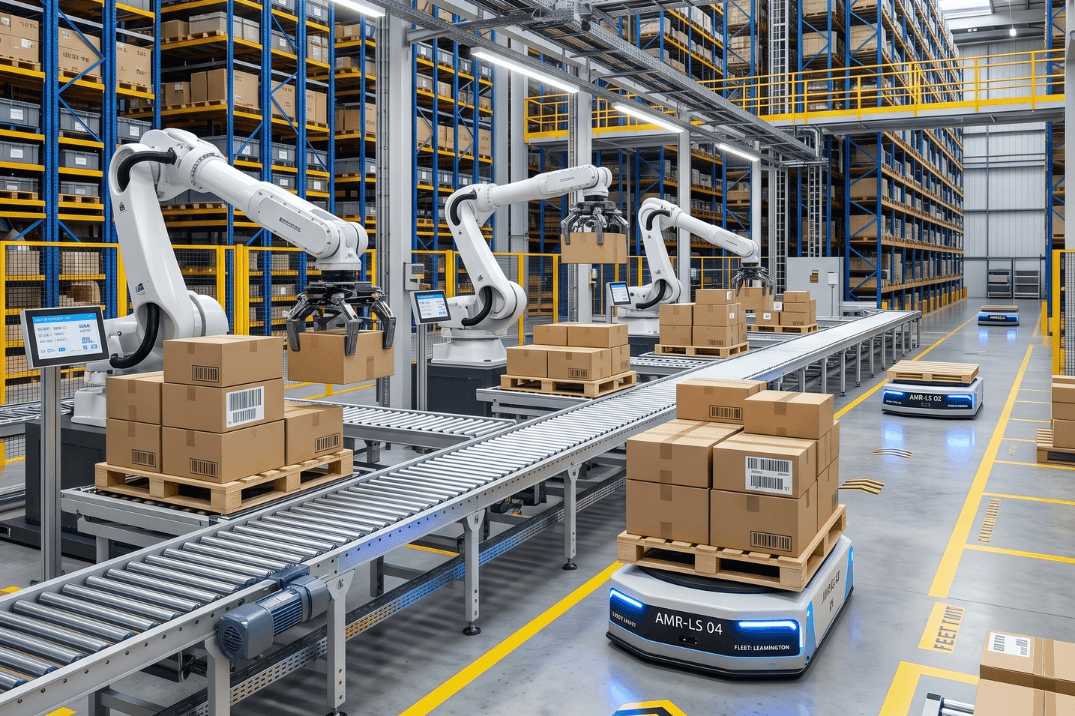
Automated warehouse with robotic picking arms, conveyor system, and autonomous mobile robots integrated with ASRS racking, illustrating system-wide dependencies in warehouse automation

At a high level, the process follows a simple loop:

Receiving

Goods arrive at the warehouse and are automatically identified using barcode scanners, RFID, or vision systems.

Storage

Automated systems (AS/RS, shuttles, or AMRs) move goods to optimal storage locations.

Picking

Orders are fulfilled using pick-to-light, voice picking, robotic arms, or goods-to-person systems that bring inventory to the picker.

Packing & Shipping

Goods are conveyed, sorted, and routed to the correct dispatch area.

The "brain" behind this operation is the software layer. A Warehouse Management System (WMS) manages inventory and orders, while a Warehouse Control System (WCS) like MotionTech's HELIX orchestrates the physical automation in real time, controlling conveyors, sorters, robots, and AMRs to ensure everything moves efficiently.

Without this software orchestration, even the best hardware can become a bottleneck. The real power of warehouse automation lies in getting machines, humans, and software to work in sync.

Types of warehouse automation systems


assessing a large conveyor system in a UK distribution centre, weighing an upgrade against full replacement

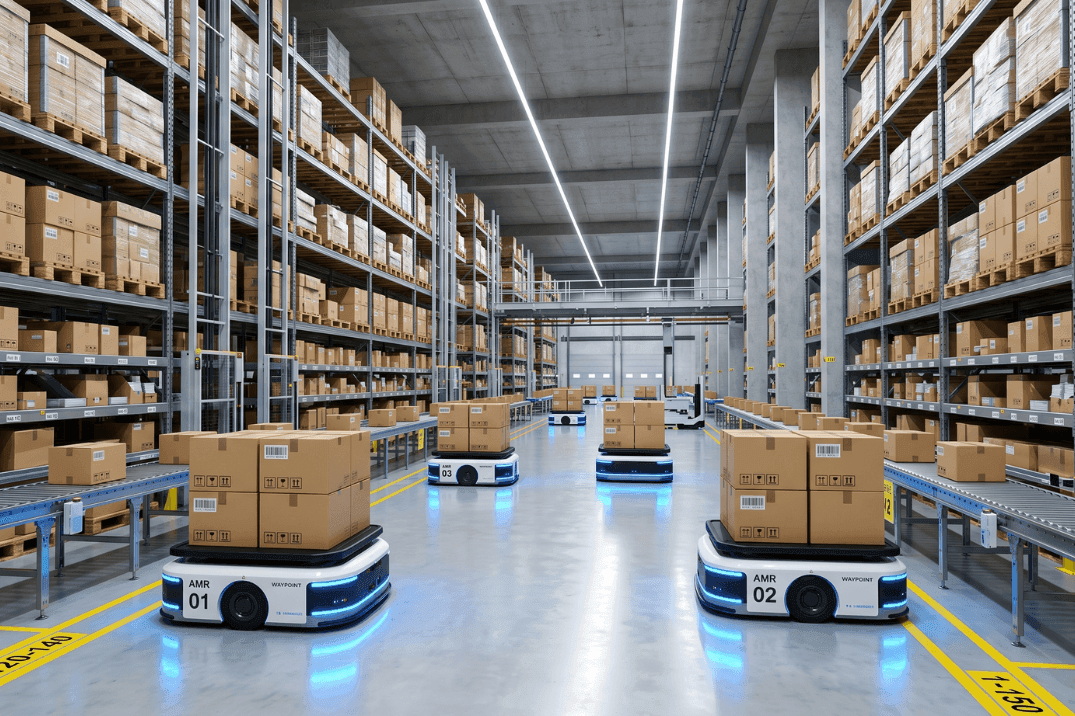
Autonomous mobile robots transporting cartons alongside conveyor systems in a modern warehouse, illustrating flexible automation commonly used in ASRS retrofit projects

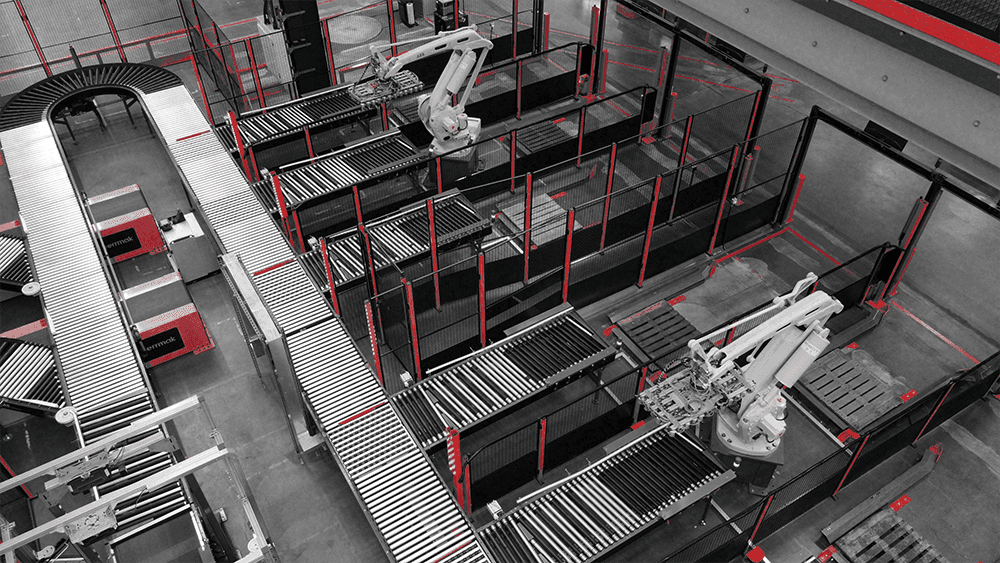
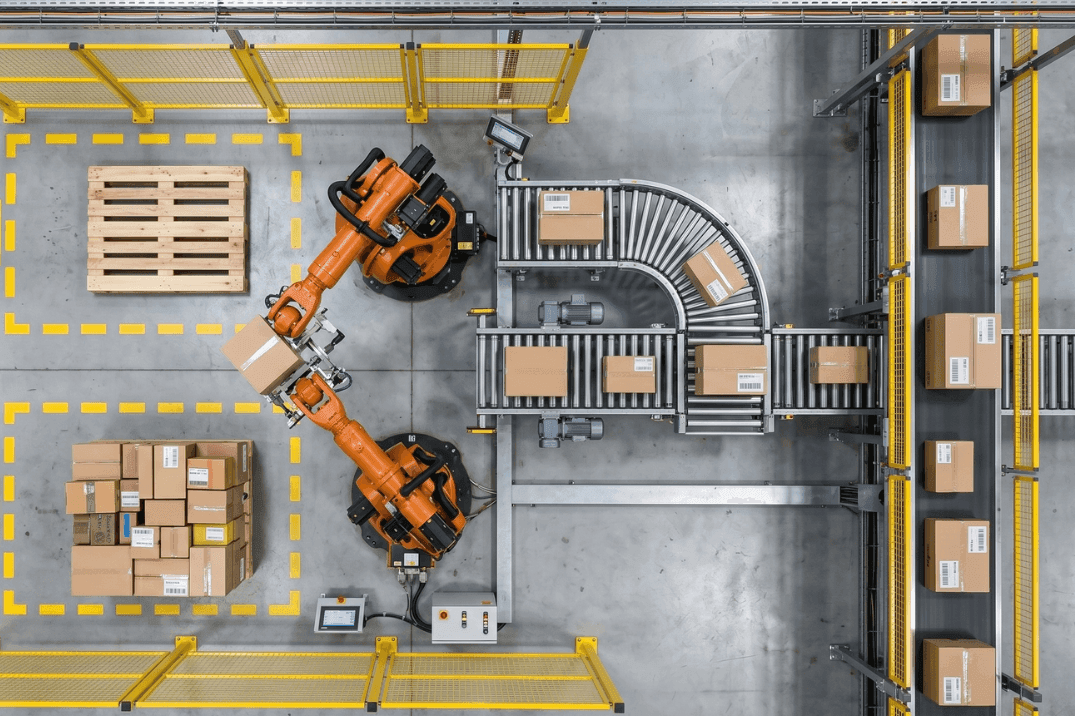
Top-down view of robotic arms picking cartons from a conveyor system, illustrating integration between robotics and conveyor flow in automated warehouse operations

Warehouse automation is not a single technology; it is an ecosystem of systems that work together. Here are the main types:

Conveyor systems

Conveyor systems form the backbone of most automated warehouses, moving goods between receiving, storage, picking, and shipping zones. They include belt conveyors, roller conveyors, spiral conveyors, and overhead systems. MotionTech designs and manufactures a full range of conveyor systems tailored to UK warehouses. Learn more about conveyor systems →

AS/RS (Automated Storage & Retrieval Systems)

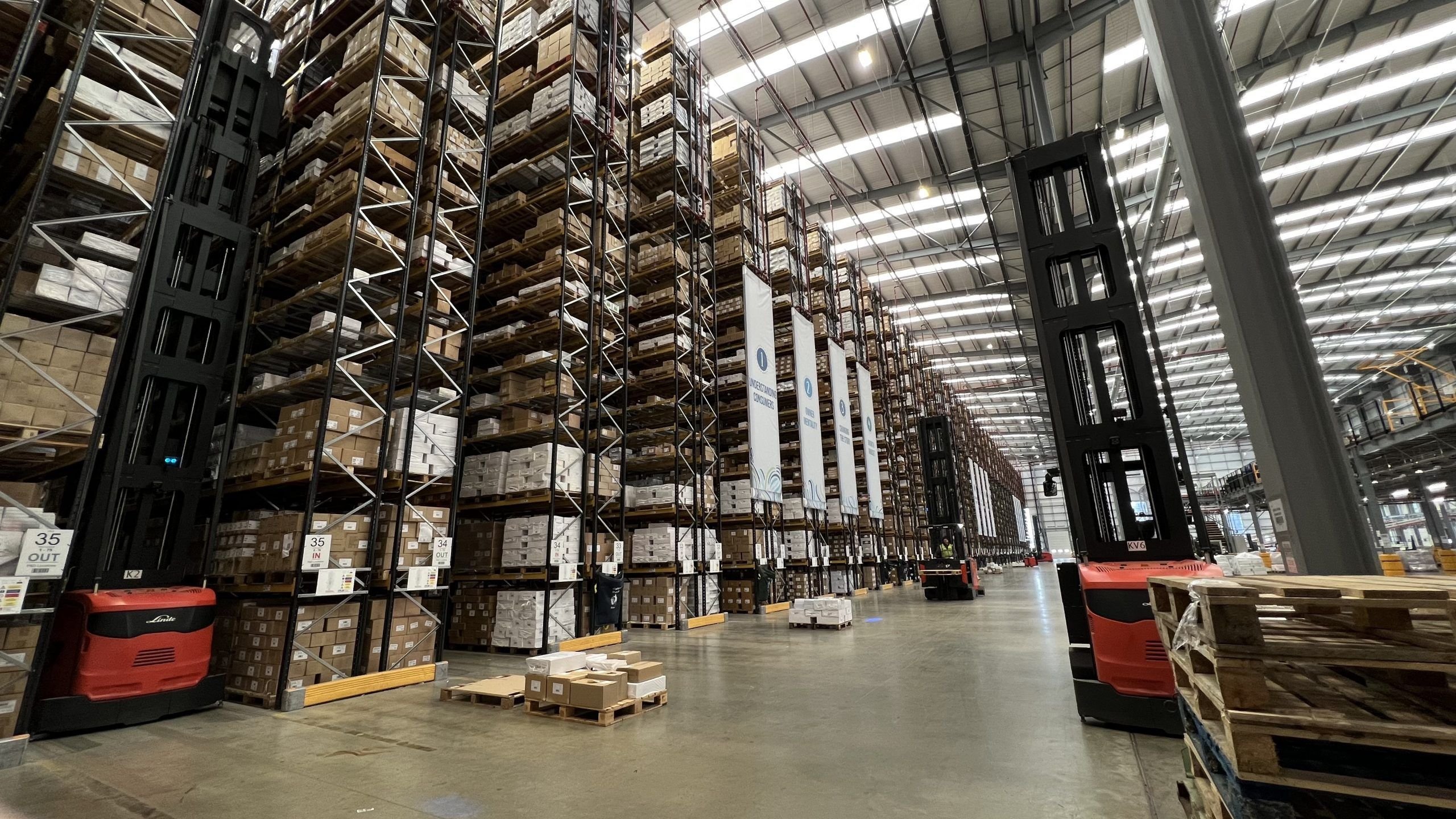
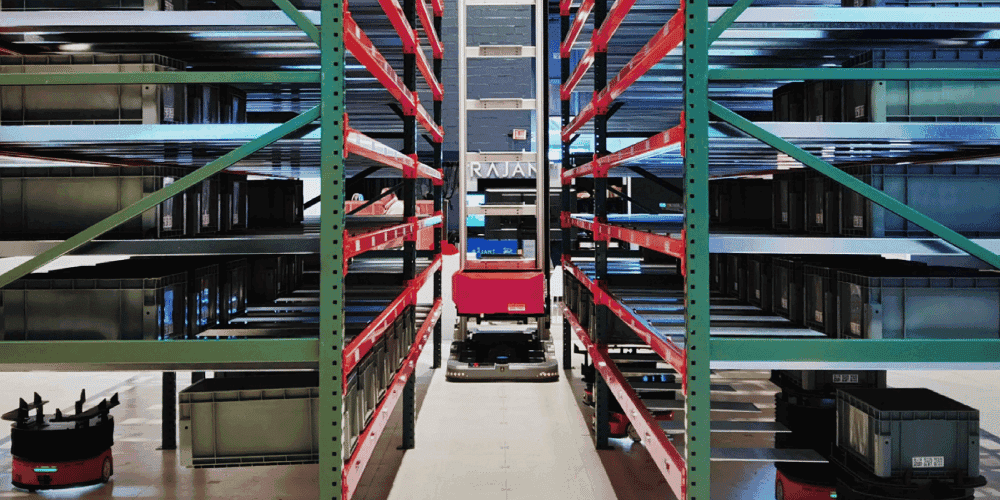
AS/RS are high-density storage systems that automatically store and retrieve materials. They include pallet shuttles, mini-load systems, and goods-to-person solutions that bring items to operators rather than sending operators to find items. MotionTech's AS/RS solutions include pallet shuttles, vertical lifts, and fully integrated storage systems. Explore AS/RS solutions →

AGVs and AMRs

AGVs (Automated Guided Vehicles) follow fixed paths using wires, magnetic tape, or QR codes. AMRs (Autonomous Mobile Robots) navigate dynamically using onboard sensors, cameras, and AI, making them more flexible and easier to deploy. MotionTech has deployed over 2,000 robots across UK warehouse sites.

Pick-to-light and voice picking

Pick-to-light uses illuminated displays to guide workers to the correct picking locations. Voice picking uses headset-based voice commands to direct workers hands-free. Both systems dramatically improve picking accuracy and speed.

Robotic picking

Robotic arms and grippers are increasingly used for picking individual items, cases, or totes. MotionTech specialises in AI-driven robotic palletising and de-palletising, with partnerships including Brightpick Gridpicker for advanced goods-to-person robotics.

WMS and WCS (Warehouse Management System & Warehouse Control System)

WMS: manages inventory, orders, and labour – the "system of record." WCS: orchestrates physical automation in real time – conveyors, sorters, AGVs, AMRs, and robotic arms. MotionTech's HELIX WCS offers a new generation of warehouse control logistics software with a cost-effective price point, bridging the gap between the WMS and the physical automation layer.

Benefits of warehouse automation


The business case for warehouse automation is compelling. Here are the key benefits:

Faster throughput

Automated systems move goods faster and more consistently than manual labour.

Higher accuracy

Fewer picking and shipping errors mean fewer returns and happier customers.

Reduced labour costs

Automation helps tackle persistent labour shortages and reduces reliance on temporary staff.

Improved safety

Reducing manual handling cuts workplace injuries and associated costs.

Scalability

Automation systems can be expanded as your business grows.

24/7 operation

Automation does not take breaks, get sick, or need holidays.

Better inventory visibility

Real-time data from WMS/WCS gives you complete control over your stock.

The financial returns are equally impressive. Survey respondents report 20-40% ROI across warehouse automation investments, with more than 80% of operators achieving payback in under two years. In some cases, organisations achieve full payback within 12 months.

Warehouse automation examples and use cases

MotionTech has delivered warehouse automation solutions across the UK. Here are some real-world examples:

Hachette multi-zone pick solution – A network of approximately 500 metres of conveyors, mergers, diverts, pop-up transfers, and scanning systems across ground and four mezzanine levels, fully integrated with JDA WMS.

Pallet shuttle solution – A completely tailored system using pallet shuttles, vertical lifts, conveyors, and a warehouse control system designed for pallet storage management, traffic control, and route scheduling, fully integrated with the customer's existing WMS.

Grocery distributor – A robotic warehouse automation solution that increased case picking speed by 300%.
View more case studies →

Hachette MULTI-ZONE

Challenges and considerations


Warehouse automation is not without its challenges. Being aware of these upfront will help you avoid costly mistakes.

Integration complexity

Getting different systems (conveyors, robots, software) to work together is often the hardest part. A 2025 MIT report found that despite nearly £32 billion invested in enterprise AI, 95% of pilots have little to show for it.

Upfront investment

Automation requires capital, but ROI is achievable. Average investments range from under £80,000 to over £4 million.

Process first, automation second

Automating a broken process amplifies the problem. Fix your processes before you automate.

Labour and skills

Warehouses need skilled staff to run and maintain automation.

Space constraints

Not every warehouse has room for large-scale systems.

Legacy system integration

Older WMS or ERP systems may not talk to new automation.

As McKinsey noted, a significant portion of warehouse automation fails due to a lack of coherent vision, poor understanding of automation technology at senior management level, and misalignment within the company. Working with an experienced partner like MotionTech mitigates these risks.

How to get started with warehouse automation

Starting your warehouse automation journey does not have to be overwhelming. Follow these steps:

Audit your current operation – map your workflows, bottlenecks, and pain points. Which areas cost the most in labour, errors, or delays?

Define your goals – throughput, accuracy, labour savings, or all three? Be specific.

Engage an expert – work with a partner who understands both hardware and software. MotionTech offers in-house manufacturing, robotics, conveyors, storage, controls, and software – a true end-to-end capability.

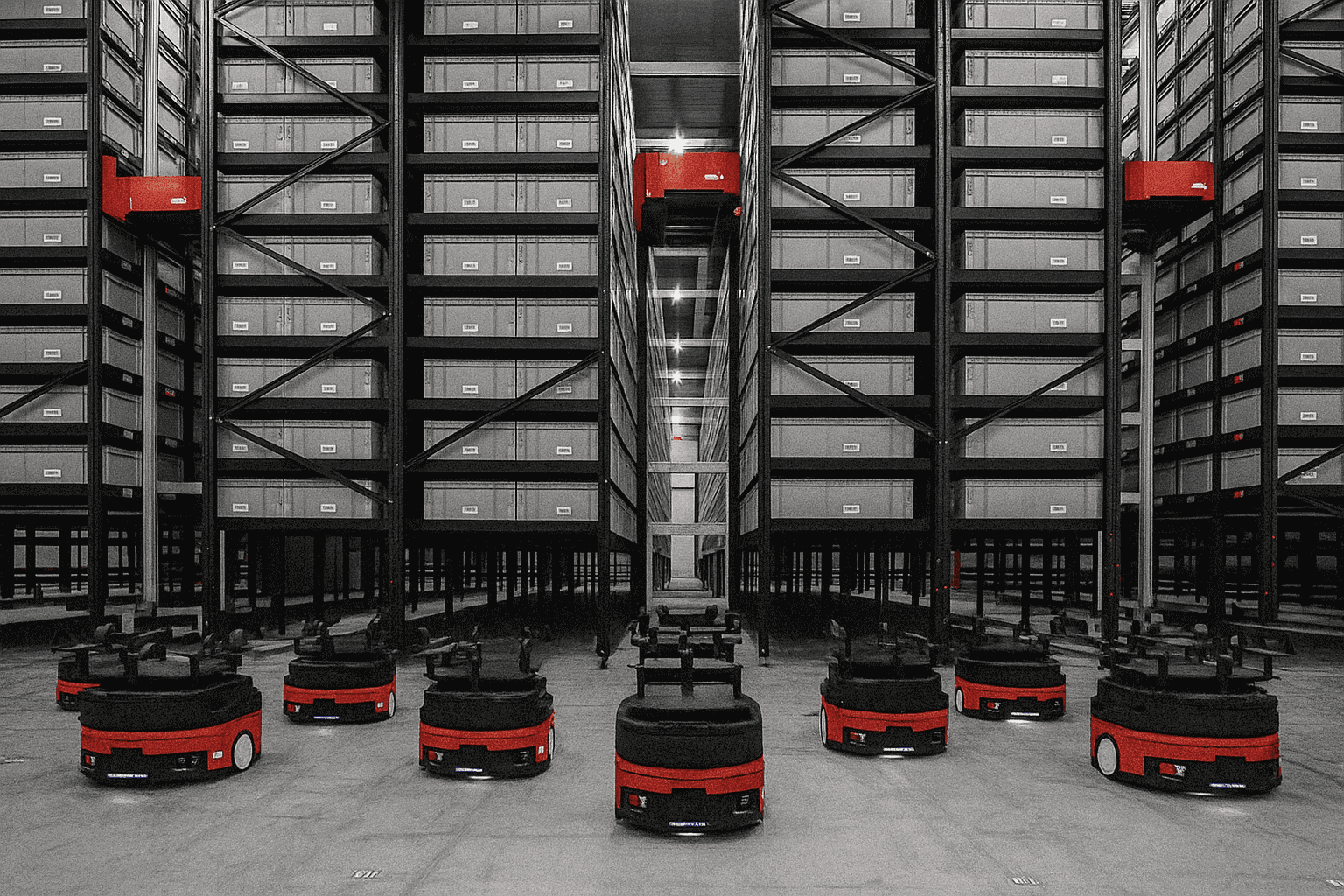
Automated storage and retrieval system modernising warehouse storage without expanding footprint

Start with a pilot – test automation in a specific zone before scaling across the entire warehouse.

Plan for integration – ensure your WMS, WCS, and automation layers are designed to work together from day one.

Measure and iterate – track KPIs and refine the system over time.

Ready to automate your warehouse?

MotionTech is the UK's end-to-end automation partner. With in-house manufacturing and a full portfolio of conveyors, AS/RS, AMRs, and HELIX WCS software, we design, build, and support complete warehouse automation solutions.

2,000+ robots deployed In-house UK manufacturing Conveyors · AS/RS · AMRs · HELIX WCS
Talk to a MotionTech engineer →

Warehouse automation FAQS

RELATED ARTICLES