Different Types Of Robotic Applications

Types of Industrial Robots Explained

Understanding the different types of industrial robots available is the first step towards selecting the right automated solutions.

Across the UK, manufacturers and warehouse operators are increasingly turning to robotics to address mounting pressures: labour shortages, rising operational costs, and the relentless pace of e-commerce growth. Understanding the different types of industrial robots available is the first step towards selecting the right automated solutions for any given environment.

In short: the main types of industrial robots are articulated, SCARA, delta, Cartesian (including gantry and linear robots), collaborative robots (cobots), and autonomous mobile robots (AMRs), each suited to different tasks, payloads, and speeds.
What Are Industrial Robots?

An industrial robot is a programmable machine capable of performing automation tasks autonomously or semi-autonomously within a production, manufacturing, or logistics environment. Most are built around robotic arms with several degrees of freedom, allowing precise, repeatable movement. Unlike traditional fixed automation, modern types of industrial robots offer varying flexibility, allowing them to adapt to changing production lines, layouts, or throughput requirements.

Common Types of Industrial Robots in Use Today

The range of robot types available reflects the diversity of tasks that automation is now asked to perform. The most widely deployed types of industrial robots include:


Articulated Robots

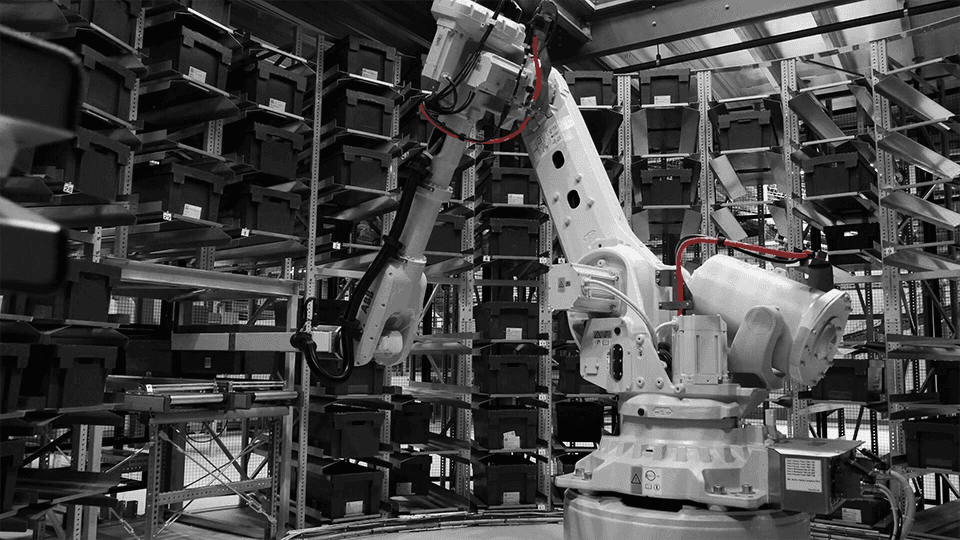
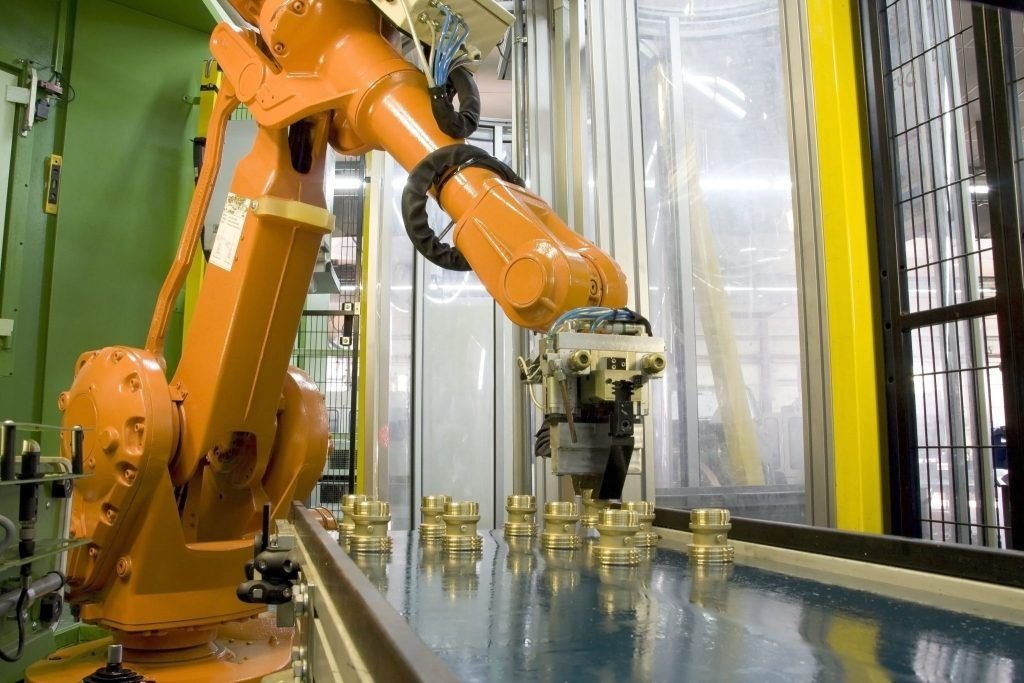
Equipped with rotary joints, typically between four and six axes, articulated robots offer exceptional range of motion and suit welding, assembly, palletising, machine tending, and pick-and-place tasks.

SCARA Robots

Selective Compliance Articulated Robot Arm (SCARA) robots excel at high-speed lateral movement with strong positioning accuracy, making them a preferred choice for electronics assembly, packaging, and light-load pick-and-place.

Delta Robots

Characterised by their spider-like parallel-link structure, delta robots are built for speed and precision, frequently paired with vision systems for high-cycle picking, food sorting, and pharmaceutical packaging.

Cartesian Robots

Operating along X, Y, and Z axes, Cartesian robots (also known as linear robots) offer repeatable linear motion ideal for CNC machine loading, dispensing, and inspection. Large-format gantry robots extend the principle across a wider envelope.

Collaborative Robots (Cobots)

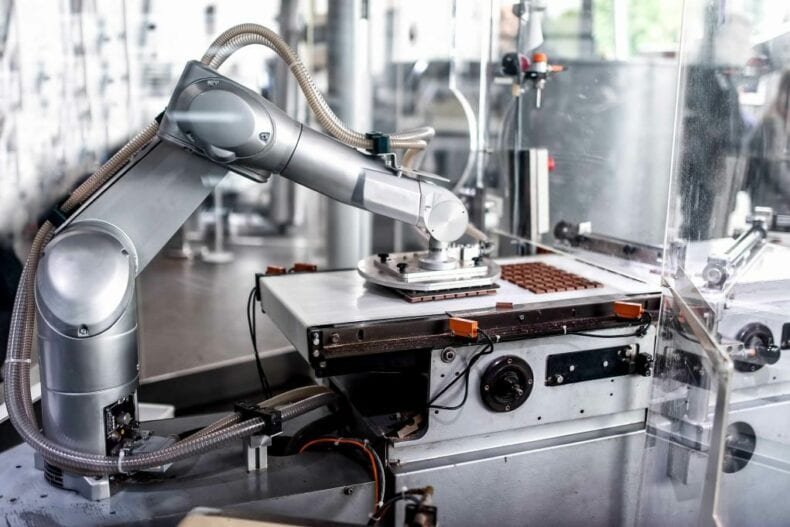
Designed for human-robot collaboration, cobots use force-limiting and safety sensors to operate alongside people without extensive guarding, supporting flexibility and frequent reconfiguration.

Autonomous Mobile Robots (AMRs)

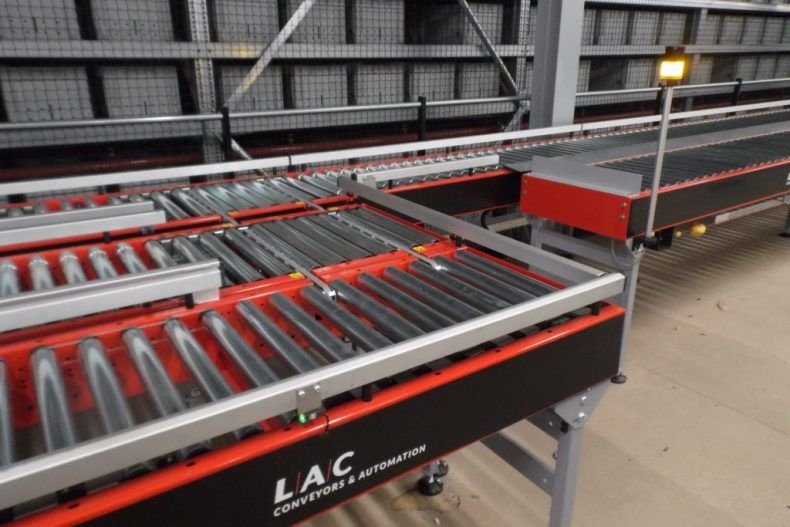
AMRs navigate warehouse and factory environments independently using onboard sensors and mapping software, transporting goods without the fixed infrastructure of a conveyor belt.

Choosing the Right Robot Type for Your Operation

Selecting between types of industrial robots requires careful evaluation of payload requirements, reach, cycle time, and integration complexity. Key considerations include:


Payload and Reach

Articulated and Cartesian robots suit heavier loads and extended reach, whilst delta and SCARA variants prioritise speed over load capacity.

Environment and Space

AMRs require clear floor space and consistent ambient conditions; fixed arm robots need defined work envelopes and appropriate guarding or collaborative safety certification.

Integration with Existing Systems

All types of industrial robots must interface with wider automation infrastructure, including WCS, WMS, and conveyor networks. Experienced system integrators turn individual robots into a coordinated line.

Flexibility Requirements

Operations with frequent changeovers or product variety benefit from cobots and AMRs, whilst high-volume, repetitive tasks suit fixed articulated or delta configurations.

A Foundation for Long-Term Automation Success

As robotic technologies mature and the total cost of deployment falls, types of industrial robots that were once viable only for large manufacturers are increasingly accessible to mid-sized UK operations. Understanding the distinctions between articulated, SCARA, delta, Cartesian, cobot, and mobile robot platforms is a strategic exercise. Businesses that invest time in selecting the right robot type for their context will be better positioned to build scalable, future-proof automation systems.

Frequently Asked Questions