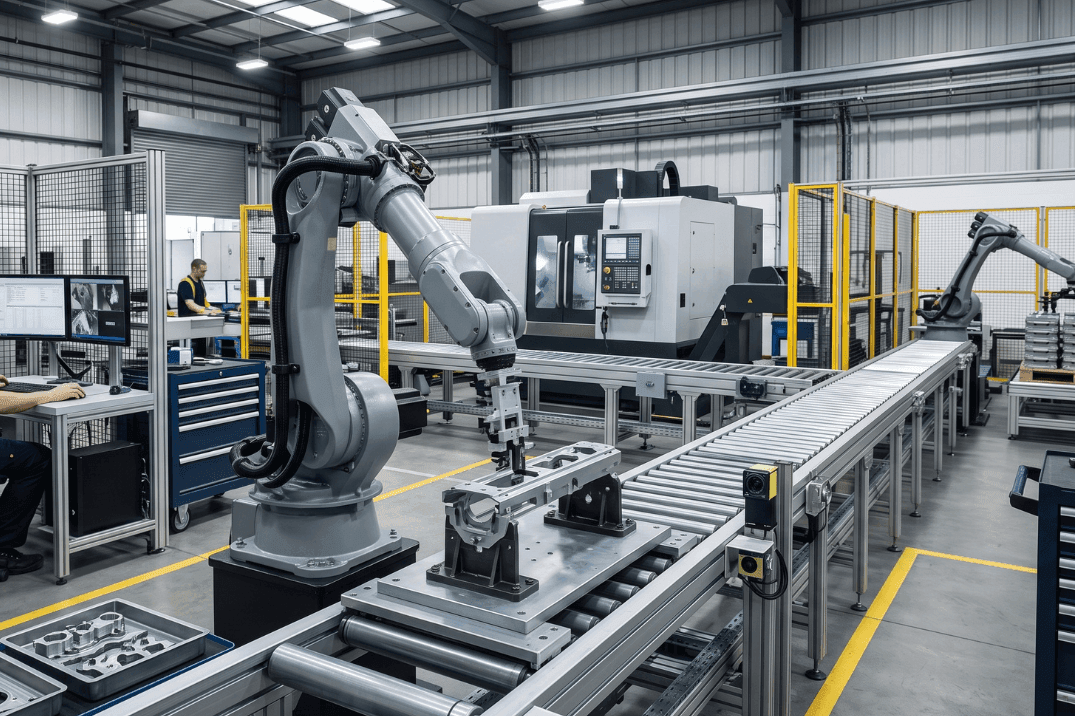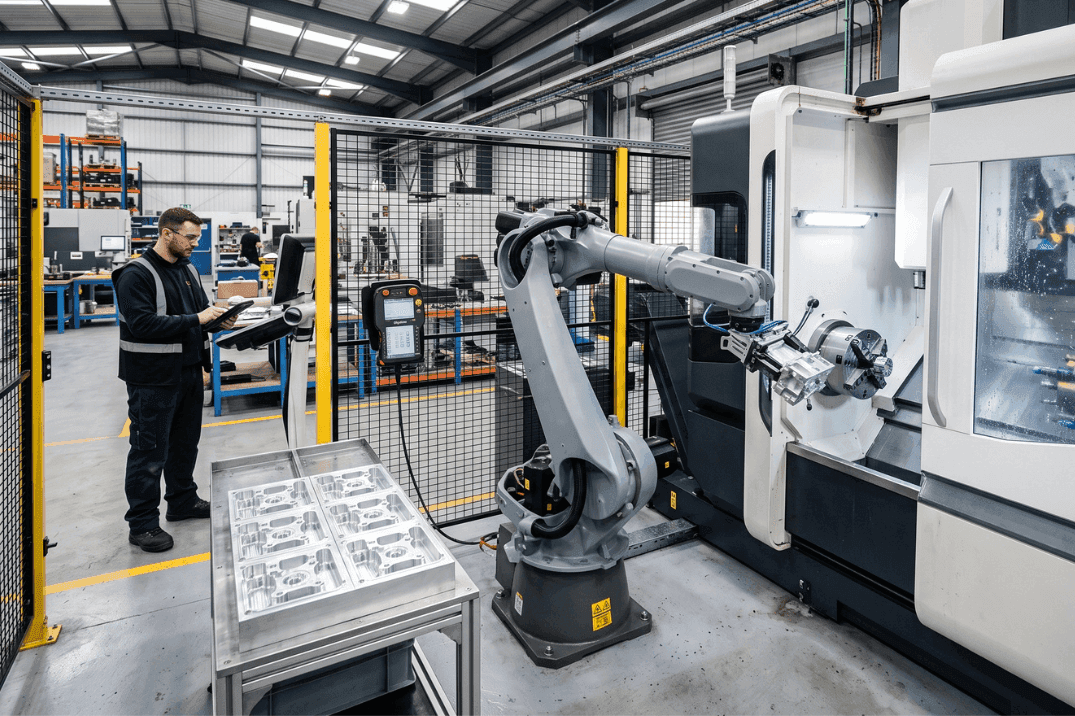
Industrial machine tending robot automatically loading and unloading metal components from a CNC machine.

Machine Tending Robots

Machine tending robots load and unload CNC machines, presses and moulding cells so skilled operators are freed for higher-value work. Here is how machine tending automation works, where it fits, and the return it delivers for UK manufacturers.

Key Takeaways

  • Machine tending robots automate the loading and unloading of CNC machines, presses, injection moulding and inspection cells.
  • They run unattended across shifts, lifting spindle utilisation from a typical 40-60% up to 80% or more.
  • Both collaborative robots and six-axis industrial arms suit tending; the choice comes down to payload, cycle time and guarding.
  • Typical UK payback is 12-24 months, and faster on multi-shift or lights-out operation.
  • The best first candidates are repetitive, high-mix, low-value manual loading tasks tying up skilled operators.

What Are Machine Tending Robots?

A machine tending robot is an industrial robot or cobot that loads raw parts into a production machine and removes the finished part once the cycle is complete. It takes over the repetitive "stand and feed" job that would otherwise occupy a skilled operator for a full shift, keeping the machine running continuously instead of waiting on manual loading.

Machine tending is one of the most common and fastest-returning applications of industrial robotics, because the task is repetitive, well defined and easy to justify. Rather than replacing people, it redeploys them from door-opening and part-swapping to setup, quality and process improvement. For a wider view of robot types and how they are used, see our guide to industrial robotics.

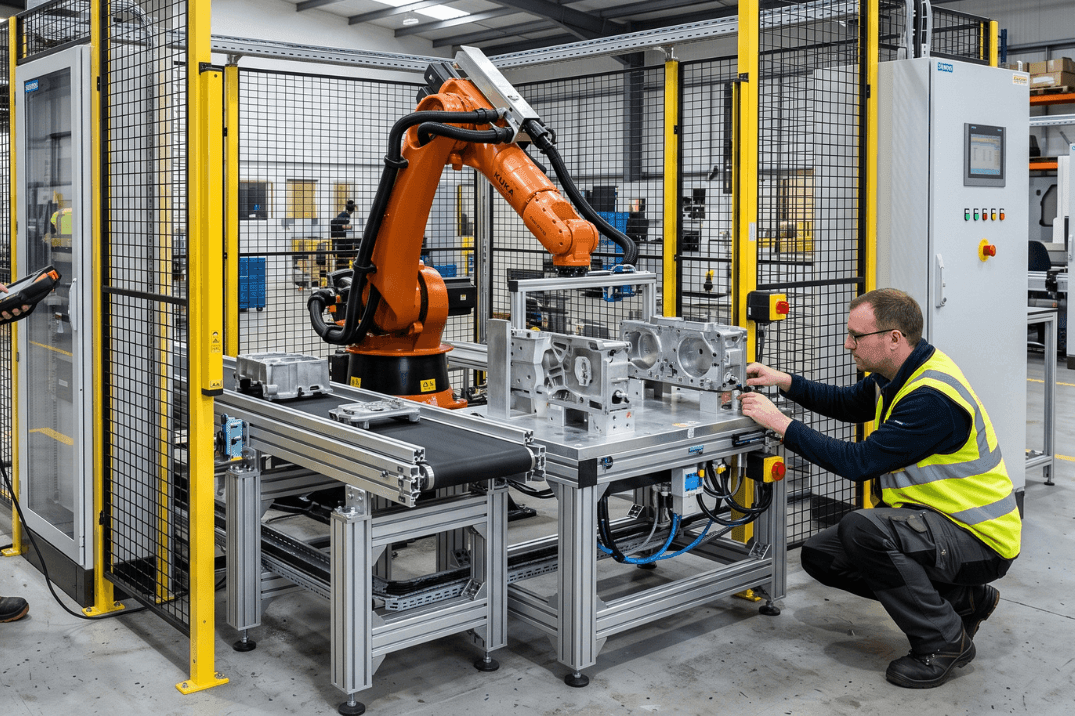
Machine tending robot operating a CNC machine while a skilled operator monitors the automated production cell.

Machines a Tending Robot Can Load


CNC lathes and machining centres

Loading billets and unloading finished components to keep spindles cutting across shifts.

Press brakes and stamping presses

Feeding blanks and removing formed parts, removing operators from the point of operation.

Injection moulding machines

Removing mouldings, degating and placing parts for downstream handling.

Die casting cells

Extracting hot castings safely and consistently from the tool.

Grinding, deburring and finishing

Presenting parts to the process and transferring them between operations.

Inspection and CMM stations

Loading parts for measurement so quality checks run unattended.

Cobots or Industrial Robots for Machine Tending?

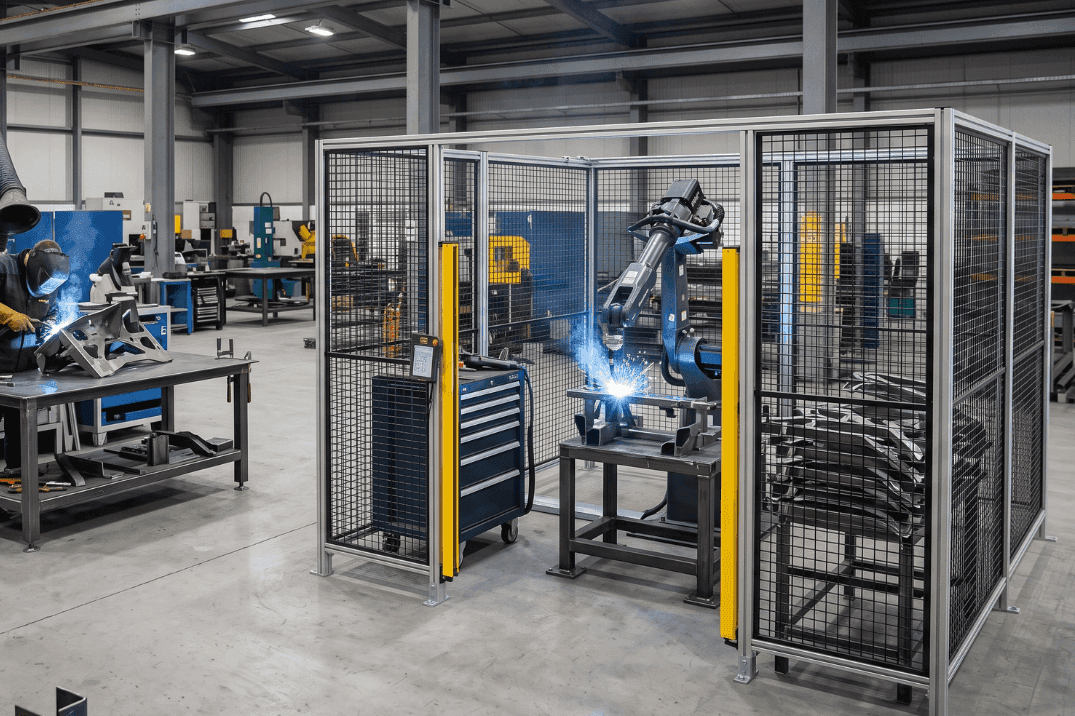
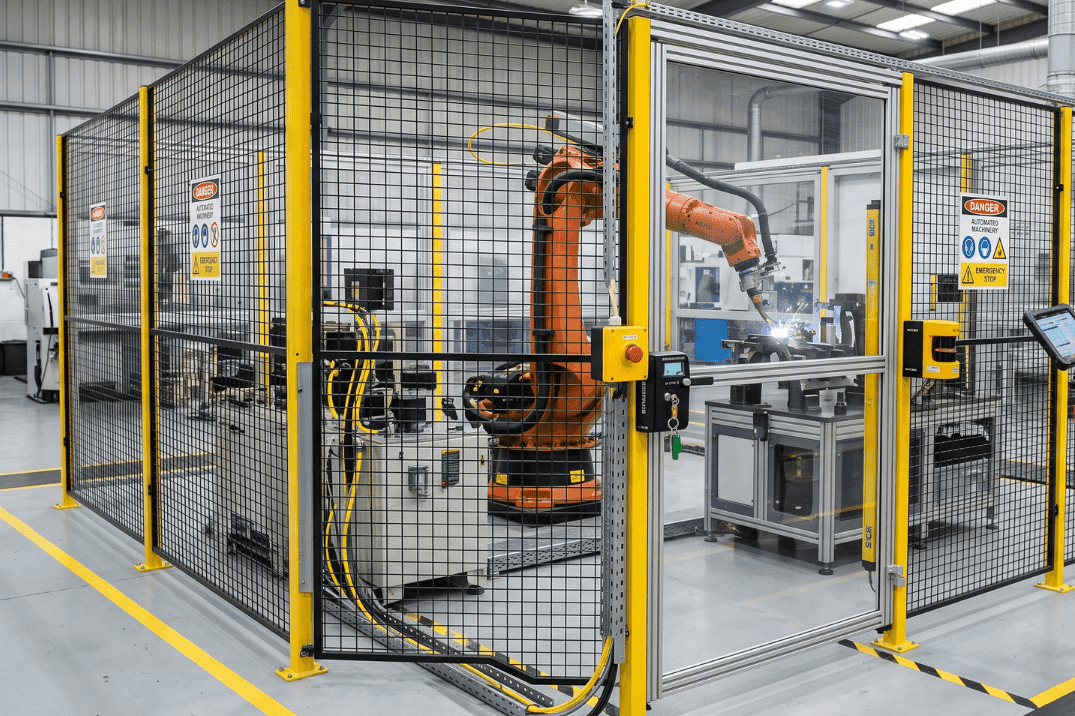
Both work well; the right choice depends on the cell. Six-axis industrial arms handle heavier payloads and faster cycle times but usually need guarding. Collaborative robots can often run alongside operators without full fencing, which suits smaller footprints and frequent changeovers, though they are slower and lighter. Our comparison of cobots vs industrial robots covers the trade-offs in detail.

In practice, high-volume CNC and press cells tend to favour industrial arms, while high-mix, lower-volume shops with limited space often start with a cobot on a single machine and expand from there.

80%+
Spindle utilisation vs 40-60% with manual loading
24/7
Unattended lights-out running
12-24 mo
Typical payback period
30-50%
More parts per shift

The Business Case: Uptime, Labour and Consistency

The core return on machine tending is machine uptime. A manually tended CNC often sits idle 40-50% of the time between loads; a robot keeps the spindle cutting, so you get far more parts from the same capital equipment. Add unattended overnight running and the effective capacity of the shop rises without buying another machine.

Labour is redeployed rather than removed, quality becomes more consistent, and the numbers stack up quickly. Most UK machine tending projects reach payback inside two years; our guide to robotics ROI and payback explains how to model it.

Benefits of Machine Tending Automation


Higher machine utilisation

Spindles and presses keep running between loads instead of waiting on an operator.

Labour redeployed to skilled work

Operators move from part-swapping to setup, quality and process improvement.

Consistent quality

Every load is identical, reducing scrap and damage from handling variation.

Improved safety

People are removed from presses, hot tools and pinch points.

Lights-out capacity

Cells run unattended overnight, adding capacity without extra machines.

Scalable and flexible

Reprogram or redeploy the robot as part mix and volumes change.

Machine Tending with MotionTech

MotionTech designs, guards and integrates machine tending cells around your existing machines, tooling and takt time, from a single cobot on one CNC to multi-machine arm cells feeding several stations. We handle the gripper, part presentation, safety guarding and PLC integration so the cell drops into your line and runs from day one.

Our robot integration specialists will assess your best first candidate and size the return. Talk to our team about automating your loading tasks.

Ready to automate a process? Our integration specialists scope the cell, the tooling and the return around your line.

Speak to a specialist

Frequently Asked Questions