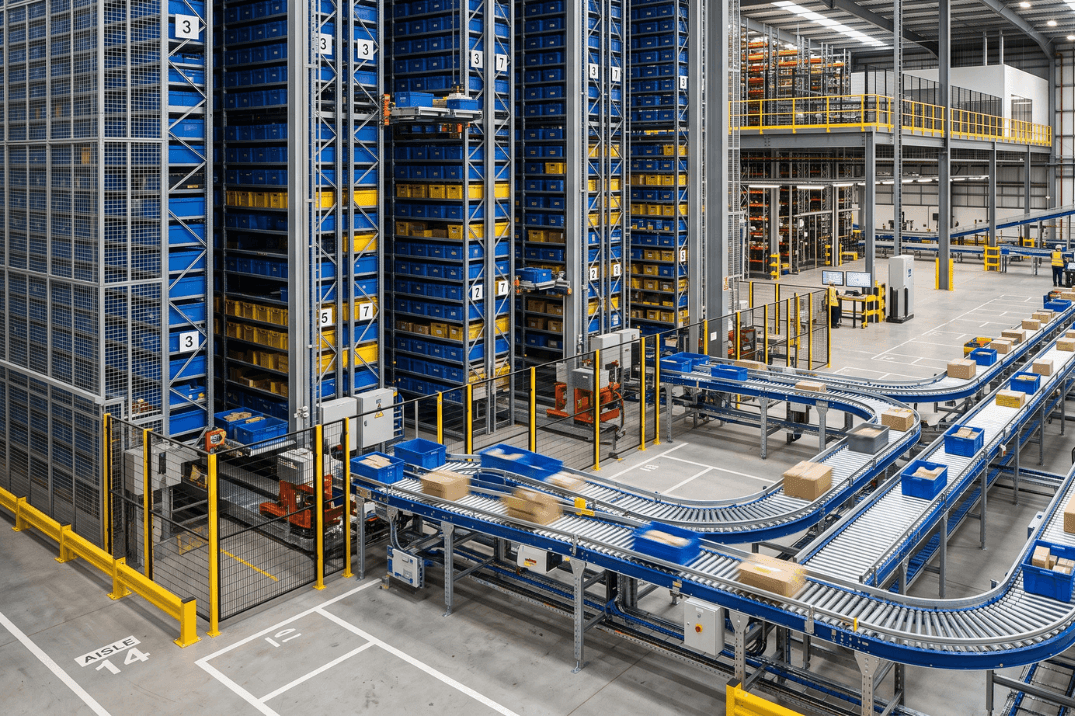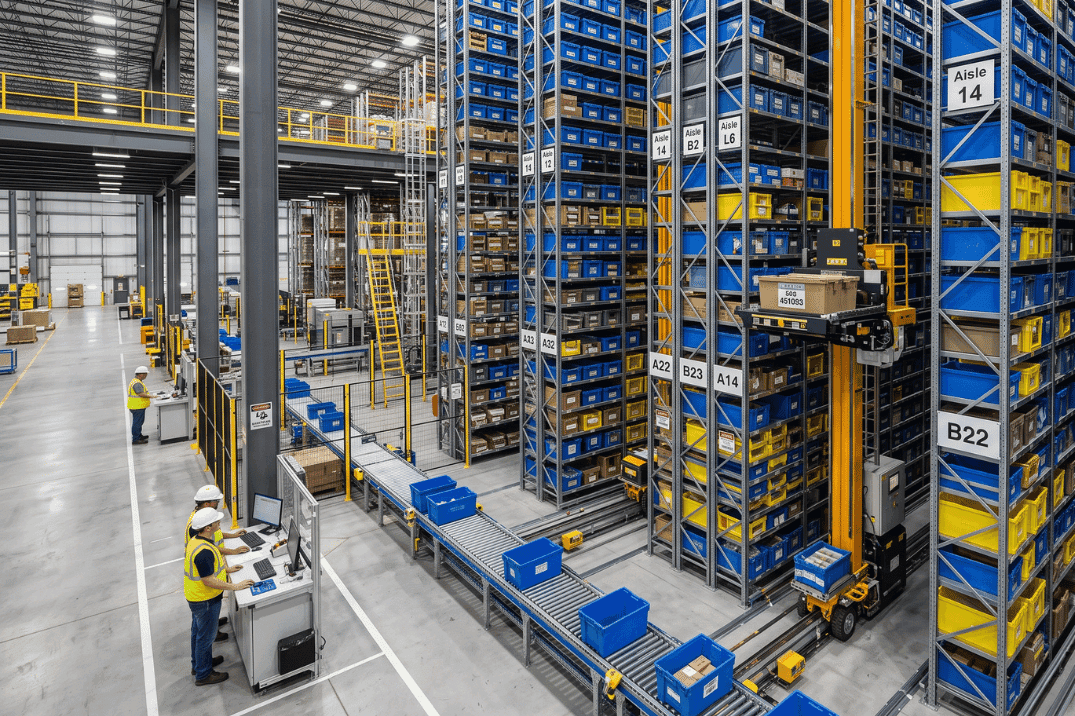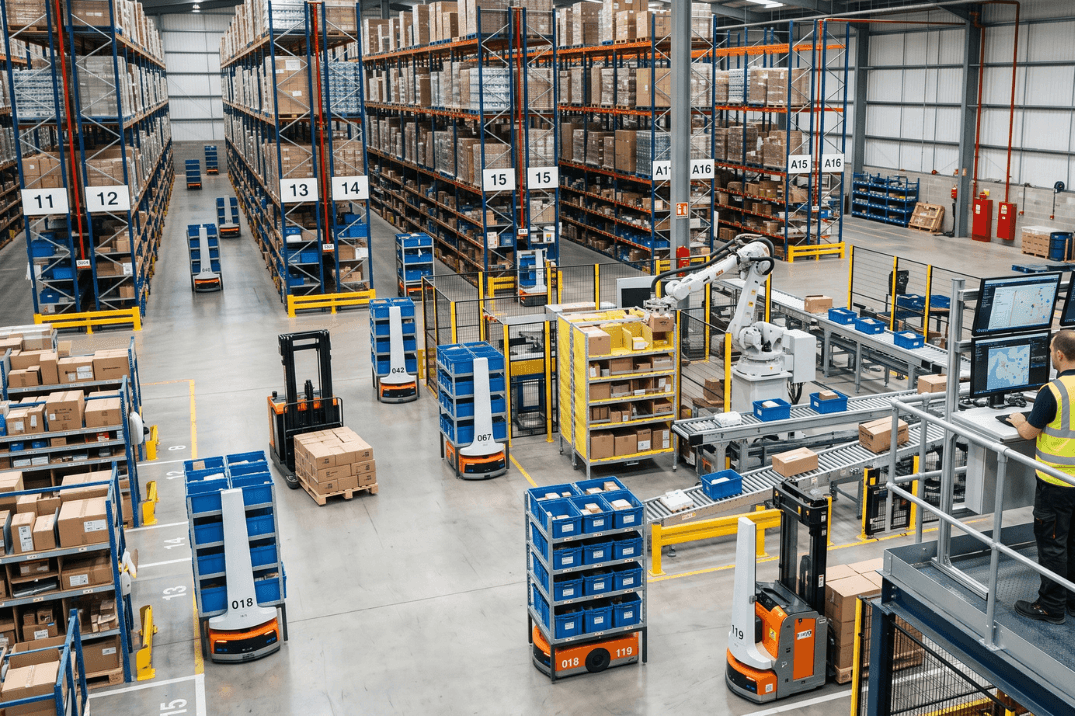
Automated warehouse with AMRs, robotic picking equipment and conveyors handling goods with minimal manual labour

Goods-To-Person Vs Person-To-Goods Order Fulfilment: Which Approach Fits Your Warehouse?

Warehousing operations across the UK face mounting pressure to increase throughput while managing rising labour costs and shrinking site footprints. Goods-to-person vs person-to-goods order fulfilment is one of the most fundamental decisions in warehouse design, shaping everything from picking speed to future scalability.

Key Takeaways
  • ✓Two opposite models: Person-to-goods sends operatives to fixed storage racks; goods-to-person picking systems bring the stock to the operator at fixed pick stations.
  • ✓Goods-to-person removes walking: Goods-to-person picking systems (AS/RS, ASRS shuttles and vertical lift modules) remove walking time and lift pick rates and order fulfilment.
  • ✓Capital vs scalability: Person-to-goods needs less capital; goods-to-person needs more but scales better across peaks, distribution centres and fulfilment centres.
  • ✓Both integrate: Both integrate with automated conveyors, warehouse software (a WMS or warehouse control system) and AMR assistance to form one workflow.
  • ✓Often a hybrid: The right choice depends on order profile, SKU velocity and site footprint, and is often a hybrid that protects pick rates and customer satisfaction.

What Is Person-To-Goods Fulfilment?

Person-to-goods is the traditional model of order fulfilment. In this approach, warehouse operatives walk or ride through the facility to locate and retrieve items from fixed storage racks and storage locations before bringing them to a packing or consolidation point.


This method has underpinned warehouse operations for decades. It requires minimal capital investment and offers flexibility for handling a wide range of SKUs, but it is inherently limited by human walking time, which can account for a significant proportion of a picker shift.

Large automated warehouse combining conveyor systems, high-density automated storage and mobile robots for material handling.

What Is Goods-To-Person Fulfilment?

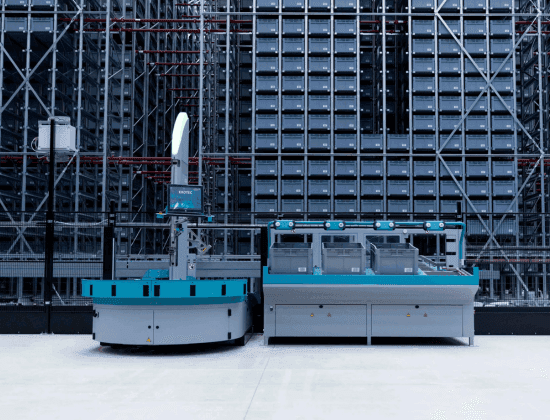
Goods-to-person reverses the traditional model. Rather than sending operatives to retrieve stock, goods-to-person picking systems such as AS/RS, ASRS shuttles, vertical lift modules, or robotic pod retrieval bring the required goods directly to stationary pick stations.


This approach eliminates unproductive walking time entirely, allowing pickers to focus solely on the pick-and-pack task. It is increasingly adopted in high-throughput e-commerce and 3PL environments where speed and consistency are critical.

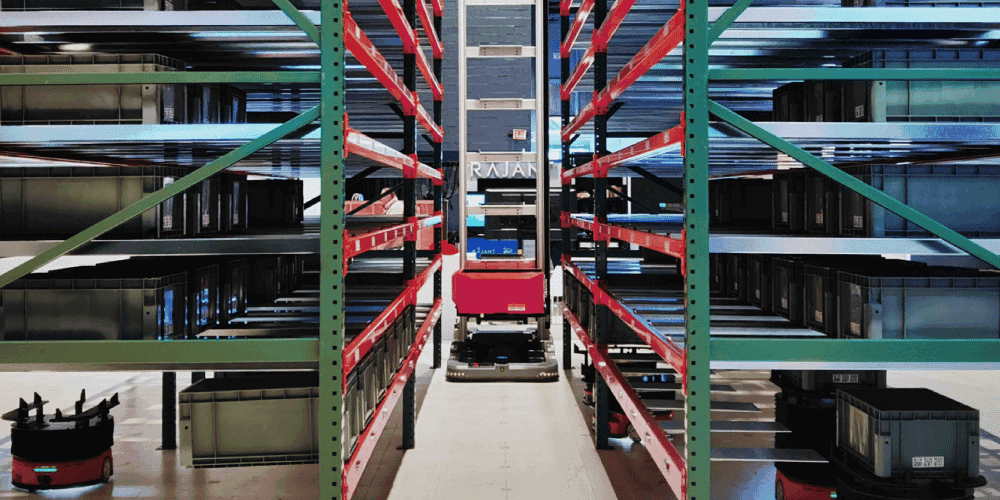
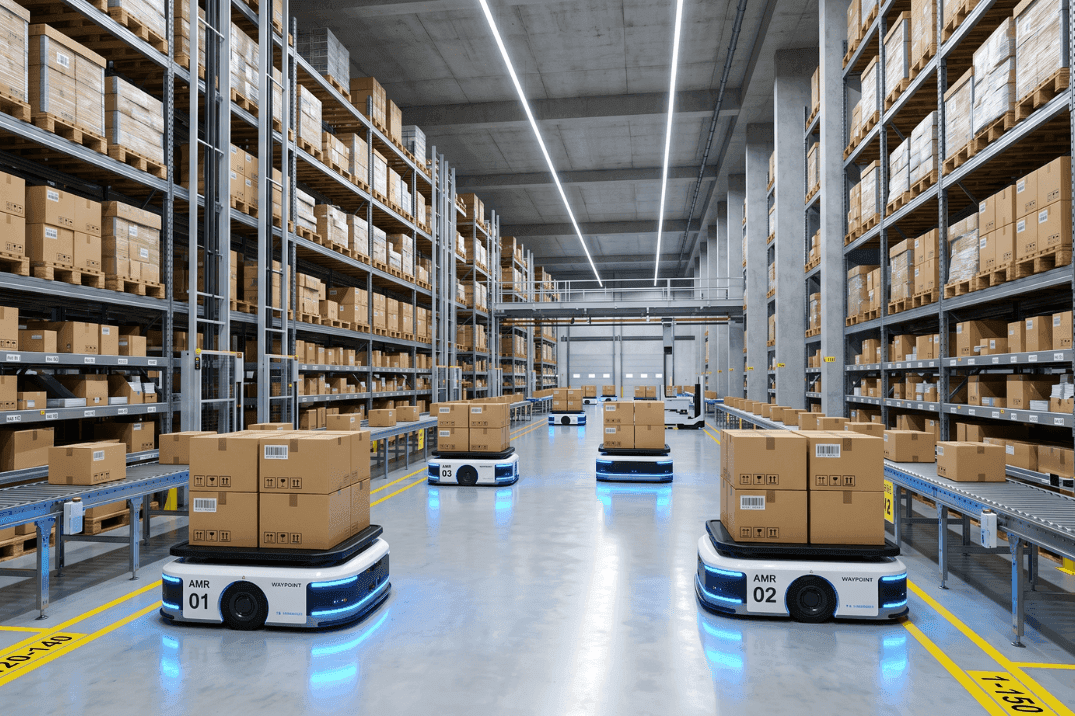
Autonomous mobile robots transporting cartons alongside conveyor systems in a modern warehouse, illustrating flexible automation commonly used in ASRS retrofit projects

Types of Goods-to-Person Picking Systems


AS/RS and ASRS shuttles

Shuttle AS/RS and automated storage systems that present totes or pallets to the operator.

Vertical Lift Modules and carousels

Vertical lift modules that bring trays and shelves to the pick stations.

Robotic pod retrieval

Automated robots and automated guided vehicles that move mobile storage racks to the operator.

Smart carts and AMR assistance

Smart carts and AMR assistance that guide pickers in hybrid, semi-automated setups.

By the numbers
500-700
goods-to-person picks per hour
~50%
of a picker shift is walking in person-to-goods
2-3x
higher pick rates from goods-to-person
<2 yrs
typical payback on warehouse automation

Key Differences in Goods-To-Person Vs Person-To-Goods Systems


Several operational factors separate the two approaches:

Picking Speed

Goods-to-person systems typically deliver significantly higher pick rates per operative by removing travel time from the order-picking equation.

Storage Density

Goods-to-person solutions, particularly AS/RS and shuttle-based systems, make use of vertical space far more effectively than traditional racking accessed by person-to-goods methods.

Capital Investment

Person-to-goods requires lower upfront investment, while goods-to-person demands greater capital outlay but delivers stronger long-term efficiency gains.

Labour Dependency

Person-to-goods operations are more exposed to labour shortages and rising wage costs, whereas goods-to-person reduces reliance on large picking headcounts.

Scalability

Goods-to-person systems are generally easier to scale during peak periods without a proportional increase in labour.

These differences demonstrate why the choice is rarely simple. It depends heavily on order profile, SKU velocity, and available site footprint.

Applications Across Industry Sectors


Both models find application across a wide range of sectors, though goods-to-person has gained particular traction in certain areas:

E-Commerce and Retail

High order volumes and same-day dispatch demands make goods-to-person a natural fit for fast-moving online retail operations and fulfilment centres.

3PL

Third-party logistics providers managing multiple client SKU ranges across several distribution centres benefit from the flexibility and speed goods-to-person provides.

Grocery

Perishable goods and high SKU turnover in grocery fulfilment often favour goods-to-person for its speed and accuracy.

Manufacturing

Person-to-goods remains common in manufacturing with lower order frequency and bulkier unit loads, though goods-to-person is increasingly adopted for kitting and component supply.

Integration With Other Technologies

Neither model operates in isolation. Goods-to-person systems are often integrated with conveyor systems, put-to-light stations, and warehouse management systems (WMS) or a warehouse control system to create a seamless end-to-end picking workflow. Person-to-goods operations increasingly rely on voice picking, handheld scanning, smart carts, collaborative robots and AMR assistance to close the productivity gap with automated alternatives.

By combining either approach with smart WMS integration, businesses gain enhanced visibility over stock accuracy and order status, supporting more informed operational decisions and stronger customer satisfaction.

Choosing Between Goods-To-Person And Person-To-Goods

There is no universally correct answer in the goods-to-person vs person-to-goods debate. Order profile, SKU count, available space, and budget all influence which model, or combination of both, delivers the best operational outcome.


As UK warehousing continues to face labour shortages and rising throughput demands, more operations are exploring hybrid models that combine the flexibility of person-to-goods with the speed and scalability of goods-to-person picking systems for peak SKUs. Making the right choice early supports long-term growth, higher customer satisfaction and a lasting competitive edge.

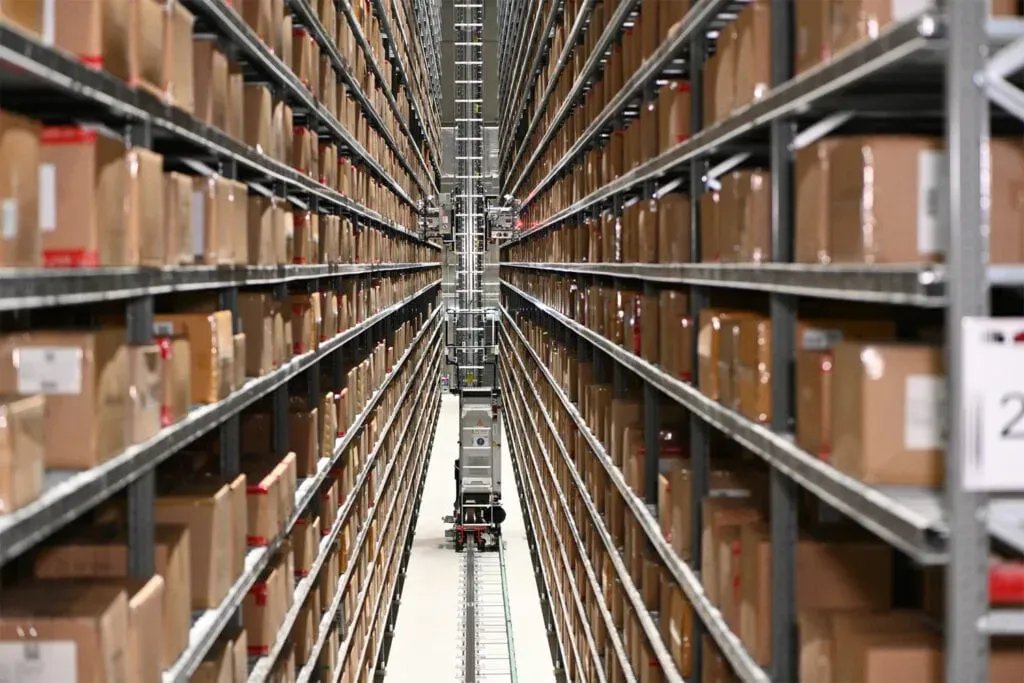
Integrated ASRS and conveyor system moving totes and cartons between automated storage and warehouse processing areas.

Planning a storage or ASRS project? We size the system, cost and payback around your space, SKU profile and throughput.

Speak to a specialist

Frequently Asked Questions