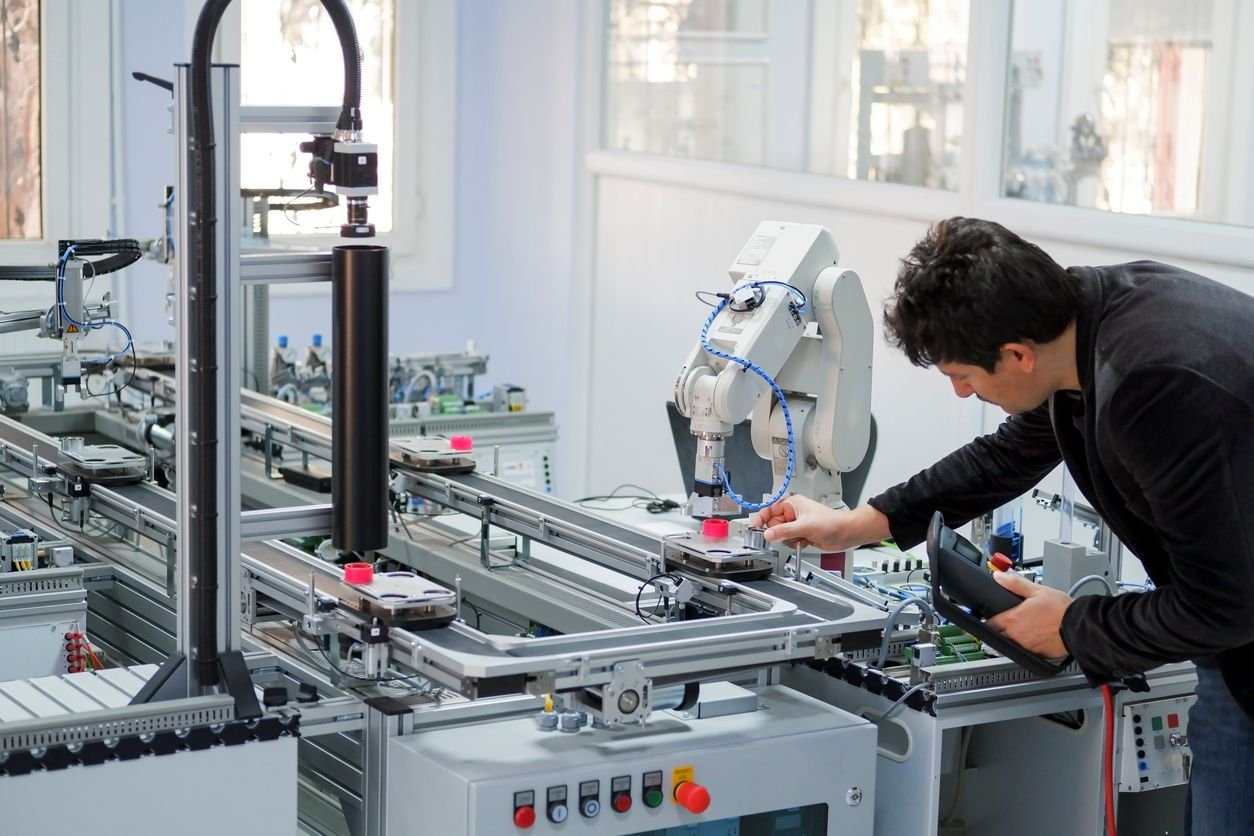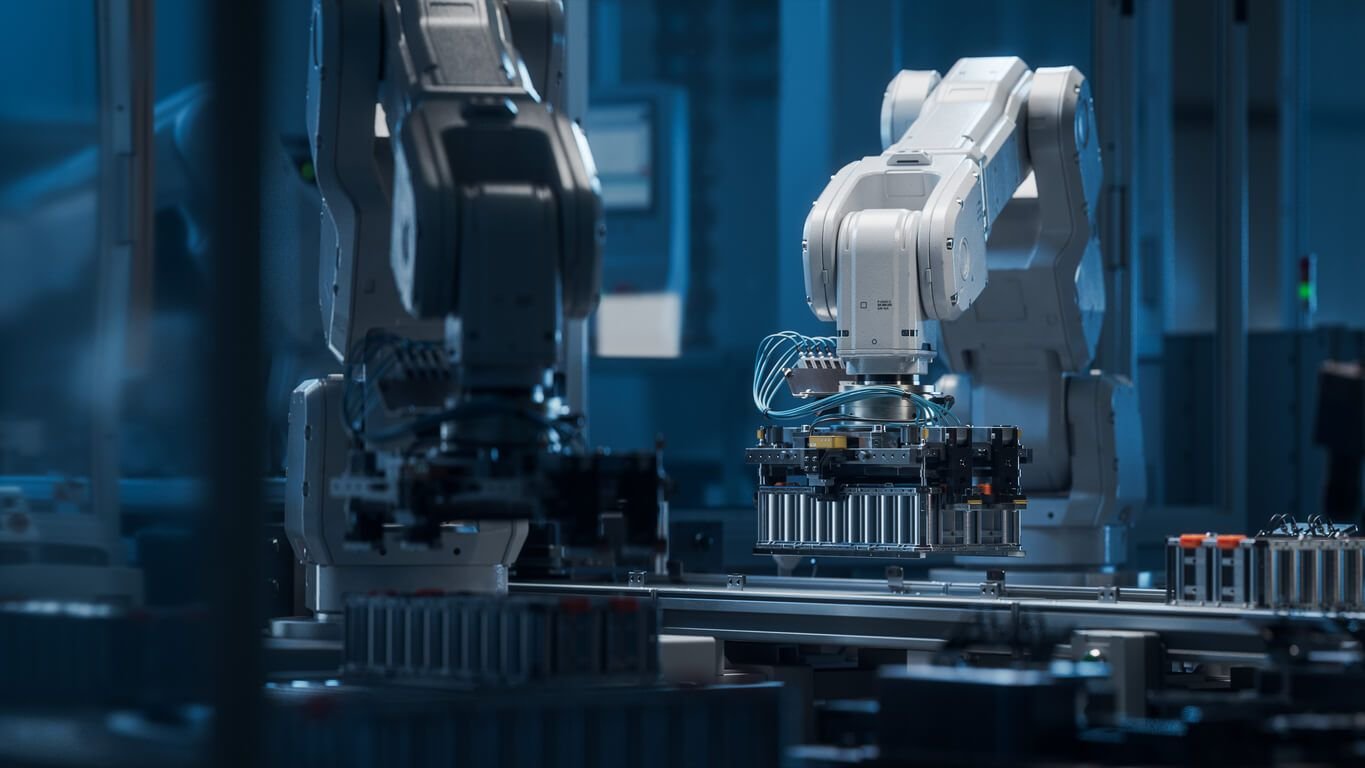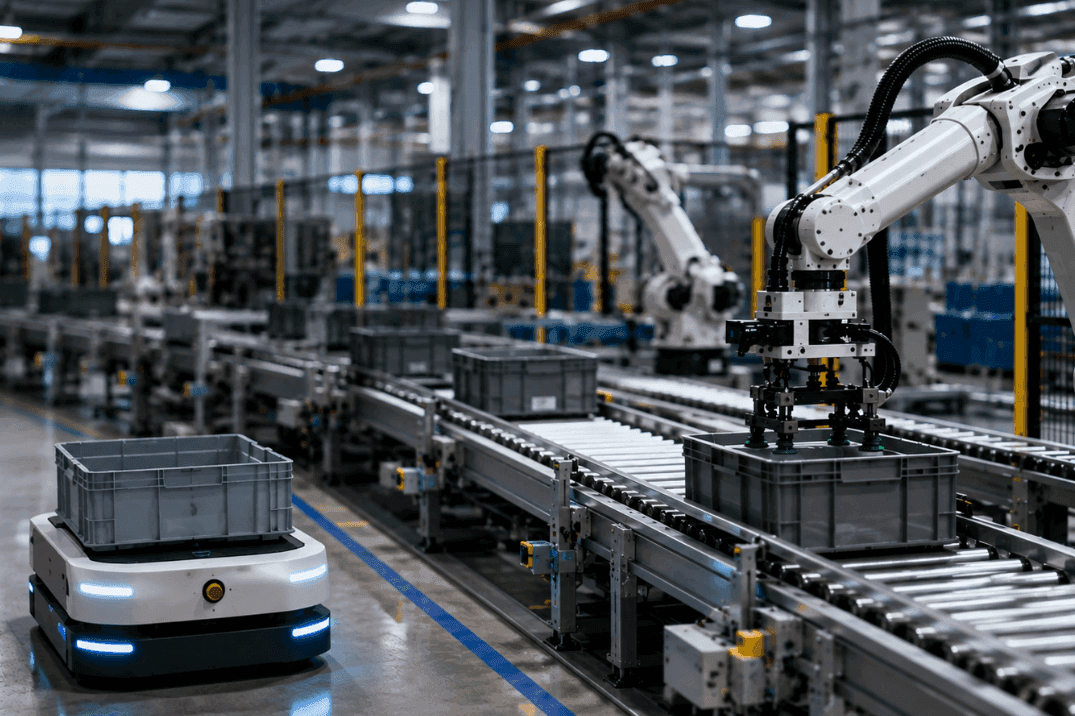
Robotic arms and an AMR integrated with an automated conveyor system in a modern manufacturing facility.

Integrating Robots with Existing Lines

Warehouses and production facilities are under increasing pressure to do more with less. Labour shortages, rising operational costs, and the relentless pace of e-commerce growth have pushed industrial automation to the top of the agenda for logistics and manufacturing operators alike.

Integrating robots with existing production lines is now one of the most widely considered routes to modernisation, offering a scalable path to greater efficiency and faster material handling without the upheaval of a complete system overhaul, and without waiting for robotic technologies to be designed in from scratch.

In short: integrating robots with existing lines means adding robotic systems (mobile, articulated, or collaborative) into an operation not originally designed for them, reusing existing infrastructure. Success depends on mechanical fit, control system integration, safety compliance, and the right software layer.

What Does Integrating Robots with Existing Lines Mean?

Integrating robots with existing lines refers to the process of introducing robotic systems, whether mobile, articulated, or collaborative, into a manufacturing environment that was not originally designed to accommodate them. Rather than starting from scratch, operators enhance what is already in place as a single automation system. This approach preserves existing infrastructure investment while layering in new capability where it is needed most.


The scope of integration varies considerably. Some projects involve deploying autonomous mobile robots (AMRs) to handle goods movement between fixed conveyor systems zones, while others require articulated robotic arms or Cartesian robots to take over pick-and-place or palletising tasks at the end of a line. Whatever the robot platforms and automated machines involved, they share a common challenge: making new technology work seamlessly with legacy equipment.

Industrial robotic arm integrated alongside an existing conveyor system to automate material handling in a manufacturing facility.

Key Challenges in Robotic Integration


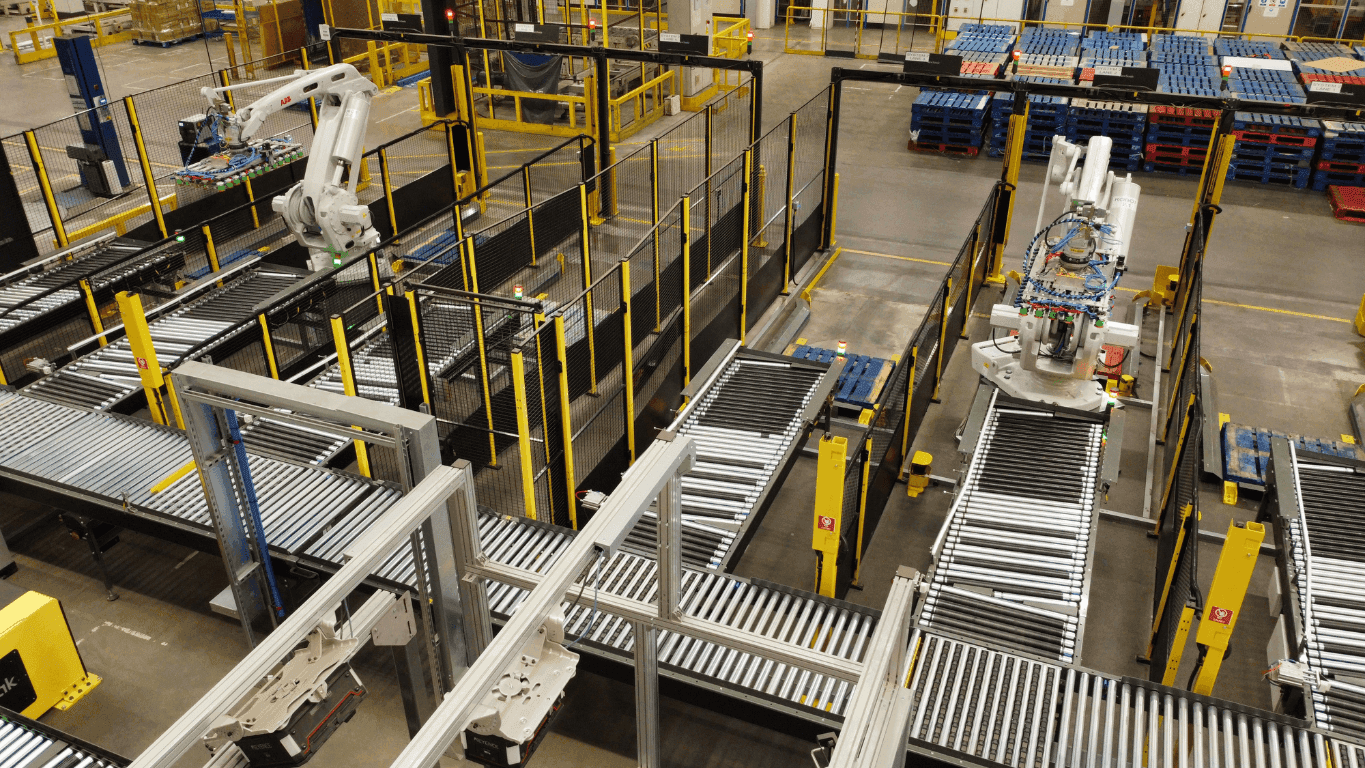
Integrating robots into established operations is not without its complexities. The most common barriers to robotic integration faced by UK operators include:

Mechanical compatibility

Conveyors, racking and floor layouts may need modifying for robot footprints, reach envelopes, tooling and safety zones.

Control system connectivity

Legacy PLCs and WMS may not speak modern robot protocols, needing middleware or interface development.

Safety compliance

Robots near people require full risk assessment, and often segregation or collaborative integration to meet the machinery directive.

Workflow redesign

Adding robots surfaces surrounding inefficiencies, such as uneven cycle times and product variation, that must be fixed first.

Integration Approaches for Different Operation Types

There is no single method for integrating robots with existing production lines. The right approach depends on the operation's throughput requirements, physical environment, and longer-term automation roadmap. Common models include:

Island automation

A standalone cell at one point (machine tending, palletising, labelling) with manual handoff. The lowest-risk entry point.

Conveyor-connected robotics

Cells linked to existing conveyors via transfer stations or buffers, for more continuous flow without full redesign.

AMR-based goods movement

Mobile robots replace manual trolley or forklift moves between stations, working alongside conveyors rather than replacing them.

Cobot assistance stations

Collaborative robots assist workers at picking or assembly with repetitive or ergonomically demanding tasks.

Key Challenges in Robotic Integration

Vision systems add another dimension: integrating machine vision and inspection systems lets a robot adjust its motion control to real conditions, handling product variations that fixed programming cannot. Each model can be implemented incrementally, allowing operators to validate performance before committing to further investment.


The Role of Software in Successful Integration


Hardware is only one part of the equation. Integrating robots with existing lines requires a software layer capable of orchestrating robotic automation systems alongside current automation and manual processes. A warehouse control system (WCS) sits at the centre of this, managing task allocation, traffic coordination for mobile robots, and real-time data exchange between robot controllers and upstream systems.


Where legacy WMS or enterprise resource planning (ERP) platforms lack native integration capabilities, application programming interfaces (APIs) or middleware solutions bridge the gap. Getting this control system integration right from the outset avoids the fragmented visibility that undermines many early-stage automation projects.


Benefits of Integrating Robots with Existing Lines


For operators who approach integration methodically, the returns are well documented. The principal benefits include:

Why it pays off
Lower capital requirement by reusing existing infrastructure instead of a greenfield build
Faster time to value, with throughput or labour gains in months rather than years
Operational resilience, running consistently regardless of staff availability
Scalability, once the integration framework is in place adding more is straightforward

A Foundation for Long-Term Automation Growth

Integrating robots with existing lines is not simply a short-term fix for an immediate operational problem. Done well, it establishes the technical and organisational foundation from which further automation investment can grow. 


As robotic systems become increasingly capable and the total cost of ownership continues to fall, the operators who have already built integration experience will be best placed to scale. Working with an experienced robotic system integrator, or robotic systems integrator, at this stage helps avoid costly rework later.

Industrial robot integrated with a conveyor line in a manufacturing facility designed for future automation expansion.

Design a tailored integration approach

We design integration around your existing lines, control systems, and long-term automation roadmap.

Speak to a specialist

Frequently Asked Questions