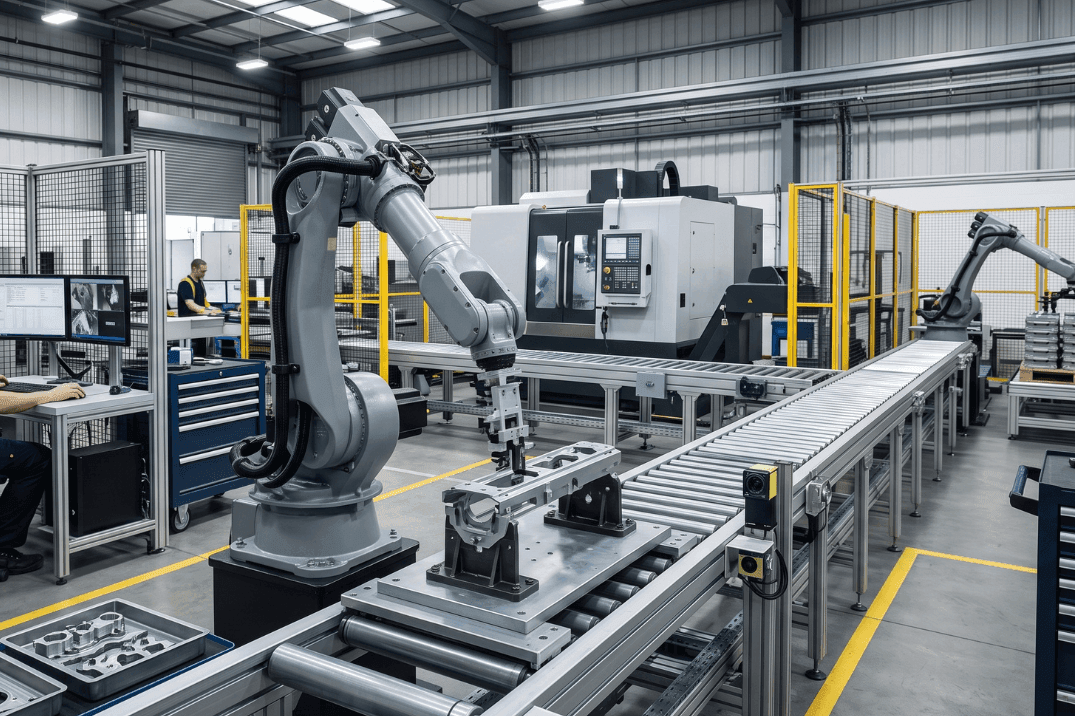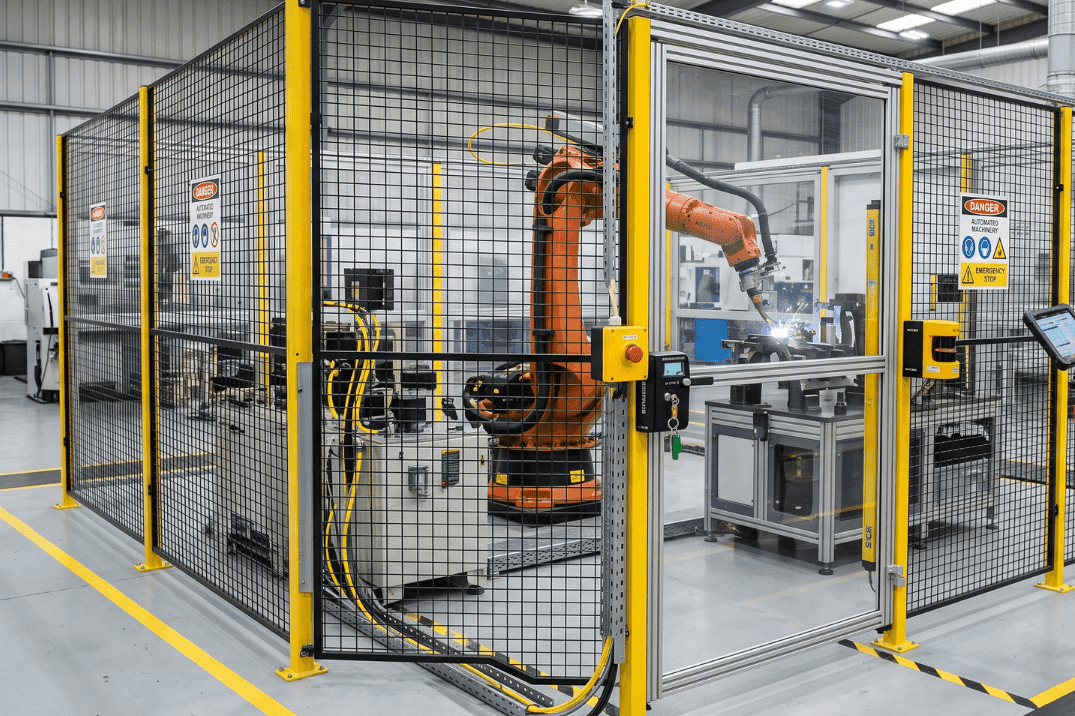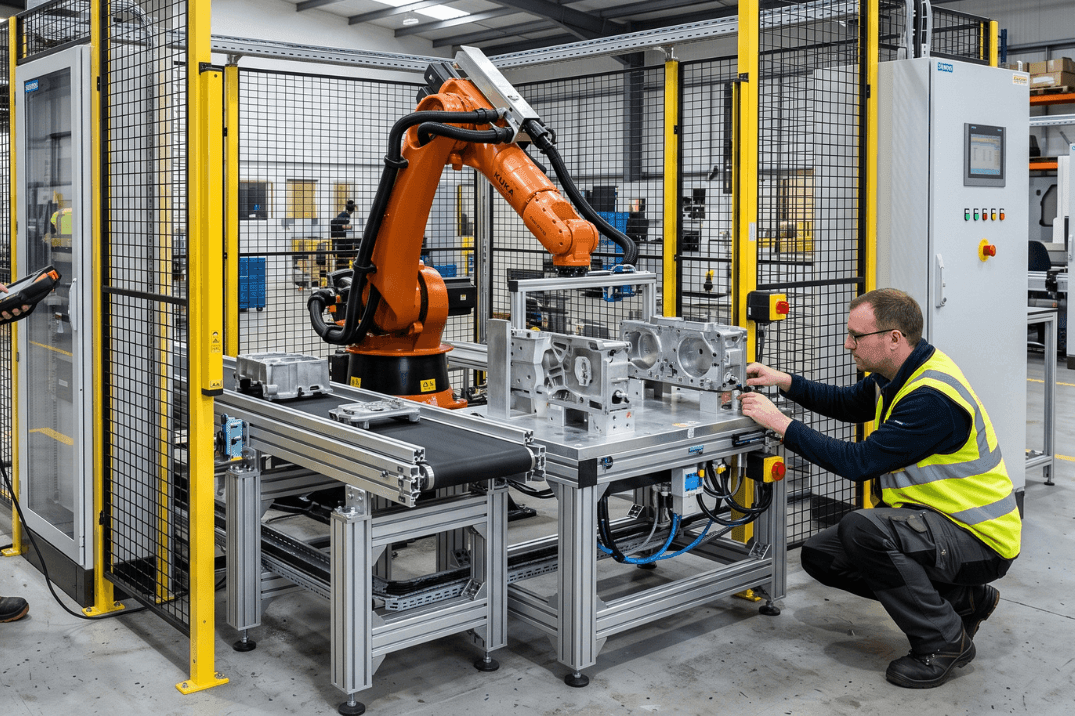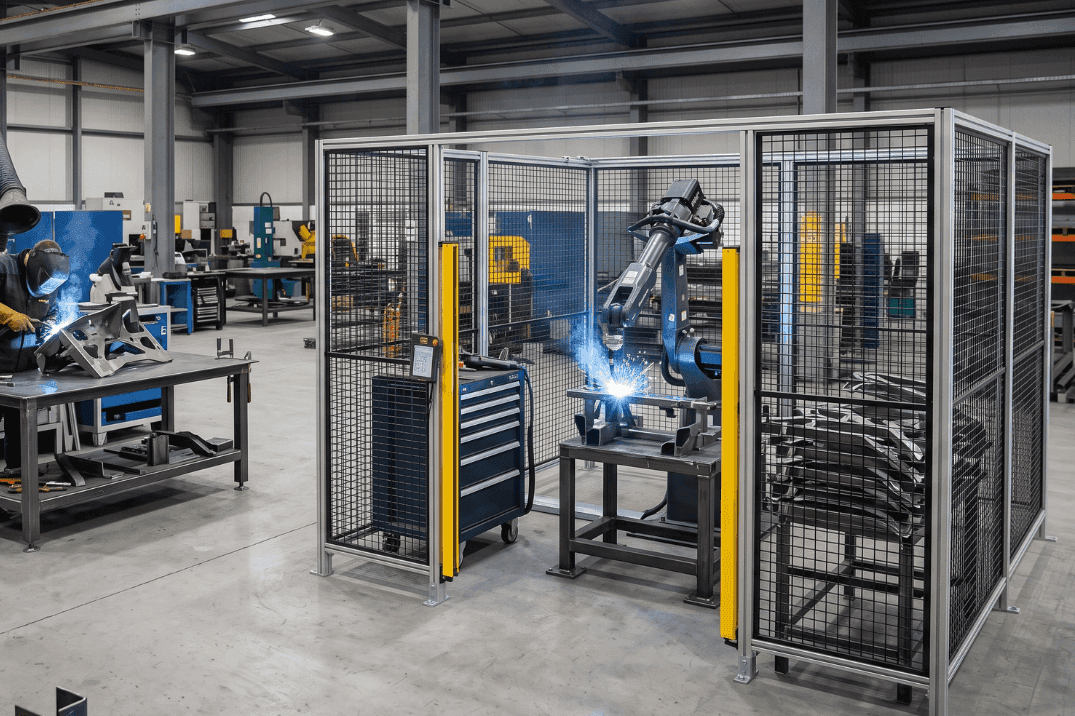
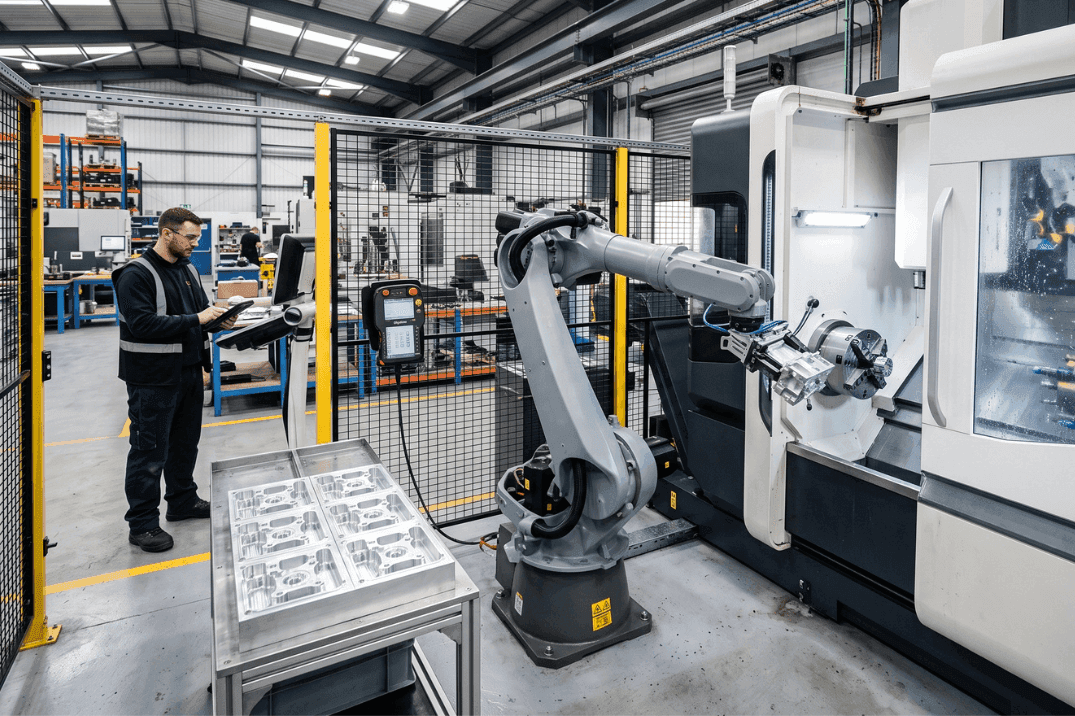
Robotic welding cell operating alongside a skilled manual welder in a modern UK manufacturing facility.

Robotic Welding vs Manual Welding

Robotic welding delivers speed, consistency and arc-on time that manual welding cannot match, but manual still wins for low-volume and complex work. Here is a clear comparison of robotic welding vs manual welding to help UK manufacturers decide.

Key Takeaways

  • Robotic welding gives far higher arc-on time, throughput and weld consistency than manual welding.
  • Manual welding still wins for one-offs, very high mix, awkward access and on-site repairs.
  • Robotic welding directly answers the UK skilled-welder shortage by getting more from each welder.
  • Common processes automated include MIG/MAG arc, TIG, spot, laser and plasma welding.
  • Typical payback is 12-24 months, faster where welders are hard to recruit.

Robotic Welding vs Manual Welding: The Short Answer

Robotic welding uses a programmed robot arm to make repeatable welds at high speed with minimal downtime between joints. Manual welding relies on a skilled welder's judgement and hands. For repetitive, high-volume work the robot wins on speed, consistency and cost per part; for varied, low-volume or complex work, a skilled welder is still the better and more flexible choice.

Robotic welding is one of the oldest and most proven applications of industrial robotics, and remains one of the strongest cases for automation in UK fabrication.

Where Robotic Welding Wins


Consistency and quality

Every weld is identical, cutting rework, spatter and scrap.

Speed and throughput

Higher travel speeds and far more arc-on time per shift.

Repeatability at volume

Ideal for medium-to-high volume families of similar parts.

Answers the welder shortage

Gets more output from each skilled welder you can recruit.

Safer working

Removes people from arc flash, fumes, heat and spatter.

Lower cost per part

Higher utilisation spreads fixed cost across far more parts.

When Manual Welding Still Makes Sense

Automation is not always the answer. Manual welding stays the right choice for one-off and prototype work, very high-mix jobs with constant changeover, large or awkward assemblies that are hard to fixture, on-site work and repairs, and jobs where the setup and programming time would outweigh the run.

The best operations often run both: robots on the repetitive, high-volume families and skilled welders on the complex and variable work, so each is used where it is strongest.

3-4x
Higher throughput than manual welding
90%+
Arc-on time vs ~15-30% manual
12-24 mo
Typical payback period
24/7
Consistent, repeatable welds

Cost and ROI of Robotic Welding

The economics of robotic welding are driven by arc-on time. A skilled manual welder is typically only actually welding 15-30% of the shift once you account for setup, repositioning and rest; a robot can weld 80-90%+ of the time. That difference multiplies output from the same floor space and the same, or fewer, welders.

Add consistent quality and less rework, and most cells pay back within one to two years. See our guide to robotics ROI and payback to model your own numbers.

Types of Robotic Welding


MIG / MAG (arc) welding

The most common robotic process, fast and well suited to steel fabrication.

TIG welding

High-quality, precise welds for thinner materials and visible joints.

Spot welding

Resistance welding widely used in sheet-metal and automotive assembly.

Laser welding

Fast, low-distortion welds with a narrow heat-affected zone.

Plasma welding

Precise, high-energy welding for specialist and thicker-section work.

Robotic Welding with MotionTech

MotionTech specifies, fixtures and integrates robotic welding cells, including collaborative welding where a cobot works safely alongside your welder for smaller batches. We handle the fixturing, torch, seam tracking and safety so the cell produces good welds from the first shift.

Our robot integration specialists will assess your parts and mix and recommend the right approach. Talk to our team about automating your welding.

Ready to automate a process? Our integration specialists scope the cell, the tooling and the return around your line.

Speak to a specialist

Frequently Asked Questions