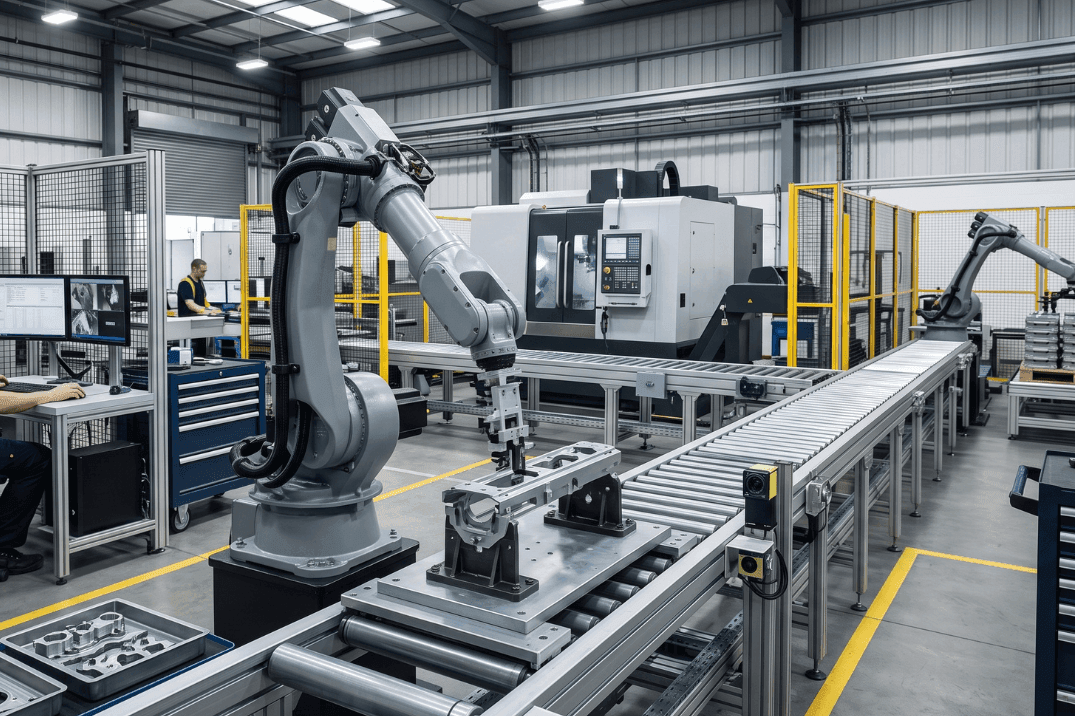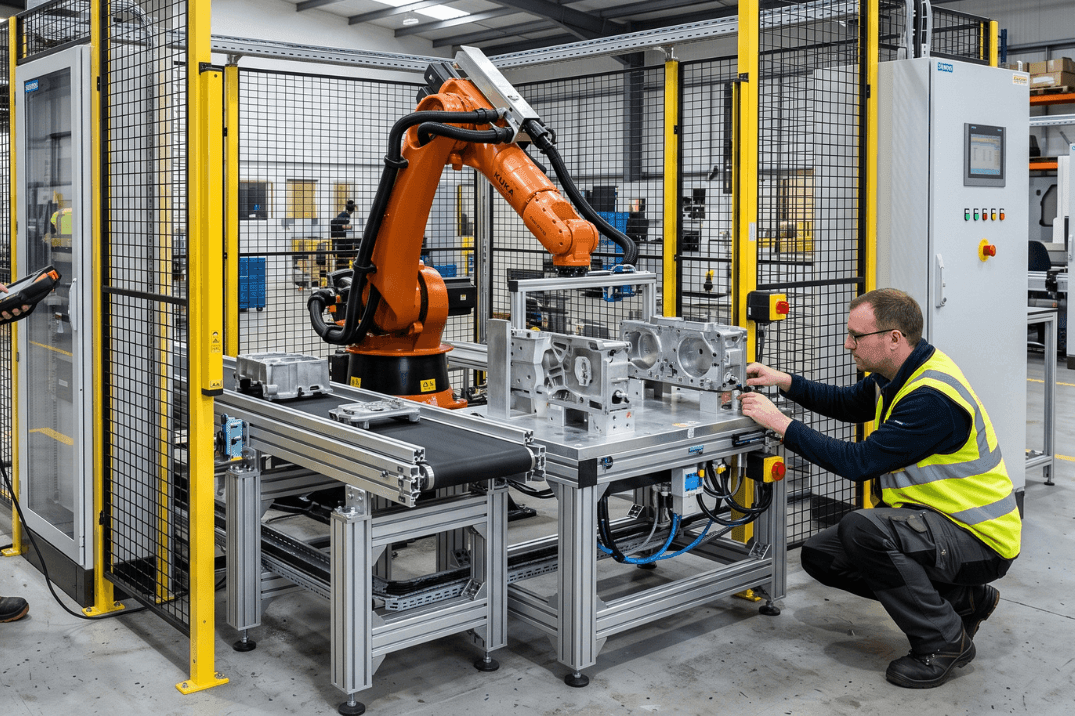
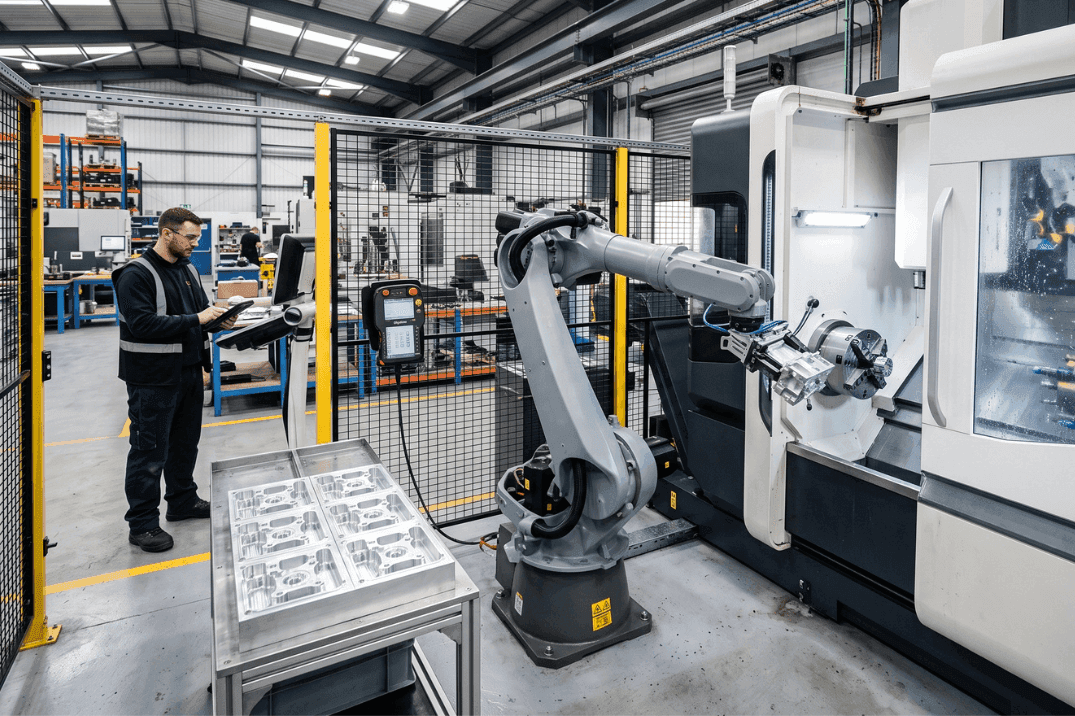
Automation engineer commissioning an industrial robot cell with conveyor, safety guarding and production fixtures in a UK manufacturing facility.

Robot Integration: 7 Mistakes to Avoid

Most failed robot projects fail at integration, not at the robot. These are the seven most common robot integration mistakes UK manufacturers make, why they happen, and how to get automation right the first time.

Key Takeaways

  • Most robot projects fail at integration and process design, not because the robot cannot do the job.
  • The single biggest mistake is automating a poor or unstable process instead of fixing it first.
  • Integration and tooling typically account for around half of a project's cost - budget for it.
  • Part presentation, safety and operator buy-in are underestimated far more often than the robot itself.
  • Defining a clear success metric and ROI up front is what keeps a project on track.

Why Robot Integration Makes or Breaks the Project

Buying a robot is the easy part. The value, and the risk, sits in integration: how the robot is fed, guarded, controlled, tooled and fitted into the wider process. A capable robot bolted onto a badly understood process will disappoint, while a modest robot integrated well will pay back for years.

The good news is that the failure modes are predictable. Almost every struggling robotics project traces back to one of a handful of avoidable mistakes made before the robot ever arrived.

7 Common Robot Integration Mistakes


1. Automating a poor process

Automating an unstable or badly documented process just repeats its faults faster. Fix it first.

2. Underestimating integration and tooling cost

The robot is often only half the cost; grippers, fixturing, guarding and controls make up the rest.

3. Choosing the wrong robot for the task

Wrong payload, reach or type leads to compromise, slow cycles or an unreliable cell.

4. Ignoring part presentation and flow

If parts do not arrive and leave reliably, even a perfect robot cell stalls.

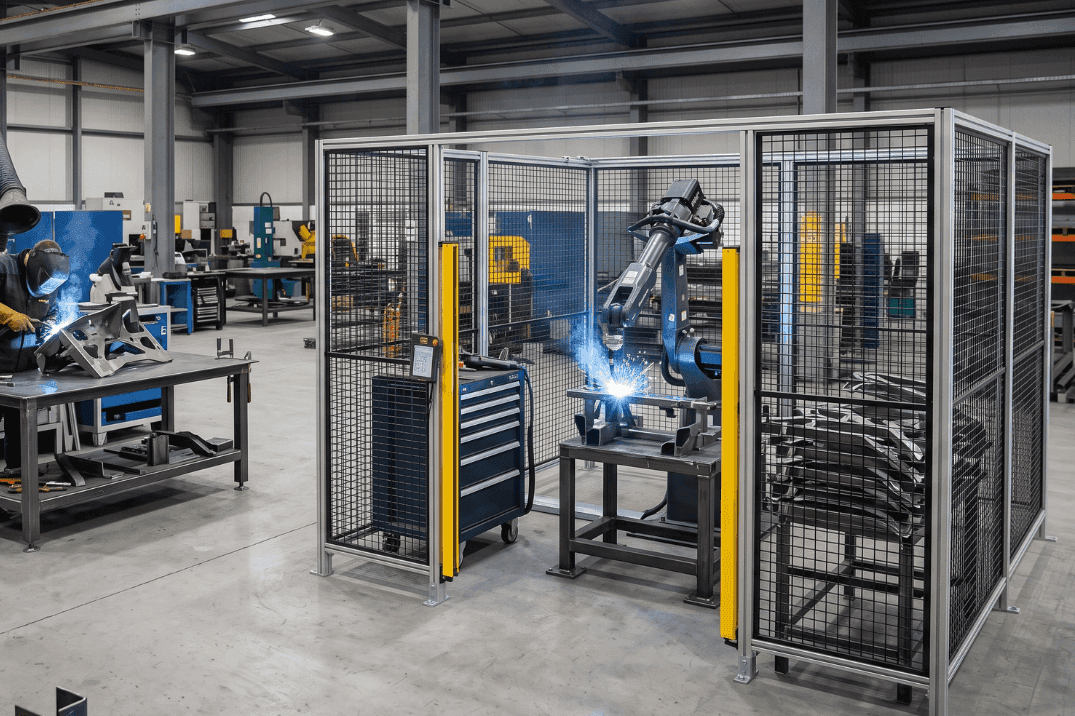
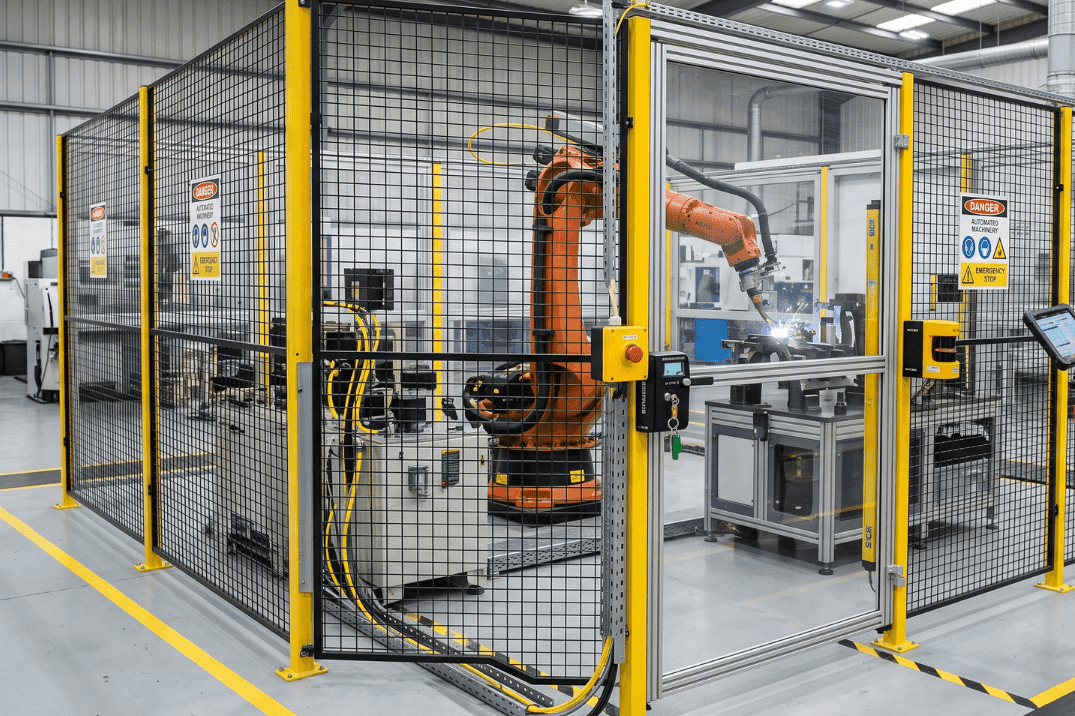
5. Leaving safety and compliance to the end

Bolting on guarding late is costly and risks non-compliance with PUWER and ISO 10218.

6. Forgetting operator training and buy-in

A cell no one is confident to run or recover gets switched off. Involve and train the team early.

7. No clear ROI or success metric

Without a defined target for throughput, quality and payback, the project cannot be judged or steered.

Start with the Process, Not the Robot

The most common and most damaging mistake is automating a process that is not ready. If the manual process is inconsistent, poorly documented or full of exceptions, a robot will simply repeat those problems faster. Fix and stabilise the process first, then automate the stable version.

This is also where the business case is won or lost. Defining the target throughput, quality and payback before design begins keeps everyone honest; our guide to robotics ROI and payback shows how to set those targets.

7
Avoidable mistakes that sink most projects
~50%
Of project cost is integration & tooling, not the robot
2-3 yr
Payback when integration is done right
#1
Cause of failure: automating a poor process

The Cost of Getting Integration Wrong

Integration mistakes are expensive because they surface late, during commissioning or after go-live, when they are hardest to fix. Under-budgeting for tooling, ignoring how parts are presented, or leaving safety to the end can stall a project for weeks and erode the very ROI that justified it.

Choosing the right robot for the task matters too; our comparison of cobots vs industrial robots helps avoid specifying the wrong platform from the start.

How to Get Robot Integration Right


Define and stabilise the process

Automate a clean, well-understood process, not a moving target.

Choose the right integration partner

Work with an experienced, technology-agnostic integrator who specifies for the task.

Budget for the whole cell

Include tooling, guarding, controls and commissioning, not just the robot price.

Design safety in from the start

Build the risk assessment and safeguarding into the concept, not the sign-off.

Plan part presentation

Make sure parts arrive and leave the cell reliably and repeatably.

Train the team and plan recovery

Give operators the confidence to run, fault-find and restart the cell.

Set and measure ROI

Agree the success metrics up front and track them after go-live.

Robot Integration with MotionTech

MotionTech has integrated automation for UK manufacturers for over 28 years. We start with your process and success metrics, specify the right robot and tooling, design safety in from the outset, and plan part presentation and operator training so the cell performs from day one, not eventually.

Our robot integration specialists can review a stalled project or scope a new one. Get in touch to avoid these mistakes on your next automation project.

Ready to automate a process? Our integration specialists scope the cell, the tooling and the return around your line.

Speak to a specialist

Frequently Asked Questions