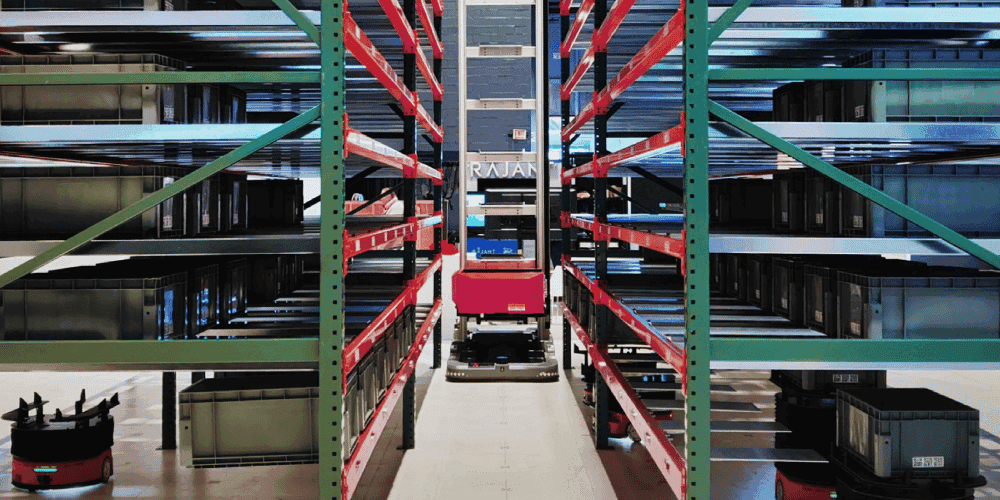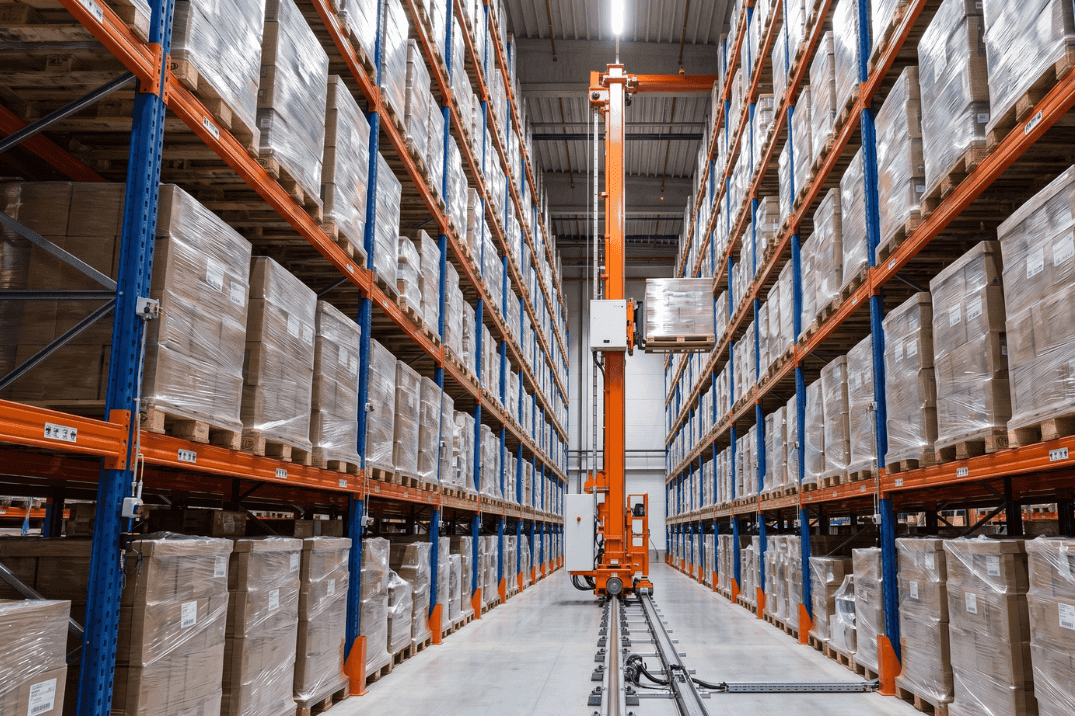
Stacker crane operating within a high-bay automated storage and retrieval system, moving palletised goods along racking aisles in a warehouse environment

How to Know If Your Warehouse Is Ready for Automation

Across the UK, investment in automated warehouses has accelerated sharply over the past five years. Retail, grocery, third-party logistics, and food and beverage operators are all evaluating warehouse automation at a pace driven by labour market pressure, rising operational costs, and the sustained growth of e-commerce. Logistics UK reports that the sector now processes more than 4.4 billion online orders annually, and that automation can reduce picking errors by up to 99.9% and increase fulfilment speed by 300% in high-volume facilities.¹ The UK warehouse automation market is now projected to reach around £2.7 billion by 2030, with over half of UK fulfilment centres expected to use AI in their operations by 2025, rising to 70% by 2027.²

What Readiness Actually Means

But readiness for automation is not a binary question. Operations that move forward without an honest assessment of their current state often find the transition harder and more expensive than anticipated.

Warehouse automation readiness is not simply about whether a business can afford the automation investment. It is about whether the operation, the building, the data, and the organisation are in a position to absorb and benefit from automation solutions. An automated warehouse performs to specification only when the inputs feeding into it are reliable and well-managed. If the fundamentals are weak, automation accelerates the problems rather than solving them, and the cost-benefit analysis quickly stops adding up.

Data Quality Is the First Test


Modern warehouse operations and the automation technologies that support them are data-driven. A Warehouse Management System and the wider supply chain management layer coordinate every movement in the facility based on order data, SKU profiles, and throughput requirements, with real-time tracking and real-time visibility across receipts, storage, and despatch. If a business cannot accurately report its current daily order volumes, SKU count, order line profiles, and peak-to-average throughput ratio, the specification for any automation programme, whether autonomous mobile robots, Automated Storage and Retrieval Systems, or End-to-End Warehouses, cannot be written to the right size.

Before engaging with any automation providers, operations teams should be able to answer the following:

Daily throughput volumes

Average orders per day, lines per order, and units per line, with at least twelve months of data to capture seasonal variation in order processing.

SKU profile and inventory tracking

Total active SKU count, percentage of slow-moving versus fast-moving lines, and any exceptional product dimensions or weights. Persistent inventory inaccuracy at the manual stage will only be amplified by automation.

Peak demand

The ratio of peak throughput to average throughput, and the duration and frequency of those peaks.

Returns volumes

For e-commerce operations supplying distribution centers and fulfilment centres, daily returns volumes and the complexity of the returns process.

Building Fabric and Infrastructure


Automated warehouses impose physical requirements that not every building can meet. Before committing to an automation specification, the warehouse floor and building shell should be assessed for:

Floor flatness

Automated guided vehicles, autonomous vehicles, automated mobile robots, ASRS, and automated conveyors all have floor flatness tolerances that must be met. A survey is needed to determine whether the existing slab meets specification or whether remediation is required. The same applies to dedicated zones for warehouse storage for robotics, which often require tighter tolerances than the rest of the floor.

Clear internal height

ASRS and shuttle storage systems require significant clear height, and have a direct impact on space utilisation. Buildings with low eaves or significant structural obstructions may limit the automation options available.

Power supply

Automation equipment, particularly robotic systems and ASRS, draws substantially more power than a manual operation. The existing power infrastructure should be checked against the projected load.

Column grid and floor loading

Racking and ASRS structures must fit within the column grid, and floor loadings must be adequate for the equipment weights involved.

Process Stability and Standardisation

Automated warehouses perform best when the processes feeding them are stable and well-defined. If a warehouse is regularly processing non-standard goods, running highly variable order profiles, or dealing with frequent exceptions that require manual intervention, the automation specification must account for this, and the operational processes should be reviewed before the project begins. This is particularly true where the future-state design involves goods-to-person systems, robotic picking systems with robotic picking arms, pick-to-light systems, sortation technologies, and conveyor belts working together at Robotic Speed across automated picking solutions and robotic fulfilment centres.

Unstable processes transferred directly into an automated warehouse create a system that requires constant management. Operations that invest in process improvement before automation go live typically achieve higher throughput performance and lower system downtime in the months following installation.

Organisational Readiness

Automated fulfilment centres require different operational skills from a manual warehouse. Maintenance technicians, system administrators, and data analysts replace some of the manual labour dependency, but they need to be recruited, trained, and in place before go-live. 


The organisational transition should be planned as carefully as the technical one, and aligned with the wider inventory management and supply chain strategy so that the new capability is exploited rather than just installed.

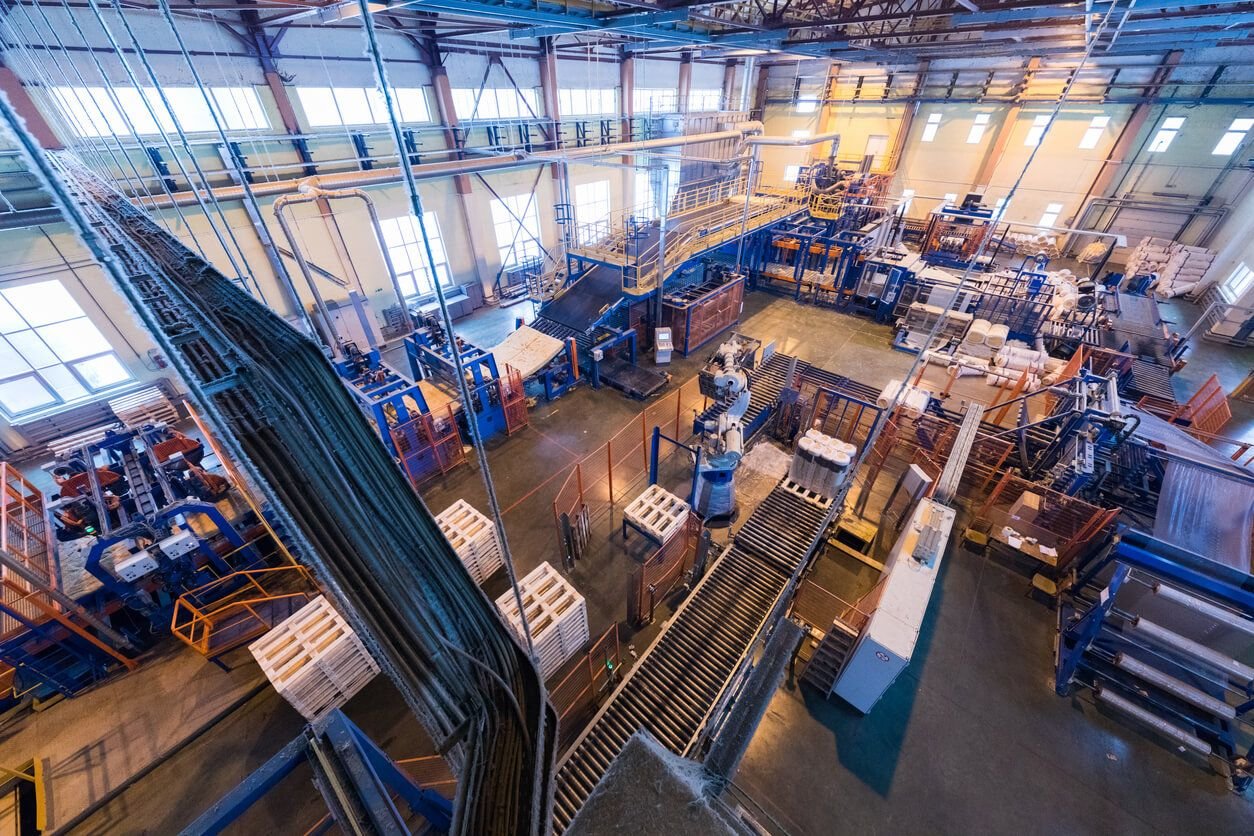
Automated warehouse conveyor system moving parcels through sortation lines illustrating material flow and system capacity balance

Assessing Your Position Before Committing

Warehouse automation readiness is a structured assessment, not a gut feeling. Operations that invest the time to evaluate their data quality, building fabric, process stability, and organisational capability before specifying logistics automation are consistently better positioned to deliver a successful project on time and to budget.

At MotionTech, our integrated approach to warehouse automation and software solutions brings together conveyor systems, robotic systems, ASRS, mobile robotics, and the controls and software layer needed to coordinate them. Speak to our team to run a readiness assessment and identify any gaps before the specification is written.

References

  1. Logistics UK, Warehouse Automation in the UK: Robots and Smart Fulfilment, citing Office for National Statistics data on UK online retail volumes. logisticsuk.org
  2. OPEX, UK Warehouse Automation Market Trends: Growth, Investment, and Future Outlook (2025), on UK warehouse automation market size and AI adoption in fulfilment centres. opex.com