
The pressure to get this right is increasing. The Health and Safety Executive's latest figures show that around 543,000 UK workers are suffering from a work-related musculoskeletal disorder at any one time, with manual handling tasks accounting for approximately 17% of all non-fatal workplace injuries and 7.8 million working days lost each year.¹ For operations heavy in repetitive work, the case for targeted automation is no longer just about throughput; it is about protecting the workforce and the operating cost base at the same time.
How to Identify Repetitive Tasks Suitable for Automation
For UK manufacturers and logistics operators considering their first move into robotic and workflow automation, the most common starting point is the same question: which tasks should be automated first? Identifying repetitive tasks suitable for automation requires more than listing the jobs that look mechanical. It requires a structured assessment of volume, variability, physical risk, and the cost of doing nothing. Getting this right at the outset determines whether the first phase of investment in automation technology delivers the return that funds the next.
What Makes a Task a Strong Candidate
Not all repetitive tasks are equal as automation candidates. A task that is performed at high volume with low variability is fundamentally different in terms of automation feasibility from one that is technically repetitive but involves frequent exceptions, non-standard inputs, or unpredictable environmental conditions. This is true whether the technology in question is a physical robotic cell on the warehouse floor, a Robotic Process Automation workflow handling invoice processing or data entry in the back office, or a hybrid solution combining the two.
The four criteria that consistently identify the strongest candidates for Task Automation are:

Volume
The task is performed hundreds or thousands of times per shift. Low-volume tasks, even if repetitive, rarely generate a payback on the capital investment required to automate them.
Predictability
The inputs are consistent. Standard case sizes, predictable object orientation, and a defined sequence of movements are all indicators that automation tools and automation software can be specified reliably. Where inputs vary, Machine Learning and Artificial Intelligence can extend the range of viable tasks, but they raise the complexity and cost of specification.
Physical demand or ergonomic risk
Tasks that place workers at risk of musculoskeletal injury through repetitive lifting, twisting, or carrying are strong automation candidates both for operational and health-and-safety reasons. HSE data shows back, upper limb, and neck conditions account for the great majority of work-related MSD cases, with repetitive warehouse and manufacturing tasks among the leading drivers.¹
Direct labour intensity
The task requires a dedicated headcount that scales with throughput. If the labour requirement rises linearly with volume, the case for automation strengthens proportionally.
Common Warehouse Tasks Suitable for Automation
In warehouse and distribution environments, the following categories consistently meet the criteria above:
Depalletising
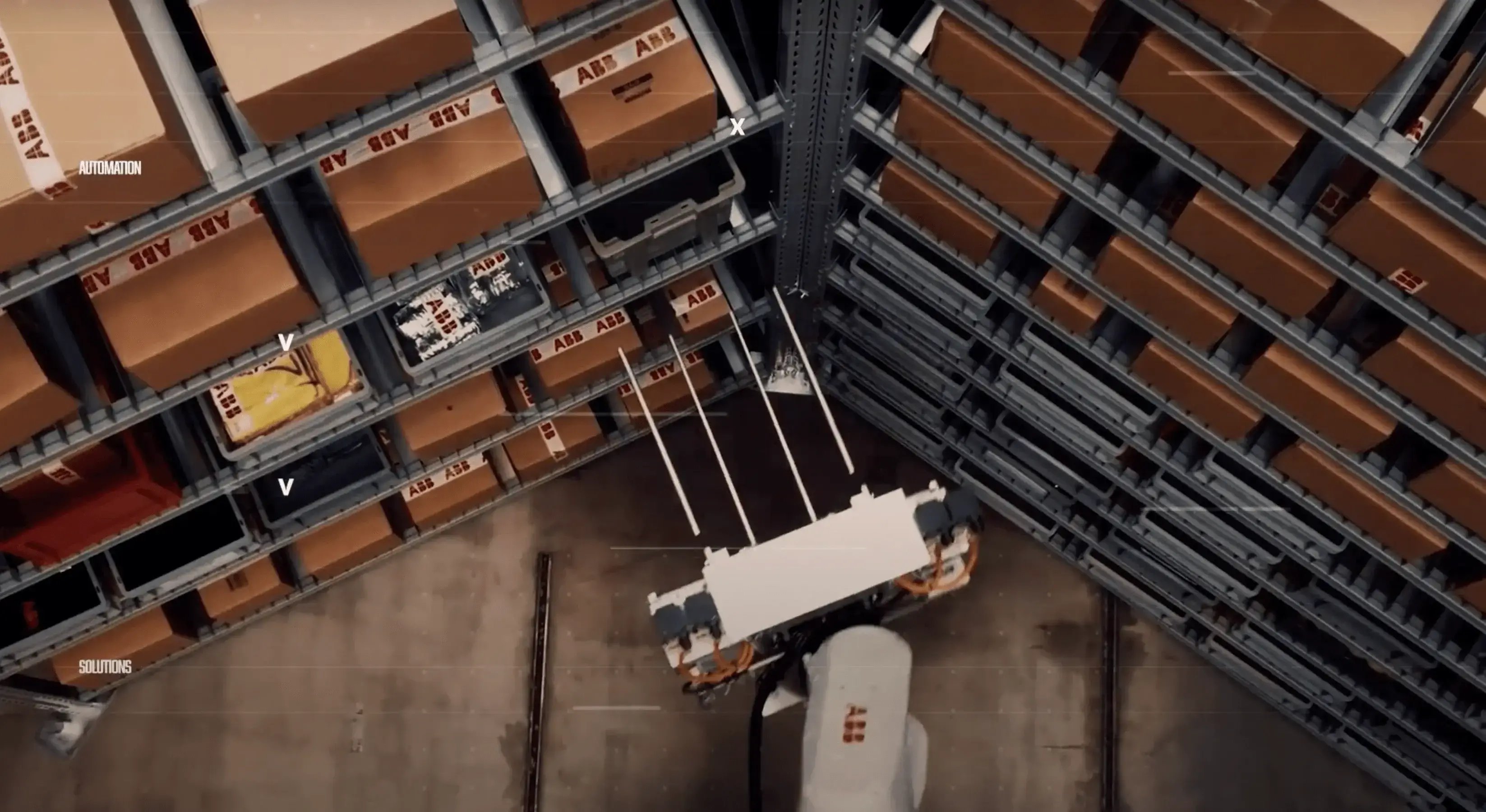
Unloading cases from inbound pallets is high-volume, physically demanding, and follows a predictable pattern across standard suppliers. Robotic depalletising arms with vision-guided sensing can handle mixed-layer pallets without pre-sorting.
Conveyor induction and sortation
Placing items onto conveyor induction points or sorting them to destination lanes is repetitive, volume-sensitive, and benefits directly from the consistent throughput rates that robotic induction delivers.
Palletising
Building pallet loads at end-of-line is one of the most commonly automated tasks in UK distribution, driven by ergonomic risk and the high headcount requirement at peak output rates.
Stretch wrapping and labelling
Post-palletising processes are excellent automation candidates: they are identical in execution for every pallet and require no judgement from the operator.
Removing or reducing manual involvement in these tasks also has a measurable effect on customer satisfaction. Higher accuracy, fewer mis-picks, and more consistent despatch times all flow directly through to the end customer, which is why many operators now treat service-level improvement as a co-equal benefit alongside the direct labour saving.
Common Manufacturing Tasks Suitable for Automation
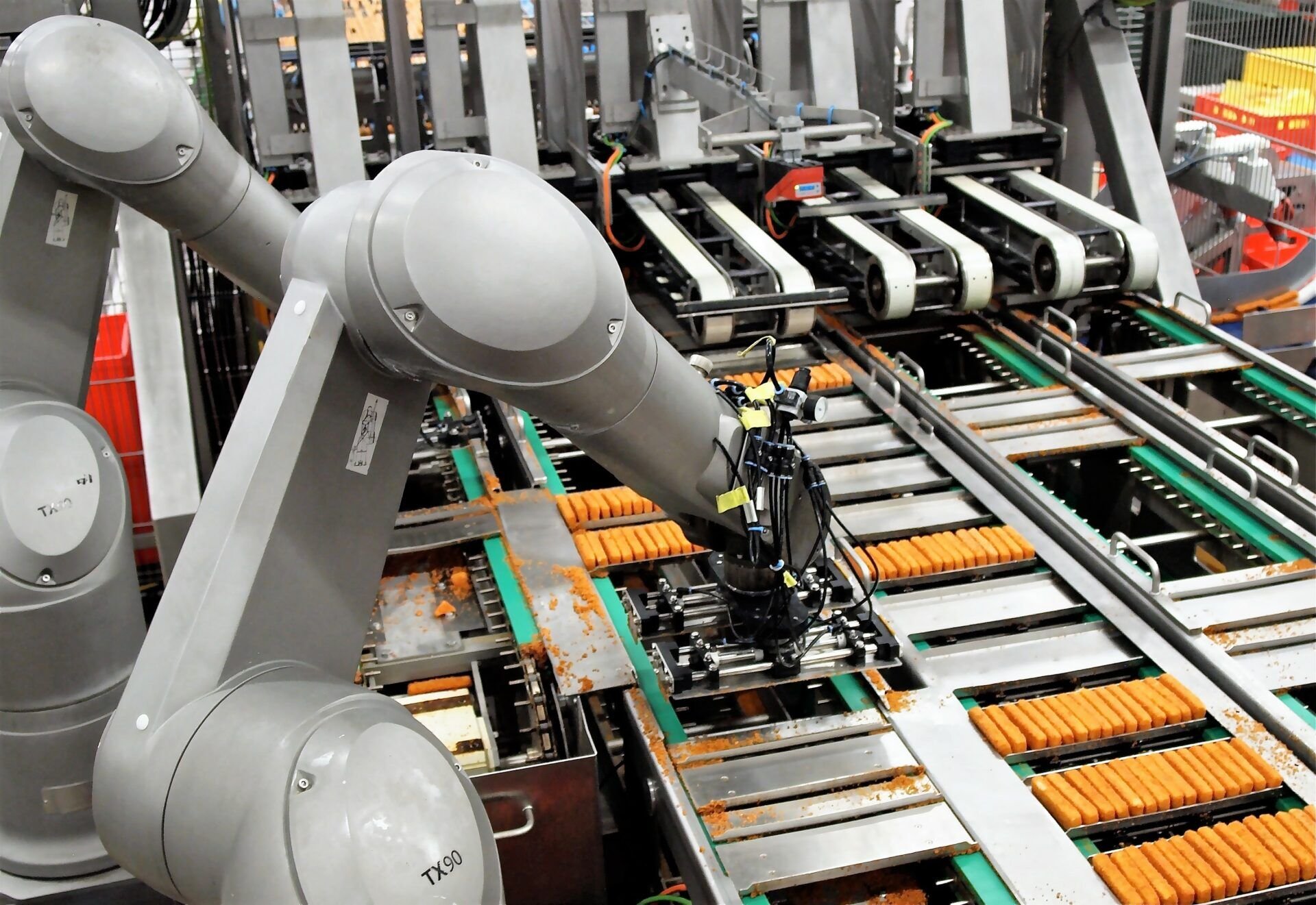
On the production line, repetitive tasks suitable for automation typically include machine tending, component assembly, quality inspection of standard parts, and transfer of items between production stages. Vision-guided robotic arms are increasingly deployed for pick-and-place tasks previously reliant on manual dexterity, and AI-assisted quality inspection systems are now common where defect patterns can be learned from historical data.
The distinguishing factor in manufacturing automation is the degree of product variability. A line running a single product variant at high volume is a simpler automation case than one running frequent changeovers across multiple SKUs. Both can be automated, but the system specification differs significantly.

Mapping Tasks Against Automation ROI
Once candidate tasks are identified, each should be assessed against a simple return-on-investment framework. The key inputs are the current direct labour cost for the task, the automation system capital cost, the throughput uplift the system delivers, and the expected system life. According to Logistics UK case modelling, a typical UK warehouse deploying autonomous robotic equipment can achieve annual net labour savings of around £276,000 against a payback of approximately 2.2 years, with productivity per labour hour rising by 25% to 40% depending on layout and SKU profile.² Tasks that deliver a payback within three to five years at conservative throughput assumptions are strong candidates for the first phase.
Tasks with longer payback periods are not necessarily unviable, but they are better suited to later phases once the business has established confidence in operating automated equipment and can demonstrate returns from the initial investment.
Building a Phased Automation Programme
Identifying Repetitive Tasks Is the Start, Not the End
Identifying repetitive tasks suitable for automation is the analytical foundation of a successful phased automation programme. Businesses that approach this process with a structured framework, rather than automating the most visible or most complained-about task first, build programmes that deliver consistent returns at each stage and generate the internal appetite for continued investment.
At MotionTech, our integrated approach to robotics, conveyors, and warehouse automation combines the engineering capability needed to specify the right system with the operational analysis required to identify the right starting point. Speak to our team to map candidate tasks against feasibility and payback before committing to a specification.

References
- Health and Safety Executive, Health and Safety Statistics 2024/25, including data on work-related musculoskeletal disorders, manual handling injuries, and working days lost. hse.gov.uk
- Logistics UK, Automated Guided Vehicles (AGVs): The ROI of Warehouse Robotics for UK Operators, on labour savings, payback periods, and productivity uplift in UK warehouse automation. logisticsuk.org
RELATED ARTICLES



Quick Links
CONTACT US

Unit 3, Charles Park, Cinder Hill Road, Bulwell, Nottingham NG6 8RE

0115 975 3300

Sales enquiries: sales@motiontech.co.uk
AFTER SALES ENQUIRIES
© 2026 MotionTech.