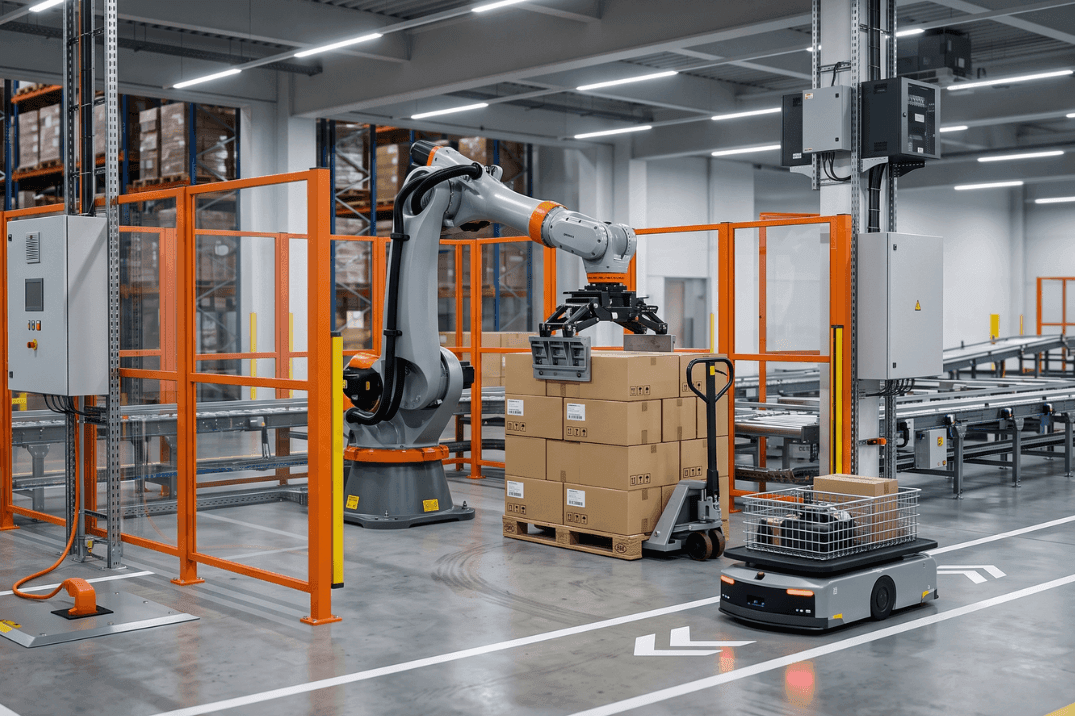
Industrial robotic arm, conveyors and AMRs operating in a modern UK automated warehouse.

Robotic Automation Cost: A UK Guide

What does robotic automation actually cost? For most UK operations weighing up automation, it is the first and most decisive question, and the one with the least straightforward answer.

Robot cost depends entirely on what you are automating, at what scale, and how deeply it integrates with your existing operation, which is why quoted figures can look wildly inconsistent from one supplier to the next. Understanding robotic automation cost in full, from capital outlay to long-term return, is what turns a vague ambition into a credible business case.

Key takeaways
  • Costs range from around £20,000 for a single AMR to £2m+ for a large AS/RS; most mid-sized UK projects land £80,000 to £400,000.
  • System integration alone is often 20 to 40% of project value, and infrastructure prep is routinely underestimated.
  • Right-sizing the spec is the biggest cost lever; refurbished robots can lower the entry price for moderate-duty tasks.
  • Payback is typically 18 to 24 months for AMRs and 2 to 4 years for larger systems, over a 10 to 20 year lifespan.

What Drives Robotic Automation Cost?


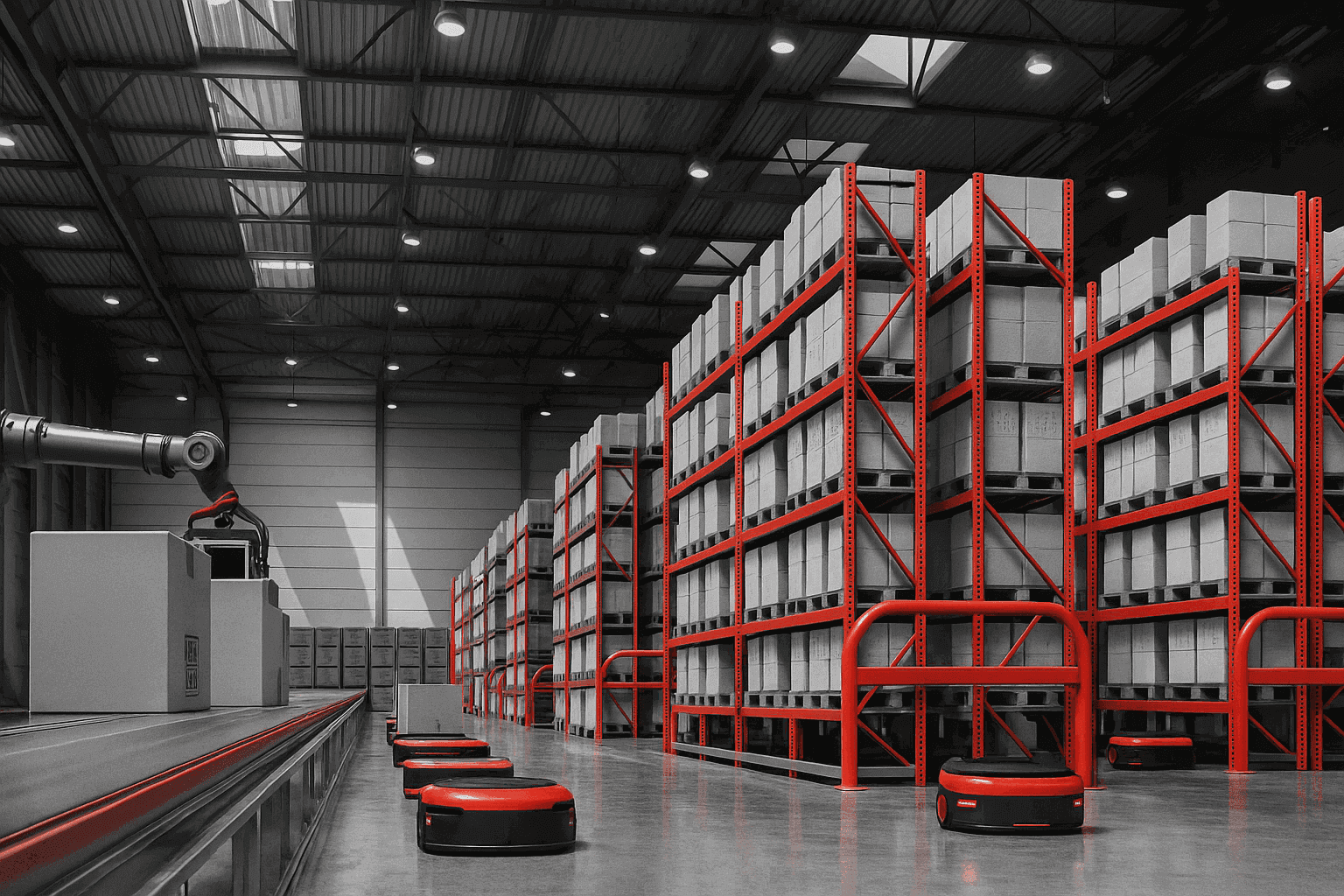
Industrial robotic arm, AMR and conveyor infrastructure in a modern automated warehouse.

Robotic automation cost varies enormously depending on technology type, operational scale, and integration complexity. Several factors directly influence total cost:

Robot type and payload

AMRs, articulated robotic arms, autonomous guided vehicles (AGVs), and AS/RS systems carry different base hardware costs, with complexity and payload capacity driving the price upward.

System integration

Software, WCS, and WMS integration into a single automation system often represents 20 to 40 percent of total project value.

Infrastructure modifications

Facility preparation, including floor upgrades, charging infrastructure, safety barriers, and networking, is frequently underestimated at the business case stage.

Commissioning and training

Programming, installation, and operator training typically add £6,000 to £30,000 depending on system complexity.

Ongoing maintenance

Annual maintenance contracts run between three and five percent of hardware cost per year, with software licensing adding further cost for larger deployments.

£20k+
from, for a single autonomous mobile robot
£120k–400k
for an integrated robotic cell
£2m+
for a large automated storage & retrieval system
£80k–400k
where most mid-sized UK projects land

Robotic Automation Cost by Technology Type

Understanding how robotic automation cost varies by technology type helps businesses identify where investment is proportionate to their operational needs. Costs can range from tens of thousands of pounds for individual mobile robots or robot arms to more than £2 million for large-scale automated storage and fulfilment systems.

Technology Typical cost Best for
Autonomous mobile robot (AMR) £20,000–80,000 Goods transport, collaborative picking
AMR fleet (with software & infra) £80,000–400,000 Scalable, multi-zone fulfilment
Industrial robot arm (hardware) £30,000–120,000 Assembly, palletising, machine tending
Full robotic cell (integrated) £120,000–400,000 Production-line automation with vision & guarding
AS/RS & goods-to-person £500,000–2m+ High-throughput distribution

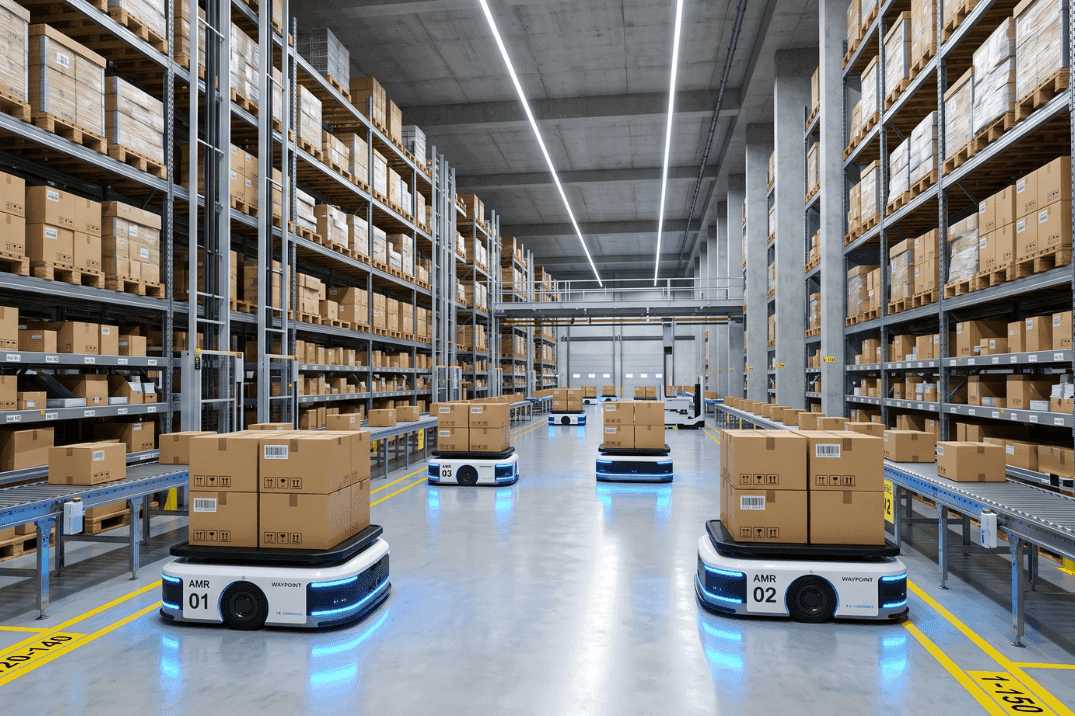
AMRs represent one of the most accessible entry points for many UK operations. Collaborative picking AMRs typically fall in the £20,000 to £40,000 per unit range, while heavier transport platforms with payloads of 500kg or more sit closer to £50,000 to £80,000. A complete AMR fleet deployment, including software and infrastructure, commonly falls between £80,000 and £400,000 depending on fleet size and operational complexity.


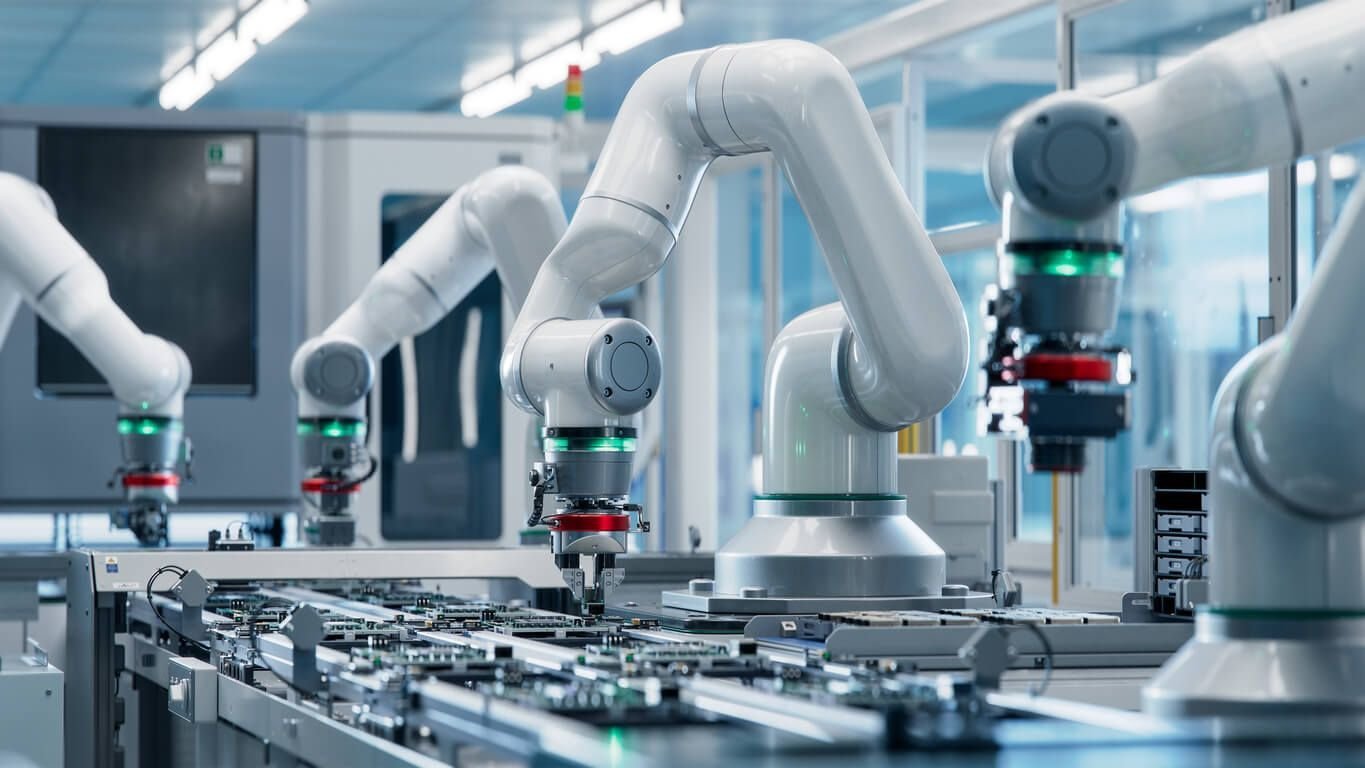
Industrial robot arms, such as the SCARA robot used for high-speed assembly and the 6-axis robot used for palletising, welding, and machine tending, range from approximately £30,000 to £120,000 for hardware alone. Manufacturers in this area include ABB, KUKA, and Universal Robots, with collaborative robot arms typically sitting at the more accessible end of the cost range.


However, the robot itself is only one part of the overall investment. Full robotic cells incorporating machine vision, safety guarding, end-of-arm tooling, controls, and programming typically cost between £120,000 and £400,000. For an assembly robot on a production line, or for palletising, case handling, or pick-and-place applications, the integrated cell cost is therefore the more realistic investment figure rather than the base hardware price. Machine vision can also protect product quality by identifying defects inline before they progress downstream.


AS/RS and goods-to-person systems sit at the higher end of the robotic automation cost spectrum. Modular goods-to-person solutions can be deployed from approximately £500,000, while large-scale shuttle-based or robotic cube installations for high-throughput distribution frequently exceed £2 million. While the initial investment is considerably higher, these systems automate material movement and order fulfilment across a much broader operation, supporting greater storage density, faster processing, and reduced reliance on manual handling.


Ultimately, robotic automation cost should be assessed against the scale of the process being automated and the operational return the system can deliver. A lower-cost standalone robot may be appropriate for a defined task, while larger integrated systems require greater capital investment but can deliver automation across multiple stages of production, warehousing, or fulfilment.

The True Cost of Not Automating

Robotic automation cost must always be evaluated against the cost of the status quo, and the status quo is rarely as cheap as it looks. Labour accounts for 50 to 70 percent of a typical UK warehousing budget, while a manual operation processing high volumes across multiple shifts faces ongoing recruitment, retention, training, and wage costs. Errors, mis-picks, rework, and throughput limitations create further financial pressure that may not be immediately visible when comparing existing processes against the upfront cost of automation.


Robotic systems can operate across extended shift patterns without fatigue-related losses, delivering consistent throughput and accuracy while reducing costs associated with errors, returns, and rework. Automation can also create a more predictable and scalable cost base, allowing businesses to increase operational capacity without labour requirements necessarily increasing at the same rate. The comparison below highlights some of the key cost considerations when assessing an automated operation against maintaining a predominantly manual process.

Automated operation
  • Consistent throughput across extended shifts, no fatigue losses
  • Lower error, mis-pick and rework costs
  • Predictable, scalable cost base
Manual operation (status quo)
  • Labour is 50 to 70% of the warehousing budget
  • Rising wages, recruitment and retention costs compound annually
  • Errors, mis-picks and throughput limits add hidden cost

Return on Investment and Payback Periods

Payback period and return on investment (ROI) are key considerations when determining whether a manufacturing or warehouse automation project is commercially viable. While the initial robotic automation cost can be significant, the investment needs to be assessed against the labour savings, productivity improvements, increased throughput, and greater accuracy the system can deliver throughout its operational lifespan.


AMR deployments in well-suited operations can typically achieve payback within 18 to 24 months, while broader warehouse and manufacturing automation projects, including AS/RS and integrated robotic systems, commonly deliver payback within two to four years. With automated systems potentially operating for 10 to 20 years, the financial benefit can continue to build long after the initial investment has been recovered.


Operations that realise the strongest returns tend to share common characteristics: high labour costs relative to throughput, multi-shift working patterns that maximise robot utilisation, and significant picking volumes with tight accuracy requirements. Modular solutions that can be scaled incrementally may also offer a more predictable return profile than large single-phase capital projects, particularly for mid-sized UK operations.


The figures below provide an indication of typical payback periods and the longer-term timeframe over which ROI can be realised.

18–24 mo
typical payback for well-suited AMR deployments
2–4 yrs
payback for AS/RS and integrated robotic systems
10–20 yrs
system lifespan over which ROI builds

Building a Long-Term Investment Case

Robotic automation is a long-term investment that rewards careful planning, phased deployment, and ongoing optimisation. The strongest outcomes come from treating automation as a scalable platform, selecting systems and partners capable of adapting as operational demands evolve.


As robotic automation cost continues to moderate and available solutions expand, UK businesses across logistics, the manufacturing sector, food and beverage, healthcare, and retail are increasingly finding that a credible investment case, and more resilient supply chains, is within reach. Speak with a specialist to model the true total cost of ownership and build a business case grounded in realistic, site-specific data.

Automation specialists planning a scalable robotic automation system in a modern UK warehouse.

Model the true total cost of ownership

We will build a business case grounded in realistic, site-specific data, from capital outlay to long-term return.

Speak to a specialist

Frequently Asked Questions