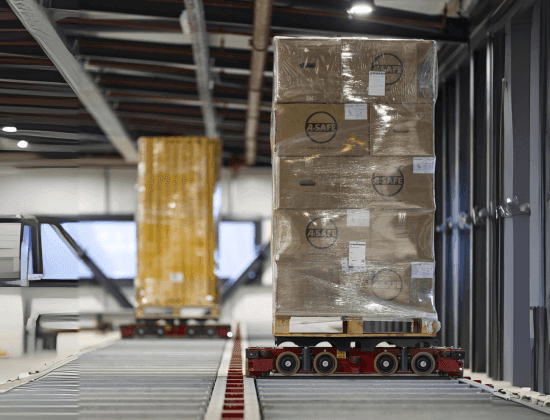
shuttle storage

How to Choose Between ASRS and Shuttle Storage for a Warehouse

The decision between automated storage and retrieval systems and shuttle storage is one of the most commercially significant choices in a warehouse automation project. Both technologies address the same core challenge: achieving high-density storage with fast, accurate retrieval in a facility where manual racking has reached its operational or physical limit. But they suit different throughput profiles, building dimensions, and operational requirements. Savills' joint research with UKWA shows the UK warehouse sector growing relentlessly, with the development of warehouses over 1 million sq ft rising 345% in the decade to 2024 as supply chains absorb more activities and hold more inventory closer to the customer.¹ As space, energy, and labour pressures all climb, selecting the wrong automated storage system creates a system that performs below expectation from day one; selecting the right one delivers returns for fifteen or more years.

What Distinguishes ASRS from Shuttle Storage

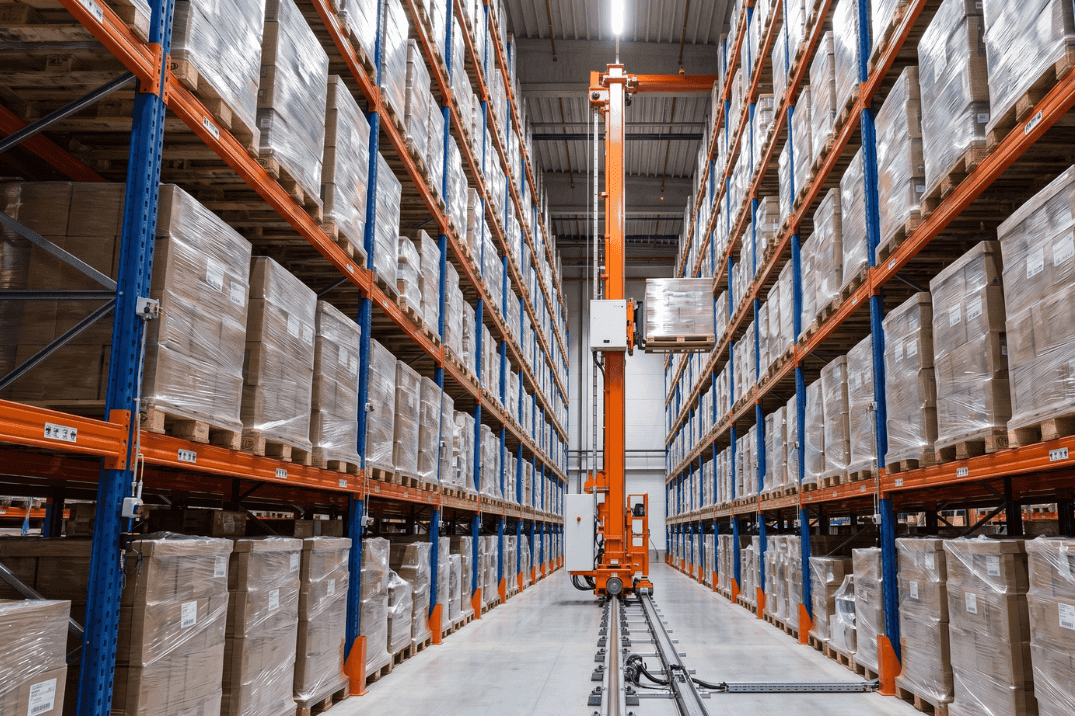
Crane-based ASRS, in its traditional form, uses a single stacker crane or machine operating within a fixed aisle to store and retrieve pallets or totes from tall, narrow high-density racking. The crane moves in two axes: horizontally along the aisle and vertically to the required level. Each aisle has one machine, and that stacker crane's cycle speed determines the throughput rate for the whole aisle. Mini Load variants apply the same architecture to totes and small cases rather than pallets, and remain a proven option where SKU counts are very high and product sizes are small.

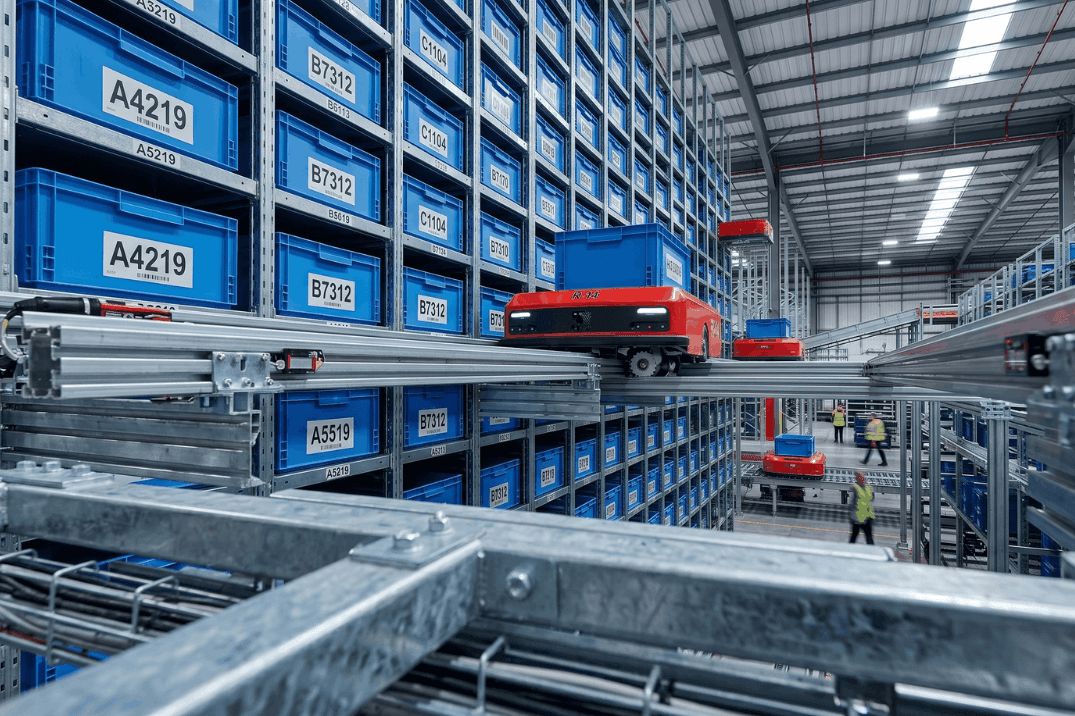
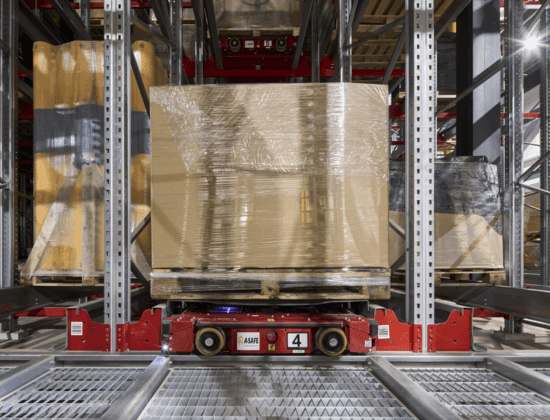
Shuttle storage replaces the single crane with multiple independent shuttle vehicles operating on rails within the racking structure. Shuttles move horizontally at each racking level, carrying loads to and from a lift mechanism at the aisle end. Because multiple shuttles operate independently, throughput is not limited by a single machine's cycle time in the way it is with a traditional ASRS crane. More recent 4-Way Shuttle (or Four-Way Shuttle) designs add the ability to move forward, backward, and cross-aisle, removing the need for one shuttle per aisle and supporting more flexible Pallet Shuttle and case shuttle ASRS layouts.

When ASRS Is the Right Choice


Traditional automated storage and retrieval systems suit operations with the following characteristics:

High-density storage is the primary objective

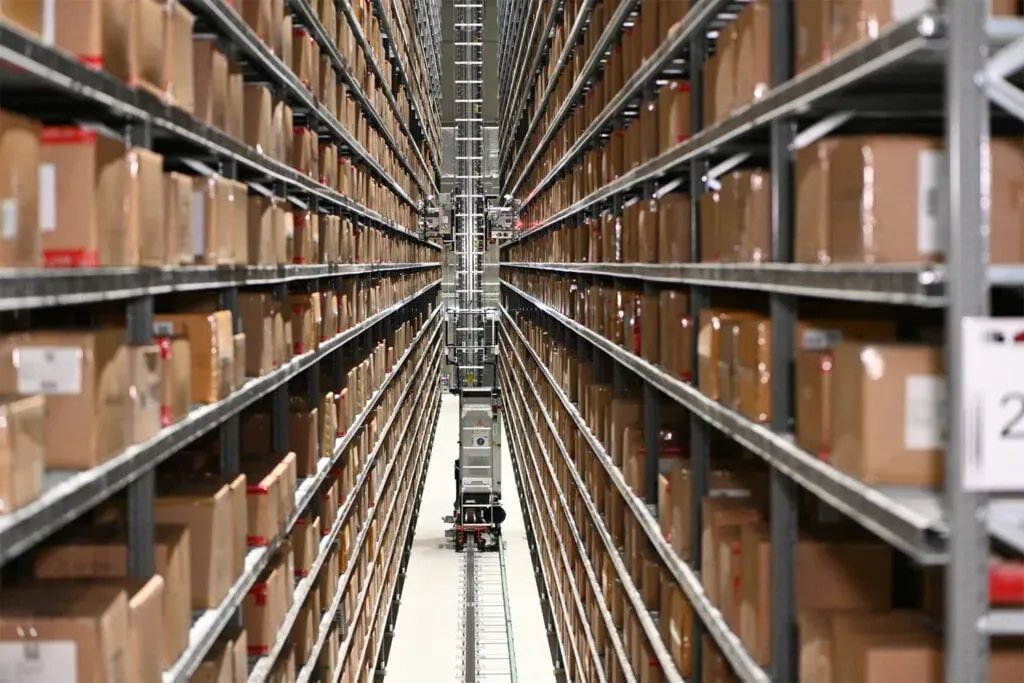
Stacker cranes operate in very narrow aisles at significant height, achieving floor space density that most conventional racking configurations cannot match in the same footprint.

Throughput requirements are moderate and consistent

A single stacker crane per aisle delivers reliable, consistent throughput at cycle times that work well for operations with predictable order profiles and manageable peak-to-average ratios.

Pallet handling with a stable product range

Traditional crane-based ASRS is well-established for pallet storage applications where load dimensions are consistent and the product range is relatively stable.

Long building life and high capital appetite

ASRS is a significant capital investment with a long payback period. It suits operations with long-term lease security and the capital budget for a major infrastructure project.

Cold storage and cold chain operators in particular are increasingly building automated facilities of this type from day one. CBRE reports that only around 5% of UK 3PL cold storage facilities are currently automated, but 91% of new cold storage stock under development will be automated, driven by the need to run facilities at scale, increase storage volumes, and reduce labour and energy costs in temperature-controlled environments.²

When Shuttle Storage Is the Right Choice


Shuttle-based warehouse shuttle systems are better matched to operations with these characteristics:

High throughput with variable demand peaks

Because multiple shuttles can operate simultaneously in a channel, the system's throughput is far more scalable than a single crane. Additional shuttle vehicles can be deployed to increase capacity without changing the racking structure, and 4-Way Shuttle designs add further flexibility for variable layouts.

Tote or case-level storage for order fulfilment

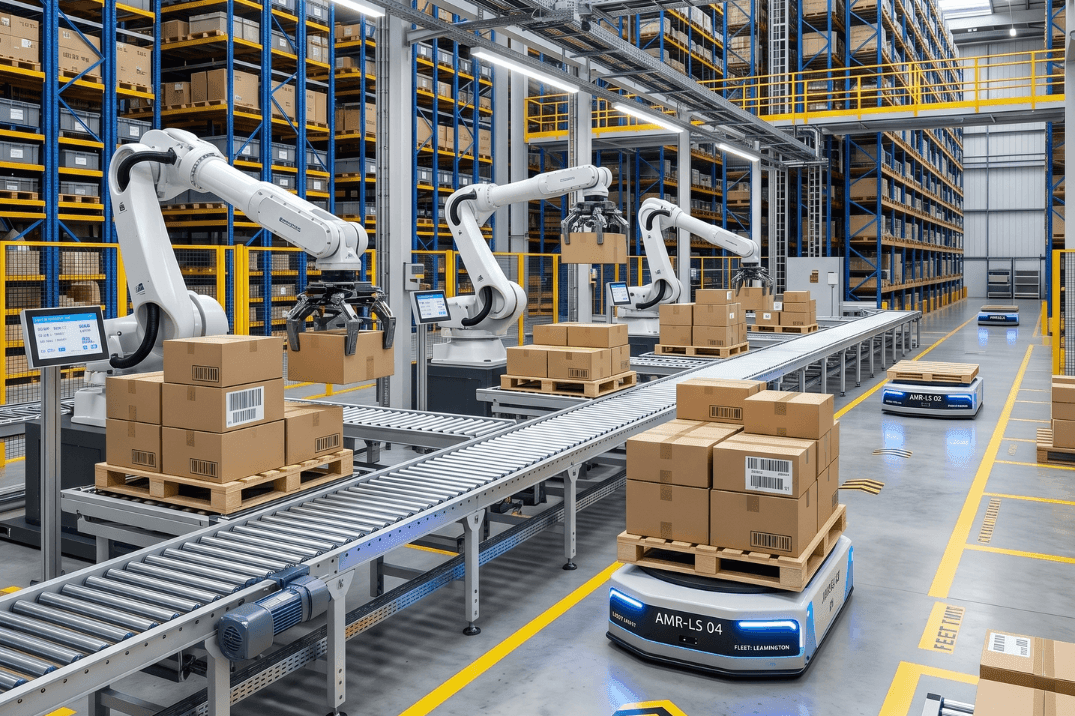
Shuttle technology is widely deployed in goods-to-person fulfilment operations, where individual totes or cases are retrieved at high rates to service picking stations. This application demands order processing rates that a single crane cannot deliver, and integrates naturally with robotic arms, pick-to-light, and downstream packing automation.

Faster return on investment and system redundancy

Shuttle storage installations can be designed to a lower initial capital commitment with the option to add capacity as throughput grows, making the early-stage financial profile more accessible than a full ASRS build. Multiple shuttles also provide inherent system redundancy: if one vehicle is out of service, the aisle continues to operate at reduced capacity rather than stopping entirely.

Limited building height

Where eaves height restricts the use of very tall ASRS structures, shuttle systems can be designed across multiple levels at a lower overall height while maintaining density.

Cold storage and energy efficiency

Shuttle systems integrate well with cold chain operations, where compressing the storage volume directly reduces the space to be cooled and supports measurable energy reduction. Modern shuttle racking in distribution centres can deliver high cube utilisation, with both floor space efficiency and energy efficiency feeding the wider business case.

The Throughput Comparison in Practice

The key performance difference between the two technologies becomes apparent at peak demand. A traditional ASRS stacker crane operating in a single aisle has a fixed maximum throughput rate: one movement per crane cycle. A shuttle system in the same aisle with four shuttles deployed can execute four movements in the same time period. For operations with peak-to-average order processing ratios above three to one, this difference is often the deciding factor.

In hybrid operations, the two technologies are also increasingly combined, with crane-based ASRS used for deep reserve storage and shuttle systems or autonomous mobile robots used to service forward picking stations and pack benches.

shuttle storage

Integration and Control System Requirements

Both ASRS and shuttle storage require a warehouse control system to manage task allocation, sequencing, and the interface between the storage system and the wider facility. The control layer must communicate with the Warehouse Management System to receive storage and retrieval instructions, manage inventory management data, and report system performance in real time. This integration requirement is broadly equivalent for both technologies; the complexity lies in the throughput management logic rather than the physical interface.

Making the Decision on the Right Foundations

Choosing between ASRS and shuttle storage for a warehouse is a decision that rewards detailed operational analysis. Throughput profile, SKU count, product sizes, building dimensions, capital availability, and growth projections all influence the outcome. Businesses that approach this choice with verified operational data and engage a systems integrator capable of specifying both technologies objectively are consistently better placed to select the solution that performs for their specific requirements.

At MotionTech, our integrated approach to ASRS and warehouse automation covers crane-based systems, shuttle technology, and the conveyors and controls that connect them to the rest of the operation. Speak to our team to evaluate the right configuration for your throughput, building, and growth plans before any specification is locked.

High-density shuttle-based ASRS system with autonomous robots transporting blue storage totes within a structured racking system, illustrating the balance between storage capacity and retrieval responsiveness in automated warehouse operations.

References

  1. Savills and UK Warehousing Association (UKWA), The Size and Make-Up of the UK Warehousing Sector (2024). savills.com
  2. CBRE, Cold Storage Market Shifts to Development Phase (2025), on UK cold storage automation rates and new development pipeline. cbre.co.uk