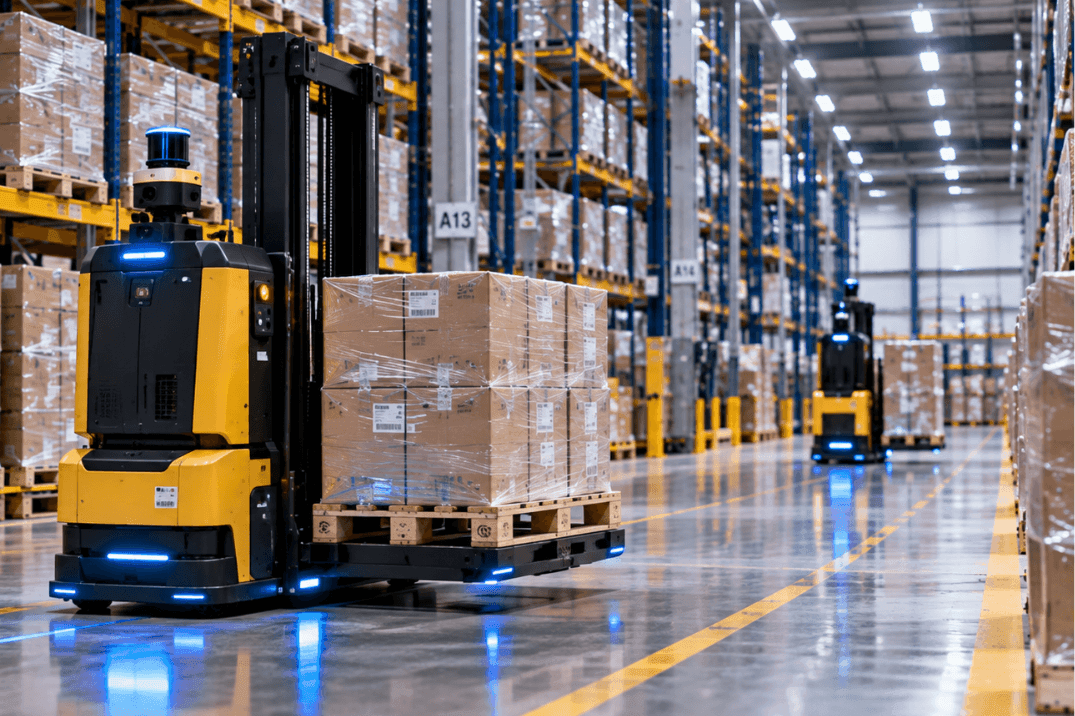
Automated guided vehicle transporting a pallet of goods through a modern warehouse.

What Is an Automated Guided Vehicle (AGV)? A UK Guide

Warehouse and manufacturing operations are under sustained pressure to move more product with fewer people. Labour shortages, rising wage costs, and the volatility of e-commerce demand have made manual material handling harder to scale and harder to staff. The automated guided vehicle has become one of the most widely adopted answers to that pressure, and a cornerstone of modern warehouse automation, taking repetitive transport tasks off the shop floor and running them to a fixed, predictable schedule.

Key points

✓An automated guided vehicle (AGV) is a driverless industrial vehicle that moves materials along fixed, predefined routes.
✓AGVs follow a guidance path set by a navigation system such as magnetic tape, embedded wire, laser reflectors or vision cameras.
✓Unlike an autonomous mobile robot (AMR), an AGV runs a set route rather than planning its own.
✓They suit high, repeatable transport volumes in structured environments.
✓The strongest return comes from multi-shift operations feeding production lines, storage and despatch.

What Is an Automated Guided Vehicle (AGV)?

An automated guided vehicle (AGV) is a driverless industrial vehicle that transports materials along predefined routes without an onboard operator. Navigation is guided by physical or virtual infrastructure installed in the facility: magnetic tape, embedded wire, floor-mounted markers, or laser reflectors positioned around the building. The vehicle follows that guidance path and stops at fixed load and unload points determined by the control system.

This fixed-route behaviour is the defining characteristic of an AGV system. Where an autonomous mobile robot (AMR) plans its own path dynamically, an automated guided vehicle runs the route it has been given and halts when an obstacle blocks it. That predictability is an advantage in structured, high-volume environments where material flow rarely changes.

Automated guided vehicle following a predefined navigation route between warehouse racking.

AGV vs Autonomous Mobile Robot (AMR): What Is the Difference?


The two are often confused, but they solve different problems:

Fixed path

An automated guided vehicle follows a fixed guidance path and stops when something blocks it.

Dynamic navigation

An autonomous mobile robot uses an onboard navigation system to map its surroundings and plan its own route around obstacles in real time.

Where each wins

AGVs excel in stable, high-volume flows; AMRs suit changeable layouts and mixed tasks.

For many UK sites the two work together: AGVs and AMRs handle the heavy, repeatable trunk routes while AMRs cover the flexible last few metres.

How Do Automated Guided Vehicles Navigate?


An AGV system follows infrastructure installed in the facility. The main types of navigation technology are:

Magnetic or wire guidance

Magnetic tape or embedded wire laid into the floor for the vehicle to track.

Laser guidance

Laser reflectors positioned around the building for laser-guided navigation.

Floor markers

Floor-mounted markers or QR codes read as the vehicle passes over them.

Vision navigation

Vision cameras that recognise natural features of the building for camera-based, vision-guided navigation.

The right navigation system depends on layout, the flexibility you need, and how often routes are likely to change.

By the numbers
0
Onboard operators per vehicle
4
Navigation methods
5
AGV types, from tow to heavy load
24/7
Consistent multi-shift output

Types of Automated Guided Vehicle


Automated guided vehicle systems are categorised by the load they carry and the way that load is transferred. The most common types found in UK facilities include:

Tow Tractors

Pull trains of trailers or roll cages along long internal routes, suited to moving high volumes between production and despatch.

Unit Load Carriers

Carry a single pallet, tote, or container on a deck fitted with rollers, chain, or lift tables for automatic transfer.

Forklift AGVs

Automated counterbalance and reach trucks that lift pallets from floor level or racking, removing the need for dedicated transfer stations.

Tugger and Cart Systems

Move wheeled carts through assembly and kitting operations, commonly deployed for line-side replenishment.

Heavy Load Carriers

Handle coils, moulds, and other outsized loads that manual equipment cannot move safely or repeatedly.

Selection depends on load weight, transfer height, aisle width, and the cycle time the operation needs to sustain.

Automated Guided Vehicle Applications Across UK Industry


Automated guided vehicle deployments span a wide range of sectors, from chilled food production to heavy engineering:

Food and Beverage

Moving pallets between production, chilled storage, and despatch, reducing manual truck traffic in low-temperature areas across food and beverage operations.

Manufacturing

Feeding raw materials and components to assembly lines and clearing finished goods, keeping line-side stock at agreed levels.

Third-Party Logistics

Handling inbound putaway and outbound staging across large floor areas where travel distance dominates labour cost across third-party logistics operations.

Pharmaceutical

Supporting traceable movement of materials between controlled production areas and packing in pharmaceutical environments, with a full audit trail of every move.

These deployments share a common profile: repetitive routes, consistent load types, and sufficient volume to justify the investment.

Benefits of Automated Guided Vehicles


The business case rests on removing the cost and variability of manual transport, and the gains extend beyond labour:

Operational Efficiency

Vehicles run to a consistent cycle time across every shift, giving planners a reliable throughput figure to work from.

Enhanced Safety

Onboard sensors, speed limiting, and fixed routes reduce the pedestrian and racking collisions associated with manual truck traffic.

Labour Redeployment

Staff move from driving to picking, quality, and exception handling, where judgement adds more value.

Scalable Capacity

Vehicles can be added to an existing route network as transport volumes grow, without redesigning the layout.

Product Protection

Controlled acceleration and consistent handling reduce damage to loads and packaging in transit.

Cost per move falls as utilisation rises, so operations running multiple shifts typically see the strongest return on a guided vehicle fleet.

AGV Safety Standards and Features


Automated guided vehicles are designed to work safely alongside people. In the UK, driverless industrial trucks are covered by recognised safety standards such as BS EN ISO 3691-4, and a compliant AGV system combines several safety features:

Obstacle detection

Obstacle-detection sensors and laser scanners that slow or stop the vehicle before contact.

Speed control

Speed limiting and controlled acceleration in shared and pedestrian areas.

Warnings

Audible and visual warnings at junctions, doorways and crossings.

Emergency stops

Emergency stops and clearly defined safety zones around each vehicle.

Meeting these safety standards is central to gaining floor-team confidence and to any successful deployment.

Integrating AGVs with Warehouse Automation Systems

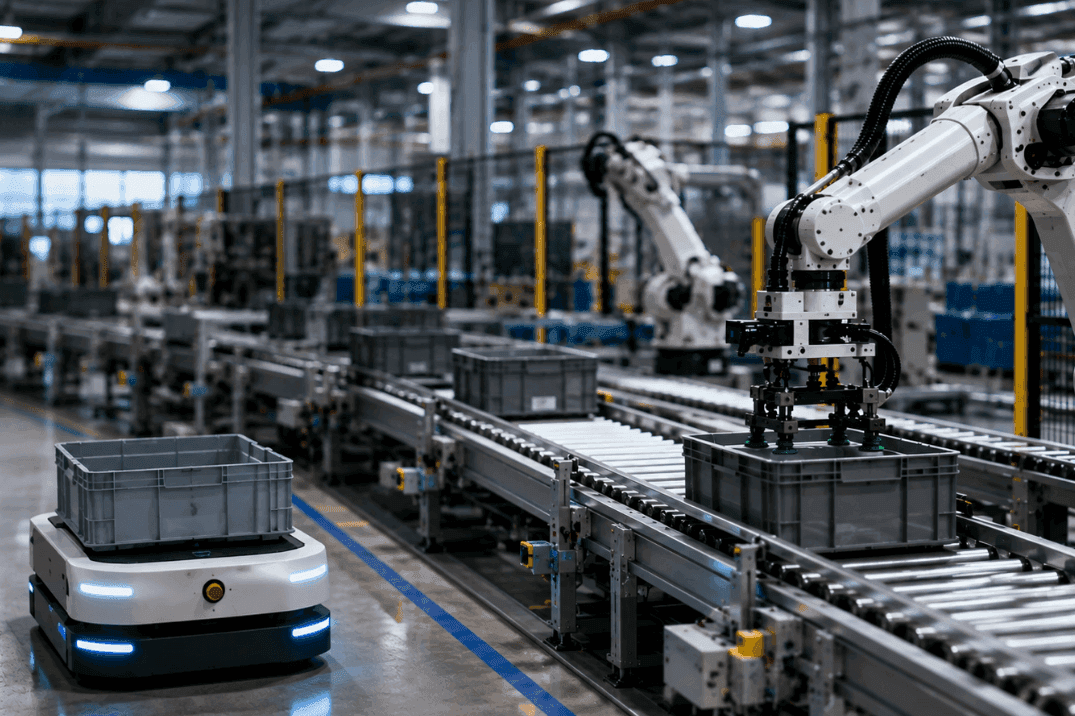
Automated guided vehicle systems rarely operate in isolation. Fleet management software assigns tasks, manages traffic at intersections, and schedules opportunity charging, while an interface to the warehouse management system determines what needs to move and when. Conveyors, palletisers, and automated storage and retrieval systems (ASRS) then handle the transfer at each end of the route. Where high-density or long-term storage is required, AGVs feed and retrieve loads from an ASRS, joining transport and storage into a single flow of warehouse automation rather than a collection of separate machines.

Is an Automated Guided Vehicle Right for Your Operation?

As sensor costs fall and fleet software matures, automated guided vehicle technology is increasingly within reach of mid-sized operations that would once have ruled it out on price. For businesses facing rising labour costs and tightening delivery windows, guided transport offers a proven route to steadier throughput, safer internal traffic, and long-term scalability, as part of a broader shift toward robotic automation and wider industrial automation.

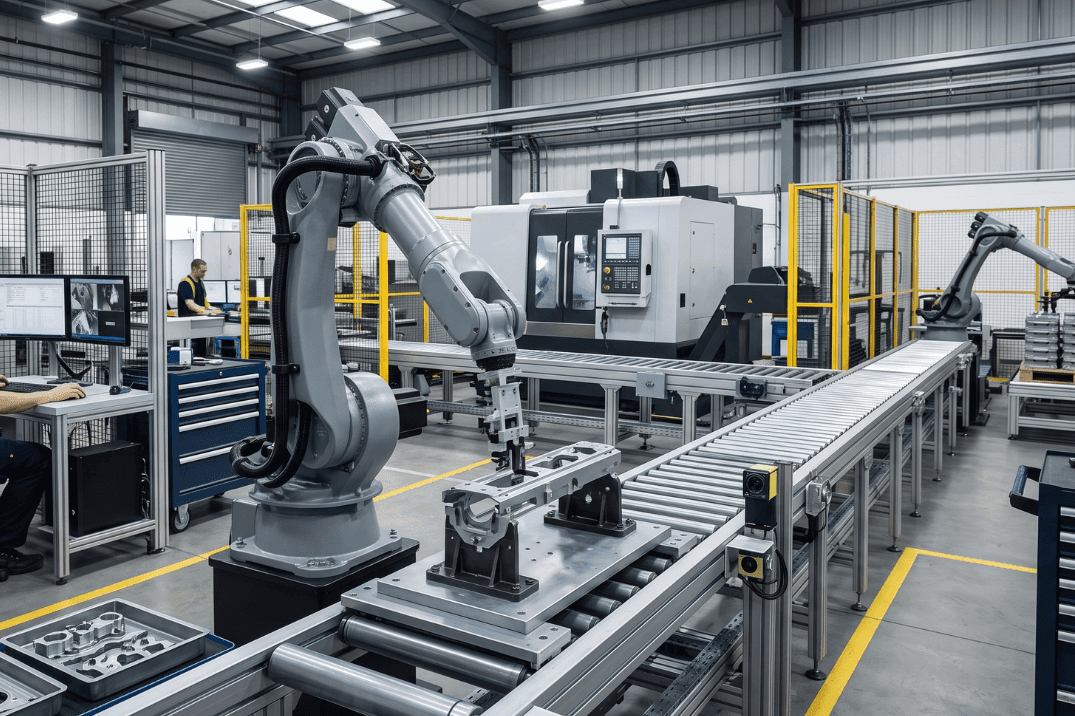
Automated guided vehicle moving palletised goods alongside warehouse staff and conveyor systems.

Considering automated guided vehicles for your operation?

Speak to our team to assess where an AGV fleet fits your throughput and layout.

Speak to a specialist

Frequently Asked Questions