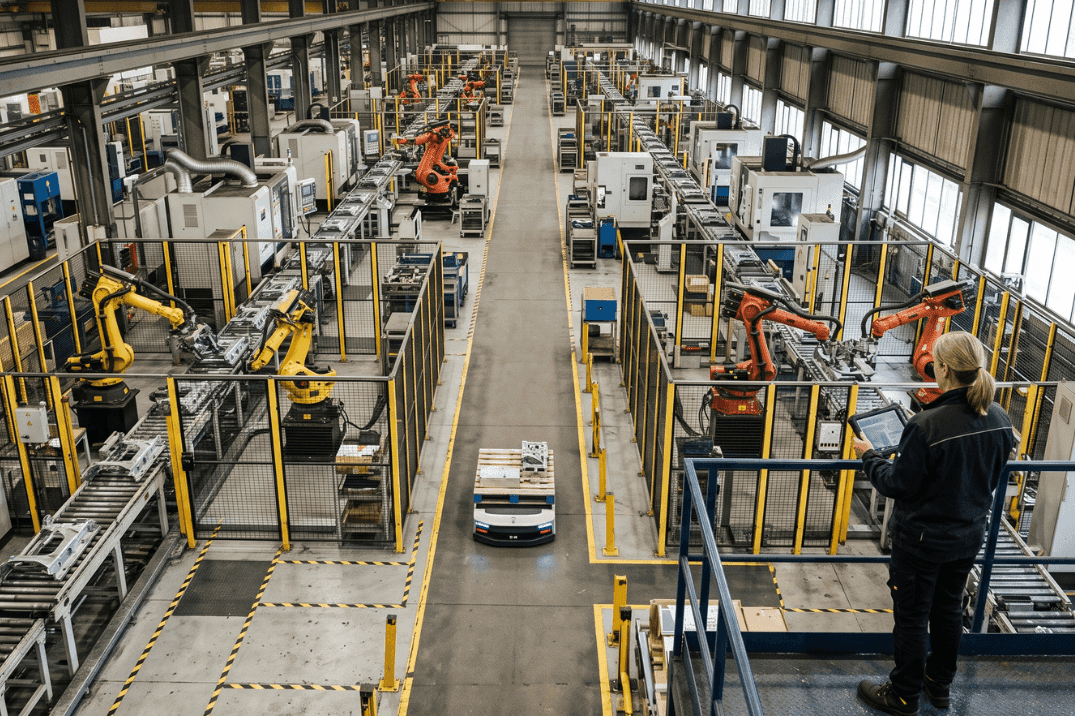
Large automated manufacturing facility with robotic arms, conveyor systems and an autonomous mobile robot supporting production line automation.

What Is Industrial Automation?

Industrial automation is the use of advanced technology, control systems and machinery to streamline industrial tasks and processes with minimal human intervention, integrating machines, sensors and systems across manufacturing and supply chain operations.

Key Takeaways
  • Industrial automation uses control systems, machinery and software (PLCs, SCADA, robots) to run manufacturing and processing tasks with minimal human intervention.
  • It falls into three types, fixed, programmable and flexible automation, matched to production volume and product variety.
  • The core building blocks are PLCs, SCADA, HMIs, robots and cobots, plus sensors and conveyors, working together as one layered system.
  • Warehouse automation is a sub-set of industrial automation, focused on storing and moving finished goods rather than making them.

What is industrial automation?

Industrial automation is the use of advanced technology, control systems and machinery to streamline industrial tasks and processes with minimal human intervention. It is the integration of machines, sensors, and systems to automate manufacturing processes, supply chain operations, and other industrial tasks. From automotive assembly lines to food processing plants, industrial automation is the engine that powers modern production.

At its core, industrial automation replaces manual labour with automated systems that are faster, more consistent, and more reliable. This shift allows human workers to move from repetitive physical tasks to higher-value roles in management, decision-making, and system optimisation.

How does industrial automation work?

Industrial automation works through a layered system of hardware, software, and control technologies that work together to monitor, control, and optimise industrial processes.

The typical automation architecture follows a hierarchy:

How industrial automation works


This layered approach allows manufacturers to achieve real-time control, data visibility, and rapid response to changing conditions. The result is a production environment where machines communicate, adapt, and optimise themselves with minimal human input.
Field level

sensors, actuators, and machines collect data and perform physical actions.

Control level

Programmable Logic Controllers (PLCs) and other devices process data and execute control logic.

Supervisory level

SCADA systems monitor and manage the overall process.

Enterprise level

business systems (ERP, MES) integrate automation data with broader business operations.

Types of industrial automation

Industrial automation systems are typically classified into three main categories based on their flexibility and the volume of production they support.

Types of industrial automation


Fixed automation

Also known as "hard automation", it uses specialised equipment permanently configured for a single, repetitive operation. High production volume, low flexibility, high initial investment and low unit cost. Examples: automated assembly lines, transfer lines in automotive manufacturing, and dedicated machining systems. Ideal for mass production of identical products.

Programmable automation

Designed for batch production; the equipment can be reprogrammed to handle different products or tasks. Moderate flexibility, with changeover time between batches and a higher unit cost than fixed automation. Examples: CNC machine tools, industrial robots programmed for different tasks, and automated workstations.

Flexible automation

Also known as "soft automation", it extends programmable automation to allow rapid changeovers with minimal downtime. High flexibility, computer-controlled, and able to produce a mix of products simultaneously. Examples: flexible manufacturing systems (FMS), robotic workcells, and automated guided vehicle (AGV) systems.

Key components of industrial automation

Industrial automation relies on several core technologies that work together to control, monitor, and optimise production processes.

Key components of industrial automation


PLCs (Programmable Logic Controllers)

A ruggedised industrial computer that carries out the logic functions once handled by relays, switches and mechanical timers. PLCs focus on real-time control, executing logic that directly controls machines and processes, from conveyor systems to robotic cells.

SCADA (Supervisory Control and Data Acquisition)

Systems that control and monitor industrial processes, gathering data from PLCs and other devices to give a high-level view. Operators can monitor conditions in real time, adjust setpoints, respond to alarms, and analyse historical data.

HMIs (Human-Machine Interfaces)

The software and hardware that let operators interact with industrial systems, presenting data so they can monitor conditions, adjust setpoints and respond to alarms. HMIs, PLCs and SCADA work together as part of a layered system.

Robots and cobots

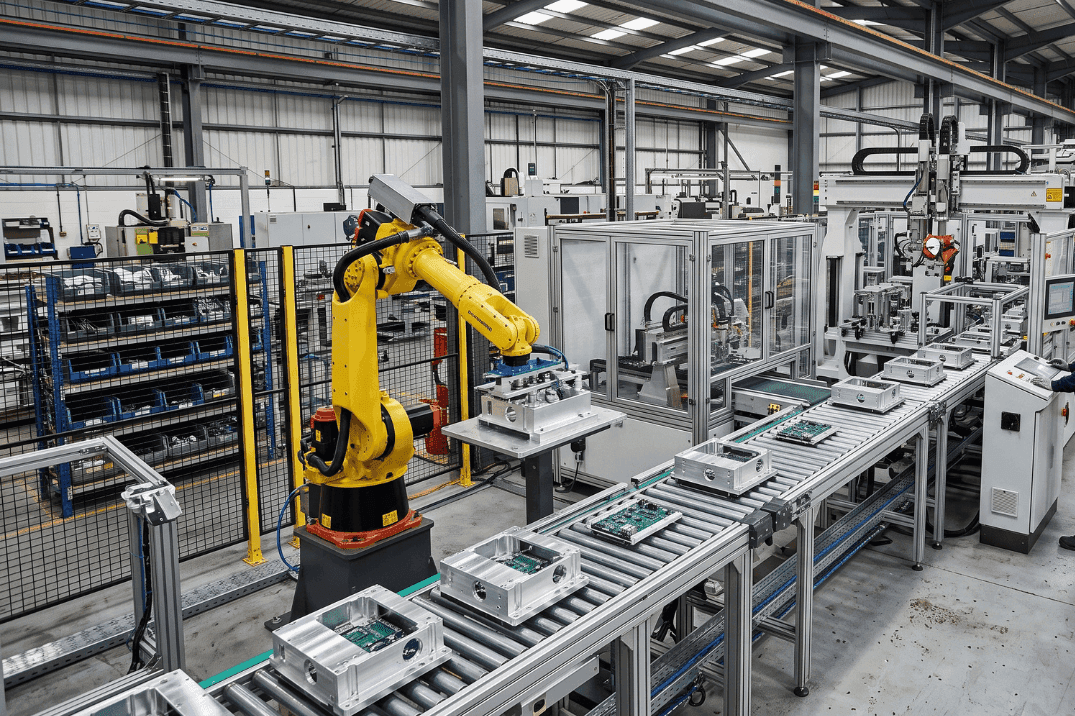
Industrial robots are typically floor-mounted and programmed for repetitive, high-speed, high-precision tasks such as material handling, welding, painting and assembly. Collaborative robots (cobots) work alongside operators and are safer and easier to program. MotionTech offers both for packaging, pick and place and material handling.

Sensors and conveyors

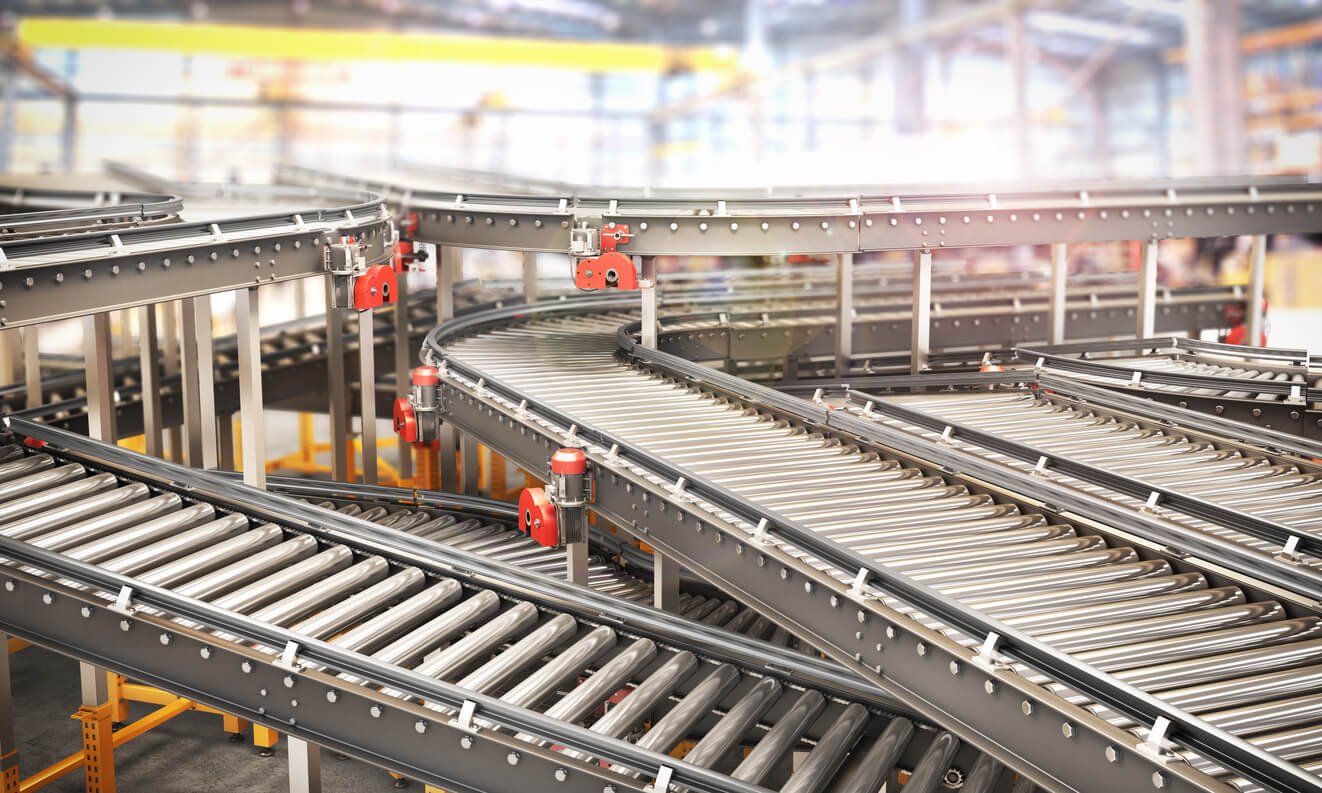
Sensors are the eyes and ears of automation, detecting position, temperature, pressure and proximity and feeding data back to control systems. Conveyor systems form the backbone of material handling, moving products between workstations, storage and shipping zones.

By the numbers
up to 50%
productivity uplift envisaged by a major automation provider
33%
increase in labour efficiency after transformation
25%
improvement in product quality
35%
reduction in energy consumption
60%
faster time to competency

Benefits of industrial automation

The business case for industrial automation is built on measurable, tangible benefits:

Benefits of industrial automation


One manufacturer reported a 33% increase in labour efficiency, 60% improvement in time to competency, 25% improvement in quality, and 35% reduction in energy consumption after an automation transformation.
Higher productivity

Automated systems complete tasks faster and more consistently than manual labour, with one major provider envisaging productivity increases of up to 50%.

Improved quality and consistency

Automation reduces human error, delivering higher quality products with greater precision.

Better health and safety

Automation removes workers from heavy, hazardous or repetitive tasks.

Shorter lead times

Automated processes reduce cycle times, keeping customers happy.

Reduced waste

More efficient use of materials and energy lowers costs and environmental impact.

24/7 operation

Automation does not take breaks, get sick, or need holidays.

Data-driven decision making

Real-time data enables predictive maintenance, process optimisation and continuous improvement.

Tackling labour shortages

Automation reduces reliance on hard-to-find skilled labour.

Industrial automation examples

Industrial automation is everywhere in modern manufacturing. Here are some real-world examples:

Industrial automation examples


Automotive manufacturing

Robotic welding arms perform precise welds on car frames, increasing speed and consistency while reducing human exposure to hazardous environments. Automated guided vehicles move components between workstations.

Food and beverage production

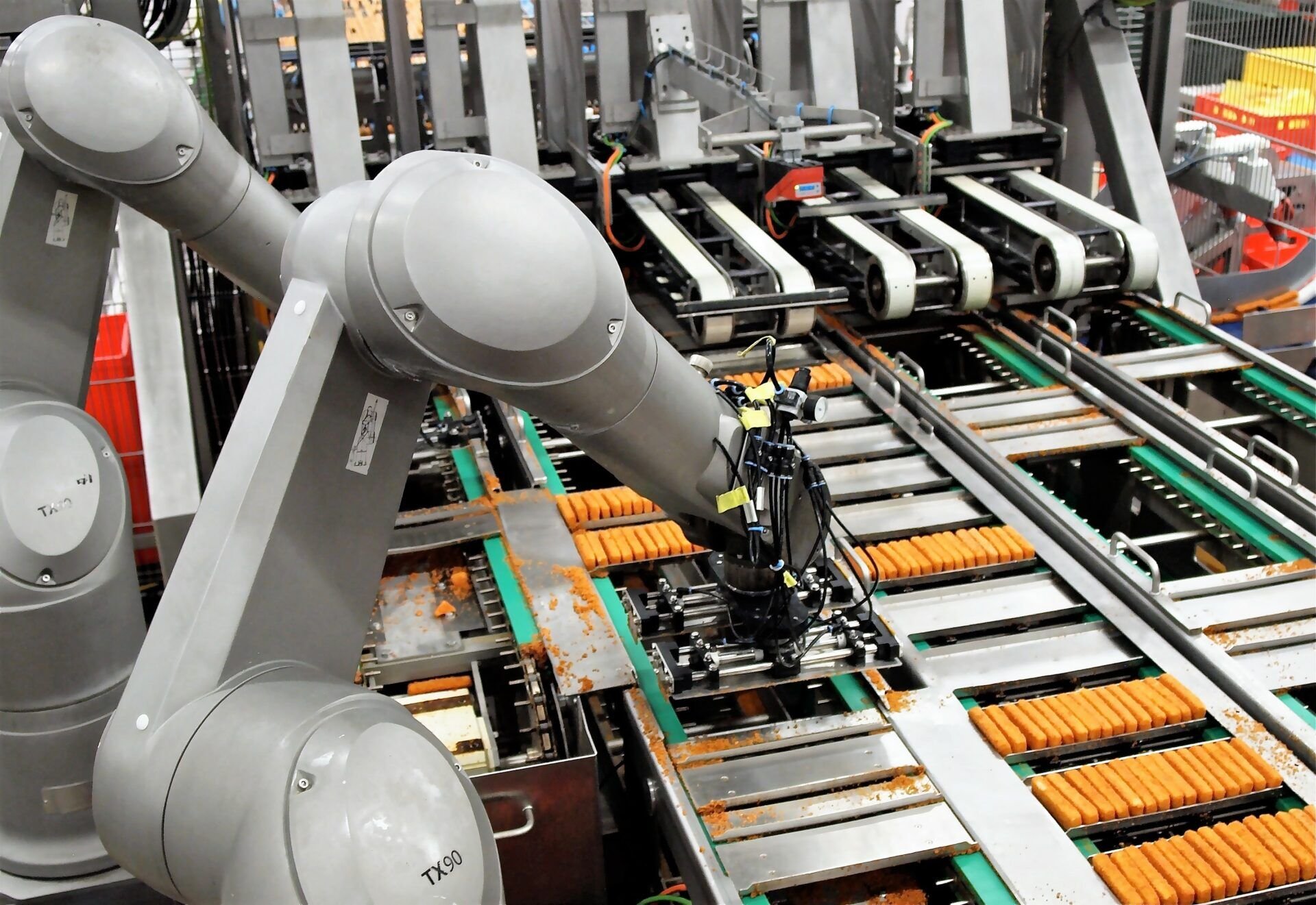
Automated conveyors, filling machines and packaging systems handle high-volume food and beverage production with minimal human intervention. Pick-and-place robots move products from conveyors to packaging.

Pharmaceutical manufacturing

Automated systems handle delicate ingredients, maintain strict environmental controls and ensure traceability throughout pharmaceutical production.

Warehouse and logistics

Automated storage and retrieval systems (AS/RS), autonomous mobile robots (AMRs) and conveyor systems manage the flow of goods through distribution centres. MotionTech has deployed over 2,000 robots across UK sites. See our guide to warehouse automation.

Machining and fabrication

CNC machines, automated welding systems and robotic machine tending cells produce components with high precision and consistency.

Textile manufacturing

AI-powered systems monitor yarn tension, insertion speed and motor temperature across hundreds of looms, optimising production in real time.

Industrial automation vs warehouse automation

Industrial automation and warehouse automation are closely related but serve different purposes.

Industrial automation is the broader category. It encompasses the automation of manufacturing processes, production lines, and industrial operations, including technologies like PLCs, SCADA, robotics, CNC machines, and process control systems. It focuses on transforming raw materials into finished products.

Warehouse automation is a subset of industrial automation. It focuses specifically on the storage, movement, and retrieval of finished goods, raw materials, and work-in-progress within a warehouse or distribution centre, including technologies like AS/RS, conveyor systems, AMRs, and warehouse control systems (WCS).

FeatureIndustrial AutomationWarehouse Automation
Primary focusManufacturing and productionStorage and distribution
EnvironmentFactory floor, process plantsWarehouses, distribution centres
Key technologiesPLCs, SCADA, CNC, robotsAS/RS, conveyors, AMRs, WCS
Typical applicationsWelding, assembly, machiningPicking, packing, sorting, storage

Today, industrial automation is no longer limited to production lines, it extends into warehouse automation, logistics systems, and digital supply chains. The two are increasingly integrated, with automated factories feeding directly into automated warehouses.

Learn more about warehouse automation in our dedicated guide.

Warehouse automation FAQS

RELATED ARTICLES